Passenger Train
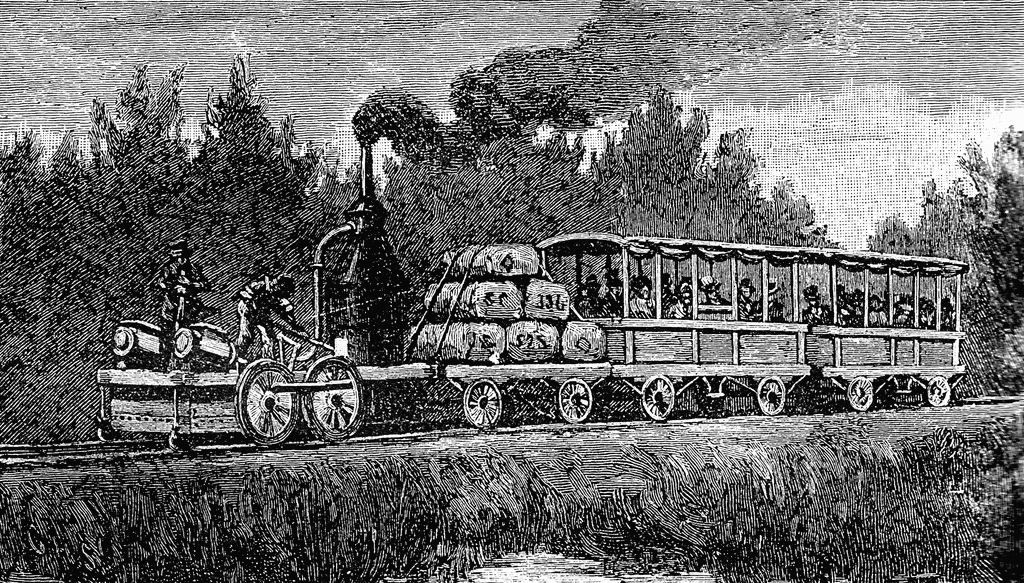
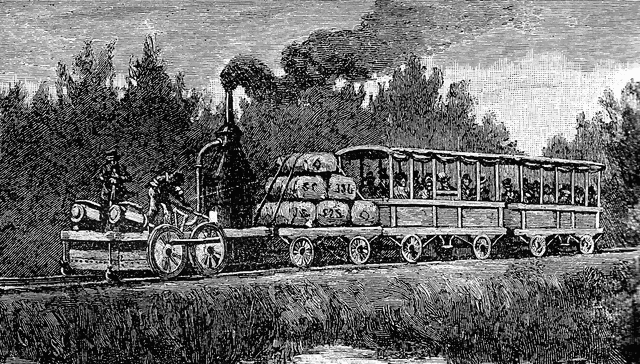
“The first passenger locomotive built in the United States. A year after the Enterprise sailed for India, the first railroad in the United States was opened in Massachusetts, from the Quincy quarries to tide water. It was only two miles long, and was used for hauling granite; the cars were drawn by horses. It was the first use of rails in America. In 1830 the first passenger railway in America was opened. It extended westward from Baltimore about fifteen miles, and now forms a part of the Baltimore and Ohio Railroad. The cars were at first drawn by horses, but a locomotive was used the next year. Its first locomotive was built by Peter Cooper, who made later the generous and useful gift of the Cooper Union to the city of New York. Now began the construction of railroads in various directions; in the next twenty years nearly ten thousand miles of road were built. This mileage has constantly been increased, until in 1895 there were in operation in the United States nearly one hundred and eighty thousand miles of railway."—Scudder, 1897
Source
Horace E. Scudder, A History of the United States of America (New York: Sheldon and Company, 1897) 274
Downloads
2400×1368, 2.9 MiB
1024×583, 366.0 KiB
640×364, 152.6 KiB
320×182, 37.2 KiB