Hooded Seal
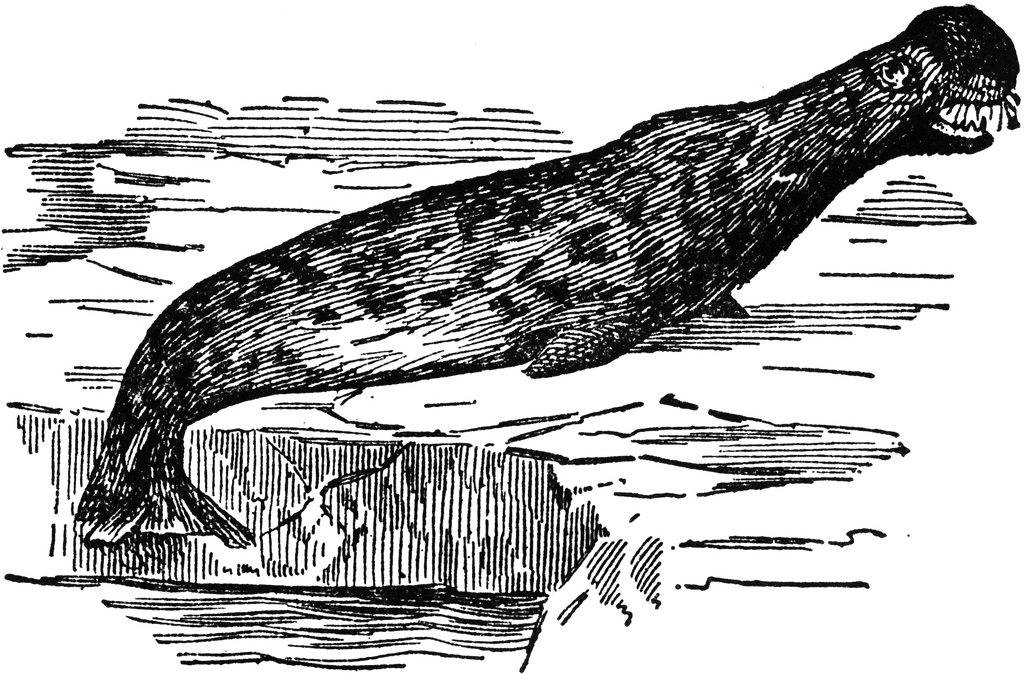
“The Seal, of the family Phocidæ, or seal tribe, are, of all four-limbed mammiferous animals, those which display the most complete adaptation to residence in the water. The seal has considerable resemblance to a quadruped in some respects, and to a fish in others. The head is round, and the nose, which is broad, resembles that of a dog, with the same look of intelligence and mild and expressive physiognomy. It has large whiskers, oblong nostrils, and great black sparkling eyes. It has no external ears, but a valve exists in the orifices, which can be closed at will, so as to keep out the water; the nostrils have a similar valve; and the clothing of the body consists of stiff glossy hairs, very closely set against the skin. The body is elongated and conical, gradually tapering from the shoulders to the tail. The spine is provided with strong muscles, which bend it with considerable force; and this movement is of great assistance to the propulsion of the body."—(Charles Leonard-Stuart, 1911)
Keywords
mammal, Seal, hooded seal, phocidae, phociæ, seal tribe, four-limbed mammiferous animals, valve exists in the orificesGalleries
Mammals: SSource
Everybody's Cyclopedia (New York, NY: Syndicate Publishing Company, 1912)
Downloads
2400×1582, 1.4 MiB
1024×674, 169.3 KiB

640×421, 81.1 KiB
320×210, 26.2 KiB