Salatio
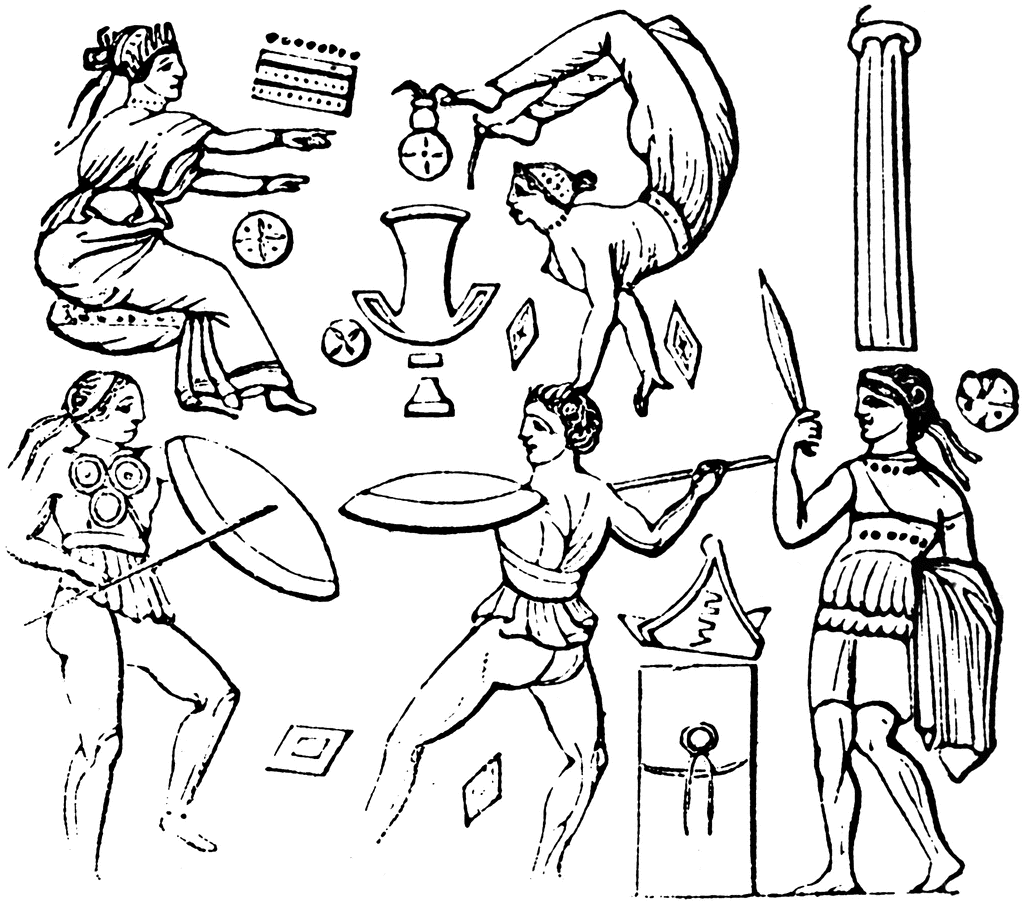
“Dancing. The dancing of the Greeks as well as of the Romans had very little in common with the exercise which goes by that name in modern times. It may be divided into two kinds, gymnastic and mimetic; that is, it was intended either to represent bodily activity, or to express by gestures, movements, and attitudes, certain ideas or feelings, and also single events or a series of events, as in the modern ballet. All these movements, however, were accompanied by music; but the term saltatio was used in a so much wider sense than our word dancing, that they applied to disignate gestures, even when the body did not move at all. We find dancing prevalent among the Greeks from the earliest times. It was originally closely connected with religion. In all the public festivals, which were so numerous among the Greeks, dancing formed a very prominent part. We find from the earliest times that the worship of Apollo was connected with a religious dance, called Hyporchema. All the religious dances, with the exception of the bacchic and the Corybantian, were very simple, and consisted of gentle movements of the body, with various turnings and windings around the altar; such a dance was the Geranus, which Theseus is said to have performed at Delos on his return from Crete.” — Smith, 1873
Source
William Smith, A School Dictionary of Greek and Roman Antiquities (New York: Harper and Brothers, 1873) 279
Downloads
2400×2113, 708.6 KiB
1024×901, 123.5 KiB

640×563, 65.5 KiB
320×281, 25.9 KiB