Combinational Volume
| View Cart ⇗ | Info
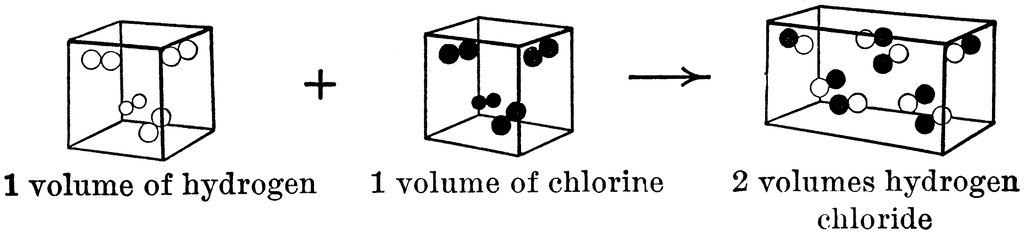
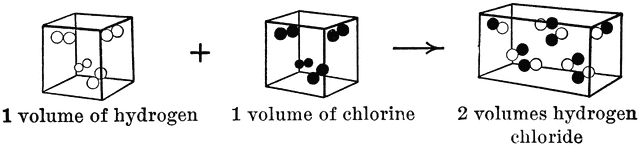
“When one volume of hydrogen actually unites with one volume of chlorine, two volumes and not one volume of hydrogen chloride result. the volume of the acid is twice that of the hydrogen. Each of these two volumes must, according to Avagadro’s hypothesis, contain four particles of the acid, or eight in all, so that in the eight particles of the acid there must be eight particles of hydrogen and eight particles of chlorine.” -Brownlee 1907
Source
Brownlee, Raymond B., Fuller, Robert W., Hancock, William J., Sohon, Michael D., Whitsit, Jesee E. First Principles of Chemistry (Boston: Allyn and Bacon, 1907) 77
Downloads
2400×544, 128.0 KiB
1024×232, 24.6 KiB
640×145, 14.1 KiB

320×72, 5.8 KiB