Genus Quercus, L. (Oak)
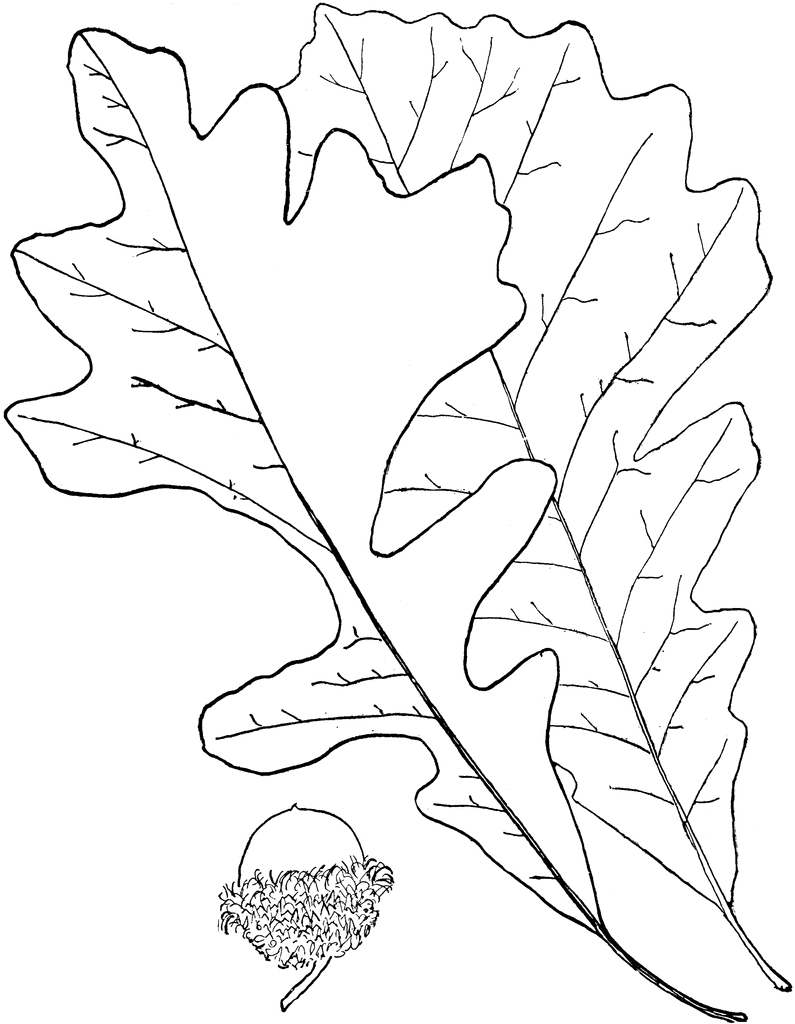
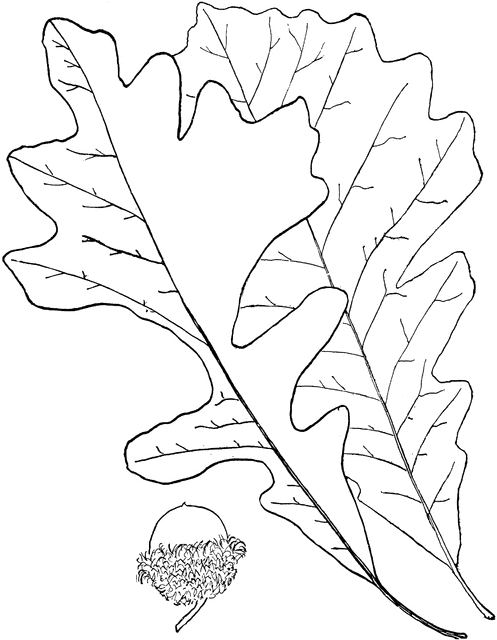
Leaves - simple; alternate; lobed (the edge of the lobes entire, or of the larger ones sometimes wavy). Outline - reverse egg-shape. Apex - of the lobes, rounded. Base - wedge-shape. Leaf - six to fifteen inches long (the longest of the oak-leaves); smooth above, downy beneath; the lobes usually long and rather irregular, the middle ones longest and often extending nearly to the middle rib. Bark - of the young branches always marked with corky wings or ridges. Acorns - large, with short stems. Cup - two thirds to two inches across, roughly covered with pointed scales, and heavily fringed around the nut. Nut - very large (one to one and a half inches long); broad egg-shape; one half to two thirds or often wholly enclosed by the cup. Found - along the coast of Maine southward as far as the Penobscot, in Western New England, in Western New York, in Pennsylvania, and thence westward to the foot-hills of the Rocky Mountains of Montana, and from Central Nebraska and Kansas southwest to the Indian Territory and Texas. It is found farther west and northwest than any other oak of the Atlantic forests. In the prairie region it forms a principal growth of the “Oak Openings.” General Information - One of the most valuable and widely distributed oaks in North America, growing sixty to eighty feet in height, or more, with hard, tough wood resembling that of the White Oak. “The most interesting thing about this tree, perhaps is its power, quite unknown in the other White Oaks, of adapting itself to very different climatic conditions, which enables it to live in the humid climate of Maine and Vermont, to flourish in the somewhat drier climate of the Mississippi Valley, and to exist (still farther west) in the driest and most exposed region in habited by any of the Eastern America Oaks.” - Sargent. Q. m. olivaformis is a variety found only in a few districts (near Albany and in Pennsylvania), having narrower and rather more deeply lobed leaves. Quercus, possible from a Celtic word meaning to inquire, because it was among the oaks that the Druids oftenest practised their rites.
Keywords
koak, leaf, trees of northeast America, trees of northeast United States, tree with simple leaves, leaves alternate, edge lobedGalleries
Trees: BSource
Newhall, Charles S. The Trees of North-Eastern America (New York: The Knickerbocker Press, 1900) 107
Downloads
1865×2400, 348.8 KiB
795×1024, 65.3 KiB
497×640, 35.2 KiB
248×320, 13.6 KiB