Physiological Bases of the Visible Speech Symbols for Vowels
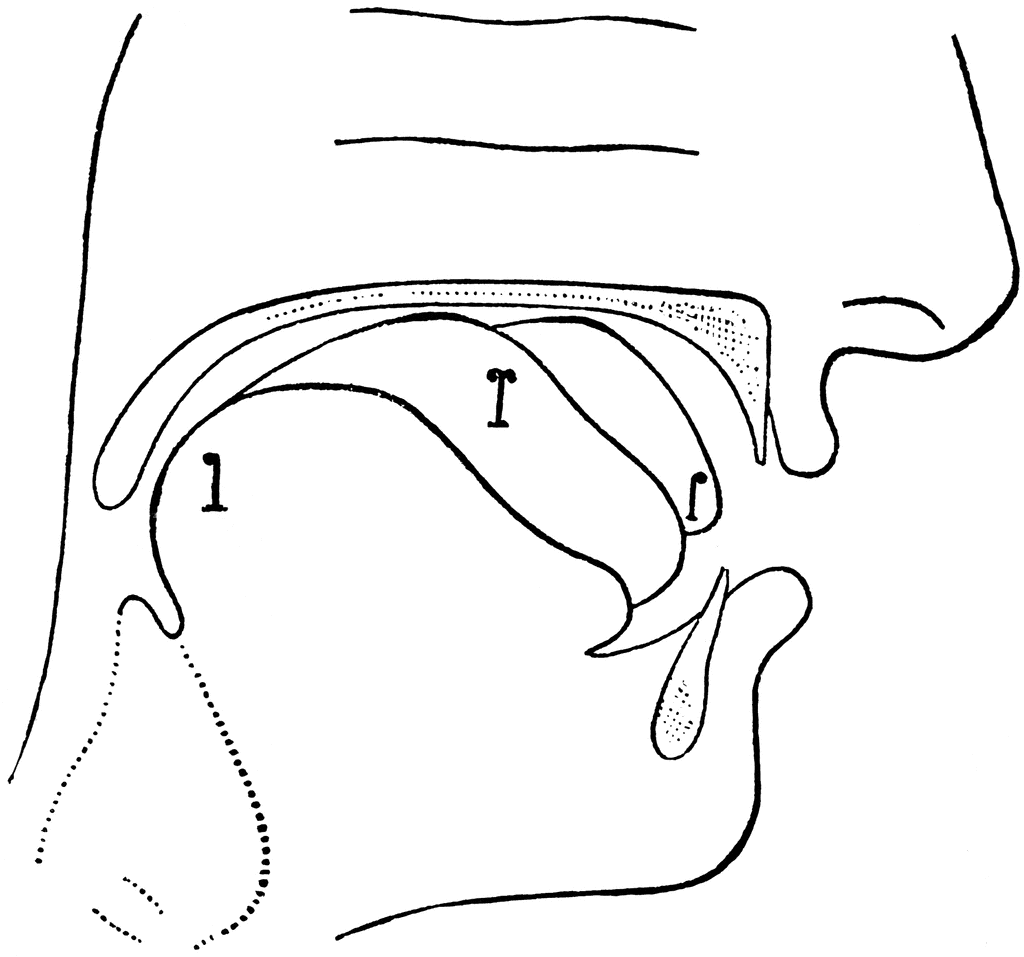
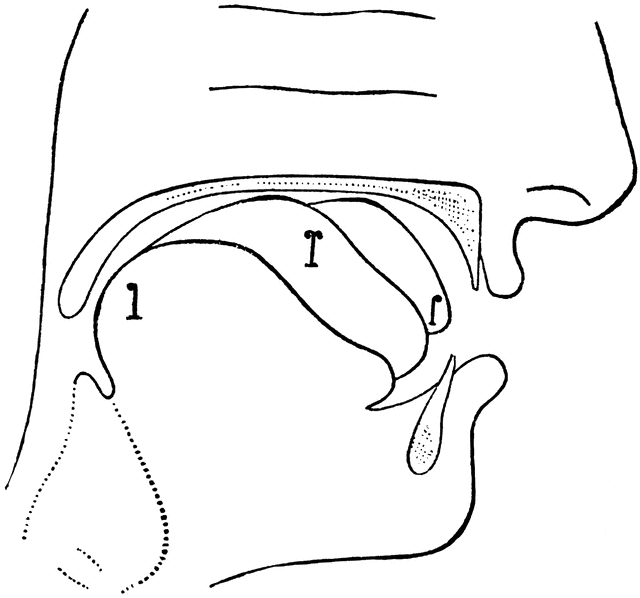
Physiological Bases of the Visible Speech Symbols - Vowels. In representing the vowel classification of sounds, a peculiar and exclusive mode of accenting ... the important ... parts of the hand is resorted to, so that, when the different ways of accentuation are understood, the class to which a given position belongs may be readily determined. The modes of accentuation adopted, impart to the various manual positions something more than mere arbitrary class distinction. A hint at the physiological differences between consonants, vowels, and glides also is given, when the positions that represent them are viewed from the index-finger side of the hand ..., according to the rules in this Manual.
Vowel positions are distinguished by always having the voice phalanx of the thumb accented and in contact with the terminal phalanx of the accented finger. This kind of accent is the strongest which can be given a finger, and so always takes precedence. Two modes of accentuation may not co-exist. The Vowel position are thirty-six in number.
Keywords
hand, sign language, hands, signing, physiological visible speech symbols, visible speech symbols, consonant visible speech symbols, Lyon's visible speech symbols, deaf language, visible speech, consonant signing, non-vocal consonant signingSource
Lyon, Edmund The Lyon Phonetic Manual (Rochester, NY: Deaf-Mute Institution, 1891)
Downloads
2567×2400, 372.2 KiB
1024×957, 40.8 KiB
640×598, 21.9 KiB
320×299, 9.9 KiB