George Berkeley
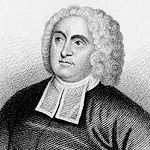
George Berkeley was an Irish philosopher known for the philosophical theory "subjective idealism," stated by Berkeley as "Esse est percipi" (“To be is to be perceived”). The theory posits that individuals can only comprehend specific sensations and objects, not abstracts such as "matter." Some of his most well-known works include Treatise Concerning the Principles of Human Knowledge (1710) and Three Dialogues between Hylas and Philonous (1713). He also wrote The Analyst, a critique of the foundations of science, which greatly influenced the development of mathematics.
Berkeley's work was so influential that the city of Berkeley, California is named after him, as is a residential college at Yale University and the copyright library at Trinity College, Dublin, Ireland.
- Nationality: Irish
- Birth Date: 12 Mar 1685
- Death Date: 14 Jan 1753
Available Works
- A Defence of Free-Thinking in Mathematics (1735)
- An essay/argument for Sir Isaac Newton and the author’s mathematical beliefs and philosophies. The full title is "A Defence of Free-Thinking in Mathematics: In answer To a Pamphlet of Philalethes Cantabrigiensis, intitled, Geometry no Friend to Infidelity, or a Defence of Sir ISAAC NEWTON, and the BRITISH Mathematicians. Also an Appendix concerning Mr. WALTON’s Vindication of the Principles of Fluxions contained in the ANALYST."