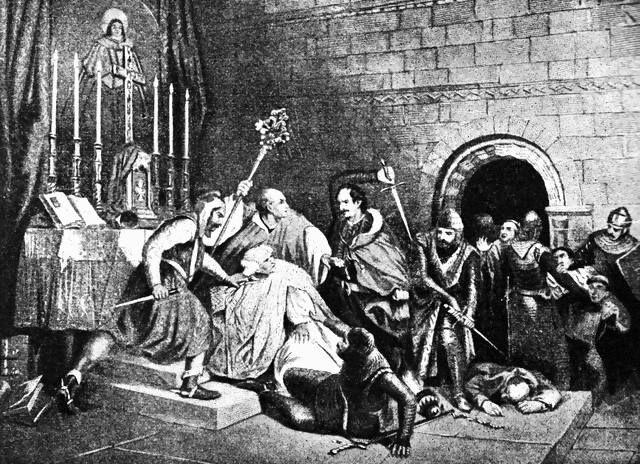
Death of Becket
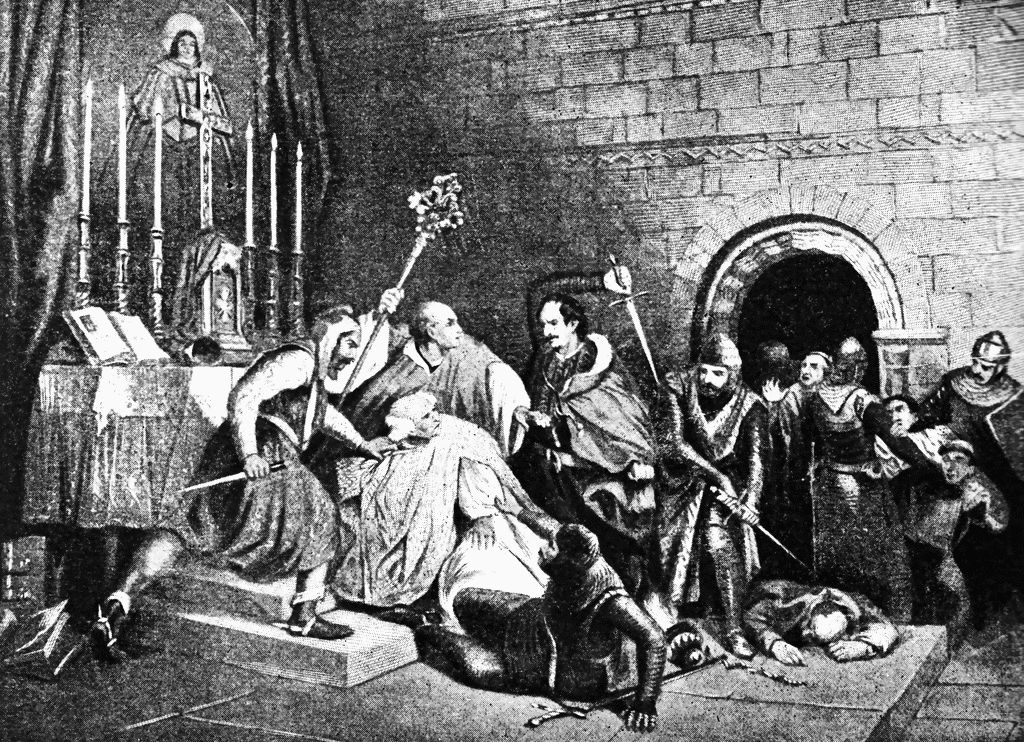
“Death of Becket. During the early years of the reign Thomas A. Becket, as the king’s chancellor, had shown great zeal in his cause, but, being appointed archbishop of Canterbury in 1162, he devoted himself wholly to the interests of the church and the exaltation of his office, and became the most dangerous of the king’s foes. the main point at issue between them was the trial of members of the clergy who had been guilty of crime. The civil courts had lost all authority over clerical offenders, who were tried by the church tribunals. But the latter bodies could inflict only spiritual penalties, and serious offenses often went without adequate punishment. In the Constitutions of Clarendon (1164) it was decided that ecclasiastics accused of crime must first be summoned before the king’s justices, who were to determine whether the offense came within the jurisdiction of a secular or a spiritual court. Becket reluctantly agreed to this, as well as to other provisions seriously affecting the authority of the church, but soon afterwards sent to the pope and asked forgiveness for what he had done. The king’s party was powerful, and Becket took refuge in France, but a few years later, through the aid of the pope and French king, was reinstated. On his return to England he angered the king by excommunicating the bishops who had taken sides against him. Henry, in a moment of rage, spoke some hasty words, which were construed by his attendants as a wish for the murder of Becket. They broke into the cathedral where the latter had taken refuge and killed him at the altar (December, 1170). Becket was now regarded as a martyr and a patron saint, and the king was finally obliged to make his submission to the papal representative and declar on oath his innocence of all complicity in the murder. Thus the apparent outcome of the struggle was unfavorable to the king, but in reality Henry gained the main object for which he had been working. The church courts no longer enjoyed such complete authority over criminal members of the clergy."—Colby, 1899
Galleries
Events in United Kingdom HistorySource
Frank Moore Colby, Outlines of General History, (New York: American Book Company, 1899) 300
Downloads
2400×1741, 4.8 MiB
1024×742, 459.3 KiB
640×464, 177.0 KiB
320×232, 46.4 KiB