Pons Ariminum
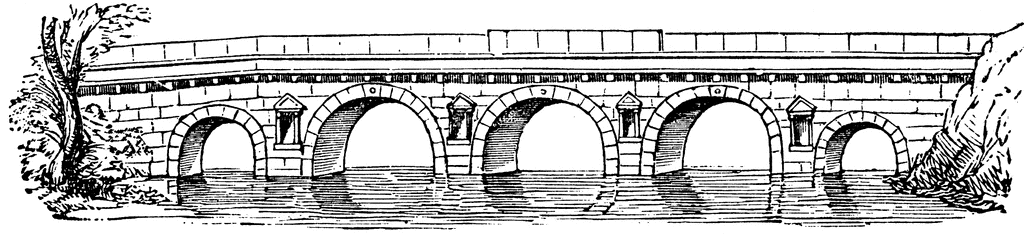
“A bridge. As the rivers of Greece were small, and the use of the arch known to them only to a limited extent, it is probable that the Greek bridges were built entirely of wood, or, at best, were nothing more than a wooden platform supported upon stone piers at each extremity. Pliny mentions a bridge over the Acheron 1000 feet in length; and also says that the island Euboea was joined to Boeotia by a bridge; but it is probably that both these works were executed after the Roman conquest. The Romans were the first people who applied the arch to the construction of bridges, by which they were enabled to erect structures of great beauty and solidity, as well as utility. The width of the passage-way in a roman bridge was commonly narrow, as compared with modern structures of the same kind, and corresponded with the road leading to and from it. It was divided into three parts. the centre one, for horses and carriages, was denominated agger or iter; and the raised foot paths on each side decursoria, which were enclosed by parapet walls similar in use and appearance to the pluteus in the basilica.” — Smith, 1873
Downloads
2400×549, 389.0 KiB
1024×234, 73.6 KiB
640×146, 36.5 KiB
320×73, 11.8 KiB