Simple Sponge DevelopmentClipart ETC: An online service of Florida's Educational Technology Clearinghouse

Simple Sponge Development

Simple Sponge DevelopmentSimple Sponge DevelopmentSimple Sponge Development

To use any of the clipart images above (including the thumbnail image in the top left corner), just click and drag the picture to your desktop. You may also control-click (Mac) or right-click (Windows) and choose "Save file to disk" from the pop-up menu. Click here for help downloading and using clipart files.

Download TIFF* File

* A TIFF file is a high-resolution (240 dpi) format. TIFF files should be used only if you are printing the clipart. Do NOT use TIFF files for clipart that will displayed on a computer screen. Click here for help downloading and using TIFF files.

File Name: 48180_simp_sponge
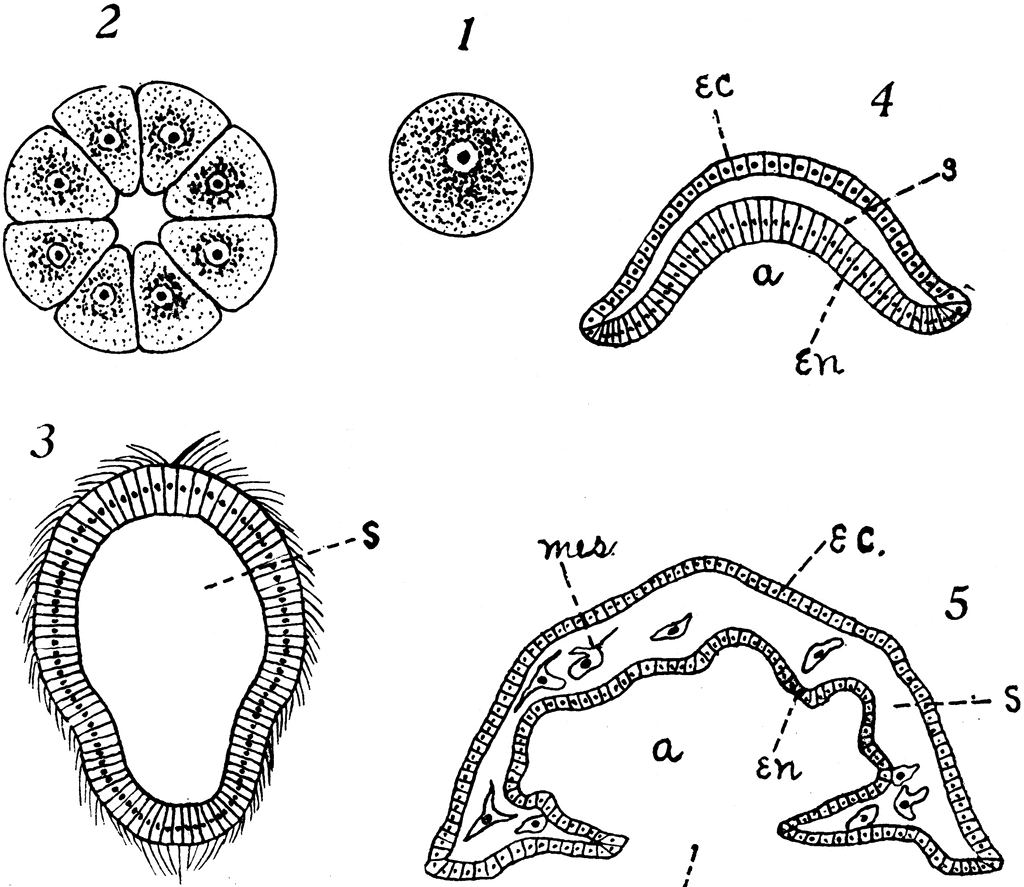
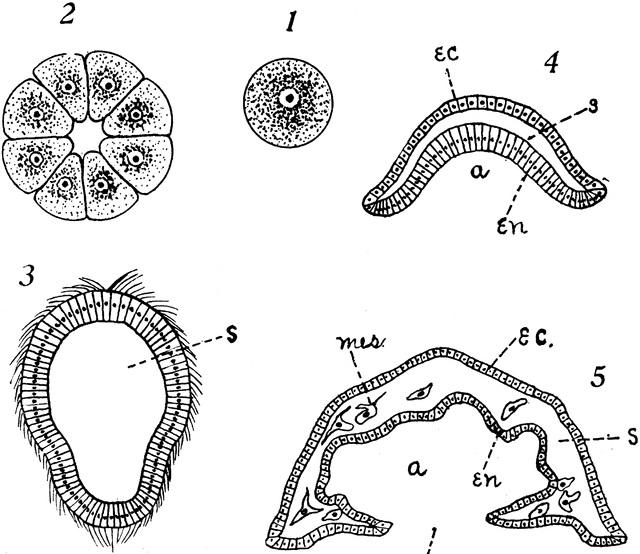
Description: "Diagrams to illustrate the development of one of the simpler types of sponge: I, the egg; 2, section of 16- to 32-celled stage; 3, section of later stage, a ciliated larva (blastula); 4, gastrula; 5, section through older larva which has become attached by the end containing the blastopore. New openings break through by the coalescence and perforation of the ectoderm and entoderm, and and a form results... a, archenteron; bl., blastopore; ec., ectoderm; en., entoderm; mes., mesenchyma; s, segmentation cavity." -Galloway, 1915
Source: Galloway, Thomas Walton Zoology (Philadelphia: P. Blakiston's Son & Co., 1915) 166
Keywords: simple sponge development, sponge egg, blastula, gastrula, ectoderm, entoderm, archenteron, blastopore, mesenchyma, label sponge parts, sponge stages

Copyright: 2009, Florida Center for Instructional Technology. See license.

Main MenuSite MapSearchLicenseClipart Help


Clipart ETC is a part of the Educational Technology Clearinghouse and is funded by various grants. Produced by the Florida Center for Instructional Technology, College of Education, University of South Florida. Email the project manager.


Clipart ETCEducational Technology Clearinghouse