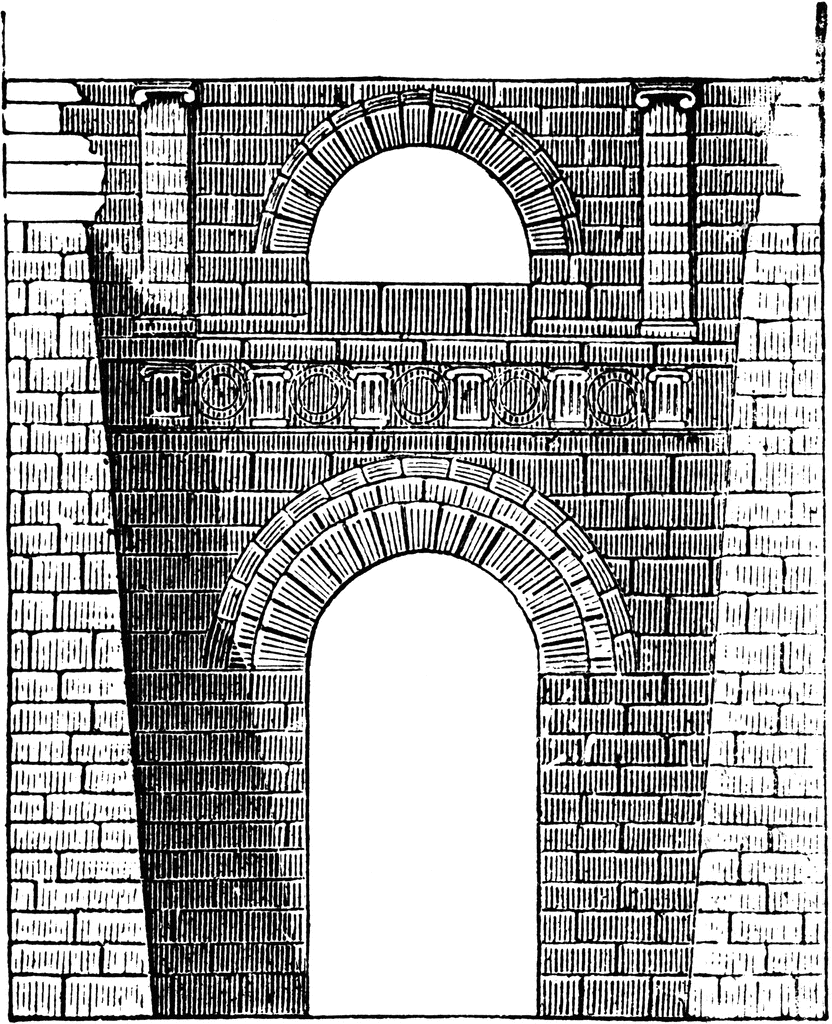
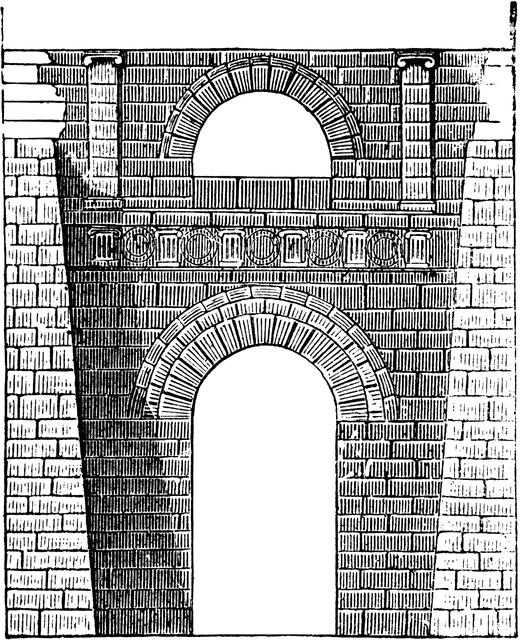
Etruscan Arch at Perugia
To use any of the clipart images above (including the thumbnail image in the top left corner), just click and drag the picture to your desktop. You may also control-click (Mac) or right-click (Windows) and choose "Save file to disk" from the pop-up menu. Click here for help downloading and using clipart files.
* A TIFF file is a high-resolution (240 dpi) format. TIFF files should be used only if you are printing the clipart. Do NOT use TIFF files for clipart that will displayed on a computer screen. Click here for help downloading and using TIFF files.File Name: 60815_etruscan_arc
Description: In these Etruscan buildings traces are to be found of the arch; as, for instance, in the Gate of Volterra and other gates at Perugia; so also in the Cloacæ at Rome, of which the Cloaca Maxima is 20 feet broad. These are sewers which were intended to render the marshy district between the hills of Rome inhabitable. They were constructed in the reign of Tarquinius Superbus, at the beginning of the sixth century B.C.
Source: A. Rosengarten, W. Collett-Sandars A Handbook of Architectural Styles (New York: Charles Scribner's Sons, 1895) 103
Keywords: roman architecture, etruscan architecture, Etruscan Arch at Perugia, etruscan gate, Cloaca Maxima, greatest sewer
Copyright: 2009, Florida Center for Instructional Technology. See license.
Main Menu Site Map Search License Clipart Help
Clipart ETC is a part of the Educational Technology Clearinghouse and is funded by various grants. Produced by the Florida Center for Instructional Technology, College of Education, University of South Florida. Email the project manager.