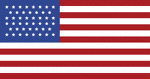
Color illustration of a 46 Star United States flag. The additional star represents the state of Oklahoma. This flag was in use from July 04, 1908 until July 3, 1912.

46 Star United States Flag, 1908

Color illustration of a 46 Star United States flag. The additional star represents the state of Oklahoma.…
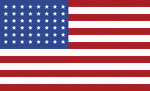
Color illustration of a 48 Star United States flag. The additional stars represent the states of Arizona and New Mexico. This flag was in use from July 04, 1912 until July 3, 1959.

48 Star United States Flag, 1912

Color illustration of a 48 Star United States flag. The additional stars represent the states of Arizona…
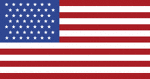
Color illustration of a 49 Star United States flag. The additional star represents the state of Alaska. This flag was in use from July 04, 1959 until July 3, 1960.

49 Star United States Flag, 1959

Color illustration of a 49 Star United States flag. The additional star represents the state of Alaska.…
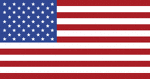
Color illustration of a 50 Star United States flag. The additional star represents the state of Hawaii. This flag has been used since July 04, 1960.

50 Star United States Flag, 1960

Color illustration of a 50 Star United States flag. The additional star represents the state of Hawaii.…

Black line illustration of a 13 Star United States flag. The original 13 stars represent the states of Delaware, Pennsylvania, New Jersey, Georgia, Connecticut, Massachusetts, Maryland, South Carolina, New Hampshire, Virginia, New York, North Carolina, and Rhode Island. This flag was in use from June 14, 1777 until May 1, 1795.

13 Star United States Flag, 1776

Black line illustration of a 13 Star United States flag. The original 13 stars represent the states…

Black line illustration of a 20 Star United States flag. The additional stars represent the states of Indiana, Louisiana, Mississippi, Ohio, and Tennessee. This flag was in use from July 04, 1818 until July 3, 1819.

20 Star United States Flag, 1818

Black line illustration of a 20 Star United States flag. The additional stars represent the states of…

Black line illustration of a 21 Star United States flag. The additional star represents the state of Illinois. This flag was in use from July 04, 1819 until July 3, 1820.

21 Star United States Flag, 1819

Black line illustration of a 21 Star United States flag. The additional star represents the state of…

Black line illustration of a 23 Star United States flag. The additional stars represent the states of Alabama and Maine. This flag was in use from July 04, 1820 until July 3, 1822.

23 Star United States Flag, 1820

Black line illustration of a 23 Star United States flag. The additional stars represent the states of…

Black line illustration of a 24 Star United States flag. The additional star represents the state of Missouri. This flag was in use from July 04, 1822 until July 3, 1836.

24 Star United States Flag, 1822

Black line illustration of a 24 Star United States flag. The additional star represents the state of…

Black line illustration of a 25 Star United States flag. The additional star represents the state of Arkansas. This flag was in use from July 04, 1836 until July 3, 1837.

25 Star United States Flag, 1836

Black line illustration of a 25 Star United States flag. The additional star represents the state of…

Black line illustration of a 26 Star United States flag. The additional star represents the state of Michigan. This flag was in use from July 04, 1837 until July 3, 1845.

26 Star United States Flag, 1837

Black line illustration of a 26 Star United States flag. The additional star represents the state of…

Black line illustration of a 28 Star United States flag. The additional star represents the state of Texas. This flag was in use from July 04, 1846 until July 3, 1847.

28 Star United States Flag, 1846

Black line illustration of a 28 Star United States flag. The additional star represents the state of…

Black line illustration of a 29 Star United States flag. The additional star represents the state of Iowa. This flag was in use from July 04, 1847 until July 3, 1848.

29 Star United States Flag, 1847

Black line illustration of a 29 Star United States flag. The additional star represents the state of…

Black line illustration of a 30 Star United States flag. The additional star represents the state of Wisconsin. This flag was in use from July 04, 1848 until July 3, 1851.

30 Star United States Flag, 1848

Black line illustration of a 30 Star United States flag. The additional star represents the state of…

Black line illustration of a 31 Star United States flag. The additional star represents the state of California. This flag was in use from July 04, 1851 until July 3, 1858.

31 Star United States Flag, 1851

Black line illustration of a 31 Star United States flag. The additional star represents the state of…

Black line illustration of a 32 Star United States flag. The additional star represents the state of Minnesota. This flag was in use from July 04, 1858 until July 3, 1859.

32 Star United States Flag, 1858

Black line illustration of a 32 Star United States flag. The additional star represents the state of…

Black line illustration of a 33 Star United States flag. The additional star represents the state of Oregon. This flag was in use from July 04, 1859 until July 3, 1861.

33 Star United States Flag, 1859

Black line illustration of a 33 Star United States flag. The additional star represents the state of…

Black line illustration of a 34 Star United States flag. The additional star represents the state of Kansas. This flag was in use from July 04, 1861 until July 3, 1863.

34 Star United States Flag, 1861

Black line illustration of a 34 Star United States flag. The additional star represents the state of…

Black line illustration of a 35 Star United States flag. The additional star represents the state of West Virginia. This flag was in use from July 04, 1863 until July 3, 1865.

35 Star United States Flag, 1863

Black line illustration of a 35 Star United States flag. The additional star represents the state of…

Black line illustration of a 36 Star United States flag. The additional star represents the state of Nevada. This flag was in use from July 04, 1865 until July 3, 1867.

36 Star United States Flag, 1865

Black line illustration of a 36 Star United States flag. The additional star represents the state of…

Black line illustration of a 37 Star United States flag. The additional star represents the state of Nebraska. This flag was in use from July 04, 1867 until July 3, 1877.

37 Star United States Flag, 1867

Black line illustration of a 37 Star United States flag. The additional star represents the state of…

Black line illustration of a 38 Star United States flag. The additional star represents the state of Colorado. This flag was in use from July 04, 1877 until July 3, 1890.

38 Star United States Flag, 1877

Black line illustration of a 38 Star United States flag. The additional star represents the state of…

Black line illustration of a 43 Star United States flag. The additional stars represent the states of Idaho, Montana, North Dakota, South Dakota, and Washington. This flag was in use from July 04, 1890 until July 3, 1891.

43 Star United States Flag, 1890

Black line illustration of a 43 Star United States flag. The additional stars represent the states of…

Black line illustration of a 44 Star United States flag. The additional star represents the state of Wyoming. This flag was in use from July 04, 1891 until July 3, 1896.

44 Star United States Flag, 1891

Black line illustration of a 44 Star United States flag. The additional star represents the state of…

Black line illustration of a 45 Star United States flag. The additional star represents the state of Utah. This flag was in use from July 04, 1896 until July 3, 1908.

45 Star United States Flag, 1896

Black line illustration of a 45 Star United States flag. The additional star represents the state of…

Black line illustration of a 46 Star United States flag. The additional star represents the state of Oklahoma. This flag was in use from July 04, 1908 until July 3, 1912.

46 Star United States Flag, 1908

Black line illustration of a 46 Star United States flag. The additional star represents the state of…
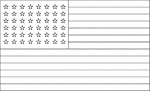
Black line illustration of a 48 Star United States flag. The additional stars represent the states of Arizona and New Mexico. This flag was in use from July 04, 1912 until July 3, 1959.

48 Star United States Flag, 1912

Black line illustration of a 48 Star United States flag. The additional stars represent the states of…

Black line illustration of a 49 Star United States flag. The additional star represents the state of Alaska. This flag was in use from July 04, 1959 until July 3, 1960.

49 Star United States Flag, 1959

Black line illustration of a 49 Star United States flag. The additional star represents the state of…

Black line illustration of a 50 Star United States flag. The additional star represents the state of Hawaii. This flag has been used since July 04, 1960.

50 Star United States Flag, 1960

Black line illustration of a 50 Star United States flag. The additional star represents the state of…
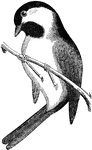
"Crown and nape, with chin and throat, black, separated by white sides of the head. Upper parts brownish-ash, with slight olive tinge, and a rusty wash on rump. Under parts more or less purely white or whitish, shaded on the sides with a brownish or rusty wash. Wings and tail like upper parts, the feathers moderately edged with hoary-white." Elliot Coues, 1884

Black-capped Chickadee

"Crown and nape, with chin and throat, black, separated by white sides of the head. Upper parts brownish-ash,…
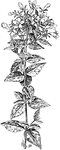
"Ornamental plants, cultivated chiefly for their handsome flowers. The Abelias are small or medium-sized bushy shrubs with deciduous or persistent foliage and rather small in numerous flowers varying from white to pink or purple; after the flowers have fallen, the persistent usually purplish sepals are attractive. A. grandiflora, Rehd. Fig. 58. Lvs. ovate, rounded or attenuate at the base, acute, 3/4-1&1/2 in. long, serrate, shining above, nearly glabrous, half-evergreen: fls. in terminal, loose panicles, white flushed pink, campanulate, 3/4in. long; stamens not exserted. Of garden origin. Gt. 41:1366. Gn. 76, p.528. J.H. III. 8:77- One of hte hardiest and most free-flowering abelias; it flowers continuously from June to November." L.H. Bailey, 1917

Glossy Abelia

"Ornamental plants, cultivated chiefly for their handsome flowers. The Abelias are small or medium-sized…
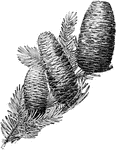
"Fig. 61- Cones of Abies- From bottom to top, A. concolor (White Fir), A. Nordmanniana (Nordmann Fir), A. Magnifica (red Fir)." L. H> Bailey, 1917

Cones of Abies

"Fig. 61- Cones of Abies- From bottom to top, A. concolor (White Fir), A. Nordmanniana (Nordmann Fir),…
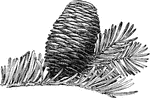
"A. grandis (Grand Fir) - Fig. 60.- tree, 200-300ft.: trunk becoming 4ft. in diam. lvs. thin and flexable, deeply grooved, very dark green above and silvery white beneath: cones cylindrical, 2-4 in. long, rounded or retuse at the apex, the broad scales somewhat squarrose and irregularly serrate and furnished with a short point." L.H. Bailey, 1917

Grand Fir Tree Cone

"A. grandis (Grand Fir) - Fig. 60.- tree, 200-300ft.: trunk becoming 4ft. in diam. lvs. thin and flexable,…
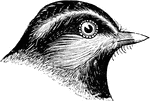
"Upper part ashy-gray, with scarcely a shade, and only on the rump, under parts similarly grayish-white, without a rusty tinge, the middle of the belly, the rest more heavily shaded. Wings and tail with comparatively little whitish edging - tail at least with no more than that of P. carolonensis. Sides of the head and neck white; top of the head, and the throat, black. A conspicuous white superciliary stripe in the black cap, usually meeting its fellow across the forehead." Elliot Coues, 1884

Mountain Chickadee

"Upper part ashy-gray, with scarcely a shade, and only on the rump, under parts similarly grayish-white,…
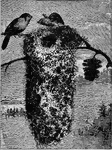
"Dull lead-color, frequently with a brownish or olivaceous shade, the top of the head abruptly darker - clove brown or hair-brown. Below sordid whitish, or brownish-white. Wings and tail dusky, with slight hoary endings. Bill and feet black." Elliot Coues, 1884

Two Least Bush-Tit Sitting on their Nest

"Dull lead-color, frequently with a brownish or olivaceous shade, the top of the head abruptly darker…
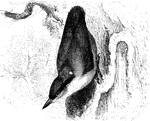
"Crown clear hair-brown; a white spot on nape; middle tail-feathers plain." Elliot Coues, 1884.

European Nuthatch

"Crown clear hair-brown; a white spot on nape; middle tail-feathers plain." Elliot Coues, 1884.
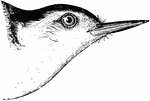
"Upper parts, central tail-feathers, and much edging of the wings, clear ashy-blue; whole crown, nape, and back of the neck, glossy black. Under parts, including sides of neck and head to above eyes, dull white, more or less marked on the flanks and crissum with rusty-brown. Wings and their coverts blackish, much edged as already said, and with an oblique bar of white on the outer webs of the primaries white; under wing-coverts mostly blackish; bold bluish and black variegation of the inner secondaries. Tail, excepting the two middle feathers, black, each feather marked with white in increasing amount, the outer web of the lateral feather being mostly white. Bill blackish-plumbeous, pale at the base below. Feet dark brown. Iris brown." Elliot Coues, 1884

White-Breasted Nuthatch

"Upper parts, central tail-feathers, and much edging of the wings, clear ashy-blue; whole crown, nape,…
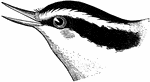
"Upper parts leaden-blue the central tail-feathers the same; wings fuscous, with slight ashy edgings and concealed white bases of the primaries. Entire under parts rusty-brown, very variable in shade, from rich fulvous to brownish-white, usually palest on the throat, deepest on the sides and crissum; tail-feathers, except the middle pair, black, the lateral marked with white. Whole top and side of head and neck glossy black, that of the side appearing as a broad bar through the eye from bill to side of neck, cut off from that of the crown by a long white superciliary stripe, which meets its fellow across the forehead. Bill dark plumbeous, paler below; feet plumbeous-brown." Elliot Coues, 1884

Red-breasted Nuthatch

"Upper parts leaden-blue the central tail-feathers the same; wings fuscous, with slight ashy edgings…
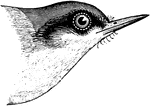
"No black cap or white stripe on head. Upper parts dull ashy-blue; under parts sordid or muddy whitish. Cap clear hair-brown. A decided spot white on the middle of the nape, in the brown cap, which on the sides of the head includes the eyes, and is bordered with dusky. Middle tail-feathers like back, without black, and with little or no white." Elliot Coues, 1884

Brown-headed Nuthatch

"No black cap or white stripe on head. Upper parts dull ashy-blue; under parts sordid or muddy whitish.…
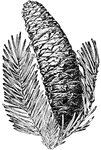
"Picea, Silver Fir. Fig. 60. Tree, 100-200 ft: trunk 6-8 ft. in dia.: lvs. flat, distichously spreading, dark green and lustrous above, silvery white below: cones slender, cylindrical, light green to dark purple, 5-6 in. long; bracts slightly longer than their scales. Mts. of Cent. and S. Eu., often gregarious.- Wood esteemed and much used; yields Strasburg turpentine. Dwarf forms, with erect and pendulous and with much abbreviated branches, are common in gardens. Not perfectly hardy in New England." L.H. Bailey, 1917

Silver Fir Tree Cone

"Picea, Silver Fir. Fig. 60. Tree, 100-200 ft: trunk 6-8 ft. in dia.: lvs. flat, distichously spreading,…
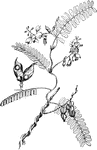
"Crab's-eye vine. Weather Plant. Fig. 64. - Height 10-12 ft.; frequently trailing over the ground S.: lfts. oblong, in numerous pairs: fls. varying from rose to white: seeds bright scarlet, with a black spot, used by Buddhists for rosaries, in India as standard weight, and in the W. Indies in bead word. Seeds irritant; also used as an abortive in the U.S.A variety with cream-colored bean is offered by Reasoner Bros.: Tropics generally. -The claims make for its weather-fortelling properties are exposed by Oliver in Kew Bull. Jan., 1890. It does, however, "go to sleep" during storms, but this is a feature of other legumes. Sometimes confounded with Rhynchosia phaseoloides (R. precatoria), which has similar seeds, but is a very different plant with large, 3-foliolate, bean-like lvs." L.H. Bailey, 1917

Crab's-Eye Vine

"Crab's-eye vine. Weather Plant. Fig. 64. - Height 10-12 ft.; frequently trailing over the ground S.:…
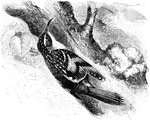
"Common Brown Creeper. Upper parts dark brown, changing to rusty-brown on the rump, everywhere streaked with ashy-white. An obscure whitish superciliary stripe. Under parts dull whitish, sometimes tinged with rusty on the flanks and crissum. Wing-coverts and quills tipped with white, the inner secondaries also with white shaft-lines, which, with the tips, contrast the blackish of their outer webs. Wings also crossed with white or tawny-white, the anterior bar broad and occupying both webs of the feathers, the other only on the outer webs near their ends. Tail grayish-brown, darker along the shaft and at the ends of the feathers, sometimes showing obsolete transverse bars. Bill blackish above, mostly flesh-colored or yellowish below; feet brown; iris dark brown." Elliot Coues, 1884

Common Brown Creeper

"Common Brown Creeper. Upper parts dark brown, changing to rusty-brown on the rump, everywhere streaked…
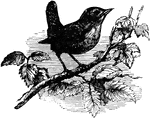
"European Wren. Feet strictly laminiplanter, as usual in Oscines. Tail thin, with narrow parallel-edged feathers. Wings and tail more or less completely barred cross-wise. Large. Upper parts uniform in color, without streaks or bars; rump with concealed white spots. Belly unmarked; a conspicuous superciliary stripe." Elliot Coues, 1884

European Wren

"European Wren. Feet strictly laminiplanter, as usual in Oscines. Tail thin, with narrow parallel-edged…
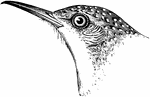
"Upper parts pale brownish-gray, minutely dotted with blackish and whitish points together, and usually showing obsolete wavy bars of dusky. Rump cinnamon-brown; a whitish superciliary line. Beneath, soiled white, shading behind into pale cinnamon, the throat and breast obsoletely streaked, and the under tail-covers barred, with dusky. Quills of the wings rather darker than the back, with similar markings on the outer webs. Middle tail-feathers like the back, with many dark bars of equal width with the lighter ones; lateral tail-feathers similarly marked on the outer webs, plain on the inner webs, with a broad subterminal black bar on both webs, and cinnamon-brown tips, the latter usually marbled with dusky; outer feathers with several blackish and cinnamon bars on both webs. Bill and feet dark horn color, the former paler at base below." Elliot Coues, 1884

Rock Wren

"Upper parts pale brownish-gray, minutely dotted with blackish and whitish points together, and usually…
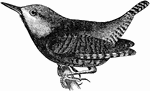
"Winter Wren. Above brown, darker before, brighter behind, most of back, together with tail and inner wing quills, banded with dusky, the markings obsolete on the back, where usually accompanied by whitish specks, strongest on the wings and tail. Outer webs of several primaries regularly barred with brownish-white, in marked contrast with the other bars of the wings. An inconspicuous whitish superciliary line. Below brownish, paler or whitish anteriorly, the belly, flanks, and crissum heavily waved with dusky and whitish bars. Bill slender, straight, decidedly shorter than the head. Tail much shorter than the wings." Elliot Coues, 1884" Elliot Coues, 1884

Winter Wren

"Winter Wren. Above brown, darker before, brighter behind, most of back, together with tail and inner…
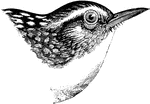
"Long-billed Marsh Wren. T. palustris. Above clear brown, unbarred, the middle of the back with a large black patch sharply streaked with white (these white stripes sometimes deficient). Crown of head usually darker that the back, often quite blackish, and continuous with the black interscapular patch. a dull white superciliary line. Wings fuscous, the inner secondaries blackish on the outer webs, often barred or indented with light brown. Tail evenly barred with fuscous and the color of the back. Under parts white, usually quite pure on the belly and middle line of the breast and throat, but much shaded with brown on the sides, flanks, and crissum. Bill blackish above, pale below; feet brown." Elliot Coues, 1884

Long-billed Marsh Wren

"Long-billed Marsh Wren. T. palustris. Above clear brown, unbarred, the middle of the back with a large…
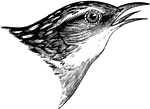
"Short-billed Marsh Wren. Cistothorus platensis. Upper parts brown, the crown and most of the back blackish, streaked with white. below, whitish, shaded with clear brown across the breast and along the sides, and especially on the flanks and crissum, the latter more or less indistinctly barred with dusky (often inappreciable). A whitish line over the eye. Wings and tail marked as in the last species. Upper tail-coverts decidedly barred. Bill blackish above, whitish below, extremely small, scarcely half as long as the head; feet brown." Elliot Coues, 1884

Short-billed Marsh Wren

"Short-billed Marsh Wren. Cistothorus platensis. Upper parts brown, the crown and most of the back blackish,…
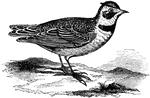
"Shore Lark or Horned Lark. Upper parts in general pinkish-brown, this pinkish or vinaceous or liliaceous tint brightest on the nape, lesser wing-coverts, and tail-coverts, the rest of the upper parts being duller and more grayish-brown, boldly variegated with dark brown streaks; middle pair of tail-feathers and several of the inner secondaries rufous-brown, with darker centres. Under parts, from the breast backward, white; the sides strongly washed with the color of the upper parts, and mottling of same across the lower part of the breast. A large, distinct, shield-shaped black area of the breast. Tail-feathers, except the middle pair, black, the outermost edged with whitish. Wings quills, except the innermost, plain fuscous, the outer web of the 1st primary whitish. Lesser wing-coverts usually tipped with grayish-white. Top of head like nape; bar across front of vertex, thence extended along sides of crown, and produced into a tuft, or "horn" black; front and line over eye, also somewhat produced to form part of the tuft, white or yellowish; a broad bar from nostrils along the lores, thence curving below the eye and widening as it descends in front of the auriculars, black; rest of the sides of the head and whole throat white or sulphury-yellow. Bill plumbeous-blackish, bluish-plumbeous at base below (sometimes there yellowish); feet and claws black; iris brown." Elliot Coues, 1884

Shore Lark

"Shore Lark or Horned Lark. Upper parts in general pinkish-brown, this pinkish or vinaceous or liliaceous…
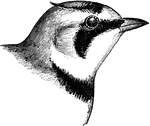
"Shore Lark or Horned Lark. Upper parts in general pinkish-brown, this pinkish or vinaceous or liliaceous tint brightest on the nape, lesser wing-coverts, and tail-coverts, the rest of the upper parts being duller and more grayish-brown, boldly variegated with dark brown streaks; middle pair of tail-feathers and several of the inner secondaries rufous-brown, with darker centres. Under parts, from the breast backward, white; the sides strongly washed with the color of the upper parts, and mottling of same across the lower part of the breast. A large, distinct, shield-shaped black area of the breast. Tail-feathers, except the middle pair, black, the outermost edged with whitish. Wings quills, except the innermost, plain fuscous, the outer web of the 1st primary whitish. Lesser wing-coverts usually tipped with grayish-white. Top of head like nape; bar across front of vertex, thence extended along sides of crown, and produced into a tuft, or "horn" black; front and line over eye, also somewhat produced to form part of the tuft, white or yellowish; a broad bar from nostrils along the lores, thence curving below the eye and widening as it descends in front of the auriculars, black; rest of the sides of the head and whole throat white or sulphury-yellow. Bill plumbeous-blackish, bluish-plumbeous at base below (sometimes there yellowish); feet and claws black; iris brown." Elliot Coues, 1884

Shore Lark

"Shore Lark or Horned Lark. Upper parts in general pinkish-brown, this pinkish or vinaceous or liliaceous…
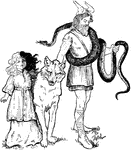
Loki goes into Asgard with his daughter, Hela, and his pets, Jormundgand the serpent, and Fenris the wolf. The people of Asgard are afraid of Hela because one side of her body was black and one side was white. They were also afraid of the wolf and the serpent and had various plans to get rid of Hela, Jormundgand, and Fenris.

Loki and his Pets

Loki goes into Asgard with his daughter, Hela, and his pets, Jormundgand the serpent, and Fenris the…
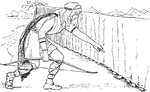
Skadi is a giantess and daughter of Thiassi who was killed while chasing Loki because of a trick. Skadi asks the gods for something in return for the loss of her father. They let her choose a husband by looking at only the gods' feet. She chooses a pair of white, slim feet which belong to Niord, the wind god.

Skadi Chooses a Husband

Skadi is a giantess and daughter of Thiassi who was killed while chasing Loki because of a trick. Skadi…
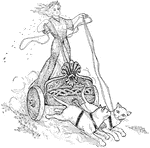
Freya searches for her husband Odur in her chariot drawn by two white cats. As she rode, she cried golden tears that spread all across the world.

Freya Searching for Odur

Freya searches for her husband Odur in her chariot drawn by two white cats. As she rode, she cried golden…
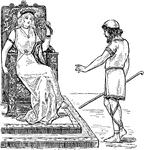
Hulda, the Norse goddess of spring sits on the throne in her cave. A shepherd finds this cave and as a reward, Hulda gives him anything in the cave. He chooses the blue flowers she holds in her hand.

Hulda and the Shepherd

Hulda, the Norse goddess of spring sits on the throne in her cave. A shepherd finds this cave and as…
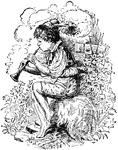
"The making of line engravings follows the same general course, with the exception that no halftone screen is needed, the copy to be reproduced being already made up of lines or dots or a combination of them." -Hill, 1921

Line Engraving

"The making of line engravings follows the same general course, with the exception that no halftone…
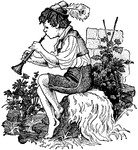
"The Benday process, so called, is the use of mechanical appliances for adding lines or stipples to either drawings or plates. Its use is very extensive in the making of tint blocks or color work, used either in connection with line or half-tone key plates." -Hill, 1921

Benday Engraving

"The Benday process, so called, is the use of mechanical appliances for adding lines or stipples to…
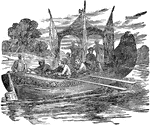
"In June of 1817 President Monroe took a very extensive journey through the States, visiting all the fortifications ... He was conveyed up the Delaware from Wilminton to the navy-yard in Philadelphia in a barge of the Franklin. The barge was lined and trimmed with crimson velvet, and rowed by sixteen oarsmen, dressed in scarlet vests, white sleeves and trousers." -Abbot, 1902

Monroe's Barge

"In June of 1817 President Monroe took a very extensive journey through the States, visiting all the…
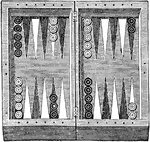
"Backgammon, a game played by two persons upon a table or board made for the purpose, with pieces or men, dice-boxes, and dice. The table is in two parts, on which are twenty-four black and white spaces called points. Each player has fifteen men of different colors for the purpose of distinction. The movements of the men are made in accordance with the numbers turned up by the dice. It is said to have been invented in the tenth century." -Vaughan, 1906

Backgammon Board

"Backgammon, a game played by two persons upon a table or board made for the purpose, with pieces or…
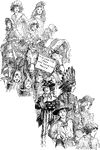
An illustration of a parade of children in costumes.

Parade of Children in Costumes

An illustration of a parade of children in costumes.

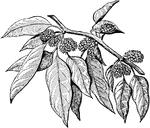
An illustration of a branch from an osage-orange plant with male flowers. Osage-orange, Horse-apple or Bois D'Arc (Maclura pomifera) is dioeceous plant species, with male and female flowers on different plants. It is a small deciduous tree or large shrub, typically growing to 8–15 metres (26–49 ft) tall. The fruit, a multiple fruit, is roughly spherical, but bumpy, and 7-15 cm in diameter, and it is filled with a sticky white latex sap. In fall, its color turns a bright yellow-green and it has a faint odor similar to that of oranges

Male Flowers of the Osage-Orange

An illustration of a branch from an osage-orange plant with male flowers. Osage-orange, Horse-apple…
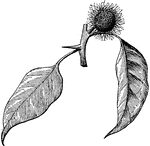
An illustration of a branch from an osage-orange plant with female inflorescence. Osage-orange, Horse-apple or Bois D'Arc (Maclura pomifera) is dioeceous plant species, with male and female flowers on different plants. It is a small deciduous tree or large shrub, typically growing to 8–15 metres (26–49 ft) tall. The fruit, a multiple fruit, is roughly spherical, but bumpy, and 7-15 cm in diameter, and it is filled with a sticky white latex sap. In fall, its color turns a bright yellow-green and it has a faint odor similar to that of oranges

Female Inflorescence of the Osage-Orange

An illustration of a branch from an osage-orange plant with female inflorescence. Osage-orange, Horse-apple…