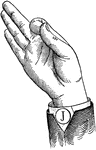
Vowels have a wide, firm, and free channel, whereby the breath is modified without friction or sibilation. &hellip; in representing vowels the hand suggests a wide and firm channel, by having the accented finger bent and its terminal phalanx brought firmly in contact with the terminal phalanx of the thumb. <p> Vowel positions are distinguished by always having the voice phalanx of the thumb accented and in contact with the terminal phalanx of the accented finger. This kind of accent is the strongest which can be given a finger, and so always takes precedence. Two modes of accentuation may not co-exist. Back Vowels have the palm in the posterior position. Wide Vowel positions differ from analogous Primary Vowel positions by having straightened unaccented fingers, to denote "Wide." Low Vowels have the first or index finger accented.

Normal Aperture Back Wide Low Vowel

Vowels have a wide, firm, and free channel, whereby the breath is modified without friction or sibilation.…
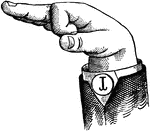
Vowels have a wide, firm, and free channel, whereby the breath is modified without friction or sibilation. &hellip; in representing vowels the hand suggests a wide and firm channel, by having the accented finger bent and its terminal phalanx brought firmly in contact with the terminal phalanx of the thumb. <p> Vowel positions are distinguished by always having the voice phalanx of the thumb accented and in contact with the terminal phalanx of the accented finger. This kind of accent is the strongest which can be given a finger, and so always takes precedence. Two modes of accentuation may not co-exist. Mixed Vowels have the palm thrown forward so as to assume a compromising position. Wide Vowel positions differ from analogous Primary Vowel positions by having straightened unaccented fingers, to denote "Wide." Low Vowels have the first or index finger accented.

Normal Aperture Mixed Wide Low Vowel

Vowels have a wide, firm, and free channel, whereby the breath is modified without friction or sibilation.…
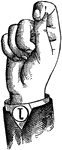
Vowels have a wide, firm, and free channel, whereby the breath is modified without friction or sibilation. &hellip; in representing vowels the hand suggests a wide and firm channel, by having the accented finger bent and its terminal phalanx brought firmly in contact with the terminal phalanx of the thumb. <p> Vowel positions are distinguished by always having the voice phalanx of the thumb accented and in contact with the terminal phalanx of the accented finger. This kind of accent is the strongest which can be given a finger, and so always takes precedence. Two modes of accentuation may not co-exist. Front Vowels have the palm in the anterior position. In Primary Vowel positions the accented voice phalanx of the thumb and the terminal phalanx of the accented finger overlap. None of the unaccented fingers are straightened. Low Vowels have the first or index finger accented.

Normal Aperture Front Primary Low Vowel

Vowels have a wide, firm, and free channel, whereby the breath is modified without friction or sibilation.…
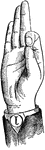
Vowels have a wide, firm, and free channel, whereby the breath is modified without friction or sibilation. &hellip; in representing vowels the hand suggests a wide and firm channel, by having the accented finger bent and its terminal phalanx brought firmly in contact with the terminal phalanx of the thumb. <p> Vowel positions are distinguished by always having the voice phalanx of the thumb accented and in contact with the terminal phalanx of the accented finger. This kind of accent is the strongest which can be given a finger, and so always takes precedence. Two modes of accentuation may not co-exist. Front Vowels have the palm in the anterior position. Wide Vowel positions differ from analogous Primary Vowel positions by having straightened unaccented fingers, to denote "Wide." Low Vowels have the first or index finger accented.

Normal Aperture Front Wide Low Vowel

Vowels have a wide, firm, and free channel, whereby the breath is modified without friction or sibilation.…
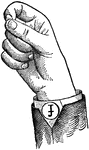
Vowels have a wide, firm, and free channel, whereby the breath is modified without friction or sibilation. &hellip; in representing vowels the hand suggests a wide and firm channel, by having the accented finger bent and its terminal phalanx brought firmly in contact with the terminal phalanx of the thumb. <p> Vowel positions are distinguished by always having the voice phalanx of the thumb accented and in contact with the terminal phalanx of the accented finger. This kind of accent is the strongest which can be given a finger, and so always takes precedence. Two modes of accentuation may not co-exist. Round Vowels differ visibly from normal aperture Vowels by having a contraction of the Lip aperture. This is shown by bringing the terminal phalanges of the thumb and the accented finger together so as to form an outline which is approximately round. Back Vowels have the palm in the posterior position. In Primary Vowel positions the accented voice phalanx of the thumb and the terminal phalanx of the accented finger overlap. None of the unaccented fingers are straightened. Low Vowels have the first or index finger accented.

Round Back Primary Low Vowel

Vowels have a wide, firm, and free channel, whereby the breath is modified without friction or sibilation.…
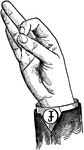
Vowels have a wide, firm, and free channel, whereby the breath is modified without friction or sibilation. &hellip; in representing vowels the hand suggests a wide and firm channel, by having the accented finger bent and its terminal phalanx brought firmly in contact with the terminal phalanx of the thumb. <p> Vowel positions are distinguished by always having the voice phalanx of the thumb accented and in contact with the terminal phalanx of the accented finger. This kind of accent is the strongest which can be given a finger, and so always takes precedence. Two modes of accentuation may not co-exist. Round Vowels differ visibly from normal aperture Vowels by having a contraction of the Lip aperture. This is shown by bringing the terminal phalanges of the thumb and the accented finger together so as to form an outline which is approximately round. Back Vowels have the palm in the posterior position. Wide Vowel positions differ from analogous Primary Vowel positions by having straightened unaccented fingers, to denote "Wide." Low Vowels have the first or index finger accented.

Round Back Wide Low Vowel

Vowels have a wide, firm, and free channel, whereby the breath is modified without friction or sibilation.…
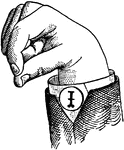
Vowels have a wide, firm, and free channel, whereby the breath is modified without friction or sibilation. &hellip; in representing vowels the hand suggests a wide and firm channel, by having the accented finger bent and its terminal phalanx brought firmly in contact with the terminal phalanx of the thumb. <p> Vowel positions are distinguished by always having the voice phalanx of the thumb accented and in contact with the terminal phalanx of the accented finger. This kind of accent is the strongest which can be given a finger, and so always takes precedence. Two modes of accentuation may not co-exist. Mixed Vowels have the palm thrown forward so as to assume a compromising position. In Primary Vowel positions the accented voice phalanx of the thumb and the terminal phalanx of the accented finger overlap. None of the unaccented fingers are straightened. Wide Vowel positions differ from analogous Primary Vowel positions by having straightened unaccented fingers, to denote "Wide." Low Vowels have the first or index finger accented.

Round Mixed Primary Low Vowel

Vowels have a wide, firm, and free channel, whereby the breath is modified without friction or sibilation.…
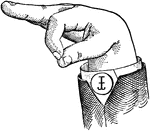
Vowels have a wide, firm, and free channel, whereby the breath is modified without friction or sibilation. &hellip; in representing vowels the hand suggests a wide and firm channel, by having the accented finger bent and its terminal phalanx brought firmly in contact with the terminal phalanx of the thumb. <p> Vowel positions are distinguished by always having the voice phalanx of the thumb accented and in contact with the terminal phalanx of the accented finger. This kind of accent is the strongest which can be given a finger, and so always takes precedence. Two modes of accentuation may not co-exist. Mixed Vowels have the palm thrown forward so as to assume a compromising position. Wide Vowel positions differ from analogous Primary Vowel positions by having straightened unaccented fingers, to denote "Wide." Low Vowels have the first or index finger accented.

Round Mixed Wide Low Vowel

Vowels have a wide, firm, and free channel, whereby the breath is modified without friction or sibilation.…
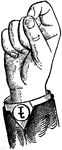
Vowels have a wide, firm, and free channel, whereby the breath is modified without friction or sibilation. &hellip; in representing vowels the hand suggests a wide and firm channel, by having the accented finger bent and its terminal phalanx brought firmly in contact with the terminal phalanx of the thumb. <p> Vowel positions are distinguished by always having the voice phalanx of the thumb accented and in contact with the terminal phalanx of the accented finger. This kind of accent is the strongest which can be given a finger, and so always takes precedence. Two modes of accentuation may not co-exist. Front Vowels have the palm in the anterior position. In Primary Vowel positions the accented voice phalanx of the thumb and the terminal phalanx of the accented finger overlap. None of the unaccented fingers are straightened. Low Vowels have the first or index finger accented.

Round Front Primary Low Vowel

Vowels have a wide, firm, and free channel, whereby the breath is modified without friction or sibilation.…
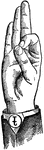
Vowels have a wide, firm, and free channel, whereby the breath is modified without friction or sibilation. &hellip; in representing vowels the hand suggests a wide and firm channel, by having the accented finger bent and its terminal phalanx brought firmly in contact with the terminal phalanx of the thumb. <p> Vowel positions are distinguished by always having the voice phalanx of the thumb accented and in contact with the terminal phalanx of the accented finger. This kind of accent is the strongest which can be given a finger, and so always takes precedence. Two modes of accentuation may not co-exist. Front Vowels have the palm in the anterior position. Wide Vowel positions differ from analogous Primary Vowel positions by having straightened unaccented fingers, to denote "Wide." Low Vowels have the first or index finger accented.

Round Front Wide Low Vowel

Vowels have a wide, firm, and free channel, whereby the breath is modified without friction or sibilation.…
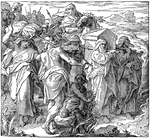
"And it came to pass, when the people removed from their tents, to pass over the Jordan, the priests that bare the ark of the covenant being before the people; and when they that bare the ark were come unto the Jordan, and the feet of the priests that bare the ark were dipped in the brink of the water (for the Jordan overfloweth all its banks all the time of harvest,) that the waters which came down from above stood, and rose up in one heap, a great way off, at Adam, the city that is beside Zarethan; and those that went down toward the sea of the Arabah, even the Salt Sea, were wholly cut off: and the people passed over right against Jericho. And the priests that bare the ark of the covenant of Jehovah stood firm on dry ground in the midst of the Jordan; and all Israel passed over on dry ground, until all the nation were passed clean over the Jordan. Joshua 3:14-17
<p>Illustration of the priests carrying the ark of the covenant into the Jordan River. Many people follow them into the dry river bed.

The Hebrews Crossing the Jordan

"And it came to pass, when the people removed from their tents, to pass over the Jordan, the priests…
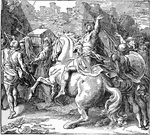
"And it came to pass on the seventh day, that they rose early at the dawning of the day, and compassed the city after the same manner seven times: only on the day they compassed the city seven times. And it came to pass at the seventh time, when the priests blew the trumpets, Joshua said unto the people, Shout; for Jehovah hath given you the city. And the city shall be devoted, even it and all that is therein, to Jehovah: only Rahab the harlot shall live, she and all that are with her in the house, because she hid the messengers that we sent. But as for you, only keep yourselves from the devoted thing, lest when ye have devoted it, ye take of the devoted thing; so would ye make the camp of Israel accursed, and trouble it. But all the silver, and gold, and vessels of brass and iron, are holy unto Jehovah: they shall come into the treasury of Jehovah. So the people shouted, and the priests blew the trumpets; and it came to pass, when the people heard the sound of the trumpet, that the people shouted with a great shout, and the wall fell down flat, so that the people went up into the city, every man straight before him, and they took the city." Joshua 6:15-20 ASV
<p>Illustration of the walls of Jericho falling as the Israelites surround the city. The ark of the covenant and priests blowing trumpets are seen on the left side of the picture.

Falling of the Walls of Jericho

"And it came to pass on the seventh day, that they rose early at the dawning of the day, and compassed…
Beach Grass (Calamagrostis arenaria or Ammophila arundinacea), also known as Seasand Reed and Mat Grass, is found almost exclusively on the first line of coastal sand dunes; their extensive systems of creeping underground stems or rhizomes allow them to thrive under conditions of shifting sands and high winds. It grows from two to three feet high with stout roots running from twenty or thirty feet long. The leaves are wide, rather short and of a sea-green color.

Beach Grass

Beach Grass (Calamagrostis arenaria or Ammophila arundinacea), also known as Seasand Reed and Mat Grass,…
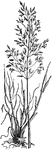
Wood Meadow Grass (Poa nemoralis) grows from eighteen inches to two feet high. It has a perennial, creeping root and an erect, slender, smooth stem. The upper sheath is no longer than its leaf, with a very short ligule, the base of the floret having a silky web suspending the calyx. The leaves are light green. The grass is common in light shady places and appears as a tall, rank grass, with a long, finely-arched panicle.

Wood Meadow Grass

Wood Meadow Grass (Poa nemoralis) grows from eighteen inches to two feet high. It has a perennial, creeping…
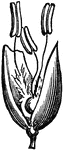
Wood Meadow Grass (Poa nemoralis) grows from eighteen inches to two feet high. It has a perennial, creeping root and an erect, slender, smooth stem. The upper sheath is no longer than its leaf, with a very short ligule, the base of the floret having a silky web suspending the calyx. The leaves are light green. The grass is common in light shady places and appears as a tall, rank grass, with a long, finely-arched panicle. It flowers in July. A magnified flower is seen here.

Wood Meadow Grass

Wood Meadow Grass (Poa nemoralis) grows from eighteen inches to two feet high. It has a perennial, creeping…
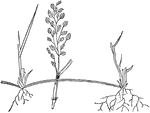
Creeping Meadow Grass (Eragrostis reptans) is found on the gravelly banks of rivers, from New England to the Western States. It is a delicate and beautiful grass, with short, nearly awl-shaped leaves, smooth, long spikelets, loose sheaths, slightly hairly on the margin;, panicles from one to two inches long. An annual growing fromn 6 to 15 inches high, it flowers in August. Shown is its panicle and creeping root-stalk , spikelets, palea, stamens, seed, and surface of a rootlet.

Creeping Meadow Grass

Creeping Meadow Grass (Eragrostis reptans) is found on the gravelly banks of rivers, from New England…
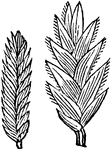
Creeping Meadow Grass (Eragrostis reptans) is found on the gravelly banks of rivers, from New England to the Western States. It is a delicate and beautiful grass, with short, nearly awl-shaped leaves, smooth, long spikelets, loose sheaths, slightly hairly on the margin; panicles from one to two inches long. An annual growing fromn 6 to 15 inches high, it flowers in August. Shown is a magnified spikelet.

Creeping Meadow Grass

Creeping Meadow Grass (Eragrostis reptans) is found on the gravelly banks of rivers, from New England…
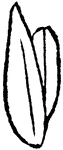
Creeping Meadow Grass (Eragrostis reptans) is found on the gravelly banks of rivers, from New England to the Western States. It is a delicate and beautiful grass, with short, nearly awl-shaped leaves, smooth, long spikelets, loose sheaths, slightly hairly on the margin; panicles from one to two inches long. An annual growing fromn 6 to 15 inches high, it flowers in August. The palea is shown here.

Creeping Meadow Grass

Creeping Meadow Grass (Eragrostis reptans) is found on the gravelly banks of rivers, from New England…
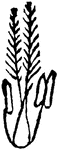
Creeping Meadow Grass (Eragrostis reptans) is found on the gravelly banks of rivers, from New England to the Western States. It is a delicate and beautiful grass, with short, nearly awl-shaped leaves, smooth, long spikelets, loose sheaths, slightly hairly on the margin; panicles from one to two inches long. An annual growing fromn 6 to 15 inches high, it flowers in August. The stamens are shown here.

Creeping Meadow Grass

Creeping Meadow Grass (Eragrostis reptans) is found on the gravelly banks of rivers, from New England…
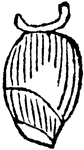
Creeping Meadow Grass (Eragrostis reptans) is found on the gravelly banks of rivers, from New England to the Western States. It is a delicate and beautiful grass, with short, nearly awl-shaped leaves, smooth, long spikelets, loose sheaths, slightly hairly on the margin; panicles from one to two inches long. An annual growing fromn 6 to 15 inches high, it flowers in August. The seed is shown here.

Creeping Meadow Grass

Creeping Meadow Grass (Eragrostis reptans) is found on the gravelly banks of rivers, from New England…
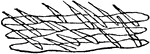
Creeping Meadow Grass (Eragrostis reptans) is found on the gravelly banks of rivers, from New England to the Western States. It is a delicate and beautiful grass, with short, nearly awl-shaped leaves, smooth, long spikelets, loose sheaths, slightly hairly on the margin; panicles from one to two inches long. An annual growing fromn 6 to 15 inches high, it flowers in August. A magnified surface of a rootlet is shown here.

Creeping Meadow Grass

Creeping Meadow Grass (Eragrostis reptans) is found on the gravelly banks of rivers, from New England…
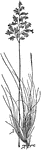
Sheep's Fescue (Festuca duriuscula) is known by its narrow panicle. It has short, tufted, bristle-shaped leaves of a grayish color with somewhat of a red tinge.It has two to six flowered spikelets. Grows from six to ten inches high in dense, perennial-rooted tufts. Flowers in June and July in dry pastures.

Sheep's Fescue Grass

Sheep's Fescue (Festuca duriuscula) is known by its narrow panicle. It has short, tufted, bristle-shaped…
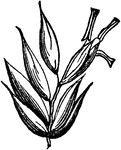
Sheep's Fescue (Festuca duriuscula) is known by its narrow panicle. It has short, tufted, bristle-shaped leaves of a grayish color with somewhat of a red tinge.It has two to six flowered spikelets. Grows from six to ten inches high in dense, perennial-rooted tufts. Flowers in June and July in dry pastures. The magnified flower is shown here.

Sheep's Fescue Grass

Sheep's Fescue (Festuca duriuscula) is known by its narrow panicle. It has short, tufted, bristle-shaped…
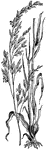
Tall Fescue Grass (Festuca elatior) is found commonly in moist meadows. The panicle is contracted, erect, or somewhat dropping with short branches spreading in all directions. The spikelets are crowded with five to ten flowers. Its rather remote and oblong. The leaves are flattish, linear, acute, and the stems two to four feet high. The root is perennial, fibrous, and somewhat creeping and forming in large tufts. Flowers in June and July.

Tall Fescue Grass

Tall Fescue Grass (Festuca elatior) is found commonly in moist meadows. The panicle is contracted, erect,…
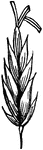
Tall Fescue Grass (Festuca elatior) is found commonly in moist meadows. The panicle is contracted, erect, or somewhat dropping with short branches spreading in all directions. The spikelets are crowded with five to ten flowers. Its rather remote and oblong. The leaves are flattish, linear, acute, and the stems two to four feet high. The root is perennial, fibrous, and somewhat creeping and forming in large tufts. Flowers in June and July. A magnified spiikelet is shown here.

Tall Fescue Grass

Tall Fescue Grass (Festuca elatior) is found commonly in moist meadows. The panicle is contracted, erect,…
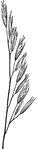
Wild Oat Grass (Danthonia spicata), also referred to as White Top grass, and Old Fog grass, is common in dry, sunny pastures, with a stem one foot high, slender with short leaves. Narrow sheaths, bearded. The panicle is simple and there are seven flowered spikelets. The lower palea broadly ovate, loosely hairy on the back, longer than its awl-shaped teeth. Perennial and flowers in June.

Wild Oat Grass

Wild Oat Grass (Danthonia spicata), also referred to as White Top grass, and Old Fog grass, is common…
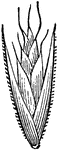
Wild Oat Grass (Danthonia spicata), also referred to as White Top grass, and Old Fog grass, is common in dry, sunny pastures, with a stem one foot high, slender with short leaves. Narrow sheaths, bearded. The panicle is simple and there are seven flowered spikelets. The lower palea broadly ovate, loosely hairy on the back, longer than its awl-shaped teeth. Perennial and flowers in June. Shown is a magnified spikelet.

Wild Oat Grass

Wild Oat Grass (Danthonia spicata), also referred to as White Top grass, and Old Fog grass, is common…
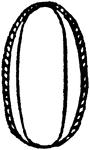
Wild Oat Grass (Danthonia spicata), also referred to as White Top grass, and Old Fog grass, is common in dry, sunny pastures, with a stem one foot high, slender with short leaves. Narrow sheaths, bearded. The panicle is simple and there are seven flowered spikelets. The lower palea broadly ovate, loosely hairy on the back, longer than its awl-shaped teeth. Perennial and flowers in June. Shown is a magnified spikelet. Shown is the upper pale.

Wild Oat Grass

Wild Oat Grass (Danthonia spicata), also referred to as White Top grass, and Old Fog grass, is common…
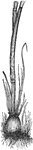
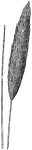
Timothy Grass is commonly grown for cattle feed and, in particular, as hay for horses. It is relatively high in fibre, especially when cut late. It is considered part of the standard mix for grass hay and provides quality nutrition for horses. Timothy is a staple food for domestic pet rabbits, guinea pigs,chinchillas, and degus, often making up the bulk of their diet. Plants persist through the winter. Dead, straw-colored flowering stems may persist, but only for a short time, and are recognized by the distinctive spike-like inflorescence. This picture represents the bulb fully developed and mature, form which the stalk was cut.

Timothy Grass

Timothy Grass is commonly grown for cattle feed and, in particular, as hay for horses. It is relatively…
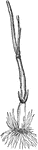
Timothy Grass is commonly grown for cattle feed and, in particular, as hay for horses. It is relatively high in fibre, especially when cut late. It is considered part of the standard mix for grass hay and provides quality nutrition for horses. Timothy is a staple food for domestic pet rabbits, guinea pigs,chinchillas, and degus, often making up the bulk of their diet. Plants persist through the winter, but if my any means, the green portion is severed, at any season of the year, the result will be as we see in the picture here, the death of the plant. Dead, straw-colored flowering stems may persist, but only for a short time, and are recognized by the distinctive spike-like inflorescence.

Timothy Grass

Timothy Grass is commonly grown for cattle feed and, in particular, as hay for horses. It is relatively…
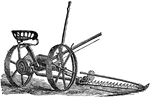
The Buckeye mower was manufactured between 1875 and 1899 by Buckeye Mower and Reaper Co. Considered a outstanding mower, with top quality material and workmanship, easy handling, durablity, with minimal repairs needed in comparision to other mowers of its time.

Buckeye Mower

The Buckeye mower was manufactured between 1875 and 1899 by Buckeye Mower and Reaper Co. Considered…
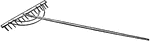
Farmers have said that the common hand-rake operates very well. It is preferred among farmers because it saves money and time.

Hand Rake

Farmers have said that the common hand-rake operates very well. It is preferred among farmers because…
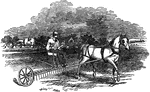
Horse-rakes are on a footing different from mowing machines. Grass may be cut in the morning, in the evening, or in a cloudy day. But the hay must be raked at the very right time, or it may be entirely spoiled.

Carpenter's Improved Horse-rake

Horse-rakes are on a footing different from mowing machines. Grass may be cut in the morning, in the…
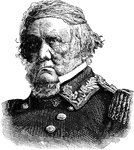
General Winfield Scott (1786 - 1866) was a United States Army general, and unsuccessful presidential candidate of the Whig party in 1852. General Scott is most known for serving on active duty as a general longer than any other man in American history and is rated as the most ablest American commander of his time. He is also known as "Old Fuss and Feathers" and "Grand Old Man of the Army."

General Winfield Scott

General Winfield Scott (1786 - 1866) was a United States Army general, and unsuccessful presidential…
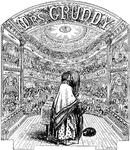
Title page made for Mrs. Grundy on Saturday July 8th, 1865. Mrs. Grundy was a short-lived periodical published after the Civil War.

Mrs. Grundy Page Title

Title page made for Mrs. Grundy on Saturday July 8th, 1865. Mrs. Grundy was a short-lived periodical…
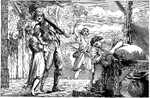
Two husbandmen heading off to work during the reign of King Solomon. I Kings chapter 4 describes a time of peace and plenty in the land.

Husbandmen in the Time of Solomon Going Forth to Work

Two husbandmen heading off to work during the reign of King Solomon. I Kings chapter 4 describes a time…

Each detour shall be adequately marked with standard temporary route signs and destination signs. Detour signs in TTC incident management situations may have a black legend and border on a fluorescent pink background. The DETOUR sign should be used for unnumbered highways, for emergency situations, for periods of short durations, or where, over relatively short distances, road users are guided along the detour and back to the desired highway without route signs. A Street Name sign should be placed above, or the street name should be incorporated into, a DETOUR sign to indicate the name of the street being detoured.

Detour, Black and White

Each detour shall be adequately marked with standard temporary route signs and destination signs. Detour…

Each detour shall be adequately marked with standard temporary route signs and destination signs. Detour signs in TTC incident management situations may have a black legend and border on a fluorescent pink background. The DETOUR sign should be used for unnumbered highways, for emergency situations, for periods of short durations, or where, over relatively short distances, road users are guided along the detour and back to the desired highway without route signs. A Street Name sign should be placed above, or the street name should be incorporated into, a DETOUR sign to indicate the name of the street being detoured.

Detour, Color

Each detour shall be adequately marked with standard temporary route signs and destination signs. Detour…

Each detour shall be adequately marked with standard temporary route signs and destination signs. Detour signs in TTC incident management situations may have a black legend and border on a fluorescent pink background. The DETOUR sign should be used for unnumbered highways, for emergency situations, for periods of short durations, or where, over relatively short distances, road users are guided along the detour and back to the desired highway without route signs. A Street Name sign should be placed above, or the street name should be incorporated into, a DETOUR sign to indicate the name of the street being detoured.

Detour, Outline

Each detour shall be adequately marked with standard temporary route signs and destination signs. Detour…
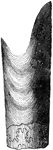
Baculites is a genus of extinct marine animals in the Phylum Mollusca and Class Cephalopoda. They are a nearly straight-shelled type of heteromorph ammonite. This fragment is of a straight chambered shell, Baculites ovatus of Mesozoic Time, belonging to the Ammonite family.

Coiled Chambered Shell

Baculites is a genus of extinct marine animals in the Phylum Mollusca and Class Cephalopoda. They are…
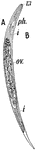
Threadworm (Nematodes) or Roundworm is composed of many different species. In all the body is slender as in the "vinegar eel". This small worm, a millimeter or two in length, lives on the various forms of mold that grow in fermenting fruit juices. A tough cuticle surrounds the body, perserving its shape and at the same time protecting the delicate organs against the action of the acids in which it lives. In the treadworm the eggs develop within the body and the young are born with the form of the parent.

Threadworm

Threadworm (Nematodes) or Roundworm is composed of many different species. In all the body is slender…
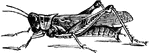
Locust is the swarming phase of short-horned grasshoppers of the family Acrididae. These are species that can breed rapidly under suitable conditions and subsequently become gregarious and migratory. They form bands as nymphs and swarms as adults&mdash;both of which can travel great distances, rapidly stripping fields and greatly damaging crops.

Locust

Locust is the swarming phase of short-horned grasshoppers of the family Acrididae. These are species…
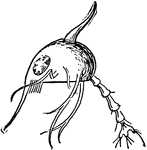
Crabs are decapod crustaceans of the infraorder Brachyura, which generally have a very short projecting tail. The body of the crab in its first larval stage is composed of short, globular portion, furnished with conspicuous long spines and a relaively long, jointed tail. This is call the zo&euml;a stage.

Metamorphosis of a Crab

Crabs are decapod crustaceans of the infraorder Brachyura, which generally have a very short projecting…
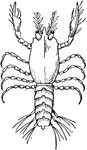
Crabs are decapod crustaceans of the infraorder Brachyura, which generally have a very short projecting tail. After the first stage, the zo&euml;a changes into a stage called the megalops, which has many characteristics of the adult crab condition. In this stage the crab looks very much like a tiny lobster or shrimp.

Metamorphosis of a Crab

Crabs are decapod crustaceans of the infraorder Brachyura, which generally have a very short projecting…
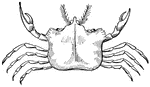
Crabs are decapod crustaceans of the infraorder Brachyura, which generally have a very short projecting tail. After the first stage, the zo&euml;a changes into a stage called the megalops, which has many characteristics of the adult crab condition. In this stage the crab looks very much like a tiny lobster or shrimp. In the final stage the tail disappears and the body widens.

Metamorphosis of a Crab

Crabs are decapod crustaceans of the infraorder Brachyura, which generally have a very short projecting…
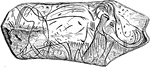
Animals alive today are but a fraction of all that have been before our time. We are continually discovering species of animals long since vanished form the fact of the earth. The mammoth is notable the among fossilized remains that have been found frozen in the ice of northern Siberia. In France this drawing of a mammoth was found, evidently sketched by a man living in that time.

Mammoth

Animals alive today are but a fraction of all that have been before our time. We are continually discovering…
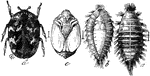
"Figure 9- Anthrenus scrofulariae, enlarged; the short line shows natural size. a, b, larvae; c, pupa; d, imago" Elliot Coues, 1884 Carpet beetles are very small more oval to rounded shape. Their bright colorful scales vary in shades of tan, brown, red, gray, and white.

Various Stages of a Carpet Beetle

"Figure 9- Anthrenus scrofulariae, enlarged; the short line shows natural size. a, b, larvae; c, pupa;…
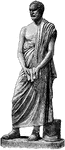
Demosthenes was a prominent Greek statesman and orator of ancient Athens. His orations constitute a significant expression of contemporary Athenian intellectual prowess and provide an insight into the politics and culture of ancient Greece during the 4th century BC. Demosthenes learned rhetoric by studying the speeches of previous great orators. He delivered his first judicial speeches at the age of 20, in which he argued effectively to gain from his guardians what was left of his inheritance. For a time, Demosthenes made his living as a professional speech-writer (logographer) and a lawyer, writing speeches for use in private legal suits.

Sculpture of Demosthenes

Demosthenes was a prominent Greek statesman and orator of ancient Athens. His orations constitute a…
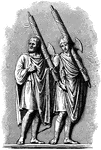
An illustration of two lictors, members of a special class of Roman civil servants. Lictors had special tasks of attending and guarding magistrates of the Roman Republic and Empire who held imperium; essentially, a bodyguard. The origin of the tradition of lictors goes back to the time when Rome was a kingdom, perhaps acquired from their Etruscan neighbours.

Roman Civil Servants

An illustration of two lictors, members of a special class of Roman civil servants. Lictors had special…
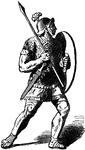
Illustration of a Roman soldier, also called a legionary, carrying a shield, short sword, and a short javelin for throwing. He is wearing sandals, traditional armor, and a helmet.

A Roman Soldier, or Legionary, with a Short Javelin and Shield

Illustration of a Roman soldier, also called a legionary, carrying a shield, short sword, and a short…

Titus Flavius Vespasianus, commonly known as Vespasian (November 17, 9 &ndash; June 23, 79), was a Roman Emperor who reigned from 69 A.D. until his death in 79 A.D. Vespasian was the founder of the short-lived Flavian dynasty, which ruled the Roman Empire between 69 A.D. and 96 A.D. He was succeeded by his sons Titus (79&ndash;81) and Domitian (81&ndash;96).

Coin of Vespasian

Titus Flavius Vespasianus, commonly known as Vespasian (November 17, 9 – June 23, 79), was a Roman…
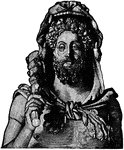
Lucius Aurelius Commodus Antoninus (31 August 161 – 31 December 192) was a Roman Emperor who ruled from 180 to 192 (also with his father, Marcus Aurelius, from 177 until 180). The name given here was his official name at his accession to sole rule; see Changes of name for earlier and later forms. His accession as emperor was the first time a son had succeeded his father since Titus succeeded Vespasian in 79. Commodus was the first emperor "born to the purple"; i.e., born during his father's reign.

Bust of Commodus

Lucius Aurelius Commodus Antoninus (31 August 161 – 31 December 192) was a Roman Emperor who ruled…
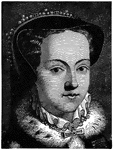
Mary I (18 February 1516 &ndash; 17 November 1558), was Queen of England and Queen of Ireland from 19 July 1553 until her death. The fourth crowned monarch of the Tudor dynasty, she is remembered for restoring England to Roman Catholicism after succeeding her short-lived half brother, Edward VI, to the English throne. In the process, she had almost 300 religious dissenters burned at the stake in the Marian Persecutions, earning her the sobriquet of "Bloody Mary". Her re-establishment of Roman Catholicism was reversed by her successor and half-sister, Elizabeth I.

Mary I of England

Mary I (18 February 1516 – 17 November 1558), was Queen of England and Queen of Ireland from 19…
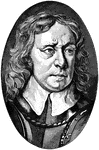
Oliver Cromwell (born April 25, 1599 Old Style, died September 3, 1658 Old Style) was an English military and political leader best known for his involvement in making England into a republican Commonwealth and for his later role as Lord Protector of England, Scotland, and Ireland. He was one of the commanders of the New Model Army which defeated the royalists in the English Civil War. After the execution of King Charles I in 1649, Cromwell dominated the short-lived Commonwealth of England, conquered Ireland and Scotland, and ruled as Lord Protector from 1653 until his death in 1658.

Oliver Cromwell

Oliver Cromwell (born April 25, 1599 Old Style, died September 3, 1658 Old Style) was an English military…
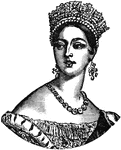
Victoria (Alexandrina Victoria; 24 May 1819 &ndash; 22 January 1901) was from 20 June 1837 the Queen of the United Kingdom of Great Britain and Ireland and from 1 May 1876 the first Empress of India of the British Raj until her death. Her reign as the Queen lasted 63 years and seven months, longer than that of any other British monarch before or (as of 2009) since. The period centered on her reign is known as the Victorian era, a time of industrial, political, and military progress within the United Kingdom.

Queen Victoria

Victoria (Alexandrina Victoria; 24 May 1819 – 22 January 1901) was from 20 June 1837 the Queen…
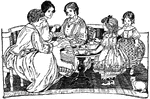
An illustration of three women and two girls having tea and snacks.

Three Women & Two Girls Having Tea

An illustration of three women and two girls having tea and snacks.

"The sceptre with the dove is of gold, three feet seven inches long; the circumference of the handle is three inches, and two inches and a quarter at the end of the staff; the pomel is decorated with a fillet of table diamonds and other precious stones; the mound at the top is enriched with a band of rose diamonds; upon the mound is a small cross of Calvary, over which is a dove with its wings expanded, as the emblem of mercy.SCEPTRE. A royal staff; an ensign of sovereignty borne in the hand. It was originally a javelin without a head. Sceptres of the present time are splendidly decorated with jewellery. " -Hall, 1862

Sceptre with the Dove

"The sceptre with the dove is of gold, three feet seven inches long; the circumference of the handle…

"The royal Sceptre with the Cross is of gold; the handle is plain, and the upper part wreathed; it is in length two feet nine inches, the fleur-de-lis of six leaves; the mound, and the cross above it, are richly embellished with amethysts and diamonds.SCEPTRE. A royal staff; an ensign of sovereignty borne in the hand. It was originally a javelin without a head. Sceptres of the present time are splendidly decorated with jewellery." -Hall, 1862

Sceptre with the Cross

"The royal Sceptre with the Cross is of gold; the handle is plain, and the upper part wreathed; it is…
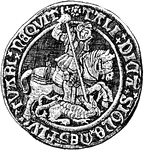
"Obverse. George-noble of Henry VIII. GEORGE-NOBLE. An English gold coin of the reign of Henry VIII., worth at the time 6s. 8d. The name George (derived from the figure of St. George on the obverse of the coin) was given it to distinguish it from the earlier English gold coins named nobles." -Whitney, 1911

Obverse Side of George-Noble

"Obverse. George-noble of Henry VIII. GEORGE-NOBLE. An English gold coin of the reign of Henry VIII.,…
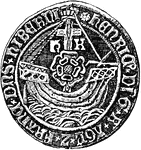
"Reverse. George-noble of Henry VIII. GEORGE-NOBLE. An English gold coin of the reign of Henry VIII., worth at the time 6s. 8d. The name George (derived from the figure of St. George on the obverse of the coin) was given it to distinguish it from the earlier English gold coins named nobles." -Whitney, 1911

Reverse Side of George-Noble

"Reverse. George-noble of Henry VIII. GEORGE-NOBLE. An English gold coin of the reign of Henry VIII.,…