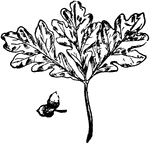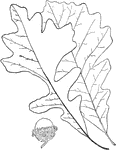
Leaves - simple; alternate; lobed (the edge of the lobes entire, or of the larger ones sometimes wavy). Outline - reverse egg-shape. Apex - of the lobes, rounded. Base - wedge-shape. Leaf - six to fifteen inches long (the longest of the oak-leaves); smooth above, downy beneath; the lobes usually long and rather irregular, the middle ones longest and often extending nearly to the middle rib. Bark - of the young branches always marked with corky wings or ridges. Acorns - large, with short stems. Cup - two thirds to two inches across, roughly covered with pointed scales, and heavily fringed around the nut. Nut - very large (one to one and a half inches long); broad egg-shape; one half to two thirds or often wholly enclosed by the cup. Found - along the coast of Maine southward as far as the Penobscot, in Western New England, in Western New York, in Pennsylvania, and thence westward to the foot-hills of the Rocky Mountains of Montana, and from Central Nebraska and Kansas southwest to the Indian Territory and Texas. It is found farther west and northwest than any other oak of the Atlantic forests. In the prairie region it forms a principal growth of the "Oak Openings." General Information - One of the most valuable and widely distributed oaks in North America, growing sixty to eighty feet in height, or more, with hard, tough wood resembling that of the White Oak. "The most interesting thing about this tree, perhaps is its power, quite unknown in the other White Oaks, of adapting itself to very different climatic conditions, which enables it to live in the humid climate of Maine and Vermont, to flourish in the somewhat drier climate of the Mississippi Valley, and to exist (still farther west) in the driest and most exposed region in habited by any of the Eastern America Oaks." - Sargent. Q. m. olivaformis is a variety found only in a few districts (near Albany and in Pennsylvania), having narrower and rather more deeply lobed leaves. Quercus, possible from a Celtic word meaning to inquire, because it was among the oaks that the Druids oftenest practised their rites.

Genus Quercus, L. (Oak)

Leaves - simple; alternate; lobed (the edge of the lobes entire, or of the larger ones sometimes wavy).…
Leaves - simple; alternate; edge quite deeply wavy-toothed. Outline - reverse egg-shape or oval. Apex - blunt-pointed. Base - pointed. Leaf - five to eight inches long; smooth, and rather bright green above; whitish-downy beneath, becoming almost silvery-white; often with a rather deep hollow just below the middle, and usually abruptly spreading above; the teeth unequal, longest toward the middle of the leaf, sometimes almost long enough to be called lobes; mostly rounded at the apex, but sometimes ending in a hard point; the main ribs prominent and rust-colored. Bark - of trunk, grayish-white, dividing into large, flat scales. Acorns - usually in pairs on a stem one and a quarter to three inches long. Cup - rounded, rather thin, rough, with sharp scales; the upper scales bristle-tipped, forming a border, or sometimes a fringe, along the edge; slightly downy within. Nut - one inch or less in length, egg-shape; sweet. October. Found - from Southern Maine and the Upper St. Lawrence to Southeastern Iowa and Western Missouri, south to Delaware and along the Alleghany Mountains to Northern Georgia; along borders of streams and in swamps, in deep, rich soil. Its finest growth is in the region of the Great Lakes. General Information - A tree thirty to sixty feet high or more, with wood similar in value to that of the White Oak. Quercus, possible from a Celtic word meaning to inquire, because it was among the oaks that the Druids oftenest practised their rites.

Genus Quercus, L. (Oak)

Leaves - simple; alternate; edge quite deeply wavy-toothed. Outline - reverse egg-shape or oval. Apex…
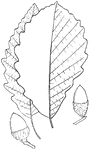
Leaves - simple; alternate; edge coarsely and evenly wavy-toothed. Outline - reverse egg-shape or sometimes oval. Apex - blunt-pointed. Base - rounded or slightly pointed, and often somewhat unequal. Leaf - four to seven inches long, two to four inches wide; smooth above, paler and downy beneath. Teeth - twelve to twenty-six, decreasing evenly and uniformly to the apex. Bark - of trunk, gray; furrowed up and down with continuous and often very deep furrows, with sharp ridges between. Acorns - usually in pairs on a stem about one half of an inch long, or often shorter. Cup - rounded or somewhat top-shaped, with minute scales, or warty. Nut - usually long egg-shape or long oval; one to one and one fourth inches long; brown; about one third covered by the cup; sweet. September, October. Found - from Eastern Massachusetts to New York, southward to Delaware, along the Alleghany Mountains to Alabama and westward to Central Kentucky and Tennessee. General Information - A tree forth to seventy feet in height, with strong, hard wood, largely used in fencing, or railroad ties, etc.; of less value than that of the White Oak. Its bark is very rich in tannin. Quercus, possible from a Celtic word meaning to inquire, because it was among the oaks that the Druids oftenest practised their rites.

Genus Quercus, L. (Oak)

Leaves - simple; alternate; edge coarsely and evenly wavy-toothed. Outline - reverse egg-shape or sometimes…
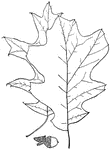
Leaves - simple; alternate; edge lobed (edge of the lobes mostly entire, but oftenest with a few teeth toward the end). Outline - reverse egg-shape or oval. Base - usually rounded. Ends of the lobes and of the few teeth, sharp and bristle-pointed, especially when young. Leaf - five to eight inches long; three to five inches wide; very variable. The two types, a and b, are often found on the same tree; b is a variation toward the leaf of the Scarlet Oak. The upper surface is roughish, becoming smoother when mature; the undersurface, rusty-downy until mid-summer, when the down mostly disappears, except from the angles of the ribs. Bark - of trunk, blackish and deeply and roughly furrowed, with an inner bark that is very thick and yellow and bitter. Acorns - variable; usually small; on short stems. Cups - thick; somewhat top-shaped; scales distinct and rather large. . Nut - one half to two thirds of an inch long; rounded; nearly one third covered by the cup. Kernel, bright yellow or orange and bitter. October. Found - from Southern Maine southward and westward. Very common, especially in the Atlantic forests. General Information - A tree fifty to a hundred feet high, with wood that is inferior to that of the White Oak. The yellow inner bark (quercitron of the shops) is a valuable dye, and is rich in tannin. Late in the autumn the leaves turn to a rich yellowish-brown or russet.   It is very probable that the "Black Oak" and the "Scarlet Oak" ought to be considered as one, and described, not as species and variety, but as slightly different forms of the single species Q. coccinea. Though the most distinctive leaves of the "Black Oak" are easily recognized, often others are so nearly like those of the "Scarlet Oak" that it is not easy to distinguish between then; and the same is true of the fruit and the bark. Michaux f. says: "The only constant difference between the acorns of the Scarlet Oak and the Black Oak is in the kernel, which is white in the Scarlet Oak and yellow in the Black Oak."  The Gray Oak (Q. c., ambigua, Gray) is a variety sometimes found along the northeastern boundary of the States (as far as Lake Champlain) and northward. It combines the foliage of the Red Oak with the acorn of the Scarlet Oak. Quercus, possible from a Celtic word meaning to inquire, because it was among the oaks that the Druids oftenest practised their rites.

Genus Quercus, L. (Oak)

Leaves - simple; alternate; edge lobed (edge of the lobes mostly entire, but oftenest with a few teeth…
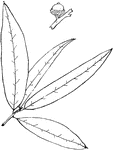
Leaves - simple; alternate; edge entire. Outline - long and narrow. Apex - pointed and bristle-tipped. Base - pointed. Leaf - three to four inches long (sometimes five); one half to seven eighths of an inch wide; rather thick and stiff; smooth and shining above; somewhat dull beneath; very young leaves, light green above and soft, white-downy beneath. Bark - thick and smoothish. Acorns - small. nearly stemless. Cup - rather shallow, saucer-shaped, or somewhat rounded top-shape. Nut - about three eighths of an inch long, rounded, brown; Kernel, bitter and bright orange. October. Found - from Staten Island and New Jersey southward along the coast to Northeastern Florida and the Gulf States, and from Kentucky southwestward. Usually on the borders of swamps and in sandy woods. General Information - a tree thirty to fifty feet high, with poor wood. Quercus, possible from a Celtic word meaning to inquire, because it was among the oaks that the Druids oftenest practised their rites.

Genus Quercus, L. (Oak)

Leaves - simple; alternate; edge entire. Outline - long and narrow. Apex - pointed and bristle-tipped.…
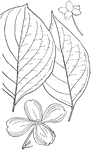
Leaves - simple; opposite; edge entire. Outline - egg-shape, or often broad oval, or reverse egg-shape. Apex - pointed, often taper-pointed. Base - pointed and usually slightly unequal. Leaf/Stem - short (about one half inch). Leaf - three to five inches long; smooth above; pale and nearly smooth beneath; with the whitish ribs very distinct and curved. Bark - of trunk, blackish and rough, with short, broken ridges. The bark, especially of the roots, is very bitter and is used as a tonic. Flowers - The real flowers are greenish-yellow, in a small rounded bunch; but this bunch is surrounded by four large, petal-like leaves, white and often tinged with pink, more than an inch in length, reverse egg-shaped, and ending in a hard, abruptly turned point. The appearance is of a single large flower. The tree blossoms in May before the leaves are fully set. Fruit - The "Flower" is succeeded by a bunch of oval berries that turn bright red as they ripen, making the tree in the autumn, with its richly changing foliage, nearly as attractive as in the spring. Found - in rich woods, from New England to Minnesota, and southward to Florida and Texas. It is very common, especially at the South. General Information - A finely shaped, rather flat-branching tree, usually twelve to thirty feet high, but dwindling, northward, to the dimensions of a shrub; one of the most ornamental of all our native flowering trees. Its character throughout the extent of its range would seem to warrant the recognition of its blossom as the "national flower." Cornus, from a Greek word meaning horn, because of the hardness of the wood.

Flowering Dogwood

Leaves - simple; opposite; edge entire. Outline - egg-shape, or often broad oval, or reverse egg-shape.…
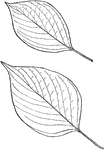
Leaves - simple, alternate (often crowded at the ends of the branches); edge entire. Outline - broadly oval or egg-shape or reverse egg-shape. Apex - pointed. Base - slightly pointed. Leaf/Stem - one inch long or more. Leaf - about three to four inches long, sometimes yellowish-green; smooth above; whitish beneath, and slightly rough between the prominent curved ribs, seldom entirely flat, usually in clusters at the ends of the branches. Bark - of the branches, smooth, yellowish-green, with whitish streaks. Flowers - yellowish in loose flat clusters. June. Fruit - very dark blue when ripe, on reddish stems. August. Found - in low rich woods and along streams, from New Brunswick through the Northern States, and southward along the Alleghany Mountains to Northern Georgia and Alabama. General Information - A small tree or shrub, ten to twenty feet high, with wide-spreading branches and flattish top. A "Shaker Medicine" is made from its bitter bark. Cornus, from a Greek word meaning horn, because of the hardness of the wood.

Dogwood Leaves

Leaves - simple, alternate (often crowded at the ends of the branches); edge entire. Outline - broadly…
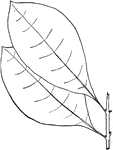
Leaves - simple; opposite; edge entire. Outline - oval, long oval, or reverse egg-shape. Apex - pointed (or sometimes rounded). Base - pointed. Leaf - smooth. Flowers - with narrow petals nearly an inch in length, snow-white, in long, loose, and drooping clusters. June. Fruit - one half to two thirds of an inch long, oval, purplish, with one stony seed. Found - along the banks of streams from New Jersey and Southern Pennsylvania southward. Common and very ornamental in cultivation. General Information - A small tree eight to twenty-five feet high, or often a shrub. Chionanthus, from two Greek words meaning "snow" and "flowers."

Genus Chionanthus, L. (Fringe Tree)

Leaves - simple; opposite; edge entire. Outline - oval, long oval, or reverse egg-shape. Apex - pointed…
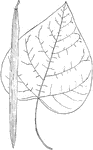
Leaves - simple; opposite; edge entire. Outline - broad egg-shape or heart-shape. Apex - pointed. Base - heart-shape. Leaf - five to eight inches wide; smooth above, downy below, especially on the ribs. Bark - of trunk, a silver-gray, only slightly furrowed. Flowers - very showy and fragrant, in large, upright pyramid-shaped clusters; white or violet-tinged, spotted inside with yellow and purple. July. Fruit - in long, rounded pods (six to twelve inches long, about half an inch in diameter), with the seeds winged and fringed. They often remain throughout the winter. October. Found - new very widely naturalized throughout the Middle and Southern Atlantic States, though formerly a rare and local Southern tree. General Information - A low, very ornamental tree, usually twenty to thirty feet high. Its seeds and bark are considered medicinal. Another species, C. speciosa, Ward, larger and of more value, is sometimes met with in Southern Illinois and the adjoining States. Catalpa is probably a corruption of the Indian word Catawba, which was the name of an important tribe that occupied a large part of Georgia and the Carolinas.

Genus Catalpa, Scop., Walt. (Catalpa)

Leaves - simple; opposite; edge entire. Outline - broad egg-shape or heart-shape. Apex - pointed. Base…
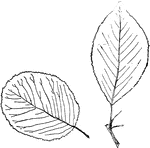
Leaves - simple, opposite; finely and sharply toothed. Outline - broadly oval, or broadly reverse egg-shape. Apex - rounded, sometimes pointed. Base - rounded, sometimes slightly pointed. Quite variable. Leaf/Stem - short and smooth, the edges slightly winged, the wings straight. Leaf - about one and a half to two inches long; smooth; shining above. Flowers - white, in rather large and flat, stemless bunches, at the ends of branches. May. Berries - oval, blackish, sweet and edible. Found - in Connecticut and Southern New York to Michigan and southward. General Information - A small tree fifteen to twenty feet high, or oftenest at the North a low, much-branching shrub. Usually with some of its branches stunted and bare. The tonic bark is sometimes used medicinally.

Genus Viburnum, L. (Haw and Viburnum)

Leaves - simple, opposite; finely and sharply toothed. Outline - broadly oval, or broadly reverse egg-shape.…
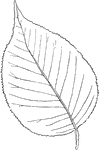
Leaves - simple; opposite; edge closely and sharply toothed. Outline - egg-shape. Apex - pointed. Base - round. Quite variable. Leaf/Stem - winged on both sides with a wavy border; when young, sprinkled with brownish glands. Leaf - about three to four inches long, and half as wide or more; smooth. Flowers - white, in flat, stemless clusters. May, June. Fruit - one half inch long; oval; sweetish; red, becoming almost black when ripe; edible. Found - from Hudson's Bay through the Northern States, southward to Georgia. Common in swamps and rich, moist soil. General Information - A tree fifteen to twenty feet high, with hard, ill-smelling wood.

Genus Viburnum, L. (Haw and Viburnum)

Leaves - simple; opposite; edge closely and sharply toothed. Outline - egg-shape. Apex - pointed. Base…
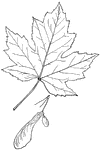
Leaves - simple; opposite; edge deeply lobed, with the lobes unequally notched and toothed. Outline - rounded, with five lobes (the lowest pair much the smallest), and with the hollows between the lobes pointed and usually extending half way to the base of the leaf. Apex - of lobes, pointed. Base - heart-shaped or nearly squared. Leaf - silvery white beneath; downy when young, becoming smooth. Flowers - yellowish-green; woolly when young, becoming nearly smooth; on stems about one inch long, with very large, wide-spreading wings (two to three inches long), one of which is often undeveloped. July, August. Found - widely distributed, but most common west of the Alleghany Mountains and southward. General Information - A tree thirty to fifty feet high, with soft, white wood of comparatively slight value.

Genus Acer, L. (Maple)

Leaves - simple; opposite; edge deeply lobed, with the lobes unequally notched and toothed. Outline…
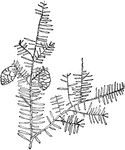
Leaves - simple; indeterminate, in position because of their closeness; arranged singly in two flat distinctly opposite ranks up and down the branchlets. Leaf - one half inch long, narrow; blunt sometimes minutely toothed toward the apex; flat; green above; silvery white beneath. Bark - reddish and scaly; when old, somewhat roughened by long, shallow furrows. Cones - very small (three fourths of an inch long); drooping; oval or egg-shape. Scales - few, thin, rounded and entire. The seed with the wing is about three fourths the length of the scale. The cone does not fall apart when ripe. Found - from Southern New Brunswick and the Valley of the St. Lawrence through the Northern States to Delaware, and along the Alleghany Mountains to Alabama. Common northward, often forming large forests. General Information - An evergreen tree, sixty to eighty feet high, irregular in outline, very graceful, especially when young, with light and delicate foliage and horizontal or drooping branches. The timber is very coarse; the bark much used for tanning, and with medicinal qualities.

Genus Tsuga, Carr. (Hemlock)

Leaves - simple; indeterminate, in position because of their closeness; arranged singly in two flat…
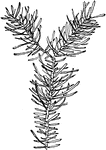
Leaves - Simple; indeterminate in position because of their closeness; arranged singly up and down the branchlets, at first radiating about equally on every side, afterward flattened into two ranks, as in the Hemlock. Leaf - one half to one inch long, narrow; apex blunt or notched; edge entire; flat, with a grooved line above and a corresponding raised line below; bright green above; silvery white below. Bark - smooth and unbroken (especially when young), and usually covered with "blisters." Cones - two to four inches long, one inch broad, erect, at the sides of the branchlets; violet-colored. Scales - thin and flat, broad and rounded. The thin bracts between the scales are tipped with a slender bristle. The cone falls apart when ripe. Found - from the far North through the Northern States to Pennsylvania, and along the Alleghany Mountains to the high peaks of West Virginia. Common northward in damp forests. General Information - A slender, evergreen tree, twenty to sixty feet high; pyramid-shaped, with regular horizontal branches; its wood is very light and soft. From the "blisters," which form under the bark of the trunk and branches, the valuable Canada balsam is obtained. The tree is short-lived, and therefore of less value in cultivation.

Genus Abies, Link. (Fir)

Leaves - Simple; indeterminate in position because of their closeness; arranged singly up and down the…
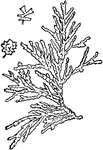
Leaves - simple; indeterminate in position because of their smallness and closeness. They are scale-like, somewhat egg-shape, overlapping each other, and closely pressed in four rows up and down the very flat branchlets. Each leaf has at its centre a raised gland, easily distinguished if held between the eye and the light. Bark - fibrous. The "spray" (formed from the flat branchlets) is itself flat and very delicate and of a dull green. Cones - about one fourth of an inch in diameter, round, variously placed, compact, purplish as they ripen; opening when ripe toward the centre line (i. e., not toward its base). Scales - fleshy, shield-shaped and apparently fastened near their centres, with the edge several-pointed, and with a sharp point or knob in the centre. Seeds - usually four to eight under each scale, oval, with wide wings at the sides. Found - in deep, cold swamps (filling them densely and exclusively), from Southern Maine along the coast to Florida, and along the Gulf coast to Mississippi. General Information - A tapering evergreen tree, thirty to seventy feet high, with light and durable wood, largely used in boat-building, for wooden-ware, shingles, etc.

Genus Chamaecyparis, Spach. (White Cedar)

Leaves - simple; indeterminate in position because of their smallness and closeness. They are scale-like,…
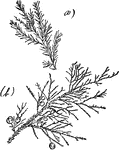
Leaves - simple; indeterminate in position because of their smallness and closeness. They are arranged in four rows up and down the branchlets. In younger or rapidly growing sprouts the leaves are awl-shaped or needle-shaped, somewhat spreading from the branch, very sharp and stiff, placed in pairs (or sometimes in threes), usually about one fourth of an inch long, and with the fine branchlets, which they cover, rounded. In the older and slower-growing trees the leaves are scale-like and overlapping, egg-shape, closely pressed to the branchlets which they cover, and with the branchlets square. As the branchlets grow, the lower scales sometimes lengthen and become dry and chaffy and slightly spreading. Bark - brown and sometimes purplish-tinged, often shredding off with age and leaving the trunk smooth and polished. Berries - about the size of a small pea, closely placed along the branchlets, bluish, and covered with a whitish powder. Found - in Southern Canada, and distributed nearly throughout the United States - more widely than any other of the cone-bearing trees. General information - An evergreen tree, fifteen to thirty feet high (much larger at the South), usually pyramid-shaped, with a rounded base, but varying very greatly, especially near the coast, where it is often twisted and flattened into angular and weird forms. The wood is very valuable, light, straight-grained, durable, fragrant. It is largely used for posts, for cabinet-work, for interior finish, and almost exclusively in the making of lead pencils. The heart-wood is usually a dull red (whence the name), the sap-wood white.  Among the most picturesque objects in the Turkish landscape, standing like sentinels, singly or in groups, and slender and upright as a Lombardy Poplar, are the black cypress trees (C. sempervirens). They mark the sites of graves, often of those which have long since disappeared. In America, more than any other northern tree, the red cedar gives the same sombre effect, whether growing wild or planted in cemeteries. The Common Juniper (J. communis, L.), common as a shrub, is occasionally found in tree form, low, with spreading or drooping branches, and with leaves resembling those of a young Red Cedar, awl-shaped and spreading, but arranged in threes instead of opposite.

Genus Juniperus, L. (Red Cedar)

Leaves - simple; indeterminate in position because of their smallness and closeness. They are arranged…
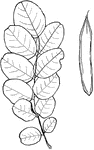
Leaves - compound (odd-feathered; leaflets, eleven to twenty-five); alternate; edge entire. Outline - oval or egg-shape. Apex, rounded. Base - rounded. Stem - of leaf, smooth, and covering the leaf-bud of the next year. Leaflets - very smooth, thin, often slightly tipped with the end of the mid-rib. Bark - of trunk, dark, rough, and very deeply ridged. The smaller branches and young trunks are armed with strong, triangular prickles, but these disappear when the parts are three to four inches thick. Flowers - showy and abundant; in long, loose clusters drooping from the sides of the branchlets; white; and very fragrant. May, June. Fruit - a smooth and rather blunt pod, two to three inches long, one and a half inches wide, four- to six-seeded. Seeds, dark brown. September. Found - Native in the Alleghany Mountains from Pennsylvania (Monroe County - Porter) to Georgia; but now very generally naturalized throughout the United States east of the Rocky Mountains. General Information - A tree usually forty to fifty feet high, sometimes ninety feet, and of rapid growth. Its wood is exceedingly hard and strong, and remarkable durable when in contact with the ground. It is used largely for posts, in ship-building, and in turnery, and it is preferred to all other native wood for tree nails. It is one of the most valuable trees of this or of any country. But is cultivation as a timber tree, which at one time was very general, has nearly ceased in the United State on account of the constant damage done by the grub of the Painted Clytus (Clytus pictus). This troublesome borer not only injures the new growth, but also pierces and detaches large branches, leaving the tree ragged and stunted.

Genus Robinia, L. (Locust)

Leaves - compound (odd-feathered; leaflets, eleven to twenty-five); alternate; edge entire. Outline…
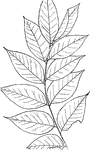
Leaves - unequally twice-compound (odd-feathered; leaflets very numerous - seven to thirteen on the different branches of the main leaf-stem; alternate; edge of leaflets entire. Outline - leaflets, egg-shape or oval. Apex - sharply taper-pointed. Base, slightly heart-shaped or rounded. Leaf-stem - in the autumn takes a violet tinge. Leaf - one and one half to three feet long, about one half as wide. Leaflets, one to two and one half inches long, of a dull green. Bark - of trunk, rough and scaly, separating in small and hard crosswise and backward-curled strips. Branchlets stout and not thorny. Flowers - in white spikes along the branches. May-July. Fruit - in large curved pods (Six to ten inches long, by two inches broad), pulpy within, of a reddish-brown color, flattened and hard. Each pod contains several hard, gray seeds one half of an inch or more in diameter. September, October. Found - in Franklin County, Pennsylvania (Porter), Western New York, westward and southward to Middle Tennessee. Not common. General information - A tree sixty to eighty feet high, or more, with a rather small and regular head. The fewness and the abruptness of its large branches give to it in the winder a dead and stumpy look, whence one of its common names. Its bruised and sweetened leaves are used at the South for poisoning flies. Its seeds were formerly used as a substitute for coffee.

Genus Gymnocladus, Lam. (Coffee Tree)

Leaves - unequally twice-compound (odd-feathered; leaflets very numerous - seven to thirteen on the…
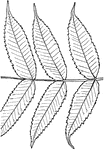
Leaves - compound (odd-feathered; leaflets eleven to thirty-one); alternate; edge of leaflets evenly and sharply toothed. Outline - of leaflet, narrow egg-shape. Apex - long, taper-pointed. Base, rounded or slightly heart-shaped. Leaflet/Stem - lacking. Leaf/Stem - densely velvety-hairy. Leaflet - usually two to four inches long and about one fourth as wide; the under surface whitish and more or less downy. Leaf - one or two feet or more in length. Branchlets - and stalks, especially towards their ends, covered with a very dense velvet-like down, often crimson-tinged. The just is milky and acid. Flowers - greenish-yellow, in upright, pyramid-shaped bunches at the ends of the branches. June. Berries - rounded, somewhat flattened, bright crimson velvety, crowded. Stone - smooth. Juice, acid. September, October. Found - from New Brunswick and the valley of the St. Lawrence through the Northern States, and southward along the Alleghany Mountains to Central Alabama. General Information - A small tree, ten to thirty feet high (or often a shrub), with straggling and evenly spreading branches that are leaved mostly toward their ends, giving an umbrella-like look to the tree. The wood is very soft and brittle; yellow within; the sap-wood white. The young shoots with the pith removed, are used in the spring as "sap quills" in drawing the sap from the sugar maples. The downy and irregular branchlets are suggestive of the horns of a stag, whence the name. An infusion of the berries is sometimes used as a gargle for sore-throat. This species is not poisonous. A variety with deeply gashed leaves (var. laciniata) is reported from Hanover, N. H.

Genus Rhus, L. (Sumach)

Leaves - compound (odd-feathered; leaflets eleven to thirty-one); alternate; edge of leaflets evenly…
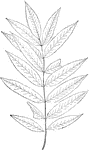
Leaves - compound (odd-feathered; leaflets, nine to fifteen); alternate (often alternate in threes); edge of leaflets finely and sharply toothed. Outline - of leaflet, long and narrow egg-shape. Apex, taper-pointed. Base - rounded and slightly pointed. Leaflet/Stem - lacking, or very short. Leaf - eight to twelve inches long. Leaflet - two to three and one half inches long; surfaces smooth. Bark - of the trunk, reddish-brown and rather smooth. Flowers - small and white, in large, flat clusters, over the surface of the tree - fifty to one hundred or more flowers in a cluster. May, June. Fruit - very ornamental, about the size of peas, scarlet, in large, flat clusters, ripening in autumn and remaining into the winter. Found - from Labrador and Newfoundland through the Northern States and southward along the Alleghany Mountains. Its finest growth is on the northern shores of Lake Huron and Lake Superior. General Information - A slender, somewhat pyramid-shaped, tree, ten to thirty feet high, much and justly prized as one of the best of the native trees for ornamental planting. Its bark and the unripe fruit are very astringent, and are sometimes used medicinally. A slightly different species (P. sambucilolia) is sometimes found in cold swamps and on the borders of streams along the Northern frontier. The Mountain Ash or "Rowan Tree" has for a long time been renowned as a safeguard against witches and all evil spirits. A mere twig of it suffices. "Rowen-tree and red thread Put the witches to their speed." "The spells were vain, the hag returned To the queen in sorrowful mood, Crying that witches have no power Where there is row'n-tree wood."

Genus Pyrus, L. (Mountain Ash)

Leaves - compound (odd-feathered; leaflets, nine to fifteen); alternate (often alternate in threes);…
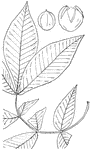
Leaves - compound (odd-feathered, leaflets, seven to nine); alternate; edge slightly and rather roundly toothed. Outline - of leaflets, mostly long oval, the lower pairs becoming smaller and more egg-shaped. Apex - long-pointed. Base - of the end leaflet, wedge-shape; of the others, more or less blunted. Leaf/Stem - rough throughout. Buds - large and round and covered with downy, yellowish-brown scales, or, in winter, with hard and grayish-white scales. Leaflet/Stem - lacking (or scarcely noticeable), except the short, roughish stem of the end leaflet. Leaflets - two to seven inches long, rough beneath, especially on the ribs; fragrant when crushed. Bark - rough, becoming cracked across, but not scaly. Fruit - rounded, slightly egg-shaped or oval, one and one half to two inches or more in length. The husk is about one fourth of an inch thick and splits nearly to the base when ripe. Nut - slightly six-angled, light brown, with a very thick and hard shell. Kernel - is sweet, but small. October. Found - common in dry woods, especially southward and westward. It grows in Southern Canada and I all the Atlantic States. General Information - All the Hickories are picturesque trees. Their tendency, even when standing alone, is to grow high, and with heads that, instead of being round, are cylinder-shaped to the very top, with only enough breaks and irregularities to add to the effect. This tendency is more marked in the Hickories than in any other of the leaf-shedding trees of North America. They are worthy of the name sometimes given them of 'the artist's tree." Hicoria, from a Greek word meaning round, in allusion to the shape of the nut.

Genus Hicoria, Raf., Carya, Nutt. (Hickory)

Leaves - compound (odd-feathered, leaflets, seven to nine); alternate; edge slightly and rather roundly…
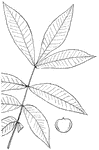
Leaves - compound (odd-feathered; leaflets, seven to eleven); alternate; edge of leaflet sharp-toothed. Outline - of leaflet, long oval or long egg-shape. Apex, taper-pointed. Base, pointed or blunted. Leaf/Stem - rather slender, somewhat downy, and often flattened and winged. Leaf/buds - small, slightly rounded or (at the ends of the branchlets) pointed, and yellow. Leaflet/Stems - lacking, except the short stem of the end leaflet. Leaflets - four to six inches long, the upper one usually short; smooth on both sides, or with a slight, scattered down below. Bark - rather smooth. Fruit - rounded or slightly egg-shaped, dark green. Husk - very thin and fleshy, never becoming entirely hard, with prominent winged edges at the seams, only two of which reach more than half-way to the base. It divides half-way down when ripe. Nut - barely one inch long, heart-shaped at the top, broader than long, white and smooth. Shell - so thin that it can be broken with the fingers. Kernel - intensely bitter. Found - usually in wet grounds, though often also on rich uplands, from Southern Maine westward and southward. It reaches its finest growth in Pennsylvania and Ohio. General information - A rather smaller and less valuable tree than the rest of the hickories.

Genus Hicoria, Raf., Carya, Nutt. (Hickory)

Leaves - compound (odd-feathered; leaflets, seven to eleven); alternate; edge of leaflet sharp-toothed.…
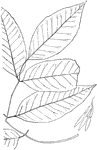
Leaves - compound (odd-feathered; leaflets, seven to nine); opposite; edge of leaflets slightly toothed or entire; entire at base. Outline - of leaflet, long oval or long egg-shape. Apex - taper-pointed. Base - somewhat pointed. Leaf/Stem - smooth. Leaflet/Stem - about one fourth of an inch long, or more; smooth. Leaf/Bud - rusty-colored and smooth. Leaflet - two to six inches long; pale beneath; downy when young, but becoming nearly smooth, except on the ribs. Bark - of the trunk, light gray. In very young trees it is nearly smooth, but it soon becomes deeply furrowed - the furrows crossing each other, and so breaking the bark into irregular, somewhat square or lozenge-shaped plates. Then in very old trees it becomes smooth again, from the scaling off of the plates. The branches are smooth and grayish-green. The young shoots have a polished, deep-green bark, marked with white lines or dots. Winged seeds - one and a half to two inches long, with the "wing" about one fourth of an inch wide, hanging in loose clusters from slender stems. The base of the seed it pointed and not winged. Found - in rich woods, from Southern Canada to Northern Florida and westward. It is most common in the Northern States. The finest specimens are seen in the bottom lands of the lower Ohio River basin. General Information - a tree forty to eighty feet high. Often the trunk rises forty feet without branching. Its tough and elastic timer is of very great value, being widely used in the manufacture of agricultural implements, for oars, and the shafts of carriages, and in cabinet-work. Fraxinus from a Greek word meaning "separation," because of the ease with which the wood of the Ash can be split. I find in the notes of an old copy of White's "Natural History of Selborne" this comment: "The Ash, I think, has been termed by Gilpin the Venus of British trees." Gerardes' "Herbal" comments: "The leaves of the Ash are of so great a vertue against serpents, as that the serpents dare not be so bolde as to touch the morning and evening shadowes of the tree, but shunneth them afarre off, as Pliny reporteth in his 16 book, 13 chap. He also affirmeth that the serpent being penned in with boughes laide rounde about, will sooner run into the fire, if any be there, than come neere to the boughes of the Ash."In Scandinavian mythology the great and sacred tree, Yggdrasil, the greatest and most sacred of all trees, which binds together heaven and earth and hell, is an Ash. Its roots spread over the whole earth. Its branches reach above the heavens. Underneath lies a serpent; above is an eagle; a squirrel runs up and down the trunk, trying to breed strife between them.

Genus Fraxinus, L. (Ash)

Leaves - compound (odd-feathered; leaflets, seven to nine); opposite; edge of leaflets slightly toothed…
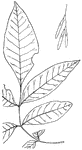
Leaves - compound (odd-feathered; leaflets, seven to nine); edge of leaflets nearly entire or slightly toothed. Outline - of leaflet, long oval or egg-shape. Apex - taper-pointed. Base - somewhat pointed. Leaf/Stem - velvety-downy. Leaflet/Stem - about one fourth of an inch long, or somewhat less, and velvety-downy. Leaf/Bud - rounded, nearly concealed by the leaf-stem, downy, and of a dark, rusty brown. Leaflet - two to six inches long, downy beneath, and pale, becoming reddish. Bark - of the trunk, dark ashy or granite-gray, or of a deep brown. It is slightly furrowed up and does, the furrows seldom joining or crossing. The branches are grayish. The young shoots are velvety, with a grayish or rusty down. Winged seeds - resembling those of the White Ash, but usually with the end of the wing more rounded. Found - along borders of streams and in low and swampy ground - New Brunswick to Minnesota, and southward to Northern Florida and Alabama; but rare west of the Alleghany Mountains. Its finest growth is in the Northern Atlantic States. General Information - A medium-sized tree, usually thirty to fifty feet high, of less value than the White Ash. Fraxinus from a Greek word meaning "separation," because of the ease with which the wood of the Ash can be split. I find in the notes of an old copy of White's "Natural History of Selborne" this comment: "The Ash, I think, has been termed by Gilpin the Venus of British trees." Gerardes' "Herbal" comments: "The leaves of the Ash are of so great a vertue against serpents, as that the serpents dare not be so bolde as to touch the morning and evening shadowes of the tree, but shunneth them afarre off, as Pliny reporteth in his 16 book, 13 chap. He also affirmeth that the serpent being penned in with boughes laide rounde about, will sooner run into the fire, if any be there, than come neere to the boughes of the Ash."In Scandinavian mythology the great and sacred tree, Yggdrasil, the greatest and most sacred of all trees, which binds together heaven and earth and hell, is an Ash. Its roots spread over the whole earth. Its branches reach above the heavens. Underneath lies a serpent; above is an eagle; a squirrel runs up and down the trunk, trying to breed strife between them.

Genus Fraxinus, L. (Ash)

Leaves - compound (odd-feathered; leaflets, seven to nine); edge of leaflets nearly entire or slightly…
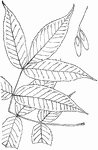
Leaves - compound (odd-feathered; leaflets, seven to eleven, usually nine); opposite; edge of leaflet toothed. Outline - of leaflet, narrow, long oval or long egg-shaped Apex - taper-pointed. Base - rounded. Leaf/Stem - lacking. Leaf/Bud - deep blue or blackish. Leaflet - three to five inches long, smooth and green on both sides, excepting where it is slightly hairy along the lower part of the middle rib. When crushed it has an Elder-like odor. Bark - of trunk, dark granite-gray, somewhat furrowed and broken up and down with roughness, which continue in the old tree. The young branches are smooth and grayish and marked with black and white dots and warts. Winged seeds - nearly one and one half inches long, with the wing three eighths of an inch wide and extending around the seed. Ripe in July. Found - along low river-banks and in swamps, which it sometimes fills; in Delaware, the mountains of Virginia, Northwestern Arkansas, through the Northern States to Canada. It is the most Northern of the American Ashes. General Information - Usually a small or medium-sized tree. The wood is largely used for barrel-hoops, baskets, in cabinet-work, and interior finish. Fraxinus from a Greek word meaning "separation," because of the ease with which the wood of the Ash can be split. I find in the notes of an old copy of White's "Natural History of Selborne" this comment: "The Ash, I think, has been termed by Gilpin the Venus of British trees." Gerardes' "Herbal" comments: "The leaves of the Ash are of so great a vertue against serpents, as that the serpents dare not be so bolde as to touch the morning and evening shadowes of the tree, but shunneth them afarre off, as Pliny reporteth in his 16 book, 13 chap. He also affirmeth that the serpent being penned in with boughes laide rounde about, will sooner run into the fire, if any be there, than come neere to the boughes of the Ash."In Scandinavian mythology the great and sacred tree, Yggdrasil, the greatest and most sacred of all trees, which binds together heaven and earth and hell, is an Ash. Its roots spread over the whole earth. Its branches reach above the heavens. Underneath lies a serpent; above is an eagle; a squirrel runs up and down the trunk, trying to breed strife between them.

Genus Fraxinus, L. (Ash)

Leaves - compound (odd-feathered; leaflets, seven to eleven, usually nine); opposite; edge of leaflet…
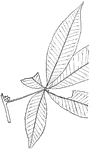
Leaves - compound (hand-shaped; leaflets, five); opposite; edge toothed. Outline - of leaflet, oval or long oval. Apex - taper-pointed. Base - pointed. Leaflets - three to seven inches long; one and a half to three inches wide. Bark - with a disagreeable odor. Flowers - small, yellowish-white. June. Fruit - about three fourths of an inch in diameter. Husk - prickly when young. Nut - smooth. Found - along the western slopes of the Alleghany Mountains - Pennsylvania to Northern Alabama and westward. General Information - A small, ill-scented tree (eighteen to thirty-five feet high). Its wood is light and hard to split. With the other species of the same genus it is preferred, above any other American wood, for the making of artificial limbs.

Genus Aesculus, L. (Buckeye, Horse Chestnut)

Leaves - compound (hand-shaped; leaflets, five); opposite; edge toothed. Outline - of leaflet, oval…
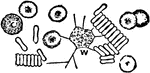
Red and white blood corpuscles (cells).

Red and White Blood Cells

Red and white blood corpuscles (cells).

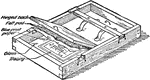
To make a blueprint, place the tracing in a blueprint frame with the inked side next to the glass and lay a sheet of blueprint paper with the sensitized side next to the tracing. Put the back of the frame in place and lock it in position so as to hold the tracing paper. Expose to sunlight for 30 seconds.

Frame Blueprint

To make a blueprint, place the tracing in a blueprint frame with the inked side next to the glass and…
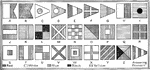
The complete alphabet of signaling flags.

Signaling Flags

The complete alphabet of signaling flags.

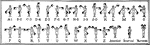
The complete alphabet of the Boy Scouts' signal code.

Scouts' Signals

The complete alphabet of the Boy Scouts' signal code.

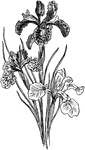
A blue flag iris.

Iris

A blue flag iris.

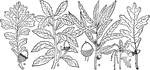
The various types of oak leaves: "a. Bur oak, b. Live oak, c. Willow oak, d. White oak." -Foster, 1921

Oak Leaves

The various types of oak leaves: "a. Bur oak, b. Live oak, c. Willow oak, d. White oak." -Foster, 1921

An iconic symbol of the United States: the bald eagle with olive branches and arrows.

Eagle

An iconic symbol of the United States: the bald eagle with olive branches and arrows.

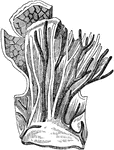
An upright section of one of the papillae of the tongue very greatly magnified, and split open, to show the nerves (engraved white) and the blood-vessels (black).

Tongue Papillae Section

An upright section of one of the papillae of the tongue very greatly magnified, and split open, to show…
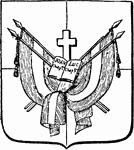
The coat of arms of Dominican Republic.

Dominican Republic Coat of Arms

The coat of arms of Dominican Republic.

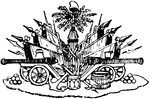
The Coat of Arms of Haiti.

Haitian Coat of Arms

The Coat of Arms of Haiti.

The White Elephant is military decoration of Europe.

The White Elephant

The White Elephant is military decoration of Europe.

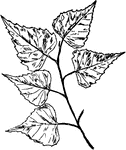
A leaf from the white or gray birch.

White or Gray Birch Leaf

A leaf from the white or gray birch.

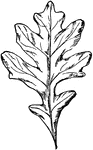
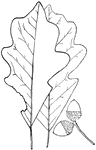
The leaf of a white oak tree.

White Oak Leaf

The leaf of a white oak tree.

The leaf of a white oak tree.

White Oak Leaf

The leaf of a white oak tree.

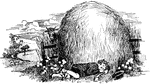
Little Boy Blue is asleep under the haystack.

Little Boy Blue

Little Boy Blue is asleep under the haystack.

Little Boy Blue fast asleep under the haystack.

Little Boy Blue

Little Boy Blue fast asleep under the haystack.

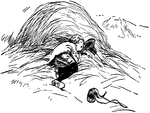
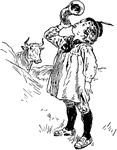
Little Boy Blue fast awake and blowing his horn.

Little Boy Blue

Little Boy Blue fast awake and blowing his horn.

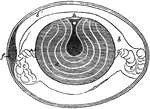
"Section of a Hen's Egg before Incubation. a, yolk, showing concentric layers; a', its semi-fluid center; b, inner dense part of the albumen; b', outer thinner part; c, twisted cords of albumen; h, the white spot, or germ cell." -Cooper, 1887

Egg Parts

"Section of a Hen's Egg before Incubation. a, yolk, showing concentric layers; a', its semi-fluid center;…
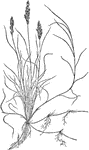
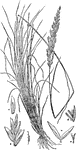
Seaside blue grass, Poa macrantha.

Seaside Blue Grass

Seaside blue grass, Poa macrantha.

"Sand blue grass (Poa leckenbyi): a, empty glumes; b, spikelet, empty glumes removed; c, floret; d, palea and stamens; e, pistil." -Department of Agriculture, 1899

Sand Blue Grass

"Sand blue grass (Poa leckenbyi): a, empty glumes; b, spikelet, empty glumes removed; c, floret; d,…
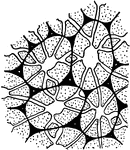
Third and final developmental stage of stone cells: "3, The walls are completed. The primary wall is black, cellulose additions white, and the lignified walls in 3 are stippled. Notice that the protoplasts have disappeared in 3, and the pits in some instances are branched." -Stevens, 1916

Stone Cells 3

Third and final developmental stage of stone cells: "3, The walls are completed. The primary wall is…
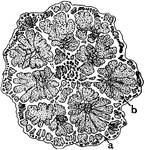
"Diagram showing some types of unusual growth in thickness...B, cross section of stem of species of Bauhinia; the xylem strands, b, are stippled while the surrounding parenchyma and bark tissues are left white." -Stevens, 1916

Bauhinia Unusual Stem Growth

"Diagram showing some types of unusual growth in thickness...B, cross section of stem of species of…
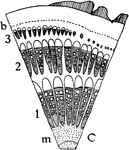
"Diagram showing some types of unusual growth in thickness...C, portion of a cross section of stem of Gnetum scandens; 1, 2, and 3 are successive rings of growth; m, is the pith; b, is a sclerenchyma ring. The xylem portions with the exception of the larger tracheal tubes are shaded, while the medullary rays, phloem and tissues intervening between the rings of growth and the outer cortes tissues are left white." -Stevens, 1916

G. Scandens Unusual Stem Growth

"Diagram showing some types of unusual growth in thickness...C, portion of a cross section of stem of…
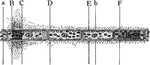
"Diagram to show the effect of different portions of the spectrum on photosynthesis. a to F, different regions of the spectrum from red to blue. A filamentous alga lies across these, and bacteria are collecting about the alga, with greatest frequency in the red between B and C, indicating the greatest evolution of oxygen there." -Stevens, 1916

Photosynthesis

"Diagram to show the effect of different portions of the spectrum on photosynthesis. a to F, different…
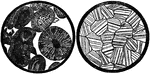
"Microscopic Structure of white Statuary marble." -Geikie, 1893

Marble

"Microscopic Structure of white Statuary marble." -Geikie, 1893

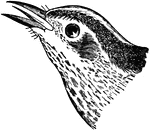
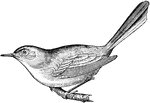
The Blue-Gray Gnatcatcher.

Blue-Gray Gnatcatcher

The Blue-Gray Gnatcatcher.

The black-and-white creeping warbler

Black-and-White Creeping Warbler

The black-and-white creeping warbler

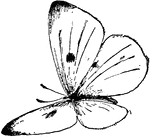
Pieris rapae, or Small White butterfly.

P. Rapae Butterfly

Pieris rapae, or Small White butterfly.

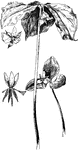
Some species of the lily family (Liliaceae): top, nodding trillium (Trillium cernuum); left, erect flower of Trillium recurvatum; right, dwarf white trillium (Trillium nivale).

Trillium Lilies

Some species of the lily family (Liliaceae): top, nodding trillium (Trillium cernuum); left, erect flower…
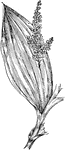
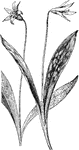
Of the lily family (Liliaceae), Veratrum viride.

V. Viride

Of the lily family (Liliaceae), Veratrum viride.

Two species of the lily family (Liliaceae): right, yellow adder's tongue (Erythronium Americanum); left, white adder's tongue (Erythronium albidum).

E. Americanum and E. Albidum

Two species of the lily family (Liliaceae): right, yellow adder's tongue (Erythronium Americanum); left,…
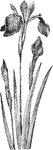
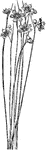
Of the iris family (Iridaceae), the blue flag or Iris versicolor.

Blue Flag

Of the iris family (Iridaceae), the blue flag or Iris versicolor.

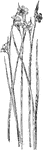
Of the iris family (Iridaceae), blue-eyed grass or Sisyrinchium angustifolium.

Blue-Eyed Grass

Of the iris family (Iridaceae), blue-eyed grass or Sisyrinchium angustifolium.

Of the iris family (Iridaceae), stout blue-eyed grass or Sisyrinchium gramineum.

Stout Blue-Eyed Grass

Of the iris family (Iridaceae), stout blue-eyed grass or Sisyrinchium gramineum.