This banner contains images of flowers, vines. In the center of the banner are two lions with wings on their backs.

Banner

This banner contains images of flowers, vines. In the center of the banner are two lions with wings…
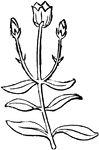
Diagram of opposite-leaved plant with a cyne of three flowers; <em>a</em> the first flower, of the main axis: <em>b b</em>, those of branches.

Opposite-Leaved

Diagram of opposite-leaved plant with a cyne of three flowers; a the first flower, of the main…
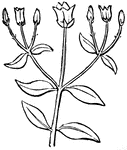
Diagram of opposite-leaved plant with a cyne of three flowers; <em>a</em> the first flower, of the main axis: <em>b b</em>, those of branches. Flowers of the third order.

Opposite-Leaved

Diagram of opposite-leaved plant with a cyne of three flowers; a the first flower, of the main…
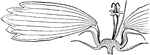
A slice of the head of flowers of a Coreopsis, with one tubular perfect flower (a) left standing on the receptacle, with its bractlet or chaff (b), one ligulate and meutral ray-flower (cc), and part of another; (dd), section or bracts or leaves of the involucre.

Coreopsis

A slice of the head of flowers of a Coreopsis, with one tubular perfect flower (a) left standing on…
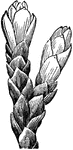
Branchlet of the American Arbor-Vitae, considerably larger than in nature, terminated by its pistillate flowers, each consisting of a single scale (an open pistil), together forming a small cone.

Arbor-Vitae

Branchlet of the American Arbor-Vitae, considerably larger than in nature, terminated by its pistillate…
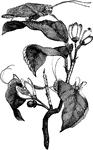
The Southern Katydid, Microcentrum laurifolium- 1, the female adult; 1a, eggs laid on leaves and twigs of orange; 1b, the young katydids; 2b, parasites on the eggs.

Katydid

The Southern Katydid, Microcentrum laurifolium- 1, the female adult; 1a, eggs laid on leaves and twigs…
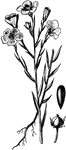
A small flax plant.

Flax

A small flax plant.

A border of flowers.

Flowers

A border of flowers.

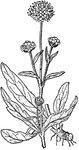
"<em>Scabious succisa</em>, the primrose scabious, is a common European plant, which bears purplish-blue flowers." &mdash;Finley, 1917

Primrose succisa

"Scabious succisa, the primrose scabious, is a common European plant, which bears purplish-blue…
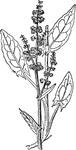
"The common sorrel is a meadow plant, slender in habit, with halberd-shaped, juicy, acid flavored leaves, and bearing whorled spikes of greenish-red flowers in summer."&mdash;Finley, 1917

Sorrel

"The common sorrel is a meadow plant, slender in habit, with halberd-shaped, juicy, acid flavored leaves,…
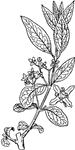
"The common spindle tree (<em>Euonymus europaeus</em>) is a European shrub, which bears glossy lanceolate leaves, and in late spring clusters of small greenish flowers, followed by fruits which become beautifully rose colored."—Finley, 1917

Spindle Tree

"The common spindle tree (Euonymus europaeus) is a European shrub, which bears glossy lanceolate…
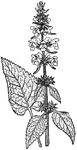
"The European hedge woundwort, a tall hairy plant, with heart-shaped leaves, and numerous whorls of full purple flowers, usually six in a whorl."

Stackys sylvatica

"The European hedge woundwort, a tall hairy plant, with heart-shaped leaves, and numerous whorls of…
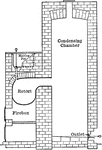
"The sulphur is then further purified by heating it in iron vessels (retorts) without access of air, until it is vaporized. the vapor is led into brick-lined rooms. A part of the gas is suddenly cooled and is deposited as a fine powder on the sides of the room. The form is known as flowers of sulphur. Most of the sulphur vapor condenses in the liquid form, and flows down to the outlet of the condensing chamber." -Brownlee 1907

Sulfur Purification

"The sulphur is then further purified by heating it in iron vessels (retorts) without access of air,…
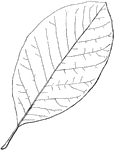
Leaves - simple, alternate, edge entire. Outline - long oval. Apex - pointed. Base - pointed. Leaf - five to ten inches long, thin, dark green above; green beneath and slightly downy; growing along the branch and not simply in a cluster at its end. Bark - dark and rough. Flowers - three to six inches across, bluish or yellowish-white, abundant and fragrant. May, June. Fruit - in a cylinder-shaped bunch, two to three inches long, and somewhat resembling a small cucumber. Found - in rich woods from Western New York to southern Illinois and southward, and in cultivation. Its finest growth is in the southern Alleghany Mountains.  General Information - A tree sixty to ninety feet high, with a straight trunk and rich foliage. The wood is durable, soft, and light. Used for cabinet-work, for flooring, for pump-logs, and water-troughs. As in other magnolias the juice is bitter and aromatic. From "magnol," the name of a botanist of the seventeenth century.

Genus Magnolia, L. (Magnolia)

Leaves - simple, alternate, edge entire. Outline - long oval. Apex - pointed. Base - pointed. Leaf -…
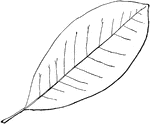
Leaves - Simple, alternate, edge entire. Outline - long oval or slightly reverse egg-shape. Apex, slightly blunt-pointed. Base, pointed. Leaf -about three to six inches long, thick and smooth; dark green and polished above; white below; the middle rib green and distinct; the side ribs slight and indistinct. Bark - of trunk, smoothish, light gray, aromatic and bitter. Flowers - large (two to three inches wide), white, at the ends of the branches, very fragrant. June, July. Fruit - bright red berries, at first in small cone-like clusters, then hanging by slender threads. September.  Found - in swampy ground, from Massachusetts southward, usually near the coast. <p>General Information - A small tree (often a bush) four to twenty-five feet high, or higher southward, where its leaves are evergreen. All parts of the tree (and it is the same with the other magnolias) have an intensely bitter, aromatic juice, which is stimulating and tonic. From "magnol," the name of a botanist of the seventeenth century.

Genus Magnolia, L. (Magnolia)

Leaves - Simple, alternate, edge entire. Outline - long oval or slightly reverse egg-shape. Apex, slightly…
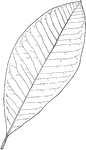
Leaves - Simple, alternate, edge entire. Outline - long oval or slightly reverse egg-shape. Apex, short, sharp-pointed. Base, pointed. Leaf - twelve to thirty-six inches long, six to eight inches wide; rather dark green above; lighter beneath; silky when young, but soon smooth; growing in clusters at the ends of the branches. Bark - smoothish and light. Flowers - seven to eight inches across, at the ends of the branches, white, and fragrant. May, June. Fruit - in a cylinder-shaped bunch, four to five inches long, and rose-colored as it ripens. Found - in Southeastern Pennsylvania and southward along the Alleghany Mountains, and in cultivation. <p>General Information - A tree twenty to thirty feet high, with irregular branches, and light, soft wood. As in other magnolias the juice is bitter and fragrant. From "magnol," the name of a botanist of the seventeenth century.

Genus Magnolia, L. (Magnolia)

Leaves - Simple, alternate, edge entire. Outline - long oval or slightly reverse egg-shape. Apex, short,…
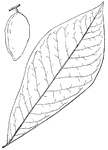
Leaves - simple; alternate; edge entire. Outline - long, reverse egg-shape. Apex - pointed, in small leaves, sometimes rounded. Base - taper-pointed or slightly rounded. Leaf - five to ten inches long, thin, rusty downy with young, soon becoming smooth and polished. Bark - slivery-gray, smooth and polished; young shoots downy. Flowers - one and a half inches wide; dark to light, in drooping clusters, appearing with the leaves. March, April. Fruit - about three inches long by one and a half inches thick, egg-shape, yellow, about ten-seeded, fragrant, sweet, and edible. October. Found - from Western New York to Southern Iowa and southward. General Information - A small tree of unpleasant odor when bruised, ten to twenty feet high (or often only a bush) and densely clothed with its long leaves.<p>General Information - A small tree of unpleasant odor when bruised, ten to twenty feet high (or often only a bush) and densely clothed with its long leaves.

Genus Asimina, Adans (Papaw)

Leaves - simple; alternate; edge entire. Outline - long, reverse egg-shape. Apex - pointed, in small…
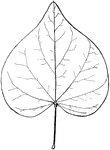
Leaves - simple; alternate; edge entire. Outline - round heart-shape. Apex - tapering and rather blunt, sometimes with a short bristle. Base - heart shape. Leaf/Stem - smooth and swollen at each end into a sort of knob. Leaf - usually about four to five inches long and wide; rather thin, smooth above and below; with seven prominent ribs radiating from the end of the leaf-stem. Flowers - reddish, acid, usually abundant in small clusters along the branches; appearing before the leaves. March to May. Fruit - a small, many-seeded, flat pod, winged along the seed-bearing stem. Seeds - reverse egg-shape. Found - in rich soil, Western Pennsylvania, westward and southward. Common in cultivation. General Information - A small and fine ornamental tree, with long, flat-leaved branches. The name "Judas tree" is traditional. "This is the tree whereon Judas did hang himself, and not the elder tree, as it is said." From a Greek word meaning "shuttle," because of the shuttle-shaped pod.

Genus Cercis, L. (Red Bud)

Leaves - simple; alternate; edge entire. Outline - round heart-shape. Apex - tapering and rather blunt,…
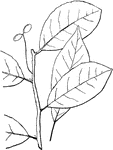
Leaves - simple; alternate; edge entire. Outline - oval or reverse egg-shape. Apex - pointed. Base - pointed. Leaf/Stem - slightly hairy when young. Leaf - two to five inches long; usually about half as broad; dark green and very shining above, especially when old; light green and shining below; thick, tough, and firm. Middle rib slightly hairy when young; side ribs rather indistinct and curved. Bark - grayish and often broken into short sections. Fertile Flowers - small, in clusters of three to eight on slender stems. April, May. Fruit - nearly one half inch long; bluish-black when ripe; egg-shape or oval; acid and rather bitter until "frosted." Stone - oval, somewhat pointed at each end, slightly flattened, and with three or four blunt ridges on each side. September. Found - from Southern Maine to Michigan, and southward to Florida and Texas. General Information - A tree twenty to forty feet high (larger southward), with flat, horizontal branches. The wood, even in short lengths, is very difficult of cleavage, and so is well fitted for beetles, hubs of wheels, pulleys, etc. Its leaves are the first to ripen in the fall, changing (sometimes as early as August) to a bright crimson. In the South, opossums climb the tree in search of its fruit and are immortalized in stories.

Genus Nyssa, L. (Sour Gum)

Leaves - simple; alternate; edge entire. Outline - oval or reverse egg-shape. Apex - pointed. Base -…
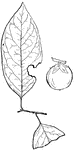
Leaves - simple; alternate, edge entire. Outline - long oval or long egg-shape. Apex - pointed. Base - pointed or rounded. Leaf - three to five inches long, thickish; dark and smooth, usually shining, above; below dull, with ribs curved and irregular and minutely downy. On the upper surface the ribs are quite indistinct, except as the lea is held toward the light when they appear almost transparent. In the same position the left is seen also to be edged with a slight delicate fringe (appearing in the dried leaf like a line of yellow light). Bark - of trunk dark and rough. Flowers - greenish-yellow and small, at the base of the leaf-stems. June. Fruit - about one inch in diameter, rounded, nearly stemless, orange-red when ripe, with about eight large flat seeds. After frost it is of very pleasant flavor, before, exceedingly "puckery." Found - from Connecticut southward to Florida and westward to Southeastern Iowa. General Information - A tree twenty to sixty feet high; sometimes, at the South, more than one hundred feet high. The wood is hard and close-grained; the bark tonic and astringent. From two Greek words meaning fruit of Jove.

Genus Diospyros, L. (Persimmon)

Leaves - simple; alternate, edge entire. Outline - long oval or long egg-shape. Apex - pointed. Base…
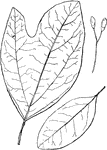
Leaves - simple; alternate; edge entire or lobed. Outline - when the edge is entire usually oval or egg-shape; when lobed usually broader and reverse egg-shape. Apex - of the leaf or of the lobes rounded or slightly blunt-pointed. Base - pointed or wedge-shape. Leaf - variable in size, dark, thin, smooth; rather shining above; the lobes, when resent, two or three in number and usually more or less bulging, with the hollows always rounded. Bark - obliquely and curiously furrowed and broken, gray without, reddish within; young twigs yellowish. Flowers - greenish-yellow, in clusters. May, June. Fruit - oval, one-seeded, blue, with a reddish, club shaped stem; pungent. Found - from Southwestern Vermont, southward and westward.  General Information - a tree fifteen to fifty feet high with light and soft wood. All parts of the tree have a pleasant, spicy taste and fragrance. From the bark of the roots a powerful aromatic stimulant is obtained.

Genus Sassafras, Nees. (Sassafras)

Leaves - simple; alternate; edge entire or lobed. Outline - when the edge is entire usually oval or…
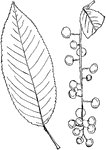
Leaves - simple; alternate; edge toothed (with the points of the teeth so incurved as to appear blunt), and often finely "crinkled." Outline - usually long oval or long egg-shape. Apex - pointed. Base - rounded or slightly pointed. Leaf/Stem - usually with two to five tooth-like glands near the base of the leaf. Leaf - two to five inches long; thickish; polished, and of a deep shining green above; beneath, lighter and smooth, with the middle rib sometimes downy toward the base. In the autumn the leaves turn to orange and later to pale yellow. Bark - of old trunks, blackish and rough; of young trunks and on the larger branches, reddish or purplish brown; marked with scattered lines; on young shoots, at first green or olive brown, gradually becoming darker, and sprinkled (sic) with small orange dots. Flowers - white, with short stems, closely set in a long, cylinder-shaped cluster. May, June. Fruit - about one and a quarter inches in diameter; with short stems (one and a quarter to one and a third inches ) hanging in long, close clusters from the ends of the twigs. It is nearly black when ripe, and of a pleasant flavor though somewhat bitter; it is eagerly eaten by birds. August. Found - very widely distributed north, south, and west. It reaches its finest growth on the western slopes of the Alleghany Mountains. General Information - A tree fifty to eighty feet high. The wood is light and hard, of a brown or reddish tinge, becoming darker with exposure, and of very great value in cabinet work and interior finish. It is now becoming scarce, so that stained birch is often used as a substitute. The bitter aromatic bark is used as a valuable tonic; "cherry brandy" is made from the fruit.

Genus Prunus L. (Cherry, Plum)

Leaves - simple; alternate; edge toothed (with the points of the teeth so incurved as to appear blunt),…
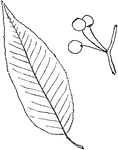
Leaves - simple; alternate, or alternate in pairs; edge finely and sharply toothed. Outline - narrow egg-shape. Apex - taper-pointed. Base - rounded or slightly pointed. Leaf/Stem - grooved above. Leaf - two to six inches long, shining and smooth and of about the same shade of green on both sides. Bark - reddish-brown and smooth, with swollen, rusty-colored dots, and usually stripping, like that of the garden cherry, around the trunk. Flowers - white, on stems about one inch or more in length, in nearly stemless clusters. May. Fruit - the size of a large pea, light red, on long stems (about three fourths to one inch long), sour, in clusters of two to five at the sides of the branches, and usually from the base of the leaf-stems; seldom abundant. July. Found - Common in all northern forests. In Northern New England it quickly occupies burned-out pine regions. General Information - A slender tree, usually twenty to twenty-five feet high, of no value as timber.

Genus Prunus L. (Cherry, Plum)

Leaves - simple; alternate, or alternate in pairs; edge finely and sharply toothed. Outline - narrow…
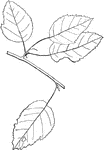
Leaves - simple; alternate; edge distinctly toothed when mature; sometimes near three-lobed Outline - egg-shape or oval Apex - pointed. Base - rounded or somewhat heart-shaped Leaf/Stem - one half to one inch long, very slender, downy Leaf - about two to three inches long, two thirds as wide, smooth. Flowers - large; rose-colored and white, in loose clusters of five to ten blossoms, and very fragrant. May. Fruit - round, one to one and a half inches in diameter; yellowish, fragrant, hard, and sour; fit only for preserving. Found - from Ontario to Western New York, Pennsylvania, and the District of Columbia; long the Alleghany Mountains, and westward. General Information - A small tree, ten to twenty feet high, rarely thirty feet, gaining its finest growth in the valleys of the lower Ohio. Often its presence is recognized before it is seen by means of the delightful fragrance of its blossoms.

Genus Pyrus L. (Apple, Mt. Ash)

Leaves - simple; alternate; edge distinctly toothed when mature; sometimes near three-lobed Outline…
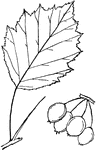
Leaves - simple; alternate (and in alternate bunches); edge unevenly sharp-toothed (with five to nine deep cuts almost forming small lobes). Outline - rounded egg-shape Apex - pointed Base - usually slightly pointed, but often blunt or slightly heart-shape. Leaf/Stem - slender and often with small wart-like glands. Leaf - usually one and a half to two and a half inches long, but of variable size on the same tree; thin; smooth; shining. Branchlets - greenish, or whitish and shining, as though washed with silver. Thorns - one to two inches long, stout, often whitish, usually slightly curved. Flowers - about two thirds of an inch across; white (often with a rosy tinge); twelve or so in a bunch; with a strong and rather disagreeable odor. May. Fruit - nearly one half inch in diameter; rounded or egg-shape; bright red; with thin pulp and one to five stones; somewhat edible. September Found - through the Atlantic forests southward to Northern Florida and Eastern Texas. General Information - A low tree (or often a bush), ten to twenty feet high, with crooked, spreading branches; very common at the North; rare in the South. From a Greek word meaning strength.

Genus Crataegus, L. (Thorn)

Leaves - simple; alternate (and in alternate bunches); edge unevenly sharp-toothed (with five to nine…
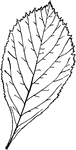
Leaves - simple; alternate; edge sharply and unequally toothed (sometimes with quite deep and sharp cuts, almost forming small lobes. Outline - oval or reverse egg-shape Apex - slightly pointed Base - tapering in a hollow curve and along the sides of the leaf-stem to a point Leaf/Stem - bordered by the leaf, to its base Leaf - about three to five inches long, one and a half to three inches wide; upper surface smoothish, and furrowed above the ribs; under surface downy at least when young; rather thick; permanently downy on the ribs. Thorns - one to two inches long Bark - of trunk, smooth and gray. New twigs, light greenish-brown Flowers - often one inch across; white eight to twelve in a cluster; at the ends of the branches; fragrant. May, June. Fruit - about one half inch in diameter, round or pear-shaped; orange-red or crimson; edible. October. Found - through the Atlantic forests to Western Florida, and from Eastern Texas far westward. Common. General Information - A thickly branching tree (or often a shrub) eight to twenty feet high; the most widely distributed of the American Thorns. It varies greatly in size, and in the style of its fruit and leaves. From a Greek word meaning strength.

Genus Crataegus, L. (Thorn)

Leaves - simple; alternate; edge sharply and unequally toothed (sometimes with quite deep and sharp…
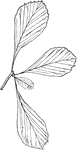
Leaves - simple; alternate; edge unevenly sharp-toothed above the middle; sometimes, toward the apex deeply cut. Outline - reverse egg-shape. Apex - usually slightly pointed. Base - strongly wedge-shape, tapering from above the middle of the leaf and along the leaf-stem to a point. Leaf/Stem - one half to one inch long, slender, and winged by a tapering leaf. Leaf - one and a half to two and a half inches long; about as wide; light green; rather thick; downy when young; when mature, smooth and dull, or sometimes hairy below, especially of the ribs. Ribs, very straight below; above, marked by deep furrows. Thorns - one to two inches long, stout and curved, or often wanting. Bark - rough. Flowers - white; eight to fifteen in somewhat leafy bunches. May. Fruit - about one half inch in diameter, or more; usually dull red or yellow, with whitish dots; round; somewhat edible. September.Found - from New Brunswick and Vermont southward and westward. General Information - A thick, wide spreading tree, twelve to twenty-five feet high. From a Greek word meaning strength.

Genus Crataegus, L. (Thorn)

Leaves - simple; alternate; edge unevenly sharp-toothed above the middle; sometimes, toward the apex…
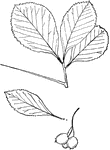
Leaves - simple; alternate; edge, sharply toothed above; entire below. Outline - reverse egg-shape. Apex - usually rounded, sometimes pointed. Base - tapering to a point, quite variable. Leaf/Stem - short. Leaf - one to two and a half inches long, half to three quarters as wide; dark green; thick, smooth, very shining above. Thorns - two to three inches long, rather slender and straight. Flowers - white; fragrant; in bunches of about fifteen blossoms, on very short side branchlets. June. Fruit - about one third inch in diameter; pear-shaped or round; red remaining on the three during the winter. Found - along the St. Lawrence and westward, and from Vermont, southward and westward; not common. General Information - A small, thick-branching tree, ten to twenty feet high. It is the best species of thorn for hedges. Var. pyracanthifolia has a somewhat narrower leaf and longer leaf stem. From a Greek word meaning strength.

Genus Crataegus, L. (Thorn)

Leaves - simple; alternate; edge, sharply toothed above; entire below. Outline - reverse egg-shape.…
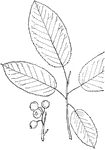
Leaves - simple; alternate; edge very sharply and finely toothed. Outline - long oval, long egg-shape, or reverse egg-shape. Apex - sometimes bristle-pointed. Base - slightly heart-shaped or rounded. Leaf - usually two to three inches long, somewhat downy when young, afterward very smooth above and below. Bark - of branches and twigs usually purplish-brown and very smooth. Flowers - large, white, in long and loose clusters at the ends of the branchlets; appearing before the leaves. April, May. Fruit - berry-like, round, purplish, sweet, and edible. June. Found - in woods and along streams; common at the North; rare in the South. General Information - A small tree, ten to thirty feet high, or in some of its numerous forms reduced to a low shrub; noticeable and showy in early spring because of its flowers. The variety A. C. oblongifolia, T. and G., differs somewhat from the above in the dimensions of the flowers and flower clusters, etc. The name "shad-bush" is given because the trees blossom about the time that the shad "run".

Genus Amelanchier, Medik (June-berry)

Leaves - simple; alternate; edge very sharply and finely toothed. Outline - long oval, long egg-shape,…
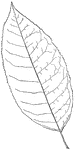
Leaves - simple; alternate; edge toothed. Outline - oval. Apex - pointed. Base - rounded or slightly pointed. Leaf - four to six inches long, one and a half to two and a half inches wide, soon becoming smooth, with a decided acid taste (whence the name). Bark - of trunk, rough and deeply furrowed. Flowers - white, in loose and long one-sided clusters. Found - from Pennsylvania and Ohio southward, chiefly along the Alleghany Mountains, and usually in dry, gravelly soil. General Information - A tree forty to sixty feet high, with hard, close-grained wood, which is used for the handles of tools, the bearings of machinery, etc. Name from two Greek words meaning sour and tree.

Genus oxydendrum, D. C. (Sorrel Tree)

Leaves - simple; alternate; edge toothed. Outline - oval. Apex - pointed. Base - rounded or slightly…
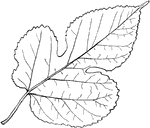
Leaves - simple; alternate; edge irregularly sharp-toothed, or, at times unequally and very variously two- to three-lobed. Outline - very nearly that of the Red Mulberry broad egg-shape. Apex - taper-pointed (when there are side lobes their ends also pointed). Base - rounded or slightly pointed, rarely, in the small leaves, slightly heart-shaped. Leaf/Stem - rough. Leaf - usually about five inches long, sometimes nine inches; thick, rough above, very velvety-rough. The main ribs are very distinct, and are thickly netted with smaller ones. Bark - light and smoothish. Flowers - in long aments and balls. Fruit - not edible. General Information - An introduced tree, common around houses or escaped from cultivation. A low-branching, large-headed shade tree of medium size, introduced from Japan. In Japan and China the bark of the Paper Mulberry is made into paper, whence the name.

Genus Broussonetia, L'Her.

Leaves - simple; alternate; edge irregularly sharp-toothed, or, at times unequally and very variously…
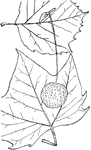
Leaves - simple; alternate; edge variable, either coarse-toothed or somewhat lobed; with the teeth or lobes sharp, and the hollows between them rounded. Outline - rounded. Apex - pointed. Base - more or less heart-shaped, squared, or rounded. Leaf/Stem - downy when young, smoothish when old; and covering the leaf-bud with its swollen base. Leaf - three and a half to eight inches wide, and usually broader than long; downy beneath when young, becoming smooth. Bark - the thin outer bark peels off each year in hard and brittle strips, leaving the branches and parts of the trunk with a mottled, whitish, polished-looking surface. Flowers - small, in compact, round balls (about one inch in diameter) like round buttons, which dry and harden, and cling to the branches by their slender stems (three to four inches long), and swing like little bells during a good part of the winter. Found - from Southern Main, southward and westward, in rich, moist soil, oftenest along streams. Its finest growth is in the bottom lands of the Mississippi and Ohio rivers. General Information - The largest of the trees of the Atlantic forests, commonly sixty to eighty feet high; along the western rivers often eighty to one hundred and thirty feet high, sometimes more, with a circumference of forty to fifty feet. A tree in Eaton, N. J., is one of the largest in the Sate. It is eighty-five feel high. At a point eight fee from the ground its circumference is fourteen feet three inches. The largest trunks are usually hollow.  The wood is hard and compact, difficult to split and work, of a reddish-brown color within. Its principle use is in the making of tobacco boxes. There is a fine and somewhat noted group of these trees on the grounds of James Know, in Knoxboro, N. Y. In old times they formed a favorite camping place for the Indians in their trading expeditions. They all measure not far from three feet in diameter. The name "sycamore," though a common one, should be dropped - it belongs to another and very different tree. From a Greek word meaning broad, in reference to the breadth of the buttonwood's shade or of its leaf.

Genus Platanus, L. (Buttonwood)

Leaves - simple; alternate; edge variable, either coarse-toothed or somewhat lobed; with the teeth or…
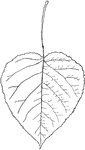
Leaves - simple; alternate; edge toothed. Outline - egg-shape. Apex - taper-pointed. Base - heart-shape. Leaf/Stem - usually hairy, nearly round. Leaf/Bud - in the spring is large and varnished, and very fragrant. Leaf - four to six inches long, nearly as broad; yellowish when young, becoming dark green above, and whitish beneath; net-veined. Bark - smooth and greenish, and often dark-spotted. Found - seldom or never growing wild, but common in cultivation. General Information - a tree forth to fifty feet high, loosely and irregularly branches, and with abundant foliage.

Genus Populus, L. (Aspen, Poplar)

Leaves - simple; alternate; edge toothed. Outline - egg-shape. Apex - taper-pointed. Base - heart-shape.…
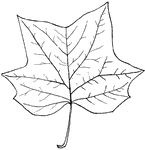
Leaves - simple; alternate; edge lobed (lobes entire). Outline - rounded. Apex - cut almost squarely across, with a shallow hollow, giving a square look to the upper half of the leaf. Base - usually heart-shape. Leaf - three to five inches long and wide; very smooth; with four to six lobes (two lobes at the summit; at the sides two, or two large and two small). Bark - of trunk, dark ash-color and slightly rough. Flowers - four to six inches across, greenish-yellow, marked within with orange, somewhat tulip-like, fragrant solitary. May, June. Found - from Southwestern Vermont to Michigan, southward and westward. Its finest growth is in the valley of the lower Wabash River and along the western slopes of the Alleghany Mountains. General Information - Among the largest and most valuable of the North American Trees. It is usually seventy to one hundred feet high, often much higher, with a straight, clear trunk, that divides rather abruptly at the summit into coarse and straggling branches. The wood is light and soft, straight grained, and easily worked, with the heart wood light yellow or brown, and the thin sap wood nearly white. It is very widely and variously used - for construction, for interior finish, for shingles, in boat-building, for the panels of carriages, especially in the making of wooden pumps and wooden ware of different kings. I asked a carpenter: "Hope, is n't it the tulip wood (which you call poplar*) that the carriage-makers use for their panels?" "Yes, and the reason is, because it shapes so easily. If you take a panel and wet one side, and hold the other side to a hot stove-pipe, the piece will just hub the pipe. It's the best wood there is for panelling." "Of all the trees of North America with deciduous leaves, the tulip tree, next to the buttonwood, attains the amplest dimensions, while the perfect straightness and uniform diameter of its trunk for upwards of forty feet, the more regular disposition of its branches, and the greater richness of its foliage, give it a decided superiority over the buttonwood and entitle it to be considered as one of the most magnificent vegetables of the temperate zone." - Michaux. *The name should be dropped. The tree is not a poplar. The tulip tree was very highly esteemed by the ancients; so much so that in some of their festivals they are said to have honored it by pouring over its roots libations of wine.

Genus Liriodendron, L. (Tulip Tree)

Leaves - simple; alternate; edge lobed (lobes entire). Outline - rounded. Apex - cut almost squarely…
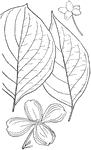
Leaves - simple; opposite; edge entire. Outline - egg-shape, or often broad oval, or reverse egg-shape. Apex - pointed, often taper-pointed. Base - pointed and usually slightly unequal. Leaf/Stem - short (about one half inch). Leaf - three to five inches long; smooth above; pale and nearly smooth beneath; with the whitish ribs very distinct and curved. Bark - of trunk, blackish and rough, with short, broken ridges. The bark, especially of the roots, is very bitter and is used as a tonic. Flowers - The real flowers are greenish-yellow, in a small rounded bunch; but this bunch is surrounded by four large, petal-like leaves, white and often tinged with pink, more than an inch in length, reverse egg-shaped, and ending in a hard, abruptly turned point. The appearance is of a single large flower. The tree blossoms in May before the leaves are fully set. Fruit - The "Flower" is succeeded by a bunch of oval berries that turn bright red as they ripen, making the tree in the autumn, with its richly changing foliage, nearly as attractive as in the spring. Found - in rich woods, from New England to Minnesota, and southward to Florida and Texas. It is very common, especially at the South. General Information - A finely shaped, rather flat-branching tree, usually twelve to thirty feet high, but dwindling, northward, to the dimensions of a shrub; one of the most ornamental of all our native flowering trees. Its character throughout the extent of its range would seem to warrant the recognition of its blossom as the "national flower." Cornus, from a Greek word meaning horn, because of the hardness of the wood.

Flowering Dogwood

Leaves - simple; opposite; edge entire. Outline - egg-shape, or often broad oval, or reverse egg-shape.…
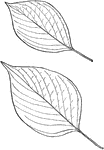
Leaves - simple, alternate (often crowded at the ends of the branches); edge entire. Outline - broadly oval or egg-shape or reverse egg-shape. Apex - pointed. Base - slightly pointed. Leaf/Stem - one inch long or more. Leaf - about three to four inches long, sometimes yellowish-green; smooth above; whitish beneath, and slightly rough between the prominent curved ribs, seldom entirely flat, usually in clusters at the ends of the branches. Bark - of the branches, smooth, yellowish-green, with whitish streaks. Flowers - yellowish in loose flat clusters. June. Fruit - very dark blue when ripe, on reddish stems. August. Found - in low rich woods and along streams, from New Brunswick through the Northern States, and southward along the Alleghany Mountains to Northern Georgia and Alabama. General Information - A small tree or shrub, ten to twenty feet high, with wide-spreading branches and flattish top. A "Shaker Medicine" is made from its bitter bark. Cornus, from a Greek word meaning horn, because of the hardness of the wood.

Dogwood Leaves

Leaves - simple, alternate (often crowded at the ends of the branches); edge entire. Outline - broadly…
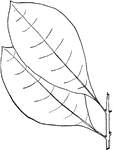
Leaves - simple; opposite; edge entire. Outline - oval, long oval, or reverse egg-shape. Apex - pointed (or sometimes rounded). Base - pointed. Leaf - smooth. Flowers - with narrow petals nearly an inch in length, snow-white, in long, loose, and drooping clusters. June. Fruit - one half to two thirds of an inch long, oval, purplish, with one stony seed. Found - along the banks of streams from New Jersey and Southern Pennsylvania southward. Common and very ornamental in cultivation. General Information - A small tree eight to twenty-five feet high, or often a shrub. Chionanthus, from two Greek words meaning "snow" and "flowers."

Genus Chionanthus, L. (Fringe Tree)

Leaves - simple; opposite; edge entire. Outline - oval, long oval, or reverse egg-shape. Apex - pointed…
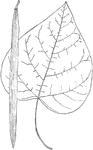
Leaves - simple; opposite; edge entire. Outline - broad egg-shape or heart-shape. Apex - pointed. Base - heart-shape. Leaf - five to eight inches wide; smooth above, downy below, especially on the ribs. Bark - of trunk, a silver-gray, only slightly furrowed. Flowers - very showy and fragrant, in large, upright pyramid-shaped clusters; white or violet-tinged, spotted inside with yellow and purple. July. Fruit - in long, rounded pods (six to twelve inches long, about half an inch in diameter), with the seeds winged and fringed. They often remain throughout the winter. October. Found - new very widely naturalized throughout the Middle and Southern Atlantic States, though formerly a rare and local Southern tree. General Information - A low, very ornamental tree, usually twenty to thirty feet high. Its seeds and bark are considered medicinal. Another species, C. speciosa, Ward, larger and of more value, is sometimes met with in Southern Illinois and the adjoining States. Catalpa is probably a corruption of the Indian word Catawba, which was the name of an important tribe that occupied a large part of Georgia and the Carolinas.

Genus Catalpa, Scop., Walt. (Catalpa)

Leaves - simple; opposite; edge entire. Outline - broad egg-shape or heart-shape. Apex - pointed. Base…
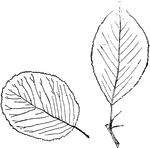
Leaves - simple, opposite; finely and sharply toothed. Outline - broadly oval, or broadly reverse egg-shape. Apex - rounded, sometimes pointed. Base - rounded, sometimes slightly pointed. Quite variable. Leaf/Stem - short and smooth, the edges slightly winged, the wings straight. Leaf - about one and a half to two inches long; smooth; shining above. Flowers - white, in rather large and flat, stemless bunches, at the ends of branches. May. Berries - oval, blackish, sweet and edible. Found - in Connecticut and Southern New York to Michigan and southward. General Information - A small tree fifteen to twenty feet high, or oftenest at the North a low, much-branching shrub. Usually with some of its branches stunted and bare. The tonic bark is sometimes used medicinally.

Genus Viburnum, L. (Haw and Viburnum)

Leaves - simple, opposite; finely and sharply toothed. Outline - broadly oval, or broadly reverse egg-shape.…
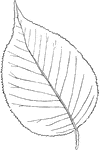
Leaves - simple; opposite; edge closely and sharply toothed. Outline - egg-shape. Apex - pointed. Base - round. Quite variable. Leaf/Stem - winged on both sides with a wavy border; when young, sprinkled with brownish glands. Leaf - about three to four inches long, and half as wide or more; smooth. Flowers - white, in flat, stemless clusters. May, June. Fruit - one half inch long; oval; sweetish; red, becoming almost black when ripe; edible. Found - from Hudson's Bay through the Northern States, southward to Georgia. Common in swamps and rich, moist soil. General Information - A tree fifteen to twenty feet high, with hard, ill-smelling wood.

Genus Viburnum, L. (Haw and Viburnum)

Leaves - simple; opposite; edge closely and sharply toothed. Outline - egg-shape. Apex - pointed. Base…
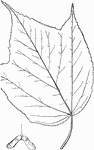
Leaves - simple, opposite; edge lobed, with the lobes very finely sharply toothed. Outline - rounded in the lower half, three-lobed above with the hollows between the lobes sharp. Apex - of the lobes, slim and pointed. Base - more or less heart-shape. Bark - smooth, green, and peculiarly marked lengthwise with dark stripes. Flowers - large, yellowish-green. May, June. Fruit - with spreading pale-green wings, in long clusters. Found - in Canada, through the Northern Atlantic States, westward to Northeastern Minnesota, and along the Alleghany Mountains to Georgia. General Information - A small and slender tree or shrub, usually ten to twenty-five feet high. Acer, from a Latin word meaning sharp, because of the ancient use of the wood for spearheads and other weapons.

Genus Acer, L. (Maple)

Leaves - simple, opposite; edge lobed, with the lobes very finely sharply toothed. Outline - rounded…
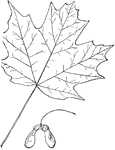
Leaves - simple; opposite; edge lobed, with the lobes very sparingly and coarsely sharp-toothed or the lower pair entire. Outline - rounded, with three to five lobes, usually five, with the hollows between the lobes and between the coarse teeth rounded. Apex - of the lobes, pointed. Base - heart-shaped or nearly squared. Leaf - dark green above; slightly lighter beneath; smooth or somewhat downy on the ribs; closely resembling that of the introduced "Norway Maple" by lacking the latter's milky-juiced leaf-stem. Bark - light gray, usually smoothish when young, becoming rough and scaly. Flowers - yellow-green and very abundant. April, May.  Fruit - greenish-yellow, smooth, drooping, on thread-like and hairy stems one to two inches long, with wings about one inch long, broad and slightly spreading. September. Found - from Southern Canada through the Northern States, southward along the Alleghany Mountains, and westward to Minnesota, Eastern Nebraska, and Eastern Texas. Its finest development is in the region of the Great Lakes. It grows in rich woods; often it forms "groves," sometimes extensive forests.

Genus Acer, L. (Maple)

Leaves - simple; opposite; edge lobed, with the lobes very sparingly and coarsely sharp-toothed or the…
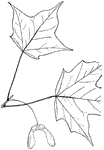
Leaves - simple; opposite; edge lobed, with the lobes very sparingly and coarsely sharp-toothed or the lower pair entire. Outline - rounded, with three to five lobes, usually five, with the hollows between the lobes and between the coarse teeth rounded. Apex - of the lobes, pointed. Base - heart-shaped or nearly squared. Leaf - dark green above; slightly lighter beneath; smooth or somewhat downy on the ribs; when heart-shaped, sometimes with overlapping lobes. Seed-wings - set wide apart, but only slightly diverging.  Bark - blackish. Flowers - yellow-green and very abundant. April, May.  Fruit - greenish-yellow, smooth, drooping, on thread-like and hairy stems one to two inches long, with wings about one inch long, broad and slightly spreading. September. Found - chiefly along streams and in river bottoms, from Western Vermont to Missouri and Northern Alabama. General Information - A tree fifty to eight feet high or more; of very great value in many directions, - as a shade tree, for fuel, for interior finish and the making of furniture, for its ashes, which give large quantities of potash; especially for its sap, which yields the "maple sugar" of commerce. The yield of sugar by an average tree in one season from five to ten pounds.

Genus Acer, L. (Maple)

Leaves - simple; opposite; edge lobed, with the lobes very sparingly and coarsely sharp-toothed or the…
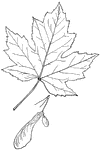
Leaves - simple; opposite; edge deeply lobed, with the lobes unequally notched and toothed. Outline - rounded, with five lobes (the lowest pair much the smallest), and with the hollows between the lobes pointed and usually extending half way to the base of the leaf. Apex - of lobes, pointed. Base - heart-shaped or nearly squared. Leaf - silvery white beneath; downy when young, becoming smooth. Flowers - yellowish-green; woolly when young, becoming nearly smooth; on stems about one inch long, with very large, wide-spreading wings (two to three inches long), one of which is often undeveloped. July, August. Found - widely distributed, but most common west of the Alleghany Mountains and southward. General Information - A tree thirty to fifty feet high, with soft, white wood of comparatively slight value.

Genus Acer, L. (Maple)

Leaves - simple; opposite; edge deeply lobed, with the lobes unequally notched and toothed. Outline…
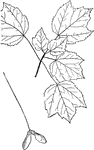
Leaves - simple; opposite; edge lobed, with the lobes irregularly sharp-toothed and notched. Outline - roundish, with three to five lobes (the lowest pair, if present, the smallest); and with the hollows between the lobes pointed and usually extending less than half-way to the base of the leaf. Apex - of the lobes, pointed. Base - heart-shaped (or sometimes rounded.) Leaf/Stem - long and round. Leaf - (very variable in size and in the toothing and shape of its lobes); whitish beneath. Bark - smoothish; gray, becoming dark and rough with age. Flowers - rich crimson, on short stems in drooping clusters. March, April. Fruit - bright red, smooth, with stems two to three inches long. The wings are about one inch long. At first they approach each other, but afterward are somewhat spreading. September.Found - widely distributed in swamps and along streams especially in all wet forests eastward from the Mississippi to the Atlantic, and from Southern Canada to Florida and Texas. General Information - A tree thirty to sixty feet high, with wood of considerable value, especially when it shows a "curly grain." It is one of the very earliest trees to blossom in the spring, and to show its autumn coloring in the fall.

Genus Acer, L. (Maple)

Leaves - simple; opposite; edge lobed, with the lobes irregularly sharp-toothed and notched. Outline…
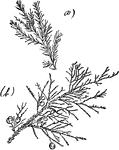
Leaves - simple; indeterminate in position because of their smallness and closeness. They are arranged in four rows up and down the branchlets. In younger or rapidly growing sprouts the leaves are awl-shaped or needle-shaped, somewhat spreading from the branch, very sharp and stiff, placed in pairs (or sometimes in threes), usually about one fourth of an inch long, and with the fine branchlets, which they cover, rounded. In the older and slower-growing trees the leaves are scale-like and overlapping, egg-shape, closely pressed to the branchlets which they cover, and with the branchlets square. As the branchlets grow, the lower scales sometimes lengthen and become dry and chaffy and slightly spreading. Bark - brown and sometimes purplish-tinged, often shredding off with age and leaving the trunk smooth and polished. Berries - about the size of a small pea, closely placed along the branchlets, bluish, and covered with a whitish powder. Found - in Southern Canada, and distributed nearly throughout the United States - more widely than any other of the cone-bearing trees. General information - An evergreen tree, fifteen to thirty feet high (much larger at the South), usually pyramid-shaped, with a rounded base, but varying very greatly, especially near the coast, where it is often twisted and flattened into angular and weird forms. The wood is very valuable, light, straight-grained, durable, fragrant. It is largely used for posts, for cabinet-work, for interior finish, and almost exclusively in the making of lead pencils. The heart-wood is usually a dull red (whence the name), the sap-wood white.  Among the most picturesque objects in the Turkish landscape, standing like sentinels, singly or in groups, and slender and upright as a Lombardy Poplar, are the black cypress trees (C. sempervirens). They mark the sites of graves, often of those which have long since disappeared. In America, more than any other northern tree, the red cedar gives the same sombre effect, whether growing wild or planted in cemeteries. The Common Juniper (J. communis, L.), common as a shrub, is occasionally found in tree form, low, with spreading or drooping branches, and with leaves resembling those of a young Red Cedar, awl-shaped and spreading, but arranged in threes instead of opposite.

Genus Juniperus, L. (Red Cedar)

Leaves - simple; indeterminate in position because of their smallness and closeness. They are arranged…
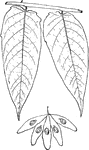
Leaves - compound (odd-feathered, but with the odd leaflet often dwarfed or broken off; leaflets, twenty-one to forty-one); alternate; edge of the leaflets entire, with one or two coarse, blunt teeth at each side of their base. Outline - of leaflet, long egg-shape or lance-shape. Apex - taper-pointed. Base, squared, or heart-shaped. Leaf/Stem - smooth, round, swollen at base. Leaflet/Stems - smooth and short. Leaf - one and a half to six feet long. Leaflets variable, usually about six inches by two and a quarter, rather smooth and thin. Bark - of the trunk, smooth and brown; the new shoots marked with whitish dots. Flowers - in long bunches at the ends of the branches; greenish, and of very disagreeable odor. June, July. Seeds - flat, at the centre of greenish and sometimes pink-tinged wings, in large, loose clusters. October. Found - common in cultivation, and to some extent naturalized. General Information - A large, showy tree (sixty to seventy feet high) of remarkable vigorous and rapid growth. It is a native of China. A Jesuit missionary sent its seeds in 1751 to England. In 1784 it was brought from Europe to the United States, and started near Philadelphia. Also about 1804 it was brought to Rhode Island from South America. But the source of most of the trees now found abundantly in the region of New York is Flushing, Long Island, where it was introduced in 1820. It has been a great favorite, and would deserve to be so still were it not for the peculiar and disagreeable odor of its flowers. Ailanthus, from a Greek word meaning "tree of heaven." Ailanthus - This spelling of the name should rule because so given by its author, although, etymologically, Ailantus would be correct, the native Amboyna name being "Aylanto."

Genus Ailanthus, Desf.

Leaves - compound (odd-feathered, but with the odd leaflet often dwarfed or broken off; leaflets, twenty-one…
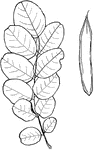
Leaves - compound (odd-feathered; leaflets, eleven to twenty-five); alternate; edge entire. Outline - oval or egg-shape. Apex, rounded. Base - rounded. Stem - of leaf, smooth, and covering the leaf-bud of the next year. Leaflets - very smooth, thin, often slightly tipped with the end of the mid-rib. Bark - of trunk, dark, rough, and very deeply ridged. The smaller branches and young trunks are armed with strong, triangular prickles, but these disappear when the parts are three to four inches thick. Flowers - showy and abundant; in long, loose clusters drooping from the sides of the branchlets; white; and very fragrant. May, June. Fruit - a smooth and rather blunt pod, two to three inches long, one and a half inches wide, four- to six-seeded. Seeds, dark brown. September. Found - Native in the Alleghany Mountains from Pennsylvania (Monroe County - Porter) to Georgia; but now very generally naturalized throughout the United States east of the Rocky Mountains. General Information - A tree usually forty to fifty feet high, sometimes ninety feet, and of rapid growth. Its wood is exceedingly hard and strong, and remarkable durable when in contact with the ground. It is used largely for posts, in ship-building, and in turnery, and it is preferred to all other native wood for tree nails. It is one of the most valuable trees of this or of any country. But is cultivation as a timber tree, which at one time was very general, has nearly ceased in the United State on account of the constant damage done by the grub of the Painted Clytus (Clytus pictus). This troublesome borer not only injures the new growth, but also pierces and detaches large branches, leaving the tree ragged and stunted.

Genus Robinia, L. (Locust)

Leaves - compound (odd-feathered; leaflets, eleven to twenty-five); alternate; edge entire. Outline…
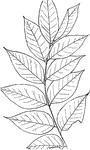
Leaves - unequally twice-compound (odd-feathered; leaflets very numerous - seven to thirteen on the different branches of the main leaf-stem; alternate; edge of leaflets entire. Outline - leaflets, egg-shape or oval. Apex - sharply taper-pointed. Base, slightly heart-shaped or rounded. Leaf-stem - in the autumn takes a violet tinge. Leaf - one and one half to three feet long, about one half as wide. Leaflets, one to two and one half inches long, of a dull green. Bark - of trunk, rough and scaly, separating in small and hard crosswise and backward-curled strips. Branchlets stout and not thorny. Flowers - in white spikes along the branches. May-July. Fruit - in large curved pods (Six to ten inches long, by two inches broad), pulpy within, of a reddish-brown color, flattened and hard. Each pod contains several hard, gray seeds one half of an inch or more in diameter. September, October. Found - in Franklin County, Pennsylvania (Porter), Western New York, westward and southward to Middle Tennessee. Not common. General information - A tree sixty to eighty feet high, or more, with a rather small and regular head. The fewness and the abruptness of its large branches give to it in the winder a dead and stumpy look, whence one of its common names. Its bruised and sweetened leaves are used at the South for poisoning flies. Its seeds were formerly used as a substitute for coffee.

Genus Gymnocladus, Lam. (Coffee Tree)

Leaves - unequally twice-compound (odd-feathered; leaflets very numerous - seven to thirteen on the…
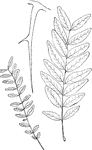
Leaves - compound; )even-feathered, leaflets, ten to twenty-two or more, usually about fourteen), sometimes twice compound; alternate; edge of leaflets entire as seen above, but as seen below often remotely and slightly toothed. Outline of leaflet - long oval or long egg-shape. Base - and narrowed. Apex - rounded. Leaf/Stem - and very short. Leaflet/Stem - downy. Leaflets - three fourths to one and a half inches long; about one third as wide. Often several of them (one to three) are partly or wholly divided into smaller leaflets. Surfaces smooth and shining. Bark - of trunk, gray, and much less rough than that of the common Locust (which has a somewhat similar leaf); branchlets brown and often warty. The branches and the trunk, excepting in very young and quite old trees, are usually thickly covered with spines, two to four inches long, which are curved at the base, often two- to three-branches, and of a reddish-brown color. Flowers - small and greenish. Fruit - a long, flat pod (nine to eighteen inches long) reddish; somewhat twisted, and filled between the seeds with a pulp which at first is sweet (whence the name "Honey" Locust) but which soon becomes sour. The seeds are flat, hard, and brown. Found - native in Pennsylvania, westward and southward, but also somewhat naturalized and widely introduced northward.  General Information - A tree sometimes seventy feet high, with wide-spreading and graceful branches, and light and delicate foliage. It is often used as a hedge plant. A variety entirely bare of thorns (var. inermis) is sometimes found; also a variety (var. brachycarpos) with shorter fruit and thorns.

Genus Gleditschia, L. (Honey Locust)

Leaves - compound; )even-feathered, leaflets, ten to twenty-two or more, usually about fourteen), sometimes…
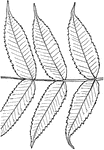
Leaves - compound (odd-feathered; leaflets eleven to thirty-one); alternate; edge of leaflets evenly and sharply toothed. Outline - of leaflet, narrow egg-shape. Apex - long, taper-pointed. Base, rounded or slightly heart-shaped. Leaflet/Stem - lacking. Leaf/Stem - densely velvety-hairy. Leaflet - usually two to four inches long and about one fourth as wide; the under surface whitish and more or less downy. Leaf - one or two feet or more in length. Branchlets - and stalks, especially towards their ends, covered with a very dense velvet-like down, often crimson-tinged. The just is milky and acid. Flowers - greenish-yellow, in upright, pyramid-shaped bunches at the ends of the branches. June. Berries - rounded, somewhat flattened, bright crimson velvety, crowded. Stone - smooth. Juice, acid. September, October. Found - from New Brunswick and the valley of the St. Lawrence through the Northern States, and southward along the Alleghany Mountains to Central Alabama. General Information - A small tree, ten to thirty feet high (or often a shrub), with straggling and evenly spreading branches that are leaved mostly toward their ends, giving an umbrella-like look to the tree. The wood is very soft and brittle; yellow within; the sap-wood white. The young shoots with the pith removed, are used in the spring as "sap quills" in drawing the sap from the sugar maples. The downy and irregular branchlets are suggestive of the horns of a stag, whence the name. An infusion of the berries is sometimes used as a gargle for sore-throat. This species is not poisonous. A variety with deeply gashed leaves (var. laciniata) is reported from Hanover, N. H.

Genus Rhus, L. (Sumach)

Leaves - compound (odd-feathered; leaflets eleven to thirty-one); alternate; edge of leaflets evenly…
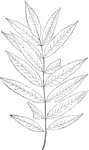
Leaves - compound (odd-feathered; leaflets, nine to fifteen); alternate (often alternate in threes); edge of leaflets finely and sharply toothed. Outline - of leaflet, long and narrow egg-shape. Apex, taper-pointed. Base - rounded and slightly pointed. Leaflet/Stem - lacking, or very short. Leaf - eight to twelve inches long. Leaflet - two to three and one half inches long; surfaces smooth. Bark - of the trunk, reddish-brown and rather smooth. Flowers - small and white, in large, flat clusters, over the surface of the tree - fifty to one hundred or more flowers in a cluster. May, June. Fruit - very ornamental, about the size of peas, scarlet, in large, flat clusters, ripening in autumn and remaining into the winter. Found - from Labrador and Newfoundland through the Northern States and southward along the Alleghany Mountains. Its finest growth is on the northern shores of Lake Huron and Lake Superior. General Information - A slender, somewhat pyramid-shaped, tree, ten to thirty feet high, much and justly prized as one of the best of the native trees for ornamental planting. Its bark and the unripe fruit are very astringent, and are sometimes used medicinally. A slightly different species (P. sambucilolia) is sometimes found in cold swamps and on the borders of streams along the Northern frontier. The Mountain Ash or "Rowan Tree" has for a long time been renowned as a safeguard against witches and all evil spirits. A mere twig of it suffices. "Rowen-tree and red thread Put the witches to their speed." "The spells were vain, the hag returned To the queen in sorrowful mood, Crying that witches have no power Where there is row'n-tree wood."

Genus Pyrus, L. (Mountain Ash)

Leaves - compound (odd-feathered; leaflets, nine to fifteen); alternate (often alternate in threes);…
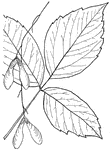
Leaves - compound (odd-feathered; leaflets, three, sometimes five, rarely seven); opposite; edge of leaflet remotely and unequally coarse-toothed. Outline - of leaflets, egg-shape or oval. Apex - taper-pointed. Base - variable and often uneven. Leaflets - slightly rough; the ribs very marked. Bark - of young trunks, smoothish and yellowish-green; twigs, light green. Flowers - small and greenish, in delicate, drooping clusters from the sides of the branches. Fruit - large, yellowish-green, smooth, in long, loose, late-hanging clusters. Found - North, South, and West. One of the most widely distributed of the North American trees, with its finest growth in the region of the Wabash and Cumberland rivers. General Information - A tree twenty to thirty feet high, with spreading branches. Its wood is light and of slight value.

Genus Negundo, Moench

Leaves - compound (odd-feathered; leaflets, three, sometimes five, rarely seven); opposite; edge of…
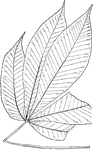
Leaves - compound (hand-shaped; leaflets, usually five, sometimes seven); opposite; edge toothed. Outline - of leaflet, long oval, long egg-shape, or long reverse egg-shape. Apex - taper-pointed. Base - pointed. Leaflet - four to nine inches long, one to three inches wide, usually minutely downy beneath. Flowers, pale yellow. April, May. Fruit - two to two and one half inches in diameter, rounded. Husk - not prickly, but uneven. Nut - one or two in a husk, large and brown. Found - from Alleghany County, Pennsylvania, southward along the Alleghany Mountains to Northern Georgia and Alabama, and westward. General Information - A tree thirty to seventy feet high. Its wood is light and hard to split. With the other species of the same genus it is preferred, above any other American wood, for the making of artificial limbs.

Genus Aesculus, L. (Buckeye, Horse Chestnut)

Leaves - compound (hand-shaped; leaflets, usually five, sometimes seven); opposite; edge toothed. Outline…
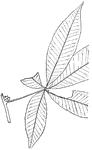
Leaves - compound (hand-shaped; leaflets, five); opposite; edge toothed. Outline - of leaflet, oval or long oval. Apex - taper-pointed. Base - pointed. Leaflets - three to seven inches long; one and a half to three inches wide. Bark - with a disagreeable odor. Flowers - small, yellowish-white. June. Fruit - about three fourths of an inch in diameter. Husk - prickly when young. Nut - smooth. Found - along the western slopes of the Alleghany Mountains - Pennsylvania to Northern Alabama and westward. General Information - A small, ill-scented tree (eighteen to thirty-five feet high). Its wood is light and hard to split. With the other species of the same genus it is preferred, above any other American wood, for the making of artificial limbs.

Genus Aesculus, L. (Buckeye, Horse Chestnut)

Leaves - compound (hand-shaped; leaflets, five); opposite; edge toothed. Outline - of leaflet, oval…
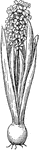
Purple flowering plant belonging to the lily family.

Hyacinth

Purple flowering plant belonging to the lily family.

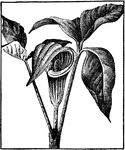
A North American flowering plant also called the Indian Turnip.

Jack-in-the-pulpit

A North American flowering plant also called the Indian Turnip.

A girl reading a book. The image is framed with flowers.

Girl Reading

A girl reading a book. The image is framed with flowers.

A group of daisy-like flowers.

Flowers

A group of daisy-like flowers.

Two small children in a field picking daisies.

Picking Daisies

Two small children in a field picking daisies.