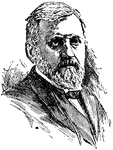
(1829-1908) American lawyer and senator famous four framing the Bland-Allison silver bill of 1878.  US Senator from Iowa.

William Boyd Allison

(1829-1908) American lawyer and senator famous four framing the Bland-Allison silver bill of 1878. US…
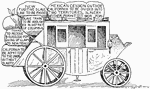
The illustration contains an explanation of the Omnibus Bill or Compromise of 1850. Although one bill, it contains amendments to many laws. This is shown by one cart carrying many things.

Omnibus Bill of 1850

The illustration contains an explanation of the Omnibus Bill or Compromise of 1850. Although one bill,…
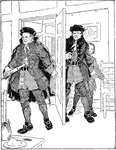
The stranger, Black Dog hiding himself and Jim from Bill, the captain in Treasure Island by Robert Louis Stevenson.

Treasure Island

The stranger, Black Dog hiding himself and Jim from Bill, the captain in Treasure Island by Robert Louis…
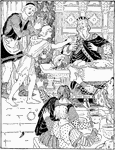
A legend of the knight Roland, who fearlessly claimed his rights by taking food and drink straight from Charlemagne's hands at a feast.

Roland

A legend of the knight Roland, who fearlessly claimed his rights by taking food and drink straight from…
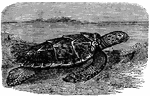
"Much of the tortoise-shell of commerce comes from the Green Turtle, but by far the finest is produced by the Hawk's-Bill Turtle."

Hawk's-Bill Turtle

"Much of the tortoise-shell of commerce comes from the Green Turtle, but by far the finest is produced…
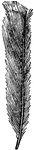
"From the head, backward to the tail, the body feathers increase in strength and size, also alter in form; those on the face, or around the base of the bill, being the smallest, the tail coverts longest."

Neck-Covert

"From the head, backward to the tail, the body feathers increase in strength and size, also alter in…
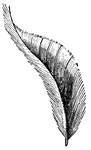
"From the head, backward to the tail, the body feathers increase in strength and size, also alter in form; those on the face, or around the base of the bill, being the smallest, the tail coverts longest."

Tail-Covert

"From the head, backward to the tail, the body feathers increase in strength and size, also alter in…
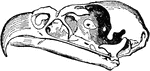
"The beak or bill of birds is composed of two bony pieces, called mandibles, surrounded by a horny substance, differing both in form and thickness, according to the habits of the species."

Bill of Eagle

"The beak or bill of birds is composed of two bony pieces, called mandibles, surrounded by a horny substance,…
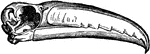
"The beak or bill of birds is composed of two bony pieces, called mandibles, surrounded by a horny substance, differing both in form and thickness, according to the habits of the species."

Bill of Toucan

"The beak or bill of birds is composed of two bony pieces, called mandibles, surrounded by a horny substance,…
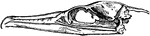
"The beak or bill of birds is composed of two bony pieces, called mandibles, surrounded by a horny substance, differing both in form and thickness, according to the habits of the species."

Bill of Cormorant

"The beak or bill of birds is composed of two bony pieces, called mandibles, surrounded by a horny substance,…
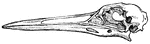
"The beak or bill of birds is composed of two bony pieces, called mandibles, surrounded by a horny substance, differing both in form and thickness, according to the habits of the species."

Bill of Crane

"The beak or bill of birds is composed of two bony pieces, called mandibles, surrounded by a horny substance,…
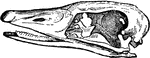
"The beak or bill of birds is composed of two bony pieces, called mandibles, surrounded by a horny substance, differing both in form and thickness, according to the habits of the species."

Bill of Goose

"The beak or bill of birds is composed of two bony pieces, called mandibles, surrounded by a horny substance,…
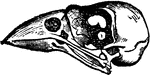
"The beak or bill of birds is composed of two bony pieces, called mandibles, surrounded by a horny substance, differing both in form and thickness, according to the habits of the species."

Bill of Sparrow

"The beak or bill of birds is composed of two bony pieces, called mandibles, surrounded by a horny substance,…
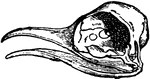
"The beak or bill of birds is composed of two bony pieces, called mandibles, surrounded by a horny substance, differing both in form and thickness, according to the habits of the species."

Bill of Cuckoo

"The beak or bill of birds is composed of two bony pieces, called mandibles, surrounded by a horny substance,…
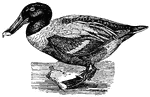
"The Shoveler is smaller than the common wild duck; it has a very long bill, with the upper mandible of a semicylindrical shape, dilated at its extremity, somewhat in the form of a small spoon."

The Shoveler

"The Shoveler is smaller than the common wild duck; it has a very long bill, with the upper mandible…
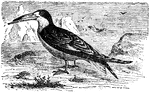
"Sometimes the Scissorbill is called the Cutwater. It is about the size of a pigeon."

The Scissorbill

"Sometimes the Scissorbill is called the Cutwater. It is about the size of a pigeon."
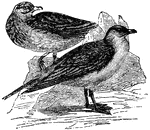
"The Skua, or Dung-bird, is remarkable for its stout bill, which is nearly cylindrical. They fly very rapidly, even against the strongest wind."

Buffon's Skua

"The Skua, or Dung-bird, is remarkable for its stout bill, which is nearly cylindrical. They fly very…
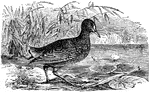
"The chief characteristic of the Water-en is a short and strong bill. They are lively, graceful and ornamental birds."

Water-Hen

"The chief characteristic of the Water-en is a short and strong bill. They are lively, graceful and…
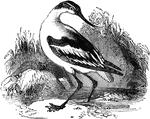
The Pied Avocet (Recurvirostra avosetta) is a large wader in the avocet and stilt family, Recurvirostridae (bill curved upwards).

Pied Avocet

The Pied Avocet (Recurvirostra avosetta) is a large wader in the avocet and stilt family, Recurvirostridae…
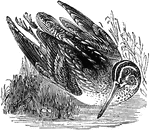
The snipe is a wading bird from the family Scolopacidae characterized by a long slender bill.

Snipe

The snipe is a wading bird from the family Scolopacidae characterized by a long slender bill.

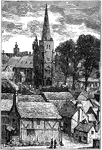
Dating back to Saxon times, the village of Hatfield was first known as "Hetfelle" and then became known as "Haethfeld" when around 970 King Edgar gave 5,000 acres to the monastery of Ely. No records remain from this time until 1226 when Henry III granted the Bishops of Ely rights to an annual four-day fair and a weekly market.

Hatfield, Herts

Dating back to Saxon times, the village of Hatfield was first known as "Hetfelle" and then became known…
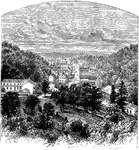
An view of Hot Springs, Arkansas which is nestled in a valley between two mountains. Hot Springs is traditionally known for the natural spring water that gives it its name, flowing out of the ground at a temperature of 147 degrees Fahrenheit. Also is the home town of former President Bill Clinton.

Hot Springs, Arkanasas

An view of Hot Springs, Arkansas which is nestled in a valley between two mountains. Hot Springs is…
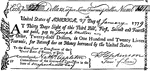
This is a thirty day sight draft bill of exchange for $24 / 120 livres tournois from the Continental Congress issued in Maryland.

Continental Draft

This is a thirty day sight draft bill of exchange for $24 / 120 livres tournois from the Continental…
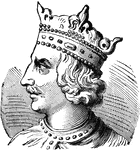
Henry I (c. 1068/1069 – 1 December 1135) was the fourth son of William I the Conqueror, the first King of England after the Norman Conquest of 1066. He succeeded his elder brother William II as King of England in 1100 and defeated his eldest brother, Robert Curthose, to become Duke of Normandy in 1106. He was called Beauclerc for his scholarly interests and Lion of Justice for refinements which he brought about in the rudimentary administrative and legislative machinery of the time. Henry's reign is noted for its political opportunism. His succession was confirmed while his brother Robert was away on the First Crusade and the beginning of his reign was occupied by wars with Robert for control of England and Normandy. He successfully reunited the two realms again after their separation on his father's death in 1087. Upon his succession he granted the baronage a Charter of Liberties, which formed a basis for subsequent challenges to rights of kings and presaged Magna Carta, which subjected the King to law.

Henry I of England

Henry I (c. 1068/1069 – 1 December 1135) was the fourth son of William I the Conqueror, the first…
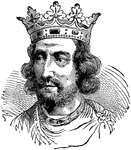
Henry III (1 October 1207 – 16 November 1272) was the son and successor of John "Lackland" as King of England, reigning for fifty-six years from 1216 to his death. His contemporaries knew him as Henry of Winchester. He was the first child king in England since the reign of Ethelred the Unready. Despite his long reign, his personal accomplishments were slim and he was a political and military failure. England, however, prospered during his century and his greatest monument is Westminster, which he made the seat of his government and where he expanded the abbey as a shrine to Edward the Confessor.  He assumed the crown under the regency of the popular William Marshal, but the England he inherited had undergone several drastic changes in the reign of his father. He spent much of his reign fighting the barons over the Magna Carta and the royal rights, and was eventually forced to call the first "parliament" in 1264. He was also unsuccessful on the Continent, where he endeavored to re-establish English control over Normandy, Anjou, and Aquitaine.

Henry III of England

Henry III (1 October 1207 – 16 November 1272) was the son and successor of John "Lackland" as…
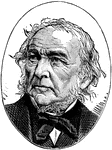
William Ewart Gladstone (29 December 1809 - 19 May 1898) was a British Liberal Party statesman and four times Prime Minister (1868-74, 1880-85, 1886 and 1892-94). He was a champion of the Home Rule Bill which would have established self-government in Ireland.

William Ewart Gladstone

William Ewart Gladstone (29 December 1809 - 19 May 1898) was a British Liberal Party statesman and four…
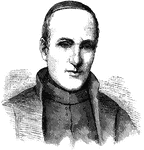
Peter Jan Beckx (February 8, 1795, Sichem, Belgium - March 4, 1887, Rome, Italy) was a Belgian Jesuit, elected 22nd Superior-General of the Society of Jesus. The Duke and Duchess of Anhalt-Köthen converted to Catholicism in 1825 and asked for a Jesuit chaplain. Beckx was appointed to this duty, and went to live in Köthen. By giving classes to children in his own house, building a little church and organizing spiritual activities he brought many people back to the Catholic faith. By 1883 - 88 years old and already 30 in office — Peter Beckx was an infirm. On his own accord he called a General Congregation in order that a 'Vicar General with rights of succession' be given him. General Congregation XXIII met in 1883, in Rome, and the 24 September Anton Anderledy, a Swiss Jesuit priest, was elected. Beckx, though remaining in title the 'Superior General' in effect abdicated his charge entirely. He died four years later at the age of ninety-two.

Peter Jan Beckx

Peter Jan Beckx (February 8, 1795, Sichem, Belgium - March 4, 1887, Rome, Italy) was a Belgian Jesuit,…
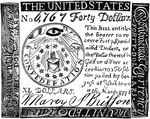
Continental currency was a paper currency issued by the Continental Congress, after the Revolutionary War began in 1775.

Facsimile of Counterfeit Continental Bill

Continental currency was a paper currency issued by the Continental Congress, after the Revolutionary…
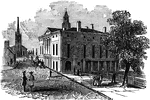
Federal Hall, located at 26 Wall Street in New York City, was the first capitol of the United States of America and the site of George Washington's first inauguration in 1789. It is also the place where the United States Bill of Rights was passed.

Federal Hall

Federal Hall, located at 26 Wall Street in New York City, was the first capitol of the United States…
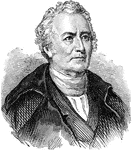
John Trumbull (June 6, 1756 – November 10, 1843) was an American artist during the period of the American Revolutionary War famous for his historical paintings including his Declaration of Independence, which appears on the reverse of the $2 dollar bill.

John Trumbull

John Trumbull (June 6, 1756 – November 10, 1843) was an American artist during the period of the…
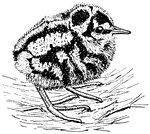
The woodcocks are a group of seven extant very similar wading bird species in the genus Scolopax, characterised by a long slender bill and cryptic brown and blackish plumage. Only two woodcocks are widespread, the others being localised island species. Their closest relatives are the typical snipes of the genus Gallinago (Thomas et al., 2004). These are woodland birds which feed at night or in the evenings, searching for invertebrates in soft ground with their long bills. Unlike in most birds the tip of the upper mandible is flexible. This habit and their unobtrusive plumage makes it difficult to see them when they are resting in the day. The tiny feathers that are located at the first joint of the woodcock's wings are referred to as "pin feathers" and these are much sought after by artists for fine painting work.

Young Woodcock

The woodcocks are a group of seven extant very similar wading bird species in the genus Scolopax, characterised…
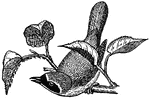
The Yellow-throated Vireo, Vireo flavifrons, is a small American songbird. Adults are mainly olive on the head and upperparts with a yellow throat and white belly; they have dark eyes with yellow "spectacles". The tail and wings are dark with white wing bars. They have thick blue-grey legs and a stout bill. Their breeding habitat is open deciduous woods in southern Canada and the eastern United States

Yellow-throated Vireo

The Yellow-throated Vireo, Vireo flavifrons, is a small American songbird. Adults are mainly olive on…
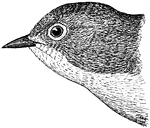
The Nashville Warbler, Vermivora ruficapilla, is a small songbird in the New World warbler family. They have olive-brown upperparts, a white belly and a yellow throat and breast; they have a white eye ring, no wing bars and a thin pointed bill. Adult males have a grey head with a rusty crown patch (often not visible); females and immature birds have a duller olive-grey head

Nashville Warbler

The Nashville Warbler, Vermivora ruficapilla, is a small songbird in the New World warbler family. They…
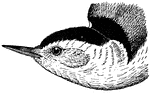
The White-breasted Nuthatch (Sitta carolinensis) is a small songbird of the nuthatch family which breeds in old-growth woodland across much of temperate North America. It is a stocky bird, with a large head, short tail, powerful bill and strong feet. The upperparts are pale blue-gray, and the face and underparts are white. It has a black cap and a chestnut lower belly. The nine subspecies differ mainly in the color of the body plumage.

White-breasted Nuthatch

The White-breasted Nuthatch (Sitta carolinensis) is a small songbird of the nuthatch family which breeds…
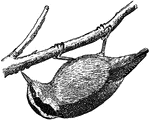
The Red-breasted Nuthatch, Sitta canadensis, is a small songbird. Adults have blue-grey upperparts with reddish underparts; they have a white face with a black stripe through the eyes, a white throat, a straight grey bill and a black crown. This bird is smaller than the White-breasted Nuthatch.

Red-breasted Nuthatch

The Red-breasted Nuthatch, Sitta canadensis, is a small songbird. Adults have blue-grey upperparts with…
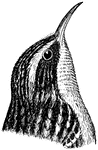
The Brown Creeper (Certhia americana), also known as the American Tree Creeper, is a small songbird, the only North American member of the treecreeper family Certhiidae. Adults are brown on the upperparts with light spotting, resembling a piece of tree bark, with white underparts. They have a long thin bill with a slight downward curve and a long tail. The male creeper has a slightly larger bill than the female. The Brown creeper is 11.7-13.5 cm long (4.6-5.3 in).

Brown Creeper

The Brown Creeper (Certhia americana), also known as the American Tree Creeper, is a small songbird,…
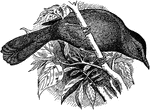
The Grey Catbird (Dumetella carolinensis) is a medium-sized northern American perching bird of the mimid family. It is the only member of New World catbird genus Dumetella. Like the Black Catbird, it is among the basal lineages of the Mimidae. Adults are dark gray with a slim, black bill and dark eyes. They have a long dark tail, dark legs and a dark cap; they are rust-colored underneath their tail.

Gray Catbird

The Grey Catbird (Dumetella carolinensis) is a medium-sized northern American perching bird of the mimid…
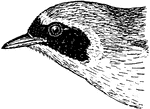
The Yellow-throated Vireo, Vireo flavifrons, is a small American songbird. Adults are mainly olive on the head and upperparts with a yellow throat and white belly; they have dark eyes with yellow "spectacles". The tail and wings are dark with white wing bars. They have thick blue-grey legs and a stout bill. Their breeding habitat is open deciduous woods in southern Canada and the eastern United States

Yellow-throat Vireo

The Yellow-throated Vireo, Vireo flavifrons, is a small American songbird. Adults are mainly olive on…
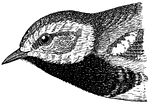
The Black-throated Green Warbler, Dendroica virens, is a small songbird of the New World warbler family. It is 12 cm long and weighs 9 g, and has an olive-green crown, a yellow face with olive markings, a thin pointed bill, white wing bars, an olive-green back and pale underparts with black streaks on the flanks. Adult males have a black throat and upper breast; females have a pale throat and black markings on their breast.

Black-throated Green Warbler

The Black-throated Green Warbler, Dendroica virens, is a small songbird of the New World warbler family.…
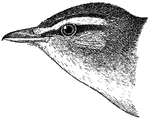
The Red-eyed Vireo, Vireo olivaceus, is a small American songbird, 13-14 cm in length. It is somewhat warbler-like but not closely related to the New World warblers. Adults are mainly olive-green on the upperparts with white underparts; they have a red iris and a grey crown edged with black. There is a dark blackish line through the eyes and a wide white stripe just above that line. They have thick blue-grey legs and a stout bill. They are yellowish on the flanks and under their tail. This bird, not always seen, may sing for long periods of time; it appears to be endlessly repeating the same question and answer. It holds the record for most songs given in a single day among bird species

Red-eyed Vireo

The Red-eyed Vireo, Vireo olivaceus, is a small American songbird, 13-14 cm in length. It is somewhat…
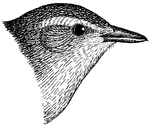
The Warbling Vireo, Vireo gilvus, is a small songbird. Adults are 12 cm long and weigh 12 g. They are mainly olive-grey on the head and upperparts with white underparts; they have brown eyes and the front of the face is light. There is a white supercilium. They have thick blue-grey legs and a stout bill. Western birds are generally smaller.

Warbling Vireo

The Warbling Vireo, Vireo gilvus, is a small songbird. Adults are 12 cm long and weigh 12 g. They are…
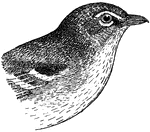
The Yellow-throated Vireo, Vireo flavifrons, is a small American songbird. Adults are mainly olive on the head and upperparts with a yellow throat and white belly; they have dark eyes with yellow "spectacles". The tail and wings are dark with white wing bars. They have thick blue-grey legs and a stout bill. Their breeding habitat is open deciduous woods in southern Canada and the eastern United States

Yellow-throated Vireo

The Yellow-throated Vireo, Vireo flavifrons, is a small American songbird. Adults are mainly olive on…
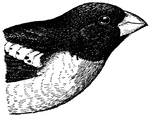
The Rose-breasted Grosbeak, Pheucticus ludovicianus, is a large seed-eating bird in the cardinal family. The adult is 19 cm long and weighs 47 g. It has dark upperparts, white underparts and a large pale bill. The adult male has a black head, wings and upperparts and a bright rose-red patch on its breast; the wings have white patches and rose red linings. The adult female has dark grey upperparts, a white stripe over the eye, streaked underparts and yellowish wing linings. The song resembles a more refined version of the American Robin's. The call is a sharp pink.

Rose-breasted Grosbeak (Male)

The Rose-breasted Grosbeak, Pheucticus ludovicianus, is a large seed-eating bird in the cardinal family.…
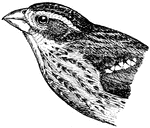
The Rose-breasted Grosbeak, Pheucticus ludovicianus, is a large seed-eating bird in the cardinal family. The adult is 19 cm long and weighs 47 g. It has dark upperparts, white underparts and a large pale bill. The adult male has a black head, wings and upperparts and a bright rose-red patch on its breast; the wings have white patches and rose red linings. The adult female has dark grey upperparts, a white stripe over the eye, streaked underparts and yellowish wing linings. The song resembles a more refined version of the American Robin's. The call is a sharp pink.

Rose-breasted Grosbeak (Female)

The Rose-breasted Grosbeak, Pheucticus ludovicianus, is a large seed-eating bird in the cardinal family.…
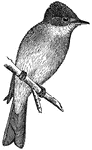
The Western Wood-Pewee, Contopus sordidulus, is a small tyrant flycatcher. Adults are gray-olive on the upperparts with light underparts, washed with olive on the breast. They have two wing bars and a dark bill with yellow at the base of the lower mandible. This bird is very similar in appearance to the Eastern Wood-Pewee; the two birds were formerly considered to be one species.

Western Wood Pewee

The Western Wood-Pewee, Contopus sordidulus, is a small tyrant flycatcher. Adults are gray-olive on…
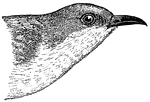
The Black-billed Cuckoo, Coccyzus erythropthalmus, is a cuckoo. Adults have a long brown tail and a black bill. The head and upper parts are brown and the underparts are white. There is a red ring around the eye. Juveniles are drabber, and the eye ring is greenish. Their breeding habitat is edges of wooded areas across North America east of the Rockies. They nest in a low tree or shrub, sometimes on the ground. They sometimes lay eggs in the nests of other birds.

Black-billed Cuckoo

The Black-billed Cuckoo, Coccyzus erythropthalmus, is a cuckoo. Adults have a long brown tail and a…
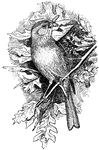
The Field Sparrow, Spizella pusilla, is a small sparrow. Adults have brown upperparts, a light brown breast, a white belly, wing bars and a forked tail. They have a grey face, a rusty crown, a white eye ring and a pink bill. Their breeding habitat is shrubby fields across eastern North America. The nest is an open cup on the ground under a clump of grass or in a small thicket.

Field Sparrow

The Field Sparrow, Spizella pusilla, is a small sparrow. Adults have brown upperparts, a light brown…

The Whip-poor-will or whippoorwill, Caprimulgus vociferus, is a medium-sized (22-27 cm) nightjar from North and Central America. The Whip-poor-will is commonly heard within its range, but less often seen. It is named onomatopoeically after its call. This bird is sometimes confused[1] with the related Chuck-will's-widow (Caprimulgus carolinensis) which has a similar but lower-pitched and slower call. Adults have mottled plumage: the upperparts are grey, black and brown; the lower parts are grey and black. They have a very short bill and a black throat. Males have a white patch below the throat and white tips on the outer tail feathers; in the female, these parts are light brown.

Whip-poor-will

The Whip-poor-will or whippoorwill, Caprimulgus vociferus, is a medium-sized (22-27 cm) nightjar from…
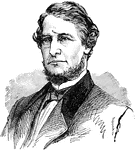
Clement Laird Vallandigham (July 29, 1820 – June 17, 1871) was an Ohio unionist of the Copperhead faction of anti-war, pro-Confederate Democrats during the American Civil War.

Clement Laird Vallandigham

Clement Laird Vallandigham (July 29, 1820 – June 17, 1871) was an Ohio unionist of the Copperhead…
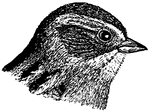
The Swamp Sparrow, Melospiza georgiana, is a medium-sized sparrow. Adults have streaked rusty and black upperparts with a grey breast, light belly and a white throat. They have a rust-coloured cap and wings. Their face is grey with a dark line through the eye. They have a short bill and fairly long legs. Their breeding habitat is marshes, including salt marshes, across eastern North America and central Canada. The bulky nest is attached to marsh vegetation, often with leaves arching over the top. On the central Atlantic coast, in the southern parts of their summer range, they are permanent residents. Other birds migrate to the southern United States.

Swamp Sparrow

The Swamp Sparrow, Melospiza georgiana, is a medium-sized sparrow. Adults have streaked rusty and black…
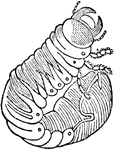
An illustration of a full grown cockchafer larva. The cockchafer (colloquially called may bug, billy witch, or spang beetle, particularly in East Anglia) is a European beetle of the genus Melolontha, in the family Scarabaeidae. Once abundant throughout Europe and a major pest in the periodical years of "mass flight", it had been nearly iradicated in the middle of the 20th century through extensive use of pesticides and has even been locally exterminated in many regions. However, since a change in pest control beginning in the 1980s, its numbers have started to grow again. As they don't tolerate pollution well, their presence is usually a marker of low pollution levels.

Cockchafer Larva

An illustration of a full grown cockchafer larva. The cockchafer (colloquially called may bug, billy…
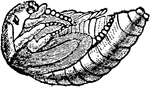
An illustration of a cockchafer pupa. The cockchafer (colloquially called may bug, billy witch, or spang beetle, particularly in East Anglia) is a European beetle of the genus Melolontha, in the family Scarabaeidae. Once abundant throughout Europe and a major pest in the periodical years of "mass flight", it had been nearly iradicated in the middle of the 20th century through extensive use of pesticides and has even been locally exterminated in many regions. However, since a change in pest control beginning in the 1980s, its numbers have started to grow again. As they don't tolerate pollution well, their presence is usually a marker of low pollution levels.

Cockchafer Pupa

An illustration of a cockchafer pupa. The cockchafer (colloquially called may bug, billy witch, or spang…
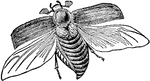
An illustration of a cockchafer. The cockchafer (colloquially called may bug, billy witch, or spang beetle, particularly in East Anglia) is a European beetle of the genus Melolontha, in the family Scarabaeidae. Once abundant throughout Europe and a major pest in the periodical years of "mass flight", it had been nearly iradicated in the middle of the 20th century through extensive use of pesticides and has even been locally exterminated in many regions. However, since a change in pest control beginning in the 1980s, its numbers have started to grow again. As they don't tolerate pollution well, their presence is usually a marker of low pollution levels.

Cockchafer

An illustration of a cockchafer. The cockchafer (colloquially called may bug, billy witch, or spang…
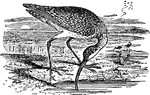
Curlew is the common name for the bird genus Numenius, a group of eight wader species, characterised by a long slender down-curved bill and mainly brown plumage with little seasonal change. Curlews feed on mud or very soft ground, searching for worms and other invertebrates with their long bills. They will also take crabs and similar items.

Curlew

Curlew is the common name for the bird genus Numenius, a group of eight wader species, characterised…
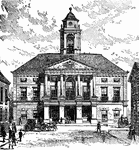
Federal Hall, located at 26 Wall Street in New York City, was the first capitol of the United States of America and the site of George Washington's first inauguration in 1789. It is also the place where the United States Bill of Rights was passed. The original building was demolished in the nineteenth century and replaced by the current structure.

Federal Hall, 1789

Federal Hall, located at 26 Wall Street in New York City, was the first capitol of the United States…
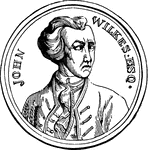
John Wilkes (17 October 1725 – 26 December 1797) was an English radical, journalist and politician. In the Middlesex election dispute, he fought for the right of voters—rather than the House of Commons—to determine their representatives. In 1771 he was instrumental in obliging the government to concede the right of printers to publish verbatim accounts of parliamentary debates. In 1776 he introduced the first Bill for parliamentary reform in the British Parliament. Wilkes' increasing conservatism as he grew older caused dissatisfaction among radicals and was instrumental in the loss of his Middlesex seat at the 1790 general election. Wilkes then retired from politics and took no part in the growth of radicalism in the 1790s.

John Wilkes

John Wilkes (17 October 1725 – 26 December 1797) was an English radical, journalist and politician.…
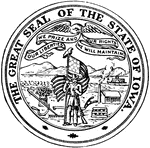
The Great Seal of the State of Iowa. The seal pictures a soldier in wheat field with the American flag and the Mississippi River in the background. The eagle holds the motto, "Our liberties we prize and our rights we will maintain."

Seal of Iowa

The Great Seal of the State of Iowa. The seal pictures a soldier in wheat field with the American flag…
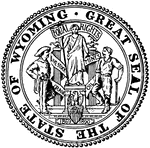
The Great Seal of the State of Wyoming. The seal shows two men symbolizing livestock and mining next to a draped statue with the banner "Equal Rights." The ribbon around the columns reads "Oil, Mines, Livestock, Grain."

Seal of Wyoming

The Great Seal of the State of Wyoming. The seal shows two men symbolizing livestock and mining next…
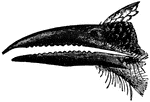
The serratirostral bill of the motmot (Momotus nattereri).

Motmot Beak

The serratirostral bill of the motmot (Momotus nattereri).

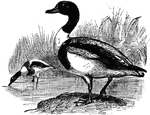
The Common Shelduck (Tadorna tadorna) is a duck distinguished by its red bill and white, brown, and green feathers. It belongs to the Anatidae family of ducks, geese, and swans.

Common Shelduck

The Common Shelduck (Tadorna tadorna) is a duck distinguished by its red bill and white, brown, and…