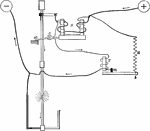
"Illustration showing the detail of a carbon arc lamp; S, solenoid; c, clutch; w, clutch-washer; T, electromagnet; m, short circuit point; R, resistance properly adjusted." -Avery 1895

Detailed Arc Lamp

"Illustration showing the detail of a carbon arc lamp; S, solenoid; c, clutch; w, clutch-washer; T,…
"Since arc lamps are connected in series, any particular lamp that is to be extinguished must be short-circuited. The dynamo is provided with appliances for maintaining a uniform current strength regardless of the number of lamps in use on its circiuit. When the number of lamps is increased, the voltage of the dynamo is correspondingly increased. ." -Avery 1895

Arc Lamps In Series

"Since arc lamps are connected in series, any particular lamp that is to be extinguished must be short-circuited.…
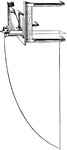
"Device used to prove that all things fall at the same rate due to gravity. When the device is triggered, one object is dropped while anothe object is shot horizontally from within, with the result being that both objects strike the ground at the same time." —Hallock 1905

Projectile Motion

"Device used to prove that all things fall at the same rate due to gravity. When the device is triggered,…
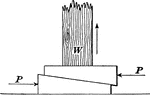
"The wedge is a movable inclined plane, and is used for moving a great weight a short distance. A common method is shown here." —Hallock 1905

Wedge

"The wedge is a movable inclined plane, and is used for moving a great weight a short distance. A common…
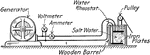
"Method of drying out a generator by short-circuiting the armature leads through a water rheostat." —Croft 1920

Method For Drying Out a Generator

"Method of drying out a generator by short-circuiting the armature leads through a water rheostat."…
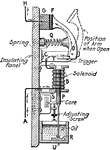
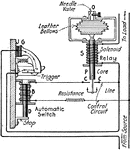
"Diagrammatic drawing of a time-limit circuit breaker." —Croft 1920

Time-limit Circuit Breaker

"Diagrammatic drawing of a time-limit circuit breaker." —Croft 1920

"Diagram illustrating one type of time-limit relay." —Croft 1920

Time-limit Relay

"Diagram illustrating one type of time-limit relay." —Croft 1920

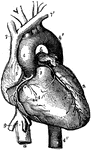
Front view of the heart and great vessels. The pulmonary artery has been cut short close to its origin. Labels: 1, right ventricle; 2, left ventricle; 3, root of the pulmonary artery; 4, 4', arch of the aorta; 4'', the descending thoracic aorta; 5, part of the right auricle; 6, part of the left auricle; 7, 7', innominate veins joining to form the vena cava superior; 8, inferior vena cava; 9, one of the large hepatic veins; X, placed in the right auriculo-ventricular groove, points to the right or posterior coronary artery; X, X, placed in the anterior interventricular groove, indicate the left or anterior coronary artery.

Heart

Front view of the heart and great vessels. The pulmonary artery has been cut short close to its origin.…
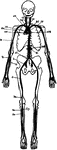
The main arteries of the body. Labels: Crd, and Crs, right and left coronary arteries of the heart, cut short near their origin; Aa, and aA, aortic arch; At, thoracic aorta; Aab, abdominal aorta; K, renal artery; Sd, right, and Ssi, left subclavian; Cd, right, and Cs, left carotid; Ax, axillary artery; B, brachial artery; U, ulner artery; R, radial artery; Ai, common iliac artery; I, external iliac artery; C, femoral artery; Po, popliteal artery; Ta, anterior, and Tp, posterior tibial artery; Pe, peroneal artery.

The Main Arteries of the Body

The main arteries of the body. Labels: Crd, and Crs, right and left coronary arteries of the heart,…
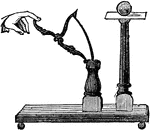
"On the top of a short pillar is placed a card, and on the card a brass ball. Beside the pillar is fixed a steel spring, with an apparatus for drawing it back. If the spring is drawn back and the suddenly released, it will drive the card from the top of the pillar, while the ball in consequence of its inertia will retain its place." —Quackenbos 1859

Inertia Demonstration

"On the top of a short pillar is placed a card, and on the card a brass ball. Beside the pillar is fixed…
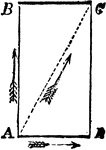
"Let, for instance, the force used by the boatman be twice as great as that of the tide. Then by the time he would reach B, the tide would have carried his boat one-half of that distance, to D." —Quackenbos 1859

Resultant Motion with Boat

"Let, for instance, the force used by the boatman be twice as great as that of the tide. Then by the…
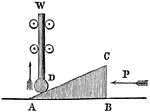
"This wedge is a movable inclined plane. Allows for raising great weights a short distance." —Quackenbos 1859

Inclined Plane Wedge

"This wedge is a movable inclined plane. Allows for raising great weights a short distance." —Quackenbos…
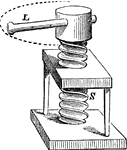
"Power is applied to the head of the screw. Each time the screw is turned into the nut, it advances the distance between two of the threads and compresses to that extent any fixed object against which it is directed." —Quackenbos 1859

Screw and Nut

"Power is applied to the head of the screw. Each time the screw is turned into the nut, it advances…
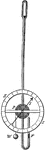
"As the mercury rises and lowers in the barometer, the float F turns the index, I. Index I points to the correct reading on the graduated scale S." —Quackenbos 1859

Wheel Barometer

"As the mercury rises and lowers in the barometer, the float F turns the index, I. Index I points to…
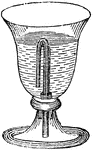
"Whenever liquid reaches the bottom of the short leg on the siphon inside the cup, the liquid is discharged out of the bottom of the siphon. Discharge continues until the liquid level drops below the short leg of the siphon." —Quackenbos 1859

Tantalus's Cup

"Whenever liquid reaches the bottom of the short leg on the siphon inside the cup, the liquid is discharged…
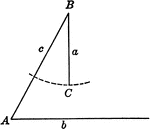
Illustration showing ambiguous case when the solution is not a triangle using law of sines.

Ambiguous Case of Law of Sines Triangle

Illustration showing ambiguous case when the solution is not a triangle using law of sines.
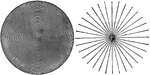
Lines for the detection of astigmatism. "The refracting surfaces of the eye acting together are equivalent in refracting power to a single, spherical surface of fairly short curvature. Frequently, however, the result is not the same as would be given by a perfect spherical surface, owing to inequalities in the curvature of the eye. In one direction the curvature may be greater than that at right angles to it. This tendency to a cylindrical form is called astigmatism. It interferes with the formation of perfect images and sometimes leads to serious eye strain in the effort to better the vision. Astigmatism may be detected by looking at black lines radiating from a point or at fine black concentric circles. Portions of the liens or circles appear gray and others black; the gray portions are out of focus. This defect is corrected by proper cylindrical glasses which equalize the curvature of the eye" — Newell, 1900

Detection of Astigmatism

Lines for the detection of astigmatism. "The refracting surfaces of the eye acting together are equivalent…
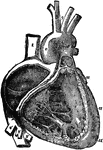
The right auricle (atrium) and ventricle of the heart opened, and a part of their right and anterior walls removed, so as to show their interior; 1/2, 1, superior vena cava; 2, inferior vena cava; 2', hepatic veins cut short; 3, right auricle; 3', placed in the fossa ovalis, below which is the Eustachian valve; 3", is placed close to the aperture of the coronary vein; +, +, placed n the auriculo-ventricular groove, where a narrow portion of the adjacent walls of the auricle and ventricle has been preserved; 4, 4, cavity of the right ventricle; the upper figure is immediately below the semilunar valves; 4', large columna carnea or musculus papillaris; 5, 5', 5", tricuspid valve; 6, placed in the interior o the pulmonary artery, a part of the anterior wall of that vessel having been removed, and a narrow portion of it preserved at its commencement where the semilunar valves are attached; 7, concavity of the aortic arch close to the cord of the ductus arteriosus; 8, ascending part of sinus of the arch covered at its commencement by the auricular appendix and pulmonary artery; 9, placed between the innominate and left carotid arteries; 10, appendix of the left auricle; 11, 11, the outside of the left ventricle, the lower figure near the apex.

Right Atrium and Ventricle of the Heart

The right auricle (atrium) and ventricle of the heart opened, and a part of their right and anterior…
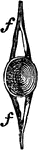
The vertebra of a fish, which is very different from that of a human. It has but two processes, <em> f f </em>. In humans there is a single short spinous process behind, while the vertebra is round in front. But in the fish there are two quite long spinous processes, one in front and the other in the rear (which is above and below, respectively, when the fish is in water).

Vertebra of a Fish

The vertebra of a fish, which is very different from that of a human. It has but two processes,

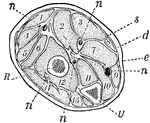
A section across the forearm a short distance below the elbow-joint. R and U, its two supporting bones, the radius and ulna; e, the epidermis, and d, the dermis of the skin; the latter is continuous below with bands of connective tissue, s, which penetrate between and invest the muscles, which are indicated by numbers; n, n, nerves and vessels.

Forearm, Section of

A section across the forearm a short distance below the elbow-joint. R and U, its two supporting bones,…
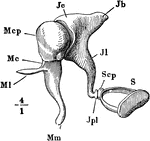
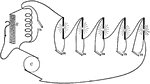
The auditory ossicles of the right ear, seen from the front. Labels: M, malleus; J, incus; S, stapes; Mcp, head of the malleus; Mc, neck of the malleus; Ml, long process; Mm, handle; Jc, boy; Jb, short, and Jl, long process of incus; Jpl, os orbiculare; Scp, head of stapes.

The Auditory Ossicles

The auditory ossicles of the right ear, seen from the front. Labels: M, malleus; J, incus; S, stapes;…
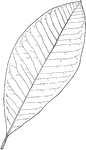
Leaves - Simple, alternate, edge entire. Outline - long oval or slightly reverse egg-shape. Apex, short, sharp-pointed. Base, pointed. Leaf - twelve to thirty-six inches long, six to eight inches wide; rather dark green above; lighter beneath; silky when young, but soon smooth; growing in clusters at the ends of the branches. Bark - smoothish and light. Flowers - seven to eight inches across, at the ends of the branches, white, and fragrant. May, June. Fruit - in a cylinder-shaped bunch, four to five inches long, and rose-colored as it ripens. Found - in Southeastern Pennsylvania and southward along the Alleghany Mountains, and in cultivation. <p>General Information - A tree twenty to thirty feet high, with irregular branches, and light, soft wood. As in other magnolias the juice is bitter and fragrant. From "magnol," the name of a botanist of the seventeenth century.

Genus Magnolia, L. (Magnolia)

Leaves - Simple, alternate, edge entire. Outline - long oval or slightly reverse egg-shape. Apex, short,…
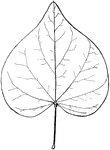
Leaves - simple; alternate; edge entire. Outline - round heart-shape. Apex - tapering and rather blunt, sometimes with a short bristle. Base - heart shape. Leaf/Stem - smooth and swollen at each end into a sort of knob. Leaf - usually about four to five inches long and wide; rather thin, smooth above and below; with seven prominent ribs radiating from the end of the leaf-stem. Flowers - reddish, acid, usually abundant in small clusters along the branches; appearing before the leaves. March to May. Fruit - a small, many-seeded, flat pod, winged along the seed-bearing stem. Seeds - reverse egg-shape. Found - in rich soil, Western Pennsylvania, westward and southward. Common in cultivation. General Information - A small and fine ornamental tree, with long, flat-leaved branches. The name "Judas tree" is traditional. "This is the tree whereon Judas did hang himself, and not the elder tree, as it is said." From a Greek word meaning "shuttle," because of the shuttle-shaped pod.

Genus Cercis, L. (Red Bud)

Leaves - simple; alternate; edge entire. Outline - round heart-shape. Apex - tapering and rather blunt,…
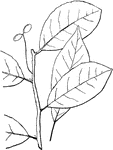
Leaves - simple; alternate; edge entire. Outline - oval or reverse egg-shape. Apex - pointed. Base - pointed. Leaf/Stem - slightly hairy when young. Leaf - two to five inches long; usually about half as broad; dark green and very shining above, especially when old; light green and shining below; thick, tough, and firm. Middle rib slightly hairy when young; side ribs rather indistinct and curved. Bark - grayish and often broken into short sections. Fertile Flowers - small, in clusters of three to eight on slender stems. April, May. Fruit - nearly one half inch long; bluish-black when ripe; egg-shape or oval; acid and rather bitter until "frosted." Stone - oval, somewhat pointed at each end, slightly flattened, and with three or four blunt ridges on each side. September. Found - from Southern Maine to Michigan, and southward to Florida and Texas. General Information - A tree twenty to forty feet high (larger southward), with flat, horizontal branches. The wood, even in short lengths, is very difficult of cleavage, and so is well fitted for beetles, hubs of wheels, pulleys, etc. Its leaves are the first to ripen in the fall, changing (sometimes as early as August) to a bright crimson. In the South, opossums climb the tree in search of its fruit and are immortalized in stories.

Genus Nyssa, L. (Sour Gum)

Leaves - simple; alternate; edge entire. Outline - oval or reverse egg-shape. Apex - pointed. Base -…
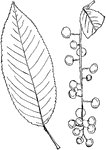
Leaves - simple; alternate; edge toothed (with the points of the teeth so incurved as to appear blunt), and often finely "crinkled." Outline - usually long oval or long egg-shape. Apex - pointed. Base - rounded or slightly pointed. Leaf/Stem - usually with two to five tooth-like glands near the base of the leaf. Leaf - two to five inches long; thickish; polished, and of a deep shining green above; beneath, lighter and smooth, with the middle rib sometimes downy toward the base. In the autumn the leaves turn to orange and later to pale yellow. Bark - of old trunks, blackish and rough; of young trunks and on the larger branches, reddish or purplish brown; marked with scattered lines; on young shoots, at first green or olive brown, gradually becoming darker, and sprinkled (sic) with small orange dots. Flowers - white, with short stems, closely set in a long, cylinder-shaped cluster. May, June. Fruit - about one and a quarter inches in diameter; with short stems (one and a quarter to one and a third inches ) hanging in long, close clusters from the ends of the twigs. It is nearly black when ripe, and of a pleasant flavor though somewhat bitter; it is eagerly eaten by birds. August. Found - very widely distributed north, south, and west. It reaches its finest growth on the western slopes of the Alleghany Mountains. General Information - A tree fifty to eighty feet high. The wood is light and hard, of a brown or reddish tinge, becoming darker with exposure, and of very great value in cabinet work and interior finish. It is now becoming scarce, so that stained birch is often used as a substitute. The bitter aromatic bark is used as a valuable tonic; "cherry brandy" is made from the fruit.

Genus Prunus L. (Cherry, Plum)

Leaves - simple; alternate; edge toothed (with the points of the teeth so incurved as to appear blunt),…
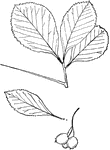
Leaves - simple; alternate; edge, sharply toothed above; entire below. Outline - reverse egg-shape. Apex - usually rounded, sometimes pointed. Base - tapering to a point, quite variable. Leaf/Stem - short. Leaf - one to two and a half inches long, half to three quarters as wide; dark green; thick, smooth, very shining above. Thorns - two to three inches long, rather slender and straight. Flowers - white; fragrant; in bunches of about fifteen blossoms, on very short side branchlets. June. Fruit - about one third inch in diameter; pear-shaped or round; red remaining on the three during the winter. Found - along the St. Lawrence and westward, and from Vermont, southward and westward; not common. General Information - A small, thick-branching tree, ten to twenty feet high. It is the best species of thorn for hedges. Var. pyracanthifolia has a somewhat narrower leaf and longer leaf stem. From a Greek word meaning strength.

Genus Crataegus, L. (Thorn)

Leaves - simple; alternate; edge, sharply toothed above; entire below. Outline - reverse egg-shape.…
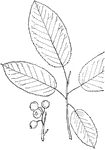
Leaves - simple; alternate; edge very sharply and finely toothed. Outline - long oval, long egg-shape, or reverse egg-shape. Apex - sometimes bristle-pointed. Base - slightly heart-shaped or rounded. Leaf - usually two to three inches long, somewhat downy when young, afterward very smooth above and below. Bark - of branches and twigs usually purplish-brown and very smooth. Flowers - large, white, in long and loose clusters at the ends of the branchlets; appearing before the leaves. April, May. Fruit - berry-like, round, purplish, sweet, and edible. June. Found - in woods and along streams; common at the North; rare in the South. General Information - A small tree, ten to thirty feet high, or in some of its numerous forms reduced to a low shrub; noticeable and showy in early spring because of its flowers. The variety A. C. oblongifolia, T. and G., differs somewhat from the above in the dimensions of the flowers and flower clusters, etc. The name "shad-bush" is given because the trees blossom about the time that the shad "run".

Genus Amelanchier, Medik (June-berry)

Leaves - simple; alternate; edge very sharply and finely toothed. Outline - long oval, long egg-shape,…
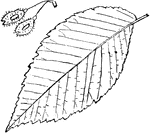
Leaves - simple; alternate; edge sharply and often doubly toothed. Outline - oval or egg-shaped, or inversely egg-shaped; always one-sided. Apex - taper-pointed. Base - rounded, or slightly heart-shaped, rarely pointed. Leaf/Stem - about one quarter inch long. Buds - smooth. Leaf - usually two to five inches long, and one and a half to two and a half wide; somewhat downy when young, afterward roughish below; above, either rough in one direction, or (especially if taken from the ends of the long branches) smooth and shining. Ribs - prominent and straight. Bark - of the branches not marked with "corky ridges"; branchlets, smooth. Seeds - flat egg-shaped or oval, winged and fringed all around. Last of May.  Found - northward to Southern Newfoundland; southward to Florida; westward to the Black Hills of Dakota. Toward the western and southwestern limits it is found only in the river-bottom lands. General Information - One of the very noblest of American trees, eighty feet or more in height, and of strong and graceful proportions. The trunk divides at a slight angle into two or three arching limbs, and these again into many smaller curving and drooping branches. The trunk and the larger branches are often heavily fringed with short and leafy boughs. The tree is widely cultivated. Streets planted with it become columned and arched like the aisles of a Gothic cathedral. The wood is hard, and very tough from the interlacing of its fibers. It is used in making saddle-trees and for wheel-hubs, and is now largely exported to England to be used in boat- and ship-building. One day I found four men in a stone quarry, working with iron bars and rollers over a heavy flat slab. They were moving the stone slowly up a narrow plant into their cart. "John, " I said, "I would not think that board could hold a stone of such weight two minutes. Is it hickory?" "No sir, " said John, " that's an elm plank; it can't break." It did not break. It was one of the woods which the Deacon used in building his famous "one-hoss shay": So the deacon inquired of the village folk Where he could find the strongest oak, That count n't be split nor bent nor broke, - That was for spokes and floor and sills; He sent for lancewood to make the thills; The cross-bars were ash, from the straightest trees; The panels of whitewood, that cuts like cheese, But lasts like iron for thing like these; The hubs of logs from the Settler's Ellum; - Last of its timber, - they could n't sell 'em, Never an axe had seen their chips, And the wedges flew from between their lips, Their blunt ends frizzled like celery-tips;" --Oliver Wendell Holmes

Genus Ulmus, L. (Elm)

Leaves - simple; alternate; edge sharply and often doubly toothed. Outline - oval or egg-shaped, or…
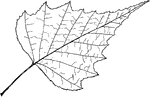
Leaves - simple; alternate (often alternate in pairs); edge unequally sharp-toothed, with the base entire. Outline - triangular. Apex - taper-pointed. Base - variable, more or less squared, sometimes slightly hollowed, rounded or pointed. Leaf/Stem - long and slender, about three quarters of an inch or more in length. Leaf - one and three quarters to three inches long. Smooth and shining on both sides. Bark - The outer bark of the mature trunk is chalky-white and thin, but not, like the bark of the Paper-birch, easily separable into layers. Usually it is marked with blackish dots and lines. Often the branchlets and twigs are blackish, and in very young trees the bark may be light reddish-brown, and marked with white dots. Found - on poor soil, from Delaware and Pennsylvania northward (mostly toward the coast), and in ornamental cultivation. It springs up abundantly over burned and abandoned lands. General Information - A slender, short-lived tree, twenty to thirty feet high, with white, soft wood, not durable; used largely in making spools, shoe pegs, etc., and for fuel. A still more graceful cultivated species is the European Weeping Birch (B. pendula). Its branches are very drooping, with more slender leaves, and a spray that is exceedingly light and delicate, especially in early spring.

Genus Betula, L. (Birch)

Leaves - simple; alternate (often alternate in pairs); edge unequally sharp-toothed, with the base entire.…
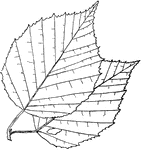
Leaves - simple; alternate; edge sharply and unequally double-toothed. Outline - egg-shaped. Apex - pointed. Base - rounded, slightly heart-shaped, or, rarely, wedge-shaped. Leaf/Stem - downy. Leaf - two to three inches long; dark green and smooth above; beneath, dull, and with the ribs somewhat hairy, especially in their angles. Bark - of trunk very tough and durable; thick; snow-white on the outside; easily removed from the wood, and then itself very separable into paper-like sheets. The inner sheets are of a reddish tinge. Found - in the mountains of Northern Pennsylvania, New England, and far northward, farther than any other non-evergreen tree of America, excepting the aspen.    General Information - A tree, forty to seventy feet high. The wood is light, hard, and very close-grained, but decays rapidly when exposed - more rapidly than the bark, which often remains as a shell long after the wood within has disappeared. It is very largely used in making spools, pegs, shoe-lasts, in turnery, for wood-pulp, and for fuel. The waterproof bark is much used by Indians and trappers for their canoes. "Give me of your bark, O Birch-Tree! Of your yellow bark, O Birch-Tree! Growing by the rushing river, Tall and stately in the valley! I a light canoe will build me, That shall float upon the river, Like a yellow leaf in autumn, Like a yellow water-lily. 'Lay aside your cloak, O Birch-Tree! Lay aside your white-skin wrapper, For the summer time is coming, And the sun is warm in the heaven, And you need no white-skin wrapper!'" Hiawatha

Genus Betula, L. (Birch)

Leaves - simple; alternate; edge sharply and unequally double-toothed. Outline - egg-shaped. Apex -…
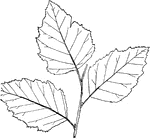
Leaves - simple; alternate; edge unequally double-toothed, entire at base. Outline - egg-shape, often approaching diamond-shape. Apex - pointed. Base - somewhat pointed, often rather blunt wedge-shaped. Leaf/Stem - short (about one half to three fourths of an inch) and downy. Leaf - about three inches long by two inches wide, or often less; whitish and (until old) downy beneath; dotted; in autumn turning to a bright yellow. Bark - of the trunk reddish-brown. As the tree grows the bark becomes torn and loose, hanging in thin shreds of varying shades. The young twigs are downy.  Found - on low grounds, especially along river banks, from Massachusetts westward and southward. It becomes common only in the lower part of New Jersey. Its finest growth is in the South. It is the only birch which grows in a warm climate. General Information - A tree usually thirty to fifty feet high, with the branches long and slender, arched and heavily drooping. Often the branches cover the trunk nearly to the ground. "Birch brooms" are made from the twigs.

Genus Betula, L. (Birch)

Leaves - simple; alternate; edge unequally double-toothed, entire at base. Outline - egg-shape, often…
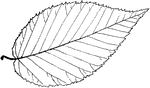
Leaves - simple; alternate (often alternate in pairs); edge very sharply, unequally, and rather coarsely toothed. Outline - egg-shape. Apex - pointed. Base - narrowed and heart-shaped. Leaf/Stem - short and downy. Leaf - about four by two and one fourth inches, or often smaller, thin' downy when young, becoming smooth. Ribs - straight. Bark - outer bark of trunk thin and a silvery yellow, and separating into narrow ribbons curling outwards at the ends. The twigs and the bark are sweet-tasting and aromatic, but less so than in the "Sweet Birch."  Found - in moist woods, along the Alleghany Mountains, in Delaware and Southern Minnesota, and northward into Canada. General Information - A tree forth to eight feet or often more in height; one of the largest and most valuable non-evergreen trees of New England and Canada. Its hard, close-grained wood is largely used for fuel, in making furniture, button-moulds, wheel-hubs, pill-boxes, etc.

Genus Betula, L. (Birch)

Leaves - simple; alternate (often alternate in pairs); edge very sharply, unequally, and rather coarsely…
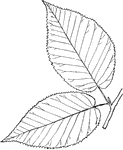
Leaves - simple; alternate; edge finely and sharply double-toothed. Outline - egg-shape. Apex - pointed. Base - heart-shaped. Leaf/Stem - short and downy. Leaf - two to four inches long; about one half as wide; silky-hairy when young, but becoming smooth, except on the ribs beneath. Bark - of trunk, a dark chestnut-brown; smoothish when young, but becoming rough in old trees. The smaller branches are smooth and dotted with white spots. In its leaves and the color of the twigs it somewhat resembles the garden cherry. The foliage and bark are very aromatic and sweet-tasting.Found - from Newfoundland to Northern Delaware, westward, and southward along the mountains. It is very common in the northern forest. General Information - A tree thirty to sixty feet high, with many slender branches. The wood is hard, fine-grained, and of a reddish tint. It is largely used for cabinet-work (sometimes in place of a more valuable Black Cherry) and for fuel.

Genus Betula, L. (Birch)

Leaves - simple; alternate; edge finely and sharply double-toothed. Outline - egg-shape. Apex - pointed.…
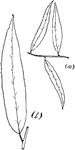
Leaves - simple; alternate; finely and sharply toothed. Outline - long and narrow. Apex - long, taper-pointed. Base - pointed or slightly rounded. Leaf/Stem - short and woolly. Leaf - one and a half to four inches long; commonest length about two inches; downy when young, becoming smooth excepting on the upper side of the mid-rib, which is usually woolly. Bark - of trunk, dark and rough; branches very brittle at the base and yellowish; twigs tough and purplish or yellow. Found - in Southern New Brunswick and Ontario, and from Northern Vermont southward. Common on low ground, especially in New York and Pennsylvania. General Information - A small tree, fifteen to twenty feet high; quite variable in the style of its foliage; the latest to flower, in May.

Genus Salix, L. (Willow)

Leaves - simple; alternate; finely and sharply toothed. Outline - long and narrow. Apex - long, taper-pointed.…
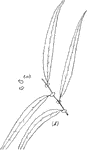
Leaves - simple; alternate; edge very finely sharp-toothed. Outline - long and narrow, often "scythe-shaped." Apex - long, taper-pointed. Base - gradually narrowing and pointed or slightly rounded. Leaf/Stem - short. Stipules - (two small, leaf-like appendages at the base of the leaf-stem), not falling off when young, as in most of the willows; moon-shaped, finely toothed, wider than long. Leaf - four to eight inches long; green and smooth above and below (silky-downy when young). Found - on low ground from New England to the Middle States and westward. General Information - A small tree (or sometimes a shrub). The persistent stipules and the length of the leaf furnish ready signs for distinguishing it from S. nigra. Salix from two Celtic words meaning "near" and "water."

Genus Salix, L. (Willow)

Leaves - simple; alternate; edge very finely sharp-toothed. Outline - long and narrow, often "scythe-shaped."…
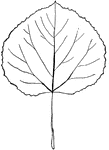
Leaves - simple; alternate; edge sharp-toothed, with rounded hollows between. Outline - rounded. Apex - short, sharp-pointed. Base - slightly heart-shaped. Leaf/Stem - slender and very much flattened sidewise. Leaf - two to two and a half inches wide, and usually about one half inch shorter than wide; dark green; smooth on both sides when mature, with a slight down on the edge. Ribs distinct above and below and whitish. Bark - of trunk, greenish-white and smooth, often with blotches of very dark brown, especially under the ends of the branches. The bark is exceedingly bitter. Found - from Northern Kentucky and the mountains of Pennsylvania northward to Hudson Bay and Newfoundland, northwest to the Arctic Ocean, and along the Rocky Mountain slopes. It is the most widely distributed of North American Trees.  General Information - A tree twenty to fifty feet high, with white, soft wood that is largely used in place of rags in making coarse paper. The tremulousness of its foliage, which the slightest breeze stirs, is due to the thinness of the sidewise-flattened leaf-stems. Tradition accounts differently for the motion of the leaves. It says that the wood of the aspen tree was taken for the Saviour's cross, and that, ever since, the tree has shivered. Another tradition claims that, when Christ went by on his way to Calvary, all the trees sympathized and mourned, excepting the aspen; but when he died, there fell upon the aspen a sudden horror of remorse, and such a fearful trembling as has never passed away. In describing the occupations of the fifty maidens in the hall of the "gorgeous palace" of King Alcinous, Homer says: "...some wove the web, Or twirled the spindle, sitting, with a quick, Light motion like the aspen's glancing leaves."

Genus Populus, L. (Aspen, Poplar)

Leaves - simple; alternate; edge sharp-toothed, with rounded hollows between. Outline - rounded. Apex…
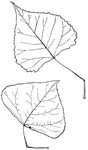
Leaves - simple; alternate; edge somewhat irregularly toothed. Outline - broad egg-shape (approaching triangular-shape). Apex - long, taper-pointed. Base - squared, slightly hollowed, or slightly pointed. Leaf/Stem - long and slender and much compressed sidewise. Leaf - two to three and a half inches long (much larger on young shoots); length and width nearly the same; smooth; ribs distinct and whitish on both sides, irregular, and branching. Bark - of trunk, light "granite-gray," smooth on young trunks, becoming somewhat rough with age, and with rounded up-and-down furrows. New and vigorous shoots are green, and marked with short white or brownish lines. Seeds - covered with a white, cotton-like fibre. Found - from Western New England southward to Western Florida, westward to the Rocky Mountains. The common "cottonwood" of the West, bordering all streams flowing east from the Rocky Mountains. General Information - A tree eighty to one hundred feet high. The very light and soft wood is largely used in making paper pulp, for light boxes, and for fuel. Experiments have been made in separating and weaving the cottony fibre of the poplar seeds. It can be manufactured into cloth, but not in paying quantity and quality.

Genus Populus, L. (Aspen, Poplar)

Leaves - simple; alternate; edge somewhat irregularly toothed. Outline - broad egg-shape (approaching…
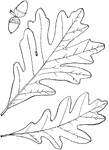
Leaves - simple; alternate; edge lobed; (edge of the lobes entire or sometimes coarsely notched and hollowed at their ends.) Outline - reverse egg-shape. Apex - of lobes, rounded. Base - wedge-shape. Leaf - quite variable in size and shape; four to seven inches long; smooth; pale beneath; the lobes oftenest five to nine, long and narrow, and sometimes widening toward the end, but at other times only three to five, short and broad, and radiating obliquely from the middle rub. Bark - of trunk, slightly roughened (comparatively smooth for an oak), light-gray; in older trees loosening in large, thin scales; the inner bark white. Acorns - usually in pairs on a stem one fourth of an inch or more in length. Cup - rounded saucer-shape, not scaly, but rough and warty and much shorter than the nut. Nut - three fourths to one inch long, slightly egg-shape or oval; brown, sweet, and edible. October. Found - from Ontario and the valley of the St. Lawrence southward to Florida, and westward to Southeastern Minnesota, Arkansas, and Texas. Its finest growth is on the western slopes of the Alleghany Mountains, and in the Ohio basin. General Information - A noble tree, sixty to eighty feet or more in height, with hard, touch wood of very great value in many kinds of manufacturing, and for fuel. The withered, light-brown leaves often cling throughout the winter. The "oak-apples" or "galls" often found on oak-trees are the work of 'gall-flies" and their larvae. When green tiny worms will usually be found at their centre. Quaint reference is made to these galls in Gerardes' "Herbal": "Oak-apples being broken in sunder before they have an hole thorough them do fore shewe the sequell of the yeere. If they conteine in them a flie, then warre insueth; if a creeping worme, then scarcitie of victuals; if a running spider, then followeth great sickness or mortalitie." The oak, probably more than any other tree, has been associated with workshop of the gods. The "Talking Tree" of the sanctuary in Dodona (the oldest of all the Hellenic sanctuaries, and second in repute only to that at Delphi) was an oak. Oak groves were favorite places for altars and temples of Jupiter. The Druids worshipped under the oak-trees. Quercus, possible from a Celtic word meaning to inquire, because it was among the oaks that the Druids oftenest practised their rites.

Genus Quercus, L. (Oak)

Leaves - simple; alternate; edge lobed; (edge of the lobes entire or sometimes coarsely notched and…
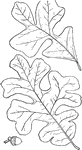
Leaves - simple; alternate; edge lobed (edge of the lobes entire, or sometimes hollowed more or less deeply at the ends.) Outline - usually broad, reverse egg-shape or oval. Apex - of lobes, rounded. Base - wedge shape or round. Leaf - four to six inches long; rough above and below; thick and coarse. The lobes, five to seven and exceedingly variable in size and shape, radiating almost at right angles from the middle rib; sometimes broad and squared, sometimes much narrowed toward their base, with the spreading ends themselves lobed or hollowed; often irregularly and unequally placed. Bark - of the trunk, resembling that of the white oak, but rather darker. Inner bark white. Acorns - two to three together on a short stem (bout one fourth inch), or single and nearly stemless. Cup - round saucer-shape, rather thin, with very small scales, not warty. Nut - about one half inch long; egg-shape or oval; more than one third covered by the cup; shining blackish-brown, and often slightly striped; very sweet. Found - from the coast of Massachusetts southward and westward. General Information - A tree twenty to fifty feet high, of value, especially in the Southwestern States, where it is very common. Quercus, possible from a Celtic word meaning to inquire, because it was among the oaks that the Druids oftenest practised their rites.

Genus Quercus, L. (Oak)

Leaves - simple; alternate; edge lobed (edge of the lobes entire, or sometimes hollowed more or less…
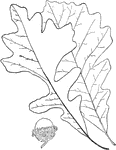
Leaves - simple; alternate; lobed (the edge of the lobes entire, or of the larger ones sometimes wavy). Outline - reverse egg-shape. Apex - of the lobes, rounded. Base - wedge-shape. Leaf - six to fifteen inches long (the longest of the oak-leaves); smooth above, downy beneath; the lobes usually long and rather irregular, the middle ones longest and often extending nearly to the middle rib. Bark - of the young branches always marked with corky wings or ridges. Acorns - large, with short stems. Cup - two thirds to two inches across, roughly covered with pointed scales, and heavily fringed around the nut. Nut - very large (one to one and a half inches long); broad egg-shape; one half to two thirds or often wholly enclosed by the cup. Found - along the coast of Maine southward as far as the Penobscot, in Western New England, in Western New York, in Pennsylvania, and thence westward to the foot-hills of the Rocky Mountains of Montana, and from Central Nebraska and Kansas southwest to the Indian Territory and Texas. It is found farther west and northwest than any other oak of the Atlantic forests. In the prairie region it forms a principal growth of the "Oak Openings." General Information - One of the most valuable and widely distributed oaks in North America, growing sixty to eighty feet in height, or more, with hard, tough wood resembling that of the White Oak. "The most interesting thing about this tree, perhaps is its power, quite unknown in the other White Oaks, of adapting itself to very different climatic conditions, which enables it to live in the humid climate of Maine and Vermont, to flourish in the somewhat drier climate of the Mississippi Valley, and to exist (still farther west) in the driest and most exposed region in habited by any of the Eastern America Oaks." - Sargent. Q. m. olivaformis is a variety found only in a few districts (near Albany and in Pennsylvania), having narrower and rather more deeply lobed leaves. Quercus, possible from a Celtic word meaning to inquire, because it was among the oaks that the Druids oftenest practised their rites.

Genus Quercus, L. (Oak)

Leaves - simple; alternate; lobed (the edge of the lobes entire, or of the larger ones sometimes wavy).…
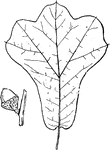
Leaves - simple; alternate; edge slightly lobed at the upper part (edge of the lobes entire). Outline - abruptly widening above. Apex - of lobes, rounded or sometimes slightly pointed, and bristle-tipped, at least until old. Base - heart-shape or rounded. Leaf - three to four inches long (on vigorous shoots much longer); dark green, smooth, and shining above; below rusty and roughish, thick and tough; ribs distinct above. Lobes - three (sometimes five), very short, and above the middle of the leaf. Bark - of tree, rough and blackish. Acorn - nearly or quite stemless. Cup - top-shaped, coarsely scaly. Nut - one half to two thirds of an inch long; rounded egg-shape; darkish brown when ripe; nearly one half covered by the cup. October. Found - on Long Island, southward and westward. Very common through the Southern States. General Information - A small tree, eight to twenty-five feet high; of slight value except for fuel. Quercus, possible from a Celtic word meaning to inquire, because it was among the oaks that the Druids oftenest practised their rites.

Genus Quercus, L. (Oak)

Leaves - simple; alternate; edge slightly lobed at the upper part (edge of the lobes entire). Outline…
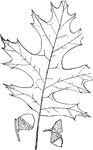
Leaves - simple; alternate; edge deeply lobed (edges of lobes mostly entire, but notched and toothed towards the ends). Outline - broadly oval or broadly reverse egg-shape. Base - very short wedge-shape or squared. Ends of the lobes and of the teeth pointed and bristle-tipped. Leaf - four to eight inches long, bright green above, slightly lighter below; both surfaces smooth and shining. Lobes - five to nine, usually seven with the hollows rounded and very broad, and reaching about two thirds of the way to the middle rib. Most of the lobes widen and are deeply notched toward their end. Bark - of trunk, thick and rough, usually not quite as dark or as straight-furrowed as that of the Black Oak. The inner bark reddish. Acorns - variable. Cup - very thick, top-shaped, with large somewhat triangular egg-shaped, scales. Nut - one half to three fourths of an inch long; rounded or rounded egg-shape, about one third covered by the cup; kernel bitter and whitish. October. Found - from Southern Maine southward and westward; most common in the Middle and Southern States. General Information - A tree fifth to ninety feet high, with wood of less value than some of the other oaks. In the fall the leaves turn to a bright scarlet, or orange0scarlet, or crimson and red. They often cling throughout the winter. Quercus, possible from a Celtic word meaning to inquire, because it was among the oaks that the Druids oftenest practised their rites.

Genus Quercus, L. (Oak)

Leaves - simple; alternate; edge deeply lobed (edges of lobes mostly entire, but notched and toothed…
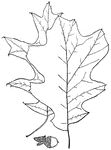
Leaves - simple; alternate; edge lobed (edge of the lobes mostly entire, but oftenest with a few teeth toward the end). Outline - reverse egg-shape or oval. Base - usually rounded. Ends of the lobes and of the few teeth, sharp and bristle-pointed, especially when young. Leaf - five to eight inches long; three to five inches wide; very variable. The two types, a and b, are often found on the same tree; b is a variation toward the leaf of the Scarlet Oak. The upper surface is roughish, becoming smoother when mature; the undersurface, rusty-downy until mid-summer, when the down mostly disappears, except from the angles of the ribs. Bark - of trunk, blackish and deeply and roughly furrowed, with an inner bark that is very thick and yellow and bitter. Acorns - variable; usually small; on short stems. Cups - thick; somewhat top-shaped; scales distinct and rather large. . Nut - one half to two thirds of an inch long; rounded; nearly one third covered by the cup. Kernel, bright yellow or orange and bitter. October. Found - from Southern Maine southward and westward. Very common, especially in the Atlantic forests. General Information - A tree fifty to a hundred feet high, with wood that is inferior to that of the White Oak. The yellow inner bark (quercitron of the shops) is a valuable dye, and is rich in tannin. Late in the autumn the leaves turn to a rich yellowish-brown or russet.   It is very probable that the "Black Oak" and the "Scarlet Oak" ought to be considered as one, and described, not as species and variety, but as slightly different forms of the single species Q. coccinea. Though the most distinctive leaves of the "Black Oak" are easily recognized, often others are so nearly like those of the "Scarlet Oak" that it is not easy to distinguish between then; and the same is true of the fruit and the bark. Michaux f. says: "The only constant difference between the acorns of the Scarlet Oak and the Black Oak is in the kernel, which is white in the Scarlet Oak and yellow in the Black Oak."  The Gray Oak (Q. c., ambigua, Gray) is a variety sometimes found along the northeastern boundary of the States (as far as Lake Champlain) and northward. It combines the foliage of the Red Oak with the acorn of the Scarlet Oak. Quercus, possible from a Celtic word meaning to inquire, because it was among the oaks that the Druids oftenest practised their rites.

Genus Quercus, L. (Oak)

Leaves - simple; alternate; edge lobed (edge of the lobes mostly entire, but oftenest with a few teeth…
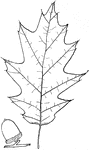
Leaves simple; alternate; edge lobed (edges of the lobes mostly entire, but slightly toothed toward the ends). Outline - about oval.  Base - short wedge-shape, or rounded. Ends of the lobes and of their one to three slight teeth, pointed and bristle-tipped. Leaf - six to nine inches long, three to five inches wide; both surfaces smooth. Lobes, nine to thirteen, usually very tapering from the base, with the hollows between them rounded and narrow and extending about half way to the middle rib. Bark - of trunk, dark, greenish-gray, and continuing smooth longer than on any other oak, never becoming as rough, for example, as that of the black oak. Acorns - large and stemless, or nearly so. Cup - flat saucer-shape, bulging, very shallow, nearly smooth, with small scales. Nut - about one inch long, somewhat egg-shape; bitter. October. Found - from Nova Scotia and New Brunswick westward and southward. Very common, especially at the North, and extending farther north than any other Atlantic oak. General Information - A tree fifty to eight feet high, with wood that at the East is porous and not durable (though often of better quality westward). It is used for clapboards and in cooperage. The leaves change in the fall to dark red. Quercus, possible from a Celtic word meaning to inquire, because it was among the oaks that the Druids oftenest practised their rites.

Genus Quercus, L. (Oak)

Leaves simple; alternate; edge lobed (edges of the lobes mostly entire, but slightly toothed toward…
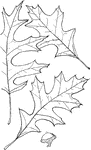
Leaves - simple; alternate; edge lobed (edges of the lobes mostly entire, but notched and toothed towards the ends). Outline - narrow oval or broad oval. Base - from long wedge-shape to squared. Ends of lobes and of the teeth pointed and bristle-tipped. Leaf - three to five inches long; both sides bright green, smooth, and shining; downy in the angles of the ribs below. Lobes - seven to nine, usually seven, with the hollows between them broad and round and usually reaching about three fourths of the way or more to the middle rib. The wide type of leaf closely resembles the leaves of the scarlet oak, but it is smaller and usually the hollows reach nearer to the middle rib. Bark - smoothish (comparatively), inner bark reddish. Acorns - numerous, small, on short stems. Cup - top-shaped, shallow, and nearly smooth. Nut - rounded, one half inch long or less, sometimes broader than long, light brown. October. Found - from the valley of the Connecticut to Central New York, southward to Delaware and the District of Columbia; in Southern Wisconsin and southward; usually along streams and on low, wet land. Most common and reaching its finest growth west of the Alleghany Mountains. General Information - A handsome tree forty to sixty feet high, usually with a pointed top and with light and delicate foliage. The wood is rather coarse and not durable. It takes its name of Pin Oak from the peg-like look of the dead twigs and short branches with which the lower parts of the tree are usually set. Quercus, possible from a Celtic word meaning to inquire, because it was among the oaks that the Druids oftenest practised their rites.

Genus Quercus, L. (Oak)

Leaves - simple; alternate; edge lobed (edges of the lobes mostly entire, but notched and toothed towards…
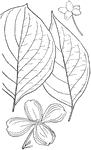
Leaves - simple; opposite; edge entire. Outline - egg-shape, or often broad oval, or reverse egg-shape. Apex - pointed, often taper-pointed. Base - pointed and usually slightly unequal. Leaf/Stem - short (about one half inch). Leaf - three to five inches long; smooth above; pale and nearly smooth beneath; with the whitish ribs very distinct and curved. Bark - of trunk, blackish and rough, with short, broken ridges. The bark, especially of the roots, is very bitter and is used as a tonic. Flowers - The real flowers are greenish-yellow, in a small rounded bunch; but this bunch is surrounded by four large, petal-like leaves, white and often tinged with pink, more than an inch in length, reverse egg-shaped, and ending in a hard, abruptly turned point. The appearance is of a single large flower. The tree blossoms in May before the leaves are fully set. Fruit - The "Flower" is succeeded by a bunch of oval berries that turn bright red as they ripen, making the tree in the autumn, with its richly changing foliage, nearly as attractive as in the spring. Found - in rich woods, from New England to Minnesota, and southward to Florida and Texas. It is very common, especially at the South. General Information - A finely shaped, rather flat-branching tree, usually twelve to thirty feet high, but dwindling, northward, to the dimensions of a shrub; one of the most ornamental of all our native flowering trees. Its character throughout the extent of its range would seem to warrant the recognition of its blossom as the "national flower." Cornus, from a Greek word meaning horn, because of the hardness of the wood.

Flowering Dogwood

Leaves - simple; opposite; edge entire. Outline - egg-shape, or often broad oval, or reverse egg-shape.…
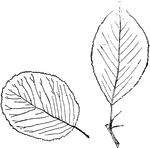
Leaves - simple, opposite; finely and sharply toothed. Outline - broadly oval, or broadly reverse egg-shape. Apex - rounded, sometimes pointed. Base - rounded, sometimes slightly pointed. Quite variable. Leaf/Stem - short and smooth, the edges slightly winged, the wings straight. Leaf - about one and a half to two inches long; smooth; shining above. Flowers - white, in rather large and flat, stemless bunches, at the ends of branches. May. Berries - oval, blackish, sweet and edible. Found - in Connecticut and Southern New York to Michigan and southward. General Information - A small tree fifteen to twenty feet high, or oftenest at the North a low, much-branching shrub. Usually with some of its branches stunted and bare. The tonic bark is sometimes used medicinally.

Genus Viburnum, L. (Haw and Viburnum)

Leaves - simple, opposite; finely and sharply toothed. Outline - broadly oval, or broadly reverse egg-shape.…
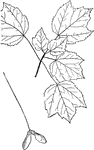
Leaves - simple; opposite; edge lobed, with the lobes irregularly sharp-toothed and notched. Outline - roundish, with three to five lobes (the lowest pair, if present, the smallest); and with the hollows between the lobes pointed and usually extending less than half-way to the base of the leaf. Apex - of the lobes, pointed. Base - heart-shaped (or sometimes rounded.) Leaf/Stem - long and round. Leaf - (very variable in size and in the toothing and shape of its lobes); whitish beneath. Bark - smoothish; gray, becoming dark and rough with age. Flowers - rich crimson, on short stems in drooping clusters. March, April. Fruit - bright red, smooth, with stems two to three inches long. The wings are about one inch long. At first they approach each other, but afterward are somewhat spreading. September.Found - widely distributed in swamps and along streams especially in all wet forests eastward from the Mississippi to the Atlantic, and from Southern Canada to Florida and Texas. General Information - A tree thirty to sixty feet high, with wood of considerable value, especially when it shows a "curly grain." It is one of the very earliest trees to blossom in the spring, and to show its autumn coloring in the fall.

Genus Acer, L. (Maple)

Leaves - simple; opposite; edge lobed, with the lobes irregularly sharp-toothed and notched. Outline…
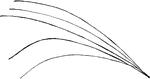
Leaves - simple; indeterminate in position because of their closeness, but arranged along the branches in five-leaved bunches, with their sheaths lacking or very short, excepting when young. Leaf - needle-shape, three to five inches long, light bluish-green, three-sided, soft, and very slender. Cones - four to six inches long, cylinder-shape, about one inch in diameter before the scales loosen; solitary, drooping, slightly curved. Scales - thin, without prickles. Bark - of trunk, lighter than in the other pines; in young trees smooth, and only slightly rough when older. Found - from Newfoundland to the Winnipeg River, southward through the Northern States, and along the Alleghany Mountains to Georgia. Its finest growth is in the region of the Great Lakes. General Information - An evergreen tree of soft and delicate foliage, eighty to one hundred and fifty feet high; one of the most valuable timber trees of any country. The wood is clear of knots, straight-grained, and soft, and is used in immense quantities for building and many kinds of manufacturing. The branches are given off in flat, regular whorls around the straight trunk.

Genus Pinus, L. (Pine)

Leaves - simple; indeterminate in position because of their closeness, but arranged along the branches…
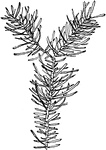
Leaves - Simple; indeterminate in position because of their closeness; arranged singly up and down the branchlets, at first radiating about equally on every side, afterward flattened into two ranks, as in the Hemlock. Leaf - one half to one inch long, narrow; apex blunt or notched; edge entire; flat, with a grooved line above and a corresponding raised line below; bright green above; silvery white below. Bark - smooth and unbroken (especially when young), and usually covered with "blisters." Cones - two to four inches long, one inch broad, erect, at the sides of the branchlets; violet-colored. Scales - thin and flat, broad and rounded. The thin bracts between the scales are tipped with a slender bristle. The cone falls apart when ripe. Found - from the far North through the Northern States to Pennsylvania, and along the Alleghany Mountains to the high peaks of West Virginia. Common northward in damp forests. General Information - A slender, evergreen tree, twenty to sixty feet high; pyramid-shaped, with regular horizontal branches; its wood is very light and soft. From the "blisters," which form under the bark of the trunk and branches, the valuable Canada balsam is obtained. The tree is short-lived, and therefore of less value in cultivation.

Genus Abies, Link. (Fir)

Leaves - Simple; indeterminate in position because of their closeness; arranged singly up and down the…
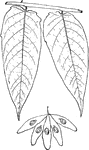
Leaves - compound (odd-feathered, but with the odd leaflet often dwarfed or broken off; leaflets, twenty-one to forty-one); alternate; edge of the leaflets entire, with one or two coarse, blunt teeth at each side of their base. Outline - of leaflet, long egg-shape or lance-shape. Apex - taper-pointed. Base, squared, or heart-shaped. Leaf/Stem - smooth, round, swollen at base. Leaflet/Stems - smooth and short. Leaf - one and a half to six feet long. Leaflets variable, usually about six inches by two and a quarter, rather smooth and thin. Bark - of the trunk, smooth and brown; the new shoots marked with whitish dots. Flowers - in long bunches at the ends of the branches; greenish, and of very disagreeable odor. June, July. Seeds - flat, at the centre of greenish and sometimes pink-tinged wings, in large, loose clusters. October. Found - common in cultivation, and to some extent naturalized. General Information - A large, showy tree (sixty to seventy feet high) of remarkable vigorous and rapid growth. It is a native of China. A Jesuit missionary sent its seeds in 1751 to England. In 1784 it was brought from Europe to the United States, and started near Philadelphia. Also about 1804 it was brought to Rhode Island from South America. But the source of most of the trees now found abundantly in the region of New York is Flushing, Long Island, where it was introduced in 1820. It has been a great favorite, and would deserve to be so still were it not for the peculiar and disagreeable odor of its flowers. Ailanthus, from a Greek word meaning "tree of heaven." Ailanthus - This spelling of the name should rule because so given by its author, although, etymologically, Ailantus would be correct, the native Amboyna name being "Aylanto."

Genus Ailanthus, Desf.

Leaves - compound (odd-feathered, but with the odd leaflet often dwarfed or broken off; leaflets, twenty-one…
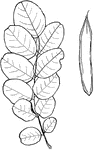
Leaves - compound (odd-feathered; leaflets, eleven to twenty-five); alternate; edge entire. Outline - oval or egg-shape. Apex, rounded. Base - rounded. Stem - of leaf, smooth, and covering the leaf-bud of the next year. Leaflets - very smooth, thin, often slightly tipped with the end of the mid-rib. Bark - of trunk, dark, rough, and very deeply ridged. The smaller branches and young trunks are armed with strong, triangular prickles, but these disappear when the parts are three to four inches thick. Flowers - showy and abundant; in long, loose clusters drooping from the sides of the branchlets; white; and very fragrant. May, June. Fruit - a smooth and rather blunt pod, two to three inches long, one and a half inches wide, four- to six-seeded. Seeds, dark brown. September. Found - Native in the Alleghany Mountains from Pennsylvania (Monroe County - Porter) to Georgia; but now very generally naturalized throughout the United States east of the Rocky Mountains. General Information - A tree usually forty to fifty feet high, sometimes ninety feet, and of rapid growth. Its wood is exceedingly hard and strong, and remarkable durable when in contact with the ground. It is used largely for posts, in ship-building, and in turnery, and it is preferred to all other native wood for tree nails. It is one of the most valuable trees of this or of any country. But is cultivation as a timber tree, which at one time was very general, has nearly ceased in the United State on account of the constant damage done by the grub of the Painted Clytus (Clytus pictus). This troublesome borer not only injures the new growth, but also pierces and detaches large branches, leaving the tree ragged and stunted.

Genus Robinia, L. (Locust)

Leaves - compound (odd-feathered; leaflets, eleven to twenty-five); alternate; edge entire. Outline…
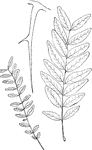
Leaves - compound; )even-feathered, leaflets, ten to twenty-two or more, usually about fourteen), sometimes twice compound; alternate; edge of leaflets entire as seen above, but as seen below often remotely and slightly toothed. Outline of leaflet - long oval or long egg-shape. Base - and narrowed. Apex - rounded. Leaf/Stem - and very short. Leaflet/Stem - downy. Leaflets - three fourths to one and a half inches long; about one third as wide. Often several of them (one to three) are partly or wholly divided into smaller leaflets. Surfaces smooth and shining. Bark - of trunk, gray, and much less rough than that of the common Locust (which has a somewhat similar leaf); branchlets brown and often warty. The branches and the trunk, excepting in very young and quite old trees, are usually thickly covered with spines, two to four inches long, which are curved at the base, often two- to three-branches, and of a reddish-brown color. Flowers - small and greenish. Fruit - a long, flat pod (nine to eighteen inches long) reddish; somewhat twisted, and filled between the seeds with a pulp which at first is sweet (whence the name "Honey" Locust) but which soon becomes sour. The seeds are flat, hard, and brown. Found - native in Pennsylvania, westward and southward, but also somewhat naturalized and widely introduced northward.  General Information - A tree sometimes seventy feet high, with wide-spreading and graceful branches, and light and delicate foliage. It is often used as a hedge plant. A variety entirely bare of thorns (var. inermis) is sometimes found; also a variety (var. brachycarpos) with shorter fruit and thorns.

Genus Gleditschia, L. (Honey Locust)

Leaves - compound; )even-feathered, leaflets, ten to twenty-two or more, usually about fourteen), sometimes…
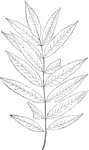
Leaves - compound (odd-feathered; leaflets, nine to fifteen); alternate (often alternate in threes); edge of leaflets finely and sharply toothed. Outline - of leaflet, long and narrow egg-shape. Apex, taper-pointed. Base - rounded and slightly pointed. Leaflet/Stem - lacking, or very short. Leaf - eight to twelve inches long. Leaflet - two to three and one half inches long; surfaces smooth. Bark - of the trunk, reddish-brown and rather smooth. Flowers - small and white, in large, flat clusters, over the surface of the tree - fifty to one hundred or more flowers in a cluster. May, June. Fruit - very ornamental, about the size of peas, scarlet, in large, flat clusters, ripening in autumn and remaining into the winter. Found - from Labrador and Newfoundland through the Northern States and southward along the Alleghany Mountains. Its finest growth is on the northern shores of Lake Huron and Lake Superior. General Information - A slender, somewhat pyramid-shaped, tree, ten to thirty feet high, much and justly prized as one of the best of the native trees for ornamental planting. Its bark and the unripe fruit are very astringent, and are sometimes used medicinally. A slightly different species (P. sambucilolia) is sometimes found in cold swamps and on the borders of streams along the Northern frontier. The Mountain Ash or "Rowan Tree" has for a long time been renowned as a safeguard against witches and all evil spirits. A mere twig of it suffices. "Rowen-tree and red thread Put the witches to their speed." "The spells were vain, the hag returned To the queen in sorrowful mood, Crying that witches have no power Where there is row'n-tree wood."

Genus Pyrus, L. (Mountain Ash)

Leaves - compound (odd-feathered; leaflets, nine to fifteen); alternate (often alternate in threes);…
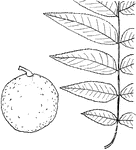
Leaves - compound (odd-feathered; leaflets, thirteen to twenty-one); alternate; edge of leaflets sharp-toothed. Outline of leaflet - long egg-shape. Apex - taper-pointed. Base - rounded or slightly heart-shaped, and one-sided. Leaf/Stem - slightly downy. Leaflet/Stem - very short. Leaf - twelve inches long, or more. Leaflets - about two to four inches long; the lower pairs shortest; slightly downy beneath. Bark - blackish and thick. Fruit - about two inches in diameter; rounded; the husk greenish-yellow when ripe, roughly dotted, spongy, decaying without splitting into sections; the nut dark, and deeply and roughly furrowed. October. Found - from Western Massachusetts westward and southward. Its finest growth is west of the Alleghany Mountains. Eastward it is now everywhere scarce.. General Information - A tree thirty to sixty feet high, or often much higher. Its rich, dark-brown heart-wood is of great value, and has been more widely used in cabinet-work, for interior finish, and for gun-stocks than the wood of any other North American tree. Juglans, from two Latin words meaning nut of Jupiter.

Genus Juglans, L. (Walnut)

Leaves - compound (odd-feathered; leaflets, thirteen to twenty-one); alternate; edge of leaflets sharp-toothed.…
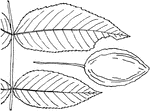
Leaves - compound (odd-feathered; leaflets, fifteen to seventeen); alternate; edge of leaflets sharp-toothed. Outline - of leaflet, long egg-shaped or long oval. Apex - taper-pointed. Base - rounded. Leaf/Stem - downy and sticky. Leaf - twelve to twenty inches long. Leaflet - three inches or more in length; downy, especially beneath. Bark - of the branches, light gray and smoothish. Twigs - as well as leaf-stems and fruit, very sticky. Fruit - long (two to three inches), pointed. Husk - very sticky; green at first; brown when ripe, becoming very dark; not splitting in sections. Nut - deeply and roughly furrowed and sharp-ridged, with a sweet oily kernel. September.Found - in Southern Canada, and common in New England and the Middle and Western States. General Information - A tree twenty to fifty feet high, with a short, stout trunk and very wide-reaching, horizontal branches. The heart-wood is reddish or light brown, not as dark nor as hard as in the Black Walnut. It is used for ornamental cabinet-work and interior finish.

Genus Juglans, L. (Walnut)

Leaves - compound (odd-feathered; leaflets, fifteen to seventeen); alternate; edge of leaflets sharp-toothed.…
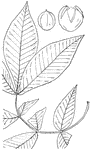
Leaves - compound (odd-feathered, leaflets, seven to nine); alternate; edge slightly and rather roundly toothed. Outline - of leaflets, mostly long oval, the lower pairs becoming smaller and more egg-shaped. Apex - long-pointed. Base - of the end leaflet, wedge-shape; of the others, more or less blunted. Leaf/Stem - rough throughout. Buds - large and round and covered with downy, yellowish-brown scales, or, in winter, with hard and grayish-white scales. Leaflet/Stem - lacking (or scarcely noticeable), except the short, roughish stem of the end leaflet. Leaflets - two to seven inches long, rough beneath, especially on the ribs; fragrant when crushed. Bark - rough, becoming cracked across, but not scaly. Fruit - rounded, slightly egg-shaped or oval, one and one half to two inches or more in length. The husk is about one fourth of an inch thick and splits nearly to the base when ripe. Nut - slightly six-angled, light brown, with a very thick and hard shell. Kernel - is sweet, but small. October. Found - common in dry woods, especially southward and westward. It grows in Southern Canada and I all the Atlantic States. General Information - All the Hickories are picturesque trees. Their tendency, even when standing alone, is to grow high, and with heads that, instead of being round, are cylinder-shaped to the very top, with only enough breaks and irregularities to add to the effect. This tendency is more marked in the Hickories than in any other of the leaf-shedding trees of North America. They are worthy of the name sometimes given them of 'the artist's tree." Hicoria, from a Greek word meaning round, in allusion to the shape of the nut.

Genus Hicoria, Raf., Carya, Nutt. (Hickory)

Leaves - compound (odd-feathered, leaflets, seven to nine); alternate; edge slightly and rather roundly…
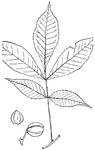
Leaves - compound (odd-feathered; leaflets, five to seven, oftenest five); alternate; edge of leaflets sharp-toothed. Outline - of leaflets, mostly long oval. Apex - pointed. Base - pointed. Leaf/Stem - smooth. Leaflet/Stems - lacking (or scarcely noticeable), excepting the short stem of the end leaflet. Leaflets - mostly four to eight inches long, remarkable smooth, excepting that the under surface is tufted in the angles of the ribs and usually dotted with dark glandular spots. Bark - rough and close. Fruit - broad egg-shape. Husk - thin, splitting part way to the base. Nut - small (three fourths of an inch in diameter), not angled, not sharp-pointed, and with a thin shell.Found - on moist ground, New York to Delaware, west to Michigan and Illinois, rarely, if ever, in New England. General Information - All the Hickories are picturesque trees. Their tendency, even when standing alone, is to grow high, and with heads that, instead of being round, are cylinder-shaped to the very top, with only enough breaks and irregularities to add to the effect. This tendency is more marked in the Hickories than in any other of the leaf-shedding trees of North America. They are worthy of the name sometimes given them of 'the artist's tree." Hicoria, from a Greek word meaning round, in allusion to the shape of the nut.

Genus Hicoria, Raf., Carya, Nutt. (Hickory)

Leaves - compound (odd-feathered; leaflets, five to seven, oftenest five); alternate; edge of leaflets…
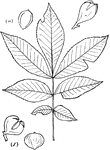
Leaves - compound (odd-feathered; leaflet, five to nine, usually seven) ; alternate, edge of leaflets sharp-toothed. Outline - of leaflets, usually long oval. Apex - taper-pointed. Base - of end leaflet, wedge-shaped, of the others more or less rounded or slightly pointed. Leaf/Stem - smooth. Leaf/Buds - egg-shape and pointed or rounded, and with their outer scales a polished-brown. Leaflet/Stems - lacking, except the smooth, very short stem of the end leaflet. Leaflets - mostly two to five inches long (the lower ones much the smallest), smooth above and below. Bark - not shaggy. Fruit - of two forms: (a) pear-shape, (b) rounded. Husks - very thin, splitting about half-way to the base. Nut - about one inch in diameter; in (b) somewhat flattened at the sides and slightly hollowed above, and with the apex a sharp point. Shell - rather thin, smooth, hard, and bluish-gray. Meat - small and sweetish or slightly bitter. Found - from Southern Maine westward and southward. General information - All the Hickories are picturesque trees. Their tendency, even when standing alone, is to grow high, and with heads that, instead of being round, are cylinder-shaped to the very top, with only enough breaks and irregularities to add to the effect. This tendency is more marked in the Hickories than in any other of the leaf-shedding trees of North America. They are worthy of the name sometimes given them of 'the artist's tree." Hicoria, from a Greek word meaning round, in allusion to the shape of the nut.

Genus Hicoria, Raf., Carya, Nutt. (Hickory)

Leaves - compound (odd-feathered; leaflet, five to nine, usually seven) ; alternate, edge of leaflets…
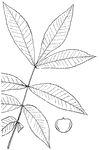
Leaves - compound (odd-feathered; leaflets, seven to eleven); alternate; edge of leaflet sharp-toothed. Outline - of leaflet, long oval or long egg-shape. Apex, taper-pointed. Base, pointed or blunted. Leaf/Stem - rather slender, somewhat downy, and often flattened and winged. Leaf/buds - small, slightly rounded or (at the ends of the branchlets) pointed, and yellow. Leaflet/Stems - lacking, except the short stem of the end leaflet. Leaflets - four to six inches long, the upper one usually short; smooth on both sides, or with a slight, scattered down below. Bark - rather smooth. Fruit - rounded or slightly egg-shaped, dark green. Husk - very thin and fleshy, never becoming entirely hard, with prominent winged edges at the seams, only two of which reach more than half-way to the base. It divides half-way down when ripe. Nut - barely one inch long, heart-shaped at the top, broader than long, white and smooth. Shell - so thin that it can be broken with the fingers. Kernel - intensely bitter. Found - usually in wet grounds, though often also on rich uplands, from Southern Maine westward and southward. It reaches its finest growth in Pennsylvania and Ohio. General information - A rather smaller and less valuable tree than the rest of the hickories.

Genus Hicoria, Raf., Carya, Nutt. (Hickory)

Leaves - compound (odd-feathered; leaflets, seven to eleven); alternate; edge of leaflet sharp-toothed.…