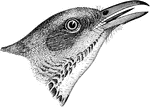
"Upper parts uniform rust-red, with a bronzy lustre. Concealed portions of quills fuscous. Greater the median wing-coverts blackish near the end, then conspicuously tipped with white. Bastard quills like the coverts. Tail like the back, the lateral feathers with paler ends. Under pars white, more or less strongly tinged, especially on the breast, flanks, and crissum, with tawney or pale cinnamon-brown, the breast and sides marked with a profusion of well-defined spots of dark brown, oval in front, becoming more linear posteriorly. Throat immaculate, bordered with a necklace or spots; middle of belly and under tail-coverts likewise unspotted. Bill quite straight, black, with yellow base of the lower mandible; feet pale; iris yellow or orange." Elliot Coues, 1884

Brown Thrasher

"Upper parts uniform rust-red, with a bronzy lustre. Concealed portions of quills fuscous. Greater the…
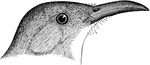
"Above, grayish-brown, nearly uniform; wing- coverts and quills with slight whitish edging, the edge of the wing itself white; tail feathers with slight whitish tips; below; a paler shade of the color of the upper parts, the throat quite whitish, the crissum slightly rufescent, the breast and belly with obscure dark gray spots on the grayish-white ground; no obvious maxillary streaks, but vague speckling on the cheeks; bill black; feet blackish-brown." Elliot Coues, 1884

Bow-Billed Thrasher

"Above, grayish-brown, nearly uniform; wing- coverts and quills with slight whitish edging, the edge…
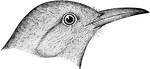
"Bill shorter than head, comparatively stout at base, very acute at tip, the culmen quite convex, the gonys just appreciably concave, Tarsus a little longer that the middle tow an claw. 3d and 4th primaries about equal and longest, 5th and 6th successively slightly shorter, 2 d equal to 7th, 1st equal to penultimae secondary in the closed wing. Entire upper parts, including surfaces of wings and tail, uniform dull pale grayish-brown, with narrow, faintly-rusty edge of the wing-coverts and inner quills, and equally obscure whitish tipping of the tail-feathers. No maxillary nor auricular streaks; no markings about the head except slight speckling on the cheeks. Under parts brownish-white, palest (nearly white) on the belly and throat, more numerous small arrow-head spots on the color of the back. Bill light-colored at base below." Elliot Coues, 1884

Arizona Thrasher

"Bill shorter than head, comparatively stout at base, very acute at tip, the culmen quite convex, the…
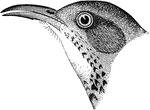
"Upper parts uniform ashy-brown; wings and tail similar, but rather purer and darker brown, the former crossed with two white bars formed by the tips of the coverts, the latter tipped with white. Below dull white, often tinged with rusty, especially behind, and thickly marked with small, sharp, triangular spots of dark brown or blackish. These spots are all perfectly distinct, covering the lower parts excepting the throat, lower belly, and crissum; becoming smaller anteriorly, they run up each side of the throat in a maxillary series bounding the immaculate area. Sides of the head finely speckled, and auriculars streaked; bill black, lightening at base below, little longer than that of H. rufas, though decidedly curved." Elliot Coues, 1884

St. Lucas Thrasher

"Upper parts uniform ashy-brown; wings and tail similar, but rather purer and darker brown, the former…
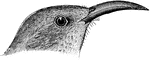
"No spots anywhere; wings and tail without decided barring or tipping. Bill as long as the head or longer, bow-shaped, black. Wings very much shorter that the tail. Above, dark oily olive-brown, the wings and tail similar, but rather purer brown. Below, a paler shade of the color of the upper parts, the belly and crissum strongly rusty-brown, the throat definitely whitish in marked contrast, and not bordered by decided maxillary streaks. Cheeks and auriculars blackish-brown with sharp whitish shaft streaks." Elliot Coues, 1884

California Thrasher

"No spots anywhere; wings and tail without decided barring or tipping. Bill as long as the head or longer,…
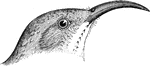
"Brownish-ash, with a faith olive shade, the wings and tail purer and darker fuscous, without white edging or tipping. Below, a paler shade of the color of the upper pats. Throat and side of the lower jaw white, with sharp black maxillary streaks. Cheeks and auriculars speckled with whitish. Under tail-coverts rich chestnut, in marked contrast with the surrounding parts. Bill black, at the maximum of length, slenderness, and curvature; feet blackish." Elliot Coues, 1884

Crissal Thrasher

"Brownish-ash, with a faith olive shade, the wings and tail purer and darker fuscous, without white…
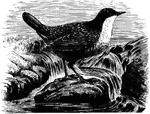
"Bill shorter that head, slender and compressed throughout, higher that broad at the nostrils, about straight, but seeming to be slightly recurved, owing to a sort of upward tilting of the superior mandible; culmen, notched near the end; gonys convex. Nostrils linear, opening beneath a large scale partly covered with feathers. No rictal vibrissae, nor any trace of bristles or bristle-tipped feathers about the nostrils. Plumage soft, lustreless, remarkably full and compact, water-proof. Body stout, thick set. Habits aquatic." Elliot Coues, 1884

European Dipper

"Bill shorter that head, slender and compressed throughout, higher that broad at the nostrils, about…
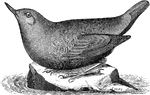
"Adult, in summer: Slaty-plumbeous, paler below, inclining on the head to sooty-brown. Quills and tail-feathers fuscous. Eyelids usually white. Bill black; feet yellowish." Elliot Coues, 1884

American Dipper

"Adult, in summer: Slaty-plumbeous, paler below, inclining on the head to sooty-brown. Quills and tail-feathers…
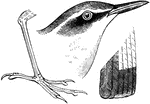
"Bill shorter than head, slender, straight, depressed at base, compressed at end, notched. Wings long, pointed, the tip formed by the 2d-4th quills, the 1st spurious, scarcely or not one-fourth as long as the 2d. Tail much shorter than wing, square. Tarsi booted, but with 4 scutella below in front; long and slender, much exceeding the middle toe and claw; lateral toes of about equal lengths, very short, the tips of their claws not reaching the base of the middle claw; claws little curved; feet thus adapted to terrestrial habits." Elliot Coues, 1884

Stone Chats

"Bill shorter than head, slender, straight, depressed at base, compressed at end, notched. Wings long,…
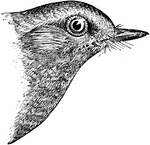
"in full plumage: Rich azure-blue, the ends of the wing-quills blackish; throat, breast, and sides of the body chestnut; belly and crissum white or bluish-white. The blue sometimes extends around the head on the sides and often fore part of the chin, so that chestnut is cut off from the bill." Elliot Coues, 1884

Eastern Blue-Bird

"in full plumage: Rich azure-blue, the ends of the wing-quills blackish; throat, breast, and sides of…
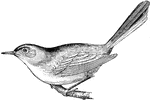
"Grayish-blue, bluer on the crown, hoary on the rump, the forehead black, continuous with a black superciliary line. Edges of eyelids white, and above these a shade on the breast. Wings dark brown, the outer webs, especially of the inner quills, edged with hoary, and the inner webs of most bordered with white. Tail jet-black, the outer feather entirely or mostly white, the next one about half white, the third one tipped with white. Bill and feet black." Elliot Coues, 1884

Blue-gray Gnat-catcher

"Grayish-blue, bluer on the crown, hoary on the rump, the forehead black, continuous with a black superciliary…
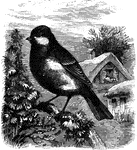
"Head not crested. Wings and tail rounded, of approximately equal lengths, and about as long as the body. Bill typically parine." Elliot Coues, 1884. Head and neck are black; cheeks and ear coverts are white; male has a thick black strip going through its yellow breast; upper parts are olive; and outer tail feathers and wing bars are white

European Greater Titmouse

"Head not crested. Wings and tail rounded, of approximately equal lengths, and about as long as the…
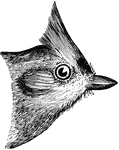
"Entire upper parts ashy, the back usually with a slight olivaceous shade, the wings and tail rather purer and darker plumberous, the latter sometimes showing obsolete transverse bars. Sides of the head and entire under parts dull whitish, washed with chestnut-brown on the sides. A black frontlet at the base of the crest. Bill plumbeous-blackish; feet plumbeous." Elliot Coues, 1884

Tufted Titmouse

"Entire upper parts ashy, the back usually with a slight olivaceous shade, the wings and tail rather…
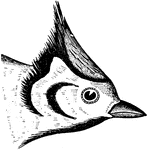
"Upper parts olivaceous-ash, wings and tail darker, edged with the color of the back, or even a brighter tint, sometimes nearly as yellowish as in Regulus. Under parts sordid ashy-white. Crest-black, with a central field like the back. Whole throat black, as in species of parus. A black line runs behind the eye and curves down over the auriculars, distinguished from the black of the crest and throat by the white of the side of the head and white superciliary stripe; a half-collar of black on the nape, descending on the sides of the neck, there separated from the black crescent of the auriculars by a white crescent, which latter is continuous with the white on the superciliary line; considerable whitish speckling in the black of the forehead and lores. Bill blackish-plumbeous; feet plumbeous." Elliot Coues, 1884

Bridled Titmouse

"Upper parts olivaceous-ash, wings and tail darker, edged with the color of the back, or even a brighter…
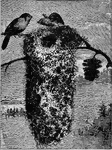
"Dull lead-color, frequently with a brownish or olivaceous shade, the top of the head abruptly darker - clove brown or hair-brown. Below sordid whitish, or brownish-white. Wings and tail dusky, with slight hoary endings. Bill and feet black." Elliot Coues, 1884

Two Least Bush-Tit Sitting on their Nest

"Dull lead-color, frequently with a brownish or olivaceous shade, the top of the head abruptly darker…
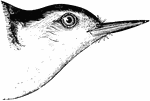
"Upper parts, central tail-feathers, and much edging of the wings, clear ashy-blue; whole crown, nape, and back of the neck, glossy black. Under parts, including sides of neck and head to above eyes, dull white, more or less marked on the flanks and crissum with rusty-brown. Wings and their coverts blackish, much edged as already said, and with an oblique bar of white on the outer webs of the primaries white; under wing-coverts mostly blackish; bold bluish and black variegation of the inner secondaries. Tail, excepting the two middle feathers, black, each feather marked with white in increasing amount, the outer web of the lateral feather being mostly white. Bill blackish-plumbeous, pale at the base below. Feet dark brown. Iris brown." Elliot Coues, 1884

White-Breasted Nuthatch

"Upper parts, central tail-feathers, and much edging of the wings, clear ashy-blue; whole crown, nape,…
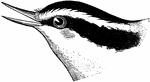
"Upper parts leaden-blue the central tail-feathers the same; wings fuscous, with slight ashy edgings and concealed white bases of the primaries. Entire under parts rusty-brown, very variable in shade, from rich fulvous to brownish-white, usually palest on the throat, deepest on the sides and crissum; tail-feathers, except the middle pair, black, the lateral marked with white. Whole top and side of head and neck glossy black, that of the side appearing as a broad bar through the eye from bill to side of neck, cut off from that of the crown by a long white superciliary stripe, which meets its fellow across the forehead. Bill dark plumbeous, paler below; feet plumbeous-brown." Elliot Coues, 1884

Red-breasted Nuthatch

"Upper parts leaden-blue the central tail-feathers the same; wings fuscous, with slight ashy edgings…
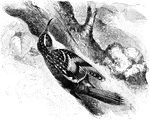
"Common Brown Creeper. Upper parts dark brown, changing to rusty-brown on the rump, everywhere streaked with ashy-white. An obscure whitish superciliary stripe. Under parts dull whitish, sometimes tinged with rusty on the flanks and crissum. Wing-coverts and quills tipped with white, the inner secondaries also with white shaft-lines, which, with the tips, contrast the blackish of their outer webs. Wings also crossed with white or tawny-white, the anterior bar broad and occupying both webs of the feathers, the other only on the outer webs near their ends. Tail grayish-brown, darker along the shaft and at the ends of the feathers, sometimes showing obsolete transverse bars. Bill blackish above, mostly flesh-colored or yellowish below; feet brown; iris dark brown." Elliot Coues, 1884

Common Brown Creeper

"Common Brown Creeper. Upper parts dark brown, changing to rusty-brown on the rump, everywhere streaked…
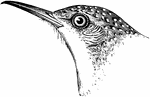
"Upper parts pale brownish-gray, minutely dotted with blackish and whitish points together, and usually showing obsolete wavy bars of dusky. Rump cinnamon-brown; a whitish superciliary line. Beneath, soiled white, shading behind into pale cinnamon, the throat and breast obsoletely streaked, and the under tail-covers barred, with dusky. Quills of the wings rather darker than the back, with similar markings on the outer webs. Middle tail-feathers like the back, with many dark bars of equal width with the lighter ones; lateral tail-feathers similarly marked on the outer webs, plain on the inner webs, with a broad subterminal black bar on both webs, and cinnamon-brown tips, the latter usually marbled with dusky; outer feathers with several blackish and cinnamon bars on both webs. Bill and feet dark horn color, the former paler at base below." Elliot Coues, 1884

Rock Wren

"Upper parts pale brownish-gray, minutely dotted with blackish and whitish points together, and usually…
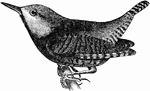
"Winter Wren. Above brown, darker before, brighter behind, most of back, together with tail and inner wing quills, banded with dusky, the markings obsolete on the back, where usually accompanied by whitish specks, strongest on the wings and tail. Outer webs of several primaries regularly barred with brownish-white, in marked contrast with the other bars of the wings. An inconspicuous whitish superciliary line. Below brownish, paler or whitish anteriorly, the belly, flanks, and crissum heavily waved with dusky and whitish bars. Bill slender, straight, decidedly shorter than the head. Tail much shorter than the wings." Elliot Coues, 1884" Elliot Coues, 1884

Winter Wren

"Winter Wren. Above brown, darker before, brighter behind, most of back, together with tail and inner…
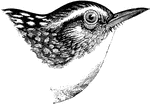
"Long-billed Marsh Wren. T. palustris. Above clear brown, unbarred, the middle of the back with a large black patch sharply streaked with white (these white stripes sometimes deficient). Crown of head usually darker that the back, often quite blackish, and continuous with the black interscapular patch. a dull white superciliary line. Wings fuscous, the inner secondaries blackish on the outer webs, often barred or indented with light brown. Tail evenly barred with fuscous and the color of the back. Under parts white, usually quite pure on the belly and middle line of the breast and throat, but much shaded with brown on the sides, flanks, and crissum. Bill blackish above, pale below; feet brown." Elliot Coues, 1884

Long-billed Marsh Wren

"Long-billed Marsh Wren. T. palustris. Above clear brown, unbarred, the middle of the back with a large…
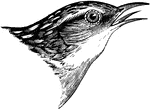
"Short-billed Marsh Wren. Cistothorus platensis. Upper parts brown, the crown and most of the back blackish, streaked with white. below, whitish, shaded with clear brown across the breast and along the sides, and especially on the flanks and crissum, the latter more or less indistinctly barred with dusky (often inappreciable). A whitish line over the eye. Wings and tail marked as in the last species. Upper tail-coverts decidedly barred. Bill blackish above, whitish below, extremely small, scarcely half as long as the head; feet brown." Elliot Coues, 1884

Short-billed Marsh Wren

"Short-billed Marsh Wren. Cistothorus platensis. Upper parts brown, the crown and most of the back blackish,…
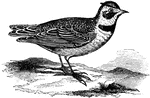
"Shore Lark or Horned Lark. Upper parts in general pinkish-brown, this pinkish or vinaceous or liliaceous tint brightest on the nape, lesser wing-coverts, and tail-coverts, the rest of the upper parts being duller and more grayish-brown, boldly variegated with dark brown streaks; middle pair of tail-feathers and several of the inner secondaries rufous-brown, with darker centres. Under parts, from the breast backward, white; the sides strongly washed with the color of the upper parts, and mottling of same across the lower part of the breast. A large, distinct, shield-shaped black area of the breast. Tail-feathers, except the middle pair, black, the outermost edged with whitish. Wings quills, except the innermost, plain fuscous, the outer web of the 1st primary whitish. Lesser wing-coverts usually tipped with grayish-white. Top of head like nape; bar across front of vertex, thence extended along sides of crown, and produced into a tuft, or "horn" black; front and line over eye, also somewhat produced to form part of the tuft, white or yellowish; a broad bar from nostrils along the lores, thence curving below the eye and widening as it descends in front of the auriculars, black; rest of the sides of the head and whole throat white or sulphury-yellow. Bill plumbeous-blackish, bluish-plumbeous at base below (sometimes there yellowish); feet and claws black; iris brown." Elliot Coues, 1884

Shore Lark

"Shore Lark or Horned Lark. Upper parts in general pinkish-brown, this pinkish or vinaceous or liliaceous…
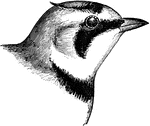
"Shore Lark or Horned Lark. Upper parts in general pinkish-brown, this pinkish or vinaceous or liliaceous tint brightest on the nape, lesser wing-coverts, and tail-coverts, the rest of the upper parts being duller and more grayish-brown, boldly variegated with dark brown streaks; middle pair of tail-feathers and several of the inner secondaries rufous-brown, with darker centres. Under parts, from the breast backward, white; the sides strongly washed with the color of the upper parts, and mottling of same across the lower part of the breast. A large, distinct, shield-shaped black area of the breast. Tail-feathers, except the middle pair, black, the outermost edged with whitish. Wings quills, except the innermost, plain fuscous, the outer web of the 1st primary whitish. Lesser wing-coverts usually tipped with grayish-white. Top of head like nape; bar across front of vertex, thence extended along sides of crown, and produced into a tuft, or "horn" black; front and line over eye, also somewhat produced to form part of the tuft, white or yellowish; a broad bar from nostrils along the lores, thence curving below the eye and widening as it descends in front of the auriculars, black; rest of the sides of the head and whole throat white or sulphury-yellow. Bill plumbeous-blackish, bluish-plumbeous at base below (sometimes there yellowish); feet and claws black; iris brown." Elliot Coues, 1884

Shore Lark

"Shore Lark or Horned Lark. Upper parts in general pinkish-brown, this pinkish or vinaceous or liliaceous…
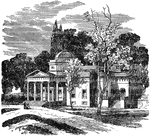
Monticello was Thomas Jefferson's estate in Charlottesville, Virginia. It was built in 1809 and appeared on the nickel and the two dollar bill.

Monticello, Jefferson's Estate

Monticello was Thomas Jefferson's estate in Charlottesville, Virginia. It was built in 1809 and appeared…
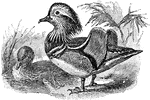
he Mandarin Duck (Aix galericulata), or just Mandarin, is a medium-sized perching duck, closely related to the North American Wood Duck. It is 41-49 cm long with a 65-75 cm wingspan. The adult male is a striking and unmistakable bird. It has a red bill, large white crescent above the eye and reddish face and "whiskers". The breast is purple with two vertical white bars, and the flanks ruddy, with two orange "sails" at the back. The female is similar to female Wood Duck, with a white eye-ring and stripe running back from the eye, but is paler below, has a small white flank stripe, and a pale tip to its bill

Mandarin Duck

he Mandarin Duck (Aix galericulata), or just Mandarin, is a medium-sized perching duck, closely related…
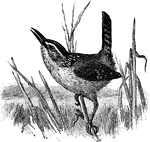
The Marsh Wren (Cistothorus palustris) is a small North American songbird of the wren family. It is sometimes called Long-billed Marsh Wren to distinguish it from the Sedge Wren, also known as Short-billed Marsh Wren. Adults have brown upperparts with a light brown belly and flanks and a white throat and breast. The back is black with white stripes. They have a dark cap with a white line over the eyes and a short thin bill.

Marsh Wren

The Marsh Wren (Cistothorus palustris) is a small North American songbird of the wren family. It is…
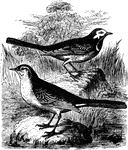
A (Motacilla alba) or White Wagtail (upper) and a (Motacilla flava) Yellow Wagtail (lower) sitting on the rocks in a grassy area. "The White Wagtail - Head black, with a broad mask of white across forehead and along side; the black extending on the fore-breast; wings blackish, with much white edging and tipping of the quills and greater coverts; tail black, the two lateral feathers on each side mostly white; back and sides ashy; lower parts mostly white; bill and feet black. In winter black more restricted, in part replaced by gray. The Yellow Wagtail has characters of the Motacilla alba; tail shorter, not exceeding the wing length; hind claw lengthened and straightish; hind toe and claw nearly as long as the tarsus. Coloration chiefly yellow and greenish." Elliot Coues, 1884

A White and Yellow Wagtail Sitting on the Rocks

A (Motacilla alba) or White Wagtail (upper) and a (Motacilla flava) Yellow Wagtail (lower) sitting on…
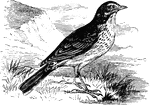
"Meadow Pipit or Anthus pratensis. Upper parts greenish-brown distinctly marked with blackish-brown centres of the feathers; wing-quills and coverts clove-brown, edged with greenish-gray. Tail-feathers dark brown, edged with the greenish shade of the back, the outer one obliquely white for nearly half its length, and others with white at the end. Cheeks olivaceous, speckled with dusky. Under parts brownish-white with a tinge of green, marked on the breast and sides with brownish-black streaks running forward as a maxillary chain; chin, belly, and under tail-coverts unmarked. Bill dusky above and at end, the rest livid flesh-color; feet obscure flesh-color; iris blackish." Elliot Coues, 1884

Meadow Pipit

"Meadow Pipit or Anthus pratensis. Upper parts greenish-brown distinctly marked with blackish-brown…
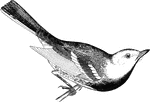
"Black Throated Green Warbler or Dendroica virens. Back and crown clear yellow-olive; forehead, superciliary line, and whole sides of head rich yellow (in high plumage, middle of back with dusky marks, and dusky or dark olive lines through eyes and auriculars, and even bordering the crown); chin, throat, and breast jet black, prolonged behind as streaks on the sides; other under parts white; usually yellow-tinged; wings and tail dusky, former with two white bars and much whitish edging, latter with outer feathers nearly all white; bill and feet blackish." Elliot Coues, 1884

Black Throated Green Warbler

"Black Throated Green Warbler or Dendroica virens. Back and crown clear yellow-olive; forehead, superciliary…
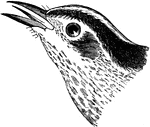
"Black and White Creeper or Mniotilta varia. Black; edges of feathers of upper parts, coronal, superciliary, and maxillary stripes, tips of greater and median wing-coverts, outer edges of inner secondaries and inner edges of quills and tail-feathers, and spots on inner webs of lateral tail-feathers, white; under parts mostly white with black streaks on sides and crissum; bill and feet black. Similar: less black in proportion to the white, being mostly white below." Elliot Coues, 1884

Black and White Creeper

"Black and White Creeper or Mniotilta varia. Black; edges of feathers of upper parts, coronal, superciliary,…
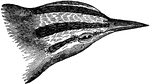
"Worm-Eating Warbler or Helmitheros vermivorus. Olive, below buffy, paler or whitish on the belly; head buff, with four black stripes, two along sides of crown from bill to nape, one along each side of head through the eye; wings and tail olivaceous, unmarked; bill and feet pale, bill acute, unbristled, unnotched, at least 0.50." Elliot Coues, 1884

Worm-Eating Warbler

"Worm-Eating Warbler or Helmitheros vermivorus. Olive, below buffy, paler or whitish on the belly; head…
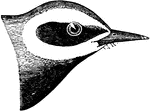
"Blue Golden-Winged Warbler or Helminthophila chrysoptera. Upper parts slaty-blue, or or fine bluish-gray; crown, and large wing-patch formed by confluent wing-bars, rich yellow; a broad stripe on side of head and patch on chin, throat and fore-breast, black, the eye-stripe bordered above and below with white; under parts generally, excepting the black breast-plate, white, often tinted with yellowish, and shaded on the sides with ashy. Exposed surfaces of wings and tail like upper parts; great white blotches on three lateral tail-feathers; bill black; feet dark." Elliot Coues, 1884

Blue Golden-Winged Warbler

"Blue Golden-Winged Warbler or Helminthophila chrysoptera. Upper parts slaty-blue, or or fine bluish-gray;…
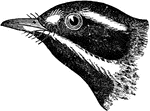
"Black-throated Gray Warbler or Dendroica nigrescens. Above, bluish-ash, the interscapular region, and usually also the upper-tail coverts, streaked with black. Entire head, with chin and throat, black; a sharply defined yellow spot before the eye, a broad white stripe behind the eye, and a long white maxillary stripe widening behind from the corner of the bill of the side of the neck. Wings fuscous, with much whitish edging, and crossed with two broad white bars on the ends of the greater and median coverts. Tail like the wings, the three lateral feathers mostly white, except on the outer webs, the fourth with a white blotch. Bill and feet black." Elliot Coues, 1884

Black-throated Gray Warbler

"Black-throated Gray Warbler or Dendroica nigrescens. Above, bluish-ash, the interscapular region, and…
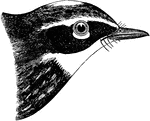
"Yellow-rumped Warbler or Dendroica coronata. Yellow-crowned Warbler. Myrtle Bird. Slaty-blue, streaked with black; below, white, breast and sides mostly black, belly, and especially throat, pure white, immaculate; rump, central crown-patch, an sides of breast, sharply yellow, there being thus four definite yellow places; sides of head black; eyelids and superciliary line white; ordinary white wing-bars and tail-blotches; bill and feet black." Elliot Coues, 1884

Yellow-rumped Warbler

"Yellow-rumped Warbler or Dendroica coronata. Yellow-crowned Warbler. Myrtle Bird. Slaty-blue, streaked…
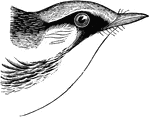
"Chestnut-sided Warbler, Dendroica pensylvanica. Back streaked with black and pale yellow (sometimes ashy or whitish); whole crown pure yellow, immediately bordered with white, then enclosed with black; sides of head and neck and whole under parts pure white, former with an irregular black crescent before the eye, one horn extending backward over the eye to border the yellow crown and be dissipated on the sides of the nape, the other reaching downward and backward to connect with a chain of pure chestnut streaks that run the whole length of the body, the under eyelid and auriculars being left white; wing-bands generally fused into one large patch, and, like the edging of the inner secondaries, much tinged with yellow; tail-spots white, as usual; bill blackish, feet brownish." Elliot Coues, 1884

Chestnut-sided Warbler

"Chestnut-sided Warbler, Dendroica pensylvanica. Back streaked with black and pale yellow (sometimes…
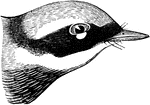
"Black -and-Yellow Warbler. Magnolia Warbler. Back black, usually quite pure and uninterrupted in the spring, more or less mixed with olive in the winter; rump yellow; upper tail-coverts black , often skirted with olive and ashy. Whole crown of head clear ash; sides of head black, including a very narrow frontlet; the eyelids and a stripe behind the eye, between the ash and black, white. Entire under parts rich yellow, excepting the white crissum, heavily streaked with black across the breast and along the sides, the streaks on the breast so thick as to form a nearly continuous black border to the immaculate yellow throat. Wings fuscous, with lining, white edging of the inner webs of all the quills, of the outer webs of the inner secondaries, and with a large white patch formed by the tips of the median coverts and tips of the median coverts and tips and outer edges of the coverts. Tail blackish, with square white spots on the middle of the inner webs of al the feathers excepting the middle pair. Bill blackish; feet dark."

Magnolia Warbler

"Black -and-Yellow Warbler. Magnolia Warbler. Back black, usually quite pure and uninterrupted in the…
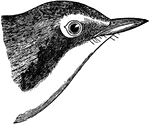
"Kentucky Warbler. Oporornis formosus. Clear olive-green; entire under parts bright yellow, olive-shaded along sides; crown black, separated by a rich yellow superciliary line(which curls around the eye behind) from a broad black bar running form bill below eye thence down the side of the neck; wings and tail unmarked, glossed with olive; feet flesh-colored." Elliot Coues, 1884

Kentucky Warbler

"Kentucky Warbler. Oporornis formosus. Clear olive-green; entire under parts bright yellow, olive-shaded…
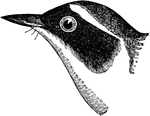
"Geothlypis trichas. Common Yellowthroat. Yellow-throated Ground Warbler. Maryland Yellow-throat. Upper parts rich olive, inclining to grayish on the head, brightest on the rump. Wings and tail brown, edged with the color of the back. Chin, throat, and breast, with under wing- and tail-coverts, rich yellow. middle under parts dull whitish, shaded on the sides. A broad mask on the front and sides of the head, bordered behind by hoary-ash. Bill black; feet flesh-colored." Elliot Coues, 1884

Common Yellowthroat

"Geothlypis trichas. Common Yellowthroat. Yellow-throated Ground Warbler. Maryland Yellow-throat. Upper…
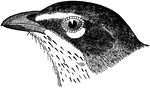
"Yellow-breasted Chat or Icteria virens. Bright olive-green, below golden-yellow, belly abruptly white; lore black, isolating the white under-eyelid from a white superciliary line above and a short white maxillary line below; wings and tail unmarked, glossed with olive; bill blue-black; feet plumbeous." Elliot Coues, 1884

Yellow-breasted Chat

"Yellow-breasted Chat or Icteria virens. Bright olive-green, below golden-yellow, belly abruptly white;…
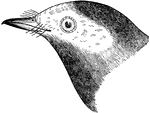
"Myiodioctes mitratus. Hooded Fly-catching Warbler. Hooded Warbler. Clear yellow-olive above; below, rich yellow, shaded with olive along the sides; whole head and neck pure black, enclosing a broad golden mask across forehead and through eyes; wings unmarked, glossed with olive; tail with large white blotches on the two or three outer pairs of feathers, as in Dendroica; bill black; feet flesh-colored." Elliot Coues, 1884

Hooded Warbler

"Myiodioctes mitratus. Hooded Fly-catching Warbler. Hooded Warbler. Clear yellow-olive above; below,…
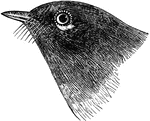
"Painted Fly-catching Warbler. Setophaga picta. Painted Redstart. Lustrous black; middle of breast and belly carmine-red; eyelids, a large patch on the wings formed by the greater and middle coverts, broad edging of inner secondaries, edging the inner webs of primaries toward the base, lining of wings, nearly all the outer tail-feather, and a diminishing space on the next two or three, together with the crissum, white. Bill and feet black." Elliot Coues, 1884

Painted Fly-catching Warbler

"Painted Fly-catching Warbler. Setophaga picta. Painted Redstart. Lustrous black; middle of breast and…
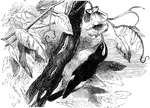
"Certhiola flaveola. Honey Creeper. Dark brown above; long superciliary line and under parts dull white; breast, edging of wing, and rump, bright yellow; wings dusky, with a white spot at base of primaries, and whitish edging of the quills; tail dusky, tipped with white; bill and feet black; eyes blue." Elliot Coues, 1884

Honey Creeper

"Certhiola flaveola. Honey Creeper. Dark brown above; long superciliary line and under parts dull white;…
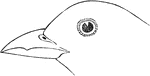
"Fig 178 - the dentirostral bill of a Tanager (Pyranga hepatica)" Elliot Coues, 1884

The Dentirostral Bill of a Tanager

"Fig 178 - the dentirostral bill of a Tanager (Pyranga hepatica)" Elliot Coues, 1884
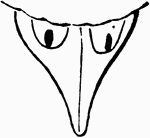
Aerial (top) view of Barn Swallow's bill"Hirundo horreorum. Barn Swallow. Bill of moderate size for this family, of the usual shape, with straight commissure; nostrils lateral overarched by a membranous scale." Elliot Coues, 1884

Barn Swallow Bill

Aerial (top) view of Barn Swallow's bill "Hirundo horreorum. Barn Swallow. Bill of moderate size for…
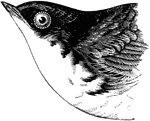
"Entire upper parts glossy dark green; wings and tail blackish, lustrous; lores black. Entire under parts white. Bill black; feet dark." Elliot Coues, 1884

White-belied Swallow

"Entire upper parts glossy dark green; wings and tail blackish, lustrous; lores black. Entire under…
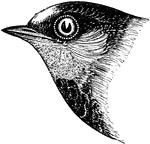
"Cliff Swallow. Eaves Swallow. Crescent Swallow. Mud Swallow. back and top of head, with a spot on the throat, deep lustrous steel-blue, that of the crown and back separated by a grayish nuchal collar. Frontlet white or brownish-white. Shorter upper tail-coverts rufous. Chin, throat, and sides of head intense rufous, sometimes purplish-chestnut, prolonged around the side of the nape. Under parts dull grayish-brown, , with usually a rufous tinge (rusty-gray), dusky shaft-lines, whitening on the belly, the under tail-coverts gray, whitish-edged and tinged with rufous. Wings and tail blackish, with slight gloss. Bill black; feet brown." Elliot Coues, 1884

Cliff Swallow

"Cliff Swallow. Eaves Swallow. Crescent Swallow. Mud Swallow. back and top of head, with a spot on the…
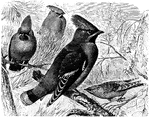
"Ampelis garrulus. Bohemian Waxwing. General color brownish-ash, shading insensibly from the clear ash of the tail and its upper coverts and rump into a reddish-tinged ash anteriorly, this peculiar tint heightening on the head, especially on the forehead and sides of the head, into orange-brown. A narrow frontal line, and bordered with white. No yellowish on belly. Under tail-coverts orange-brown, or chestnut. Tail ash, deepening to blackish-ash toward the end broadly tipped with rich yellow. Wings ashy-blackish; primaries tipped (chiefly on the outer webs) with sharp spaces of yellow, or white, or both; secondaries with white spaces at the ends of the outer webs, the shafts usually ending with enlarged, horny, red appendages. Primary coverts tipped with white. Bill blackish-plumbeous, often paler at the base below; feet black." Elliot Coues, 1884

Bohemian Waxwing

"Ampelis garrulus. Bohemian Waxwing. General color brownish-ash, shading insensibly from the clear ash…
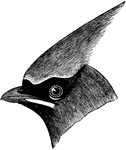
"Ampelis cedrorum. Cedar Waxwing. Carolina Waxwing. Cedar-bird. Cherry Bird. General color shading from clear pure ash on the upper tail-coverts and rump through olivaceous-cinnamon into a richer and somewhat purplish-cinnamon on the foreparts and head. On the under parts, the color shades through yellowish on the belly into white on the under tail-coverts. There is no demarcation of color whatever, and the tints are scarcely susceptible of adequate description. Frontlet, lores, and stripe through the eye, velvety-black; chin the same, soon shading into the color of the breast. A sharp white line on the side of the under jaw; a narrower one bordering the black frontlet and lores; lower eyelid white. quills of the wings slate-gray, blackening at the ends, paler along the edges of the inner webs; without white or yellow markings, as a rule; inner quills tipped with red horny appendages. Tail-feathers like the primaries, but tipped with yellow, and sometimes also showing red horny appendages. Bill plumbeous-black, sometimes paler at base; feet black." Elliot Coues, 1884

Cedar Waxwing

"Ampelis cedrorum. Cedar Waxwing. Carolina Waxwing. Cedar-bird. Cherry Bird. General color shading from…
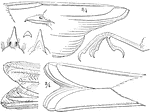
"Generic details of a Myiadestes townsendi (Townsend's Flycatching Thrush); bill and foot nat. size, wing and tail 3/4ths."

Generic Details of a Thrush

"Generic details of a Myiadestes townsendi (Townsend's Flycatching Thrush); bill and foot nat. size,…
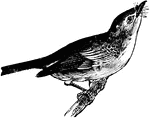
"Similar to V. gilvus, but smaller; colors paler; bill more depressed; upper mandible almost black; 2d quill much shorter than 6th" Elliot Coues, 1884

Warbling Vireo

"Similar to V. gilvus, but smaller; colors paler; bill more depressed; upper mandible almost black;…
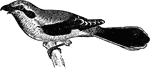
"Lanius borealis. Great Northern Shrike. Butcher-bird. Great Grey Shrike. Above, clear bluish-ash, blanching on rump and scapulars; below, white, always vermiculated transversely with fine wavy blackish lines; a broad black bar along side of head, not meeting its fellow across forehead, interrupted by a white crescent on under eyelid, and bordered above by hoary white that also occupies the extreme forehead; wings and tail black, the former with a large white spot near base of the primaries, and white tips of most of the quills, the latter with the outer web of the outer feather edged, and all the feathers excepting the middle pair broadly tipped, with white, and with concealed white bases; bill and feet bluish-black; eyes blackish. Elliot Coues, 1884

Butcher-bird

"Lanius borealis. Great Northern Shrike. Butcher-bird. Great Grey Shrike. Above, clear bluish-ash, blanching…
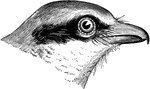
"Lanius borealis. Great Northern Shrike. Butcher-bird. Great Grey Shrike. Above, clear bluish-ash, blanching on rump and scapulars; below, white, always vermiculated transversely with fine wavy blackish lines; a broad black bar along side of head, not meeting its fellow across forehead, interrupted by a white crescent on under eyelid, and bordered above by hoary white that also occupies the extreme forehead; wings and tail black, the former with a large white spot near base of the primaries, and white tips of most of the quills, the latter with the outer web of the outer feather edged, and all the feathers excepting the middle pair broadly tipped, with white, and with concealed white bases; bill and feet bluish-black; eyes blackish. Elliot Coues, 1884

Butcher-bird Head

"Lanius borealis. Great Northern Shrike. Butcher-bird. Great Grey Shrike. Above, clear bluish-ash, blanching…
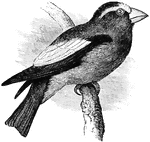
"Hesperophona vespertina. Evening Grosbeak. General color sordid yellow, overlaid with sooty-olive shade, deepest on fore parts, quite black on crown, clearest below behind. forehead and line over eye, scapulars, and rump, yellow. Wings and tail black; several inner secondaries and inner half of the greater coverts white; lining of wings black and yellow. A narrow black line around base of upper mandible; tibiae black. Bill greenish-yellow; feet apparently dusky flesh-color." Elliot Coues, 1884

Evening Grosbeak

"Hesperophona vespertina. Evening Grosbeak. General color sordid yellow, overlaid with sooty-olive shade,…
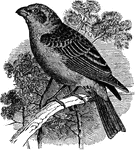
"Pinicola enucleator. Pine Grosbeak. Light carmine or rosy-red, feathers of back with dusky centres; lower belly and under tail-coverts gray, and, in general, the red continuous only in highly plumaged specimens. Nasal tufts and lores blackish. Wings blackish; primaries with narrow white or rosy edging, inner secondaries more broadly edged with white, ends of greater and middle coverts white or rosy, forming conspicuous wing-bars. Tail like wings, with narrow edgings like those of primaries. Bill blackish, with or without paler base below; feet blackish." Elliot Coues, 1884

Pine Grosbeak

"Pinicola enucleator. Pine Grosbeak. Light carmine or rosy-red, feathers of back with dusky centres;…
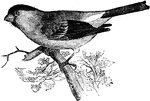
"Pyrrhula cassini. Cassin's Bullfinch. Above, clear ashy-gray; below, cinnamon-gray; rump and under wing- and tail-coverts white; wings and tail, crown, chin and face black; outer tail-feathers with a white patch, greater wing-coverts tipped and primaries edged with whitish; bill black; feet dusky." Elliot Coues, 1884

Cassin's Bullfinch

"Pyrrhula cassini. Cassin's Bullfinch. Above, clear ashy-gray; below, cinnamon-gray; rump and under…
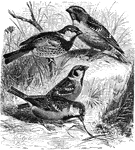
"Exotic Sparrow's - lowest pair - Passer domesticus (The Sparrow. Philip Sparrow. House Sparrow.) above pair - Passer montanus (Mountain Sparrow). House Sparrow - upper parts ashy-gray; middle of back and scapulars boldly streaked with black and bay. A dark chestnut; median tipped with white, forming a conspicuous wing-bar, bordering which is a black line. Greater coverts and inner quills with central black field bordered with bay. Tail dusky-gray, unmarked. Lower parts ashy, gray or whitish; chin and throat jet black, spreading on the breast and lores, bordered on side of neck with white. Bill blue-black; feet brown. Mountain Sparrow - Somewhat like the last, but smaller and otherwise different. Crown and nape a peculiar purplish-brown. Lores, chin, and throat-patch narrow and short, not spreading on breast, contrasted with ashy-white on side of head and neck; ear-coverts blackish. Back and scapulars streaked with black and bay, the streaking reaching to the purplish nape; rump and tail plain grayish-brown. Wings marked much as in P. domesticus, with a black and white bar across tips of median coverts, but also a narrow white bar across tips of greater coverts. Primaries more varied with ochrey-brown on outer webs, forming a basal spot and other edging. Below, ashy-gray, shaded on sides, flanks, and crissum with grayish-brown. Bill blue-black; feet brown." Elliot Coues, 1884

Exotic Sparrow's

"Exotic Sparrow's - lowest pair - Passer domesticus (The Sparrow. Philip Sparrow. House Sparrow.) above…
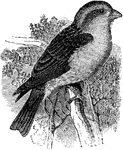
"Carpodacus purpureus. Purple Finch (better Crimson Finch). Rose-red, paler below, insensibly whitening on belly and crissum, brightest anteriorly, intensified to crimson on crown, darker and more brownish-red on back, where also streaked with brown. Wings and tail dusky, the quills edged and coverts tipped with browninsh-red. Lores and feathers about base of bill hoary-whitish. Bill and feet brown, the under mandible rather paler." Elliot Coues, 1884

Purple Finch

"Carpodacus purpureus. Purple Finch (better Crimson Finch). Rose-red, paler below, insensibly whitening…
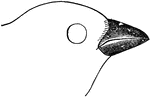
"Carpodacus. Purple Bullfinch. Bill smaller and less turgid than in Pinicol or Pyrrhula, more regularly conic and more acute; sides convex in all directions, but with distinct ridge prolonged in a point on forehead where not concealed by the antiae, its outline moderately curved; commissure decidedly angulated, about straight before and behind the bend; gonys quite straight. Nasal ruff little developed, barely cocealing the slight nasal fossae, thence falling over sides of bill, but discontinuous across culmen." Elliot Coues, 1884

The Bill of a Purple Finch

"Carpodacus. Purple Bullfinch. Bill smaller and less turgid than in Pinicol or Pyrrhula, more regularly…
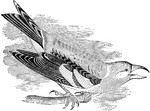
"Loxia leucoptera. White-winged Crossbill. Rosy-red, sometimes carmined or even crimsoned, obscured on middle of back, paling on lower belly and crissum, latter whitish with dusky centres of the feathers. Scapulars black, this color sometimes meeting across lower back. Wing- and tail-feathers black, with white, forming two cross-bars, sometimes confluent in one large patch. Rather larger than the next, the bill thinner and more attenuate." Elliot Coues, 1884

White-winged Crossbill

"Loxia leucoptera. White-winged Crossbill. Rosy-red, sometimes carmined or even crimsoned, obscured…