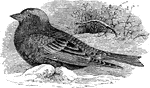
"Leucosticte tephrocotis. Swainson's Rosy Finch. Gray-crowned Rosy Finch. Sexes similar. Adult in breeding plumage or nearly so: Bill and feet black. Nasal plumules white. Frontlet black; rest of pileum hoary-ash, not descending below level of eyes and upper border of auriculars (for when the ash invades the sides of head to any extent, the bird takes the first step toward litoralis, in which the head is extensively hooded in ash). General color, sides of head included, chocolate or liver-brown of varying intensity, many feathers skirted with gray or whitish, especially the interscapulars, which also have dusky centres, and inclining to blackish on chin and throat. Hinder parts of the body above and below, including tail-coverts, rich rosy or carmine red, this color due to broad edgings of the dusky feathers of these parts. Wings and tail blackish, the wing-coverts and primaries edged with rosy, showing nearly continuous in the closed wing; edgings of inner secondaries rosy-white or white." Elliot Coues, 1884

Swainson's Rosy Finch

"Leucosticte tephrocotis. Swainson's Rosy Finch. Gray-crowned Rosy Finch. Sexes similar. Adult in breeding…
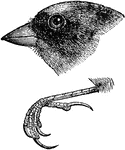
"Bill small, short, straight, very acute, more or less compressed, the lateral outlines usually a little concave, those of culmen and gonys straight; commissure straight to the slight angulation. Base of bill thickly beset with a ruff of antrorse plumules, concealing the small nasal fossae and round nostrils. Wings longer than tail, pointed by first 3 primaries. Tail rather long for this group, forked. Feet small and weak, but tarsi longer than middle toes without claw; lateral toes of equal lengths, their claw-tips falling beyond base of middle claw. Hind claw much longer, stouter and more curved than the middle, exceeding its digit in length. Size small; plumage streaky with dusky, white, and flaxen colors, crown crimson, face and throat blackish; sexes otherwise dissimilar; with rosy or carmine on breast, wanting in. Scarcely different from Linota (flavirostris, etc.) the pattern of coloration being the most available distinction." Elliot Coues, 1884

Red-poll Linnets

"Bill small, short, straight, very acute, more or less compressed, the lateral outlines usually a little…
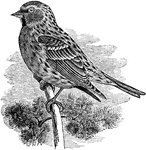
"Aegiothus linaria. Common Redpoll. Common Red-poll. Frontlet, lores, and throat-spot sooty-black. Crown crimson. Above, variegated with brownish-yellow and dusky, the feathers having dark centres and flaxen edges. Rump streaked with dusky and white, and tinged with rosy, more or less so according to age and season. Below, white, the sides and crissum streaked with dusky, the entire fore-parts colored with rose-red more or less rich and extensive according to same circumstances. Wings and tail dusky, the feathers edged with whitish, the middle and greater coverts tipped with the same, forming two crossbars. Bill black or yellow, usually found yellow with dusky tip and edges. Feet blackish." Elliot Coues, 1884

Common Redpoll

"Aegiothus linaria. Common Redpoll. Common Red-poll. Frontlet, lores, and throat-spot sooty-black. Crown…
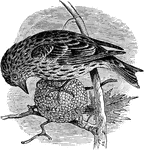
"Carduelis pinus. Pine Linnet. Pine Finch. American Siskin. Pine Siskin. Continuously streaked, above with dusky or dark olivaceous-brown and flaxen or whitish, below with dusky and whitish, the whole body usually suffused with yellowish, most evident on the rump. Wings dusky, the basal portion of all the quills and their inner webs for some distance sulphury-yellow, usually showing externally as a spot just beyond the coverts, sometimes restricted and hidden. Outer webs of the quills also narrowly edged with yellow, separated from the basal yellow patch by a blackish interval. Tail dusky, its basal half yellow, and outer webs edged with yellow. Bill and feet brown." Elliot Coues, 1884

Pine Siskin

"Carduelis pinus. Pine Linnet. Pine Finch. American Siskin. Pine Siskin. Continuously streaked, above…
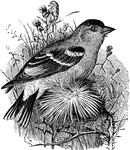
"Astragalinus tristis. American Goldfinch. Yellow-bird. Thistle-bird. In summer: Rich yellow, changing to whitish on the tail-coverts; a black patch on the crown; wings black, ore or less edged with white; lesser wing-coverts white or yellow; greater coverts tipped with white; tail black, every feather with a white spot; bill and feet flesh-colored. In September, the black cap disappears; the general plumage changes to a pale flaxen-brown above and whitey-brown below, with traces of the yellow, especially about the head; wings and tail much as in summer; sexes then much alike: this continues until the following April or May." Elliot Coues, 1884

American Goldfinch

"Astragalinus tristis. American Goldfinch. Yellow-bird. Thistle-bird. In summer: Rich yellow, changing…
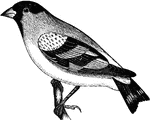
"Astragalinus lawrencii. Lawrence's Goldfinch. Gray, more or less tinged with yellowish, whitening on the belly and crissum; rump, a large breast-patch, and much of the back rich yellow; crown, face, and chin black; wings black, variegated with yellow, most of the coverts being of this color, and the same broadly edging the quills; inner secondaries edged with hoary gray; tail black, most of the feathers with large square white spots on the inner webs and whitish edging of the outer; bill and feet flesh-color more or less obscured." Elliot Coues, 1884

Lawrence's Goldfinch

"Astragalinus lawrencii. Lawrence's Goldfinch. Gray, more or less tinged with yellowish, whitening on…
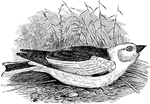
"Plectrophanes nivalis. Snow Bunting. Snowflake. Pure white; the bill, feet, middle of back, scapulars, primaries except at base, most inner secondaries, bastard quills, and and several tail-feathers, black." Elliott Coues, 1884

Snow Bunting

"Plectrophanes nivalis. Snow Bunting. Snowflake. Pure white; the bill, feet, middle of back, scapulars,…
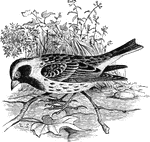
"Centrophanes lapponicus. Lapland Longspur. Whole head, throat and breast jet-black, bordered with buffy or whitish, which forms a post-ocular stripe separating black of crown from that of sides of head, sometimes continues to the bill. A broad cervical chestnut collar, separated from the black cap by whitish or buffy line and nuchal spot. Upper parts brownish-black completely streaked with buff or whitish edges of the feathers; under parts white, the sides streaked with black. Wings dusky, with pale or brownish edgings of the feathers, but no strong markings. Tail like wing, with large white spaces on outer 3 feathers. Bill yellow, black-tipped. Legs and feet black." Elliot Coues, 1884

Lapland Longspur

"Centrophanes lapponicus. Lapland Longspur. Whole head, throat and breast jet-black, bordered with buffy…
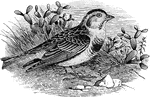
"Rhynchophanes maccowni. Black-breasted Longspur. Bay-winged Longspur. Upper parts slate-gray, streaked with dusky and grayish or yellowish-brown, especially on the interscapulars. No cervical collar, but a chestnut patch on the wings, formed by median coverts. Crown jet-black, bounded by a white superciliary line; sides of head whitish, but auriculars more or less slaty. Throat white, bounded by firm black maxillary stripes. Breast jet-black in broad crescentic form, sharply defined against the white throat, shading behind into slaty-blackish, becoming more and more mixed with white on the belly and sides, till posteriorly the parts are pure white; lining of wings white. All the tail-feathers, except the middle pair, and bases and tips of intermediate ones, white, ending squarely across both webs. Bill blackish-plumbeous, pale at base below; feet brownish-black. Elliot Coues, 1884

Black-breasted Longspur

"Rhynchophanes maccowni. Black-breasted Longspur. Bay-winged Longspur. Upper parts slate-gray, streaked…
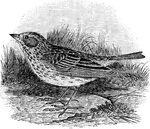
"Passercules s. savana. Common Savanna Sparrow. Thickly streaked everywhere above, on sides, and across breast; a superciliary line, and edge of the wing, yellowish: lesser wing-coverts not chestnut; legs flesh-color; bill rather slender and acute; tail nearly even, its outer feathers not white; longest secondary nearly as long as the primaries in the closed wing. Above, brownish-gray, streaked with blackish, whitish-gray and pale bay, the streaks largest on interscapulars, smallest on cervix, the crown divided by an obscure whitish line; sometimes an obscure yellowish suffusion about head besides the streak over the eye. Below, white, pure or with faint buffy shade, thickly streaked, as just stated, with dusky- the individual spots edged with brown, mostly arrow-shaped, running in chains along the sides, and often aggregated in an obscure blotch on the breast. Wings dusky, the coverts and inner secondaries black-edged and tipped with bright bay; tail-feathers rather narrow and pointed, dusky, not noticeably marked." Elliot Coues, 1884

Common Savanna Sparrow

"Passercules s. savana. Common Savanna Sparrow. Thickly streaked everywhere above, on sides, and across…
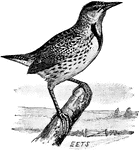
The Eastern Meadowlark, Sturnella magna, is a medium-sized icterid bird, very similar in appearance to the Western Meadowlark. It occurs from eastern North America to South America, where it is also most widespread in the east. Adults have yellow underparts with a black "V" on the breast and white flanks with black streaks. The upperparts are mainly brown with black streaks. They have a long pointed bill; the head is striped with light brown and black. The song of this bird is simpler and not warbled like that of the Western Meadowlark; their ranges overlap across central North America. In the field, the song is often the easiest way to tell the two species apart.

Eastern Meadowlark

The Eastern Meadowlark, Sturnella magna, is a medium-sized icterid bird, very similar in appearance…
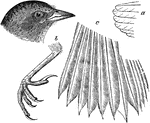
"Ammodramus. Seaside Sparrow. Bill remarkably slender and lengthened for this family, with culmen toward end, gonys straight, and sometimes an evident lobation of the cutting edge of the upper mandible. Wings short and rounded, yet longer than tail; inner secondaries, though not elongate, reaching nearly to end of primaries when wing is closed; point formed by 2d-4th quills. Feet large and stout, reaching outstretched about to the end of tail; tarsus about equal to middle toe and claw in length; lateral toes of equal lengths, very short, their claws under reaching base of middle claw. Tail shorter or not longer than wings, much rounded, of narrow, stiffish, sharp-pointed feathers. Embracing small streaky marsh sparrows, especially of the sea-coast, but not exclusively maritime, as long supposed; remarkable for slenderness of the bill, sharp narrow tail-feathers, and stout feet fitted for grasping slender swaying reeds. Edge of wing bright yellow; a yellow spot of buff stripe on head; upper parts olive-gray or quite blackish, streaky." Elliot Coues, 1884

The Details of a Seaside Sparrow

"Ammodramus. Seaside Sparrow. Bill remarkably slender and lengthened for this family, with culmen toward…
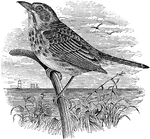
"Ammodramus maritimus. Seaside Finch. Olive-gray, obscurely streaked on back and crown with darker and paler; below, whitish, often washed with brownish, shaded on sides with color of back, and with ill-defined dark streaks on breast and sides; maxillary stripes on the same; wings and tail plain dusky, with slight olivaceous edgings; wing-coverts and inner quills somewhat margined with brown; edge of wing bright yellow; a bright yellow spot on lore, and often often some vague brownish and dusky markings on side of head; bill plumbeous, or dark horn-blue; feet dark." Elliot Coues, 1884

Seaside Finch

"Ammodramus maritimus. Seaside Finch. Olive-gray, obscurely streaked on back and crown with darker and…
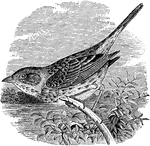
"Melospiza lincolni. Lincoln's Song Sparrow. Below, white, with a broad brownish-yellow belt across breast, the sides of the body and neck, and the crissum, washed with the same; extent and intensity of this buff very variable, often leaving only chin, throat, and belly purely white, but a pectoral band is always evident. All the buffy parts sharply and thickly streaked with dusky. Above, grayish-brown, with numerous sharp black-centred, brown-edged streaks. Top of head ashy, with a pair of dark brown black-streaked stripes; or, say, top of head brown, streaked with black, and with median and lateral ashy stripes. Below the superciliary ashy stripe is a narrow dark brown one, running from eye over ear; auriculars also bounded below by an indistinct dark brown stripe, below which and behind the auriculars the parts are suffused with buff. Wings with much rufous-brown edging of all the quills; inner secondaries and coverts having quite black central fields, with broad bay edging, becoming whitish toward their ends. Tail brown, the feathers with pale edges, and the central pair at least with dusky shaft-stripes. Bill blackish, lighter below; feet brownish." Elliot Coues, 1884

Lincoln's Sparrow

"Melospiza lincolni. Lincoln's Song Sparrow. Below, white, with a broad brownish-yellow belt across…
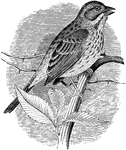
"Melospiza fasciata. Song Sparrow. Silver-tongue. Below, white, slightly shaded with brownish on the flanks and crissum; with numerous black-centred, brown-edged streaks cross breast and along sides, usually forming a pectoral blotch and coalescing into maxillary stripes bounding the white throat; crown dull bay, with fine black streaks, divided in the middle and bounded on either side by ashy-whitish lines; vague brown or dusky and whitish markings on sides of the head; a brown post-ocular stripe over the gray auriculars, and another, not so well defined, from angle of mouth below the auriculars; the interscapular streaks black, with bay and ashy-white edgings; rump and cervix grayish-brown, with merely a few bay marks; wings with dull bay edgings, the coverts and inner quills marked like the interscapulars; tail plain brown, with darker shaft lines, on the middle feathers at least, and often with obsolete transverse wavy markings. Very constant in plumage, the chief difference being in the sharpness and breadth of the markings, due in part to the wear of the feathers. In worn midsummer plumage, the streaking is very sharp, narrow, and black, from wearing of the rufous and whitish, especially observable below where the streaks contrast with white, and giving the impression of heavier streaking than in fall and winter, when in fresher feather, the markings are softer and more suffuse. The aggregation of spots into a blotch on the middle of the breast is usual. Bill dark brown, paler below; feet pale brow." Elliot Coues, 1884

Song Sparrow

"Melospiza fasciata. Song Sparrow. Silver-tongue. Below, white, slightly shaded with brownish on the…
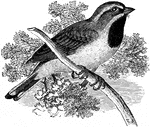
"Amphispiza bilineata. Black-throated Sparrow. Black-faced Sage Sparrow. face, chin, and throat sharply jet-black; a strong white superciliary line, and another bounding the black of the throat; under eyelid white; auriculars dark slate. No yellow anywhere. Below, pure white; the sides, flanks, and crissum shaded with ashy or fulvous-brownish, but no streaks. Above, uniform grayish-brown; clearer ash in high plumage, otherwise browner, generally more shy anteriorly than behind, and shading insensibly into the black of the face. wings dusky; coverts and inner quills edged with the color of the back. Tail black, with narrow grayish edgings; the outer feather sharply edged and tipped with white, and several others similarly tipped. Bill and feet plumbeous-black." Elliot Coues, 1884

Black-throated Sparrow

"Amphispiza bilineata. Black-throated Sparrow. Black-faced Sage Sparrow. face, chin, and throat sharply…
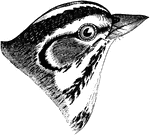
"Chondestes grammica. Lark Sparrow. Lark Finch. Head variegated with chestnut, black, and white; crown chestnut, blackening on forehead, divided by a median stripe, and bounded by superciliary stripes, of white; a black line through eye, and another below eye, enclosing a white streak under the eye and the chestnut auriculars; next, a sharp black maxillary stripe not quite reaching the bill, cutting off a white stripe from the white chin and throat. A black blotch on middle of breast. Under parts white, faintly shaded with grayish-brown; under arts grayish-brown, the middle of the back with fine black streaks. Tail very long, its central feathers like the back, the rest jet-black, broadly tipped with pure white in diminishing amount from the lateral pair inward, and the outer web of the outer pair entirely white." Elliot Coues, 1884

Lark Sparrow

"Chondestes grammica. Lark Sparrow. Lark Finch. Head variegated with chestnut, black, and white; crown…
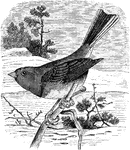
"Junco hiemalis. Eastern Snow-bird. Black Snow-bird. Blackish-ash, below abruptly pure white from the breast, the sides shaded with ashy. In the summer, and most fall and winter specimens, the upper parts have a more grayish, or even a decidedly brownish, cast, and the inner secondaries are edged with pale bay. The slaty-black intense on the head; belly and crissum pure white, the line between the two transverse or convex forward; wings and tail blackish, with slightly hoary edging of some feathers; 2-3 lateral tail feathers pure white, wholly or in great part. No rusty brown on back or sides; any shade on the sides ashy, not pinkish. Bill pinkish-white, or flesh-color, usually black-tipped." Elliot Coues, 1884

Eastern Snow-bird

"Junco hiemalis. Eastern Snow-bird. Black Snow-bird. Blackish-ash, below abruptly pure white from the…
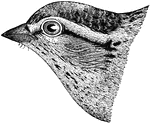
"Spizella domestica. Chipping Sparrow. Chipping Bird or Chippy. Hair-bird. Bill black; feet pale; crown chestnut; extreme forehead black, usually divided by a pale line; a grayish-white superciliary line; below this a blackish stripe through eye and auriculars; lores dusky. Below, a variable shade of pale ash, nearly uniform and entirely unmarked; back streaked with lack, dull bay and grayish-brown; inner secondaries and wing-coverts similarly variegated, the tips of the greater and median coverts forming whitish bars; rump ashy, with slight blackish streaks or none; primaries and tail-feathers dusky, with paler edges." Elliot Coues,1884

Chipping Sparrow Head

"Spizella domestica. Chipping Sparrow. Chipping Bird or Chippy. Hair-bird. Bill black; feet pale; crown…
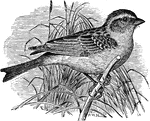
"Spizella domestica. Chipping Sparrow. Chipping Bird or Chippy. Hair-bird. Bill black; feet pale; crown chestnut; extreme forehead black, usually divided by a pale line; a grayish-white superciliary line; below this a blackish stripe through eye and auriculars; lores dusky. Below, a variable shade of pale ash, nearly uniform and entirely unmarked; back streaked with lack, dull bay and grayish-brown; inner secondaries and wing-coverts similarly variegated, the tips of the greater and median coverts forming whitish bars; rump ashy, with slight blackish streaks or none; primaries and tail-feathers dusky, with paler edges." Elliot Coues,1884

Chipping Sparrow

"Spizella domestica. Chipping Sparrow. Chipping Bird or Chippy. Hair-bird. Bill black; feet pale; crown…
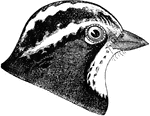
"Zonotrichia albicollis. White-throated Crown Sparrow. Peabody-bird. Crown black divided by a median white stripe, bounded by a white superciliary line, and yellow spot from nostril to eye; below this a black stripe through eye; below this a maxillary black stripe bounding the definitely pure white throat, sharply contrasted with the dark ash of the breast and sides of the neck and head. Edge of wing yellow. back continuously streaked with black, chestnut, and fulvous-white; rump ashy, unmarked. wings much edged with bay, the white tips of the median and greater coverts forming two conspicuous bars; quills and tail-feathers dusky, with pale edges. Below, white, shaded with ashy-brown on sides, the ash deeper and purer on the breast; bill dark; feet pale." Elliot Coues, 1884

White-throated Sparrow Head

"Zonotrichia albicollis. White-throated Crown Sparrow. Peabody-bird. Crown black divided by a median…
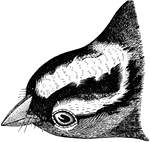
"Zonotrichia leucophrys. White-browned Crown Sparrow. Crown pure white, enclosing on either side a broad black stripe that meets its fellow on the forehead and descends the lores to the level of the eyes, and bounded by another narrow black stripe that starts behind the eye and curves around the side of the hind-head, nearly meeting its fellow on the nape; edge of under eyelid white. Or, we may say, crown black, enclosing a median white stripe and two lateral white stripes, all confluent on the hind head. No yellow anywhere. General color a fine dark ash, paler below, whitening insensibly on chin and belly, more brownish on the rump, changing to dull brownish white. No bright bay, like that of albicollis, anywhere, except some edging on the wing-coverts and inner secondaries; middle and greater coverts tipped with white, forming two bars. Bill and feet reddish." Elliot Coues, 1884

White-crowned Sparrow Head

"Zonotrichia leucophrys. White-browned Crown Sparrow. Crown pure white, enclosing on either side a broad…
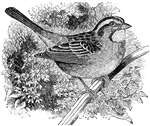
"Zonotrichia albicollis. White-throated Crown Sparrow. Peabody-bird. Crown black divided by a median white stripe, bounded by a white superciliary line, and yellow spot from nostril to eye; below this a black stripe through eye; below this a maxillary black stripe bounding the definitely pure white throat, sharply contrasted with the dark ash of the breast and sides of the neck and head. Edge of wing yellow. back continuously streaked with black, chestnut, and fulvous-white; rump ashy, unmarked. wings much edged with bay, the white tips of the median and greater coverts forming two conspicuous bars; quills and tail-feathers dusky, with pale edges. Below, white, shaded with ashy-brown on sides, the ash deeper and purer on the breast; bill dark; feet pale." Elliot Coues, 1884

White-throated Sparrow

"Zonotrichia albicollis. White-throated Crown Sparrow. Peabody-bird. Crown black divided by a median…
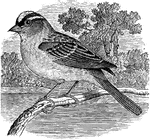
"Zonotrichia leucophrys. White-browned Crown Sparrow. Crown pure white, enclosing on either side a broad black stripe that meets its fellow on the forehead and descends the lores to the level of the eyes, and bounded by another narrow black stripe that starts behind the eye and curves around the side of the hind-head, nearly meeting its fellow on the nape; edge of under eyelid white. Or, we may say, crown black, enclosing a median white stripe and two lateral white stripes, all confluent on the hind head. No yellow anywhere. General color a fine dark ash, paler below, whitening insensibly on chin and belly, more brownish on the rump, changing to dull brownish white. No bright bay, like that of albicollis, anywhere, except some edging on the wing-coverts and inner secondaries; middle and greater coverts tipped with white, forming two bars. Bill and feet reddish." Elliot Coues, 1884

White-crowned Sparrow

"Zonotrichia leucophrys. White-browned Crown Sparrow. Crown pure white, enclosing on either side a broad…

"Calamospiza bicolor. Lark Bunting. White-winged Blackbird. Black, with A large white patch on the wings; the quills and tail-feathers frequently marked with white; bill dark horn-blue above, paler below; feet brown." Elliot Coues, 1884

Lark Bunting

"Calamospiza bicolor. Lark Bunting. White-winged Blackbird. Black, with A large white patch on the wings;…
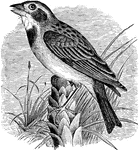
"Spiza americana. Black Throated Bunting. Above, grayish-brown, the middle of the back streaked with black, the hind neck ashy, becoming on the crown yellowish-olive with black touches. A yellow superciliary line, and maxillary touch of the same; eyelid white; ear-coverts ashy like the cervix; chin white; throat with a large jet-black patch. Under parts in general white, shaded with gray on the sides, extensively tinged with yellow on the breast and belly. Edge of wing yellow; lesser and middle coverts rich chestnut, other coverts and inner secondaries edged with paler. Bill dark horn-blue; feet brown." Elliot Coues, 1884

Black-throated Bunting

"Spiza americana. Black Throated Bunting. Above, grayish-brown, the middle of the back streaked with…
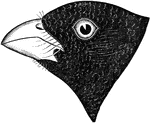
"Zamelodia. Song Grosbeak. Bill extremely heavy, with the lower mandible as deep as the upper or deeper, the commissural angle strong, far in advance of the feathered base of the bill, the rictus overhung with a few long stiff bristles. Wing with outer 4 primaries abruptly longer than 5th. Tail shorter than wing, even or scarcely rounded. Feet short and stout. Embracing two larger species, of beautiful and striking colors, the sexes dissimilar. Male black and white, with carmine-red or orange-brown; Female otherwise, but with lining of wings yellow. Brilliant songsters; nest in trees and bushes; eggs spotted." Elliot Coues, 1884

Song Grosbeak Bill

"Zamelodia. Song Grosbeak. Bill extremely heavy, with the lower mandible as deep as the upper or deeper,…
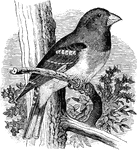
"Zamelodia ludoviciana. Rose-breasted Song Grosbeak. Adult male with the head and neck all around and most of the upper parts black, the rump, upper tail-coverts and under parts white, the breast and under wing-coverts exquisite carmine rose-red; wings and tail black, variegated with white; bill white; feet grayish-blue; iris brown. Female above, streaked with blackish and olive-brown or flaxen-brown, with median white coronal and superciliary line; below, white, more or less tinged with fulvous and streaked with dusky; under wing-coverts saffron-yellow; upper coverts and inner quills with a white spot at end; bill brown." Elliot Coues, 1884

Rose-breasted Song Grosbeak

"Zamelodia ludoviciana. Rose-breasted Song Grosbeak. Adult male with the head and neck all around and…
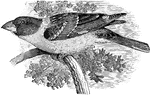
"Zamelodia melanocephala. Black-headed Song Grosbeak. Adult male with the crown, sides of head, back, wings, and tail black; the back usually varied with whitish or cinnamon-brown, the wings spotted with white on the ends of the coverts, and usually also towards the ends of the quills, and with a large white patch at the base of primaries; several lateral tail-feathers with large white spots on inner webs near their ends. Neck all round, rump, and under parts rich orange-brown, changing to bright pure yellow on the belly and under wing-coverts; bill and feet dark grayish-blue. Size of the last. The female and young differ much as in the last species, but may be recognized by the rich sulphur-yellow under wing-coverts; the bill is shorter and more tumid, along culmen, .60 deep at base." Elliot Coues, 1884

Black-headed Song Grosbeak

"Zamelodia melanocephala. Black-headed Song Grosbeak. Adult male with the crown, sides of head, back,…
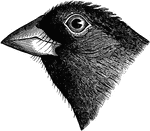
"Guiraca. Blue Grosbeak. Bill Commissure strongly angulated far beyond base, with deep under mandible and bristly rictus as in Zamelodia, but not so swollen, the culmen nearly straight. Wings long and pointed, folding about the middle of the tail; tip formed be the 2d-4th quills, 1st little shorter, 5th rapidly graduated. Tail shorter than wings, even. Tarsus rather less than middle toe and claw; outer lateral toe slightly longer than the inner, but scarcely reaching base of middle claw. One species, large, male blue, female brown." Elliot Coues, 1884

Blue Grosbeak Bill

"Guiraca. Blue Grosbeak. Bill Commissure strongly angulated far beyond base, with deep under mandible…
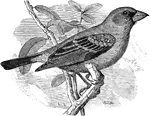
"Guiraca caerulea. Blue Grosbeak. Adult male: Rich dark blue, nearly uniform, but darker or blackish across middle of back; feathers around base of bill, wings and tail, black; middle and greater wing-coverts tipped with chestnut; bill dark horn-blue, paler below; feet blackish." Elliot Coues, 1884

Blue Grosbeak

"Guiraca caerulea. Blue Grosbeak. Adult male: Rich dark blue, nearly uniform, but darker or blackish…
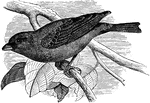
"Passerina cyanea. Indigo Painted Finch. Indigo-bird. Adult male: Indigo-blue, intense and constant on the head, glancing greenish with different lights on other parts; wings and tail blackish, glossed with greenish-blue; feathers around base of the bill black; bill dark above, rather paler below, with a curious black stripe along the gonys. Female: Above , plain warm brown, below whitey-brown, obsoletely streaky on the breast and sides; wing-coverts and inner quills pale-edged, but not whitish; no whitish wing-bars; upper mandible blackish, lower pale, with the black stripe just mentioned, - this is pretty constant feature, and will distinguish the species from any of our Eastern little brown birds." Elliot Coues, 1884

Indigo-bird

"Passerina cyanea. Indigo Painted Finch. Indigo-bird. Adult male: Indigo-blue, intense and constant…
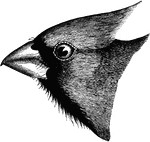
"Cardinalis virginianus. Cardinal Grosbeak. Cardinal Red-bird. Virginia Nightinggale. male, adult: Rich red, usually vermillion, sometimes rosy; pure and intense on crest and under parts, darker on back, where obscured with ashy-gray, as it is also on upper surfaces of wings and tail; the feathers of the wings fuscous on inner webs. A jet-black mask on the face, entirely surrounding the bill, extending on the throat. Bill coral-colored; feet brown." Elliot Coues, 1884

Cardinal Grosbeak

"Cardinalis virginianus. Cardinal Grosbeak. Cardinal Red-bird. Virginia Nightinggale. male, adult: Rich…
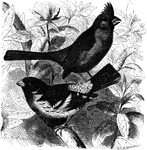
A Rose-breasted Grosbeak (lower) and a Northern Cardinal (upper) sit on branches among the flowers. "Zamelodia ludoviciana. Rose-breasted Song Grosbeak. Adult male with the head and neck all around and most of the upper parts black, the rump, upper tail-coverts and under parts white, the breast and under wing-coverts exquisite carmine rose-red; wings and tail black, variegated with white; bill white; feet grayish-blue; iris brown. Female above, streaked with blackish and olive-brown or flaxen-brown, with median white coronal and superciliary line; below, white, more or less tinged with fulvous and streaked with dusky; under wing-coverts saffron-yellow; upper coverts and inner quills with a white spot at end; bill brown." "Cardinalis virginianus. Cardinal Grosbeak. Cardinal Red-bird. Virginia Nightinggale. male, adult: Rich red, usually vermillion, sometimes rosy; pure and intense on crest and under parts, darker on back, where obscured with ashy-gray, as it is also on upper surfaces of wings and tail; the feathers of the wings fuscous on inner webs. A jet-black mask on the face, entirely surrounding the bill, extending on the throat. Bill coral-colored; feet brown." Elliot Coues, 1884

A Northern Cardinal and a Rose-breasted Grosbeak Sitting on a Branch Among the Flowers

A Rose-breasted Grosbeak (lower) and a Northern Cardinal (upper) sit on branches among the flowers.…
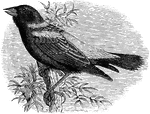
"Dolichonyx oryzivorus. Bobolink. Meadow-wink. Skunk Blackbird (Northern States), Reed-bird (Middle States), Rice-bird (Southern States). Male, in breeding plumage: Black; cervix buff; scapulars, rump and upper tail-coverts ashy-white; interscapulars streaked with black, buff, and ashy; outer quills edged with yellowish; bill blackish-horn; feet brown. The faultless full dress of black, white, and buff is worn only for a brief period; and even in spring and summer, most males are found to have yellowish touches in the black, especially of the under parts. The "delirious song" is only heard while the males re trooping their way to their breeding-grounds, and before the midsummer change of feather." Elliot Coues, 1884

Bobolink

"Dolichonyx oryzivorus. Bobolink. Meadow-wink. Skunk Blackbird (Northern States), Reed-bird (Middle…
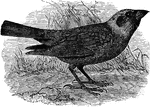
"Molothrus ater. Common Cowbird. Cuckold. male Adult: Lustrous green-black, with steel-blue, purple, and violet iridescence. head and neck deep wood-brown, with some purplish lustre. Bill and feet black." Elliot Coues, 1884

Common Cowbird

"Molothrus ater. Common Cowbird. Cuckold. male Adult: Lustrous green-black, with steel-blue, purple,…
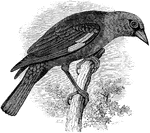
"Xanthocephalus icterocephalus. Yellow-headed Blackbird. Male: Black, including lores and small space around eye and bill; whole head otherwise, with the neck and breast, rich yellow, orange in high feather, the color extending interruptedly to or towards the belly; some feathers around vent, and the tibiae, usually yellow also. A large white patch on the wing, formed by the primary and many of the greater secondary coverts, interrupted by black of the bastard quills. Bill and feet black." Elliot Coues, 1884

Yellow-headed Blackbird

"Xanthocephalus icterocephalus. Yellow-headed Blackbird. Male: Black, including lores and small space…
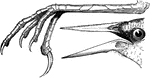
"Sturnella magna. Field Lark. Old-field Lark. Meadow Lark. The colors, as above described, rich and pure, the prevailing aspect brown; black streaks prevailing on brown; yellow of chin usually confined between rami of under mandible; black bars on wings and tail usually confluent along the shaft of the feathers, leaving the gray in scallops. Sexes are similar: Female duller colored, the yellow paler. " Elliot Coues, 1884

Meadow Lark Foot and Bill

"Sturnella magna. Field Lark. Old-field Lark. Meadow Lark. The colors, as above described, rich and…
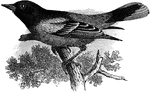
"Icterus galbula. Baltimore Oriole. Golden Robin. Firebird. Hangnest. Adult male: Black and orange. Head and neck all round, and the back, black; rump, upper tail-coverts, lesser and under wing coverts, most of the tail-feathers, and all the under parts from the throat fiery orange, but of varying intensity according to age and season. Middle tail-feathers black; wings black, the middle and greater coverts, and inner quills, more or less edged and tipped with white, but the white on the coverts not forming a continuous patch; bill and feet blue-black, or dark grayish-blue." Elliot Coues, 1884

Baltimore Oriole

"Icterus galbula. Baltimore Oriole. Golden Robin. Firebird. Hangnest. Adult male: Black and orange.…
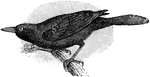
"Quiscalus purpureus. Purple Crow Blackbird. Common Crow Blackbird. Purple Grackle. Of medium size, with moderately keeled and graduated tail, shorter than wings. Sexes subsimilar. Bill usually less tapering and deflected at tip, but very variable. Adult Male: Iridescence very variable with season, age, and sexual vigor, as well as on different parts of the body; but always intense in healthy adults, and at its height during the love-ardor; variously purple, green, blue, violet, and bronzy; not he extensive green of the last species, nor usually the decided brassy of the next variety; wings and tail mostly purplish; dark purplish and steel-blue on head, neck, and breast; back more greenish or bronzy. Bill and feet ebony black." Elliot Coues, 1884

Purple Grackle

"Quiscalus purpureus. Purple Crow Blackbird. Common Crow Blackbird. Purple Grackle. Of medium size,…
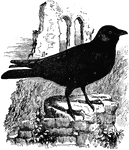
"Corvus monedul. Jackdaw. The species throughout uniform lustrous black, including the bill and feet; nasal bristles about half as long as the bill, which exhibits the typical cultrirostral style. Nostrils large, but entirely concealed. Wings much longer than tail, folding about to its end. Several outer primaries sinuate-attenuate on inner webs. Tail rounded, with broad feathers, sinuate-truncate at ends, with mucronate shafts. Feet stout; tarsus more or less nearly equal to middle toe and claw, roughly scutellate in front, laminar behind, with a set of small plates between." Elliot Coues, 1884

jackdaw

"Corvus monedul. Jackdaw. The species throughout uniform lustrous black, including the bill and feet;…
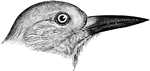
"Picicorvus. American Nutcracker. General characteristics of the European Nucifraga. Bill slenderer, more acute, with more regularly curved culmen and commissure, and straight instead of convex and ascending gonys as a whole somewhat decurved. Nostrils circular, concealed by a full tuft of plumules. Wings long and pointed, folding to the end of the tail; 5th quill longest; 4th, 3d, 6th little less; 2d much shorter, 1st not half as long as 5th. Tail little over half as long as wing, little rounded. Tarsus shorter than middle toe and claw; the envelope divided into small plates on the sides behind the bottom. Claws very large, strong, acute and much curved, especially that of the hind toe; the lateral reaching beyond base of the middle claw. Coloration peculiar; gray, with black-and-white wings and tail. Habits much the same as those of Nucifraga; alpine and sub-boreal, pinicoline, and pinivorous. One species, confined to West Amer." Elliot Coues, 1884

American Nutcracker

"Picicorvus. American Nutcracker. General characteristics of the European Nucifraga. Bill slenderer,…
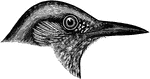
"Gymnocitta cyanocephala. Blue Crow. Male: Dull blue, very variable in intensity, nearly uniform, but brightest on head, fading on belly; the throat with whitish streaks; wings dusky on the inner webs. Bill and feet black. Iris brown." Elliot Coues, 1884

Blue Crow

"Gymnocitta cyanocephala. Blue Crow. Male: Dull blue, very variable in intensity, nearly uniform, but…
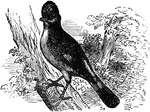
"European Jay. Garrulus glandarius. With the wings much shorter than or about equalling the tail, both rounded; tip of the wing formed by the 4th-7th quills. The feet, as well as the bill, are usually weaker than in the true crows, and the birds are more strictly arboricole, usually advancing by leaps when on the ground, to which they do not habitually resort. In striking contrast to most Corvinae, the jays are usually birds of right and varied colors, among which blue is the most prominent; and the head is frequently crested. The sexes are nearly alike, and the changes of plumage do not appear to be as great as is usual among highly-colored birds, although some differences are frequently observable. Our well-known Blue Jay is a familiar illustration of the habits and traits of the species in general. They are found in most parts of the world, and reach their highest development in the warmer portions of American. With one boreal (Perisoreus), the genera of the Old and New Word are entirely different." Elliot Coues, 1884

Eurasian Jay

"European Jay. Garrulus glandarius. With the wings much shorter than or about equalling the tail, both…
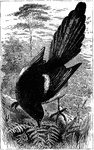
"Pica. rustica hudsonica. Lustrous black, with green, purple, violet, and even golden iridescence, especially on the tail and wings. Below, from the breast to the crissum, a scapular patch, and a great part of the inner webs of the primary quills, white; some whitish touches on the throat; lower back showing gray, owing to mixture of white with black; bill and feet black; eyes blackish." Elliot Coues, 1884

magpie

"Pica. rustica hudsonica. Lustrous black, with green, purple, violet, and even golden iridescence, especially…
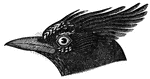
"Cyanocitta stelleri macrolopha. Long-crested Jay. Upper parts sooty umber-brown, with a faint blue tinge, blackening on head and neck all around in decided contrast, passing on rump and upper tail-coverts into beautiful light cobalt-blue; passing on fore breast into the same blue which occupies all the under parts. Crest black, but faced on forehead with bluish-white, which, when the feathers are not disturbed, runs in two parallel lines from the nostrils upward - these colored tips of the feathers of firmer texture than their basal portions. One or both eyelids patched with white. Chin abruptly whitish, streaky. Exposed surfaces of wings rich indigo-blue, most intense on the inner secondaries, which, with the greater coverts, are regularly and firmly barred across both webs with black; the outer webs of the primaries lighter blue, more like that of the rump or under parts, Upper surface of tail rich indigo, like the secondaries, and similarly black-barred; these bands most distinct towards the end and on the outer webs of the feathers; tail viewed from below appearing mostly blackish. Iris dark. Bill and feet black." Elliot Coues , 1884

Long-crested Jay

"Cyanocitta stelleri macrolopha. Long-crested Jay. Upper parts sooty umber-brown, with a faint blue…
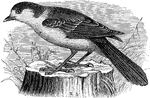
"Perisoreus canadensis. Canada Jay. Whiskey Jack. Moose-bird. Gray whitening on head, neck, and breast; a dark cap on hind and nape, separated by a gray cervical collar from ashy-plumbeous back; wings and tail plumbeous, the feathers obscurely tipped with whitish. Bill and feet black." Elliot Coues, 1884

Canada Jay

"Perisoreus canadensis. Canada Jay. Whiskey Jack. Moose-bird. Gray whitening on head, neck, and breast;…
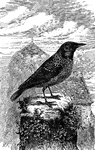
"Sturnus vulgaris. The Starling. Adult: General plumage of metallic lustre, iridescing dark green on most parts, more steel-blue on the under parts, and violet or purplish-blue on the fore parts; more or less variegated throughout with pale ochraceous or whitish tips of the feathers. Wings and tail fuscous, the exposed parts of the feathers somewhat frosty or silvery, with velvety-black and pale ochrey marginings, the former within the latter. Bill yellowish; feet reddish." Elliot Coues, 1884

Starling

"Sturnus vulgaris. The Starling. Adult: General plumage of metallic lustre, iridescing dark green on…
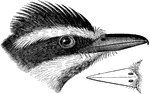
"Pitangus derbianus. Derby Flycatcher. Under parts light wood-brown, with an olive tinge; wings and tail the same, but the feathers extensively bordered without and within with chestnut, forming a conspicuous continuous area on the wing-quills in the closed wing, and on most of the wing and tail-feathers more extensively than the brown portion of the inner webs. Below from the breast, including lining of wings, clear and continuous lemon-yellow. Whole chin and throat pure white, widening behind up under ear-coverts. Top and sides of head black, a circle of white from forehead over eyes to nape white, the enclosed black enclosing black a lemon and orange patch. Or, middle of crown yellow and orange, enclosed and partly concealed in black, this black enclosed in white, then the long and broad black bar on side of head, separating the white of side of crown from that of side of throat. The coronal feathers lengthened and erectile as in a king-bird, or more so; crown-patch of same character but more extensive. Bill and feet black; iris hazel Sexes alike." Elliot Coues, 1884

Derby Flycatcher

"Pitangus derbianus. Derby Flycatcher. Under parts light wood-brown, with an olive tinge; wings and…
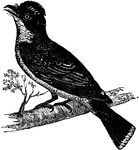
Tyrannus carolinensis. King-bird. Bee-martin. No olive nor decided yellow. Only outer primaries obviously emarginate. Tail nearly even - if anything a little rounded. Blackish-ash, still darker or quite black on head, crown with a flaming spot. Below, pure white, the breast shaded with plumbeous. Wings dusky, with much whitish edging. Tail black, broadly and sharply tipped with white, the outer feather sometimes edged with the same. Bill and feet black." Elliot Coues, 1884

King-bird

Tyrannus carolinensis. King-bird. Bee-martin. No olive nor decided yellow. Only outer primaries obviously…
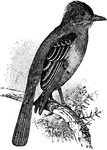
"Myiarchus crinitus. Great Crested Flycatcher. Decidedly olivaceous above, a little browner on head, where the feathers have dark centres; throat and fore pure dark ash; rest of under parts bright yellow, the two colors meeting abruptly; primaries margined on both edges with chestnut; secondaries and coverts edges and tipped with yellowish-white; tail with all the feathers but the central pair chestnut on the whole of the inner web (excepting perhaps a very narrow space next the shaft); outer web of outer feathers with yellowish; middle feathers, outer webs of the rest, and wings except as stated, dusky-brown. The foregoing phrases are intended to be chiefly antithetical to those used in describing cinerescens, below, No. 375. Other diagnostic points are: bill dark but not quite black, pale at base below; stout and comparatively short, hardly or not as long as tarsus, the latter perhaps never .90, the olive back, ash throat, and yellow belly severally pure in color; all tail-feathers but middle pair so extensively rufous on inner webs that a mere line, if any, of fuscous persists next the shaft (compare erythrocercus and cooperi), and this fuscous line,if any, running of same narrowness to ends of the feathers (compare cinerescens); never more than a trace of rufous on outer webs." Elliot Coues, 1884

Great Crested Flycatcher

"Myiarchus crinitus. Great Crested Flycatcher. Decidedly olivaceous above, a little browner on head,…
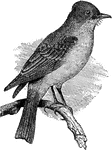
"Sayiornis fusca. Pewit Flycatcher. Water Pewee. Pewit. Phaebe. Dull olivaceous-brown, the head much darker fuscous-brown, almost blackish, usually in marked contrast with the back; below, solid whitish, or palest possible yellow, particularly on the belly; the sides, and the breast nearly or quite across, shaded with grayish -brown; wings and tail dusky, the outer tail-feather, inner secondaries, and usually the wing-coverts, edged with whitish; a whitish ring round the eye; bill and feet black. Varies greatly in shade; the foregoing is the average spring condition. As summer passes, the plumage becomes much-duller and and darker brown, from wearing of the feather; then, after the moult, fall specimens are much brighter than in spring, the under parts being decidedly yellow, at least on the belly." Elliot Coues, 1884

Pewit Flycatcher

"Sayiornis fusca. Pewit Flycatcher. Water Pewee. Pewit. Phaebe. Dull olivaceous-brown, the head much…
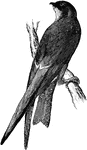
"Nephaecetes niger borealis. Northern Black Cloud Swift. Entire plumage sooty-black, with slight greenish gloss, little below than above, the feathers of head and belly with grayish edges. A velvety black area in front of eye; forehead hoary; eye-lids partly naked. Bill black; feet probably dusky-purplish in life." Elliot Coues, 1884

Northern Black Cloud Swift

"Nephaecetes niger borealis. Northern Black Cloud Swift. Entire plumage sooty-black, with slight greenish…
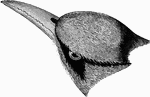
"Momotus caeruleiceps. Blue-headed Saw-bill. The central tail-feathers are long-exserted, and spatulate by absence of webs along a part of the shaft - a mutilation effected, it is said, by the birds themselves; the bill is about as long as the head, gently curved; the nostrils are rounded, basal, exposed; the wings are short and rounded; the tarsi are scutellate anteriorly. It is greenish, with blue head." Elliot Coues, 1884

Blue-headed Saw-bill

"Momotus caeruleiceps. Blue-headed Saw-bill. The central tail-feathers are long-exserted, and spatulate…
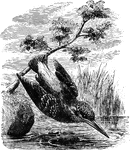
Alcedo Ispida. European Kingfisher. Small bird, upper parts blue-green; under parts orange; rump and back azure-blue head large; rufous patch on ear; stripe on neck blue-green; bill long and black with some red at base; short tail.

Common Kingfisher

Alcedo Ispida. European Kingfisher. Small bird, upper parts blue-green; under parts orange; rump and…
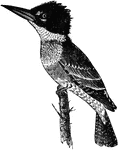
"Ceryle alcyon. Belted Kingfisher. Upper parts, broad pectoral bar, and sides under the wings, dull blue with fine black shaft lines. Lower eyelid, spot before eye, a cervical collar and under parts except as said, pure white; the female with chestnut belly-band and the sides of the same color. Quills and tail-feathers black, speckled, blotched or barred on the inner webs with white; outer webs of the secondaries and tail feathers like the back; wing-coverts frequently sprinkled with white. Bill black, pale at base below. Feet dark; tibiae naked below. A long, thin, pointed occipital crest; plumage compact and oily to resist water, into which the birds constantly plunge after their finny prey." Elliot Coues, 1884

Belted Kingfisher

"Ceryle alcyon. Belted Kingfisher. Upper parts, broad pectoral bar, and sides under the wings, dull…
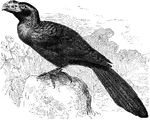
"Crotophaga ani. Smooth-billed Ani. Black Witch. Savanna Blackbird. Bill smooth or with a few transverse; culmen regularly curved. Color black, with violet and steel-blue reflections, duller below, the lanceolate feathers of the head and neck with bronze borders. Iris brown." Elliot Coues, 1884

Smooth-billed Ani

"Crotophaga ani. Smooth-billed Ani. Black Witch. Savanna Blackbird. Bill smooth or with a few transverse;…
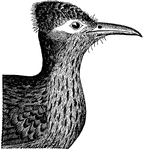
"Geococcyx californianus. Ground Cuckoo. Chaparral Cock. Road Runner. Snake Killer. Paisano. Most of the feathers of the head and neck bristle-tipped; a naked area around eye; crown crested; plumage course. Above, lustrous bronzy or coppery-green, changing to dark steel-blue on the head and neck, to purplish-violet on the middle tail-feathers; everywhere except on rump conspicuously streaked with white, mixed with tawny on the head, neck, and wings - this white and buff streaking consisting of the edges of the feathers, which are frayed out, fringe-like, producing a peculiar effect. Breast, throat and sides of neck mixed tawny-white and black; other under parts dull soiled whitish. Primaries white, tipped and with oblique white space on outer webs. Lateral tail-feathers steel-blue with green violet reflections, their outer webs fringed part way with white, their tips broadly white. Lower back and rump, where covered by the folded wings, dark colored and unmarked; under surface of wings sooty-brown. Bare space around eye bluish and orange. Bill dark horn-color; feet the same, the larger scales yellowish." Elliot Coues, 1884

Ground Cuckoo Head

"Geococcyx californianus. Ground Cuckoo. Chaparral Cock. Road Runner. Snake Killer. Paisano. Most of…
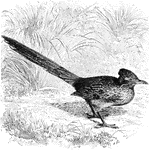
"Geococcyx californianus. Ground Cuckoo. Chaparral Cock. Road Runner. Snake Killer. Paisano. Most of the feathers of the head and neck bristle-tipped; a naked area around eye; crown crested; plumage course. Above, lustrous bronzy or coppery-green, changing to dark steel-blue on the head and neck, to purplish-violet on the middle tail-feathers; everywhere except on rump conspicuously streaked with white, mixed with tawny on the head, neck, and wings - this white and buff streaking consisting of the edges of the feathers, which are frayed out, fringe-like, producing a peculiar effect. Breast, throat and sides of neck mixed tawny-white and black; other under parts dull soiled whitish. Primaries white, tipped and with oblique white space on outer webs. Lateral tail-feathers steel-blue with green violet reflections, their outer webs fringed part way with white, their tips broadly white. Lower back and rump, where covered by the folded wings, dark colored and unmarked; under surface of wings sooty-brown. Bare space around eye bluish and orange. Bill dark horn-color; feet the same, the larger scales yellowish." Elliot Coues, 1884

Ground Cuckoo

"Geococcyx californianus. Ground Cuckoo. Chaparral Cock. Road Runner. Snake Killer. Paisano. Most of…
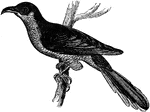
"Coccygus americanus. Yellow-billed Cuckoo. Bill black, extensively yellow below and on the sides of upper mandible. Feet dark plumbeous. Above, satiny olive-gray. Below, pure white. Wings extensively cinnamon-rufous on inner webs of the quills. Central tail-feathers like the back; the rest black with large white tips, the outermost usually also edged with white. Very constant in color, the chief variation being in extent and intensity of the cinnamon on the wings, which sometimes shows through when the wings are closed, and even tinges the coverts. Young differ chiefly in having the white ends of the tail-feathers less trenchant and extensive, the black not so pure; this state approaches the condition of erthrophthalmus, but does not match it." Elliot Coues, 1884

Small Yellow-billed Cuckoo

"Coccygus americanus. Yellow-billed Cuckoo. Bill black, extensively yellow below and on the sides of…