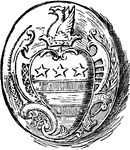
Washington's Private Seal incorporates the same design which can be found in Washington's Arms. The coat of arms of George Washington, President of the United States of America from 1789 to 1797, were first used to identify the family in the twelfth century, when one of George Washington's ancestors took possession of Washington Old Hall, then in County Durham, in north-east England.

Washington's Private Seal, 1783

Washington's Private Seal incorporates the same design which can be found in Washington's Arms. The…
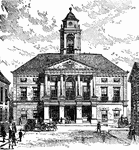
Federal Hall, located at 26 Wall Street in New York City, was the first capitol of the United States of America and the site of George Washington's first inauguration in 1789. It is also the place where the United States Bill of Rights was passed. The original building was demolished in the nineteenth century and replaced by the current structure.

Federal Hall, 1789

Federal Hall, located at 26 Wall Street in New York City, was the first capitol of the United States…
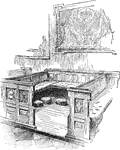
In some churches, pews were installed at the expense of the congregants, and were their personal property; there was no general public seating in the church itself. In these churches, pew deeds recorded title to the pews, and were used to convey them. Pews were originally purchased from the church by their owners under this system, and the purchase price of the pews went to the costs of building the church. Pictured here is George Washington's family pew at St. Paul's Episcopal Church in New York.

Washington's Pew at St. Paul's, New York

In some churches, pews were installed at the expense of the congregants, and were their personal property;…
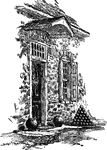
Hasbrouck House served as Washington's headquarters during the Revolutionary War from April 1782 until August 1783. It was chosen for its comparatively safe location north of the strategically important West Point. The 7,000 troops of the Continental Army were encamped near what is today known as Vails Gate, a few miles to the southwest.

Entrance to Washington's Headquarters, Newburgh

Hasbrouck House served as Washington's headquarters during the Revolutionary War from April 1782 until…
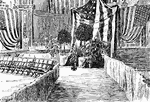
The interior of the Temple of Music at the Pan-American Exposition in Buffalo, New York where President William McKinley was shot in 1901. The X marks the sport where McKinley stood when shot.

Interior of the Temple of Music Where McKinley was Shot

The interior of the Temple of Music at the Pan-American Exposition in Buffalo, New York where President…
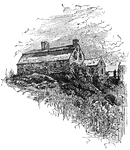
The gaol was a colonial prison building for York County, Maine and served as a jail from 1719 to 1879.
The Old Jail at York

The gaol was a colonial prison building for York County, Maine and served as a jail from 1719 to 1879.

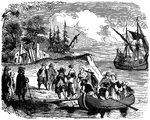
The landing of the Dutch settlers on Manhattan, now the city of New York.

Landing of the Dutch settlers on Manhattan Island

The landing of the Dutch settlers on Manhattan, now the city of New York.
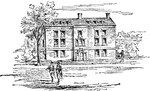
The Morris-Jumel Mansion (also known as the Roger and Mary Philipse Morris House), located in historic Washington Heights, is the oldest house in Manhattan. It served as a headquarters for both sides in the American Revolution. Between September 14 and October 20, 1776, General George Washington used the mansion as his temporary headquarters after he and his army were forced to evacuate Brooklyn Heights following their loss to the British Army under the command of General William Howe in the Battle of Long Island.

Washington's Headquarters at New York

The Morris-Jumel Mansion (also known as the Roger and Mary Philipse Morris House), located in historic…
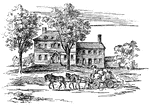
The Ford Mansion is part of the Morristown National Historical Park, and is located on a hilltop in Morristown, New Jersey. The Ford Mansion was the "hard winter" (from December 1779 - May 1780) quarters of George Washington and the Continental Army. That winter remains the coldest on record for New Jersey.

Washington's Headquarters at Morristown

The Ford Mansion is part of the Morristown National Historical Park, and is located on a hilltop in…
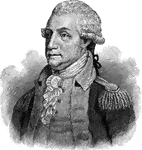
The Electoral College elected Washington unanimously in 1789, and again in the 1792 election; he remains the only president to receive 100% of electoral votes. John Adams was elected vice president. Washington took the oath of office as the first President under the Constitution for the United States of America on April 30, 1789 at Federal Hall in New York City although, at first, he had not wanted the position.

George Washington (1789)

The Electoral College elected Washington unanimously in 1789, and again in the 1792 election; he remains…
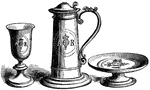
During the reign of Queen Anne a valuable communion set was presented by her Majesty to the Mohawk chapel -- in other words, to her Majesty's loyal allies, the Mohawks, who at that time resided in the State of New-York.

Communion Plate Presented by Queen Anne

During the reign of Queen Anne a valuable communion set was presented by her Majesty to the Mohawk chapel…
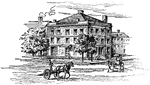
In 1789, George Washington lived on Cherry Street, in a four-story mansion that belonged to Walter Franklin, a wealthy merchant. This house served as the first Executive Mansion of the President of the United States.

George Washington's House on Cherry Street, New York (1789)

In 1789, George Washington lived on Cherry Street, in a four-story mansion that belonged to Walter Franklin,…
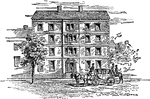
In 1788, he built a magnificent home on Broadway, which in 1790 was leased to become the president's home, occupied by George Washington after the president's previous residence on Pearl proved too small.

George Washington's House on Broadway, New York (1790)

In 1788, he built a magnificent home on Broadway, which in 1790 was leased to become the president's…
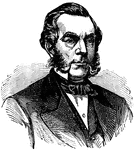
Edwin Denison Morgan (February 8, 1811 – February 14, 1883) was Governor of New York from 1859 to 1862 and served in the United States Senate from 1863 to 1869. He was the first and longest serving chairman of the Republican National Committee.

Edwin Dennison Morgan

Edwin Denison Morgan (February 8, 1811 – February 14, 1883) was Governor of New York from 1859 to…
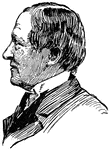
Levi Parsons Morton (May 16, 1824 – May 16, 1920) was a Representative from New York and the twenty-second Vice President of the United States. He also later served as Governor of New York.

Levi Parsons Morton

Levi Parsons Morton (May 16, 1824 – May 16, 1920) was a Representative from New York and the twenty-second…
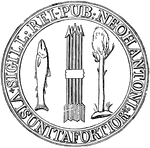
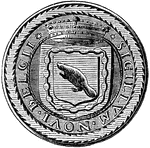
The first seal of New Hampshire.

First Seal of New Hampshire

The first seal of New Hampshire.

New Netherland, 1614–1674, is the name of the former Dutch territory on the eastern coast of North America in the 17th century.

Seal of New Netherland

New Netherland, 1614–1674, is the name of the former Dutch territory on the eastern coast of North…
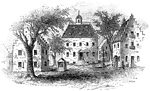
The state house in New York in colonial America.

State House in New York

The state house in New York in colonial America.

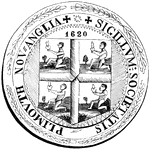
An old colony seal of New Plymouth.

Old Colony Seal

An old colony seal of New Plymouth.

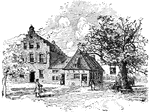
Scenery of old houses in New York City in 1679.

Old Houses, New York City, 1679

Scenery of old houses in New York City in 1679.

Benning Wentworth (1696–October 14, 1770) was the colonial governor of New Hampshire from 1741 to 1766. Wentworth enriched himself by a clever scheme of selling land now in the state of Vermont to developers, in spite of jurisdictional claims for this region by the Colony of New York. Fort Wentworth built in 1755 at Northumberland, New Hampshire was built by his order and named after him.

Benning Wentworth

Benning Wentworth (1696–October 14, 1770) was the colonial governor of New Hampshire from 1741 to…
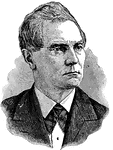
William Almon Wheeler (June 30, 1819 – June 4, 1887) was a Representative from New York and the nineteenth Vice President of the United States. When Congress voted a pay raise in 1873 and made it retroactive for five years, Wheeler not only voted against the raise, but returned his salary adjustment to the Treasury department. Governor Hayes, when he heard of what had happened, remarked: "I am ashamed to say: Who is Wheeler?" Not having done much campaigning, Wheeler didn't participate in the firestorm that took place after the election results were in November 1876.

William Almon Wheeler

William Almon Wheeler (June 30, 1819 – June 4, 1887) was a Representative from New York and the nineteenth…
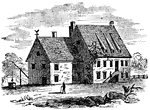
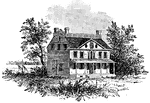
Kip's house, a home on Kip's Bay in New York.

Kip's house

Kip's house, a home on Kip's Bay in New York.

The Beekman Mansion was built over the course of two years, from 1802 to 1804, for the family of William Beekman.

Beekman's Mansion

The Beekman Mansion was built over the course of two years, from 1802 to 1804, for the family of William…
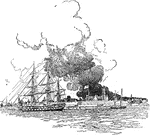
The Great Fire was a devastating fire that burned through the night of September 21 – September 22, 1776 on the west side of what then constituted New York City at the southern end of the island of Manhattan.

The Great Fire of New York in 1776

The Great Fire was a devastating fire that burned through the night of September 21 – September…
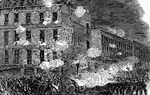
The New York Draft Riots (July 11 to July 16, 1863), were violent disturbances in New York City that were the culmination of discontent with new laws passed by Congress to draft men to fight in the ongoing American Civil War.

The Draft Riots - The Rioters and the 7th Regiment

The New York Draft Riots (July 11 to July 16, 1863), were violent disturbances in New York City that…
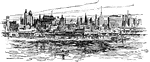
The skyline of New York City in 1912.

Skyline of New York in 1912

The skyline of New York City in 1912.

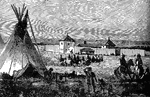
A Dutch West India Company's trading post in the Colony of New York.

A Dutch West India Company's Trading Post

A Dutch West India Company's trading post in the Colony of New York.
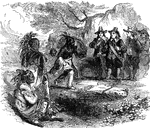
Settlers of the Colony of New York trading with Native Americans.

Trading with the Indians

Settlers of the Colony of New York trading with Native Americans.

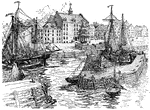
A view of the New York City hall and docks in 1679.

New York City Hall and Docks in 1679

A view of the New York City hall and docks in 1679.

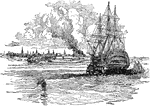
The New York Harbor in colonial days.

New York Harbor in Colonial Days

The New York Harbor in colonial days.

A view of Broad Street, New York in 1740.

Broad Street, New York

A view of Broad Street, New York in 1740.

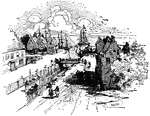
The Canal on Broad Street, New York during the days of the Colony of New York.

The Canal on Broad Street, New York

The Canal on Broad Street, New York during the days of the Colony of New York.
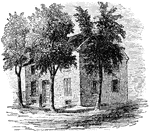
The Constitution House in Kingston, New York where the New York constitution was signed.

The Constitution House, Kingston

The Constitution House in Kingston, New York where the New York constitution was signed.
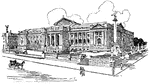
The New York Public Library, drawing from the architect's plans.

New York Public Library

The New York Public Library, drawing from the architect's plans.

Fort Niagra, viewed from Fort George, in 1812.

Fort Niagra, from Fort George, in 1812

Fort Niagra, viewed from Fort George, in 1812.

The previous site of a mission fort named Fort de La Présentation near the junction of the Oswegatchie River and the St Lawrence River. It is present day Ogdensburg.

Present Site of Fort Presentation

The previous site of a mission fort named Fort de La Présentation near the junction of the Oswegatchie…
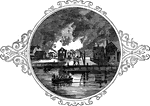
During the War of 1812 Sodus Bay was mostly burned during an attack by the British.

Destruction at Sodus Bay

During the War of 1812 Sodus Bay was mostly burned during an attack by the British.
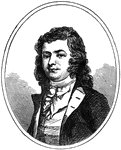
John Paulding (16 October 1758 – 18 February 1818) was a militiaman from the state of New York during the American Revolution.

John Paulding

John Paulding (16 October 1758 – 18 February 1818) was a militiaman from the state of New York during…
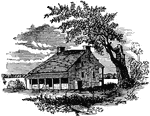
The Conference House (also known as the Bentley Manor and the Captain Christopher Billop House)was built before 1680 and located near the southernmost tip of New York State on Staten Island. The Staten Island Peace Conference was held here on September 11, 1776, which unsuccessfully attempted to end the American Revolutionary War.

The Billop House

The Conference House (also known as the Bentley Manor and the Captain Christopher Billop House)was built…
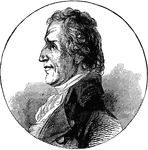
Marinus Willett (July 31, 1740 – August 22, 1830) was an American soldier and political leader from New York. He was characterized by historian Mark M. Boatner as "one of the truly outstanding American leaders of the Revolution." Marinus Willett served in the militia during the French and Indian War. He received a commission as 2nd lieutenant in a New York regiment under the command of Oliver DeLancey Sr. which took part in General James Abercrombie's expedition to Fort Ticonderoga in 1758. During the early stages of the American Revolution, Willett became an informal leader of the Sons of Liberty in New York City.

Marinus Willett

Marinus Willett (July 31, 1740 – August 22, 1830) was an American soldier and political leader from…
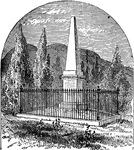
Eleazer Derby Wood (1783 – September 17, 1814) was an American Army officer in the War of 1812. He was distinguished at Fort Erie, where he lost his life in a sortie. Colonel Wood was much beloved by General Brown, who caused a handsome marble monument to be erected to his memory at West Point. Also, he was the namesake of Fort Wood on Bedloe's Island in New York Harbor on which the Statue of Liberty was built. He is also the namesake of Wood County, Ohio.

Colonel Eleazer Derby Wood's Monument at West Point

Eleazer Derby Wood (1783 – September 17, 1814) was an American Army officer in the War of 1812.…
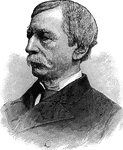
Fernando Wood (June 14, 1812 – February 14, 1881) is famous for being one of the most colorful mayors in the history of New York. He was chairman of the chief young men's political organization in 1839 and was a member of the Tammany Society, which he used as a vehicle for his political rise. Wood served as Mayor of New York from 1855 to 1862. During this time a police feud developed between the New York Municipal Police and the Metropolitan Police Force. This feud led to increased gang activity due to the police rivaling one another rather than upholding the law. Wood was one of many New York Democrats sympathetic to the Confederacy, called 'Copperheads' by the staunch Unionists. In January 1861, Wood suggested to the City Council that New York secede and declare itself a free city.

Fernando Wood

Fernando Wood (June 14, 1812 – February 14, 1881) is famous for being one of the most colorful mayors…
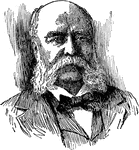
Stewart Lyndon Woodford (September 3, 1835 – February 14, 1913) was an American politician. He studied law and began practice in New York in 1857. In 1861–62, Stewart was made assistant United States district attorney for the southern district of New York. He served in the National army from 1862 to 1865 and received the brevet of brigadier general of volunteers. From 1865 to 1868 he served as Lieutenant Governor of New York.

Stewart Lyndon Woodford

Stewart Lyndon Woodford (September 3, 1835 – February 14, 1913) was an American politician. He studied…
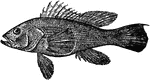
The Black Sea Bass (Centropristis striata) is a fish in the Grouper family native to New York, Maine, Florida, and the Gulf of Mexico.

Black Sea Bass

The Black Sea Bass (Centropristis striata) is a fish in the Grouper family native to New York, Maine,…
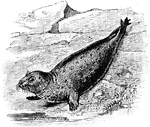
The Gray Seal (Halichoerus grypus) is a large mammal in the Phocidae family of true seals.

Gray Seal

The Gray Seal (Halichoerus grypus) is a large mammal in the Phocidae family of true seals.
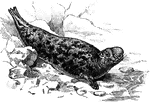
The Hooded Seal (Crystophora cristata) is an arctic seal in the Phocidae family of true seal. It is identified by the large bulge on its head.

Hooded Seal

The Hooded Seal (Crystophora cristata) is an arctic seal in the Phocidae family of true seal. It is…
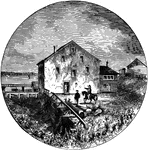
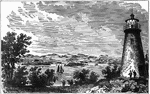
An old stone mill on the Saranac River in New York.

Old Stone Mill

An old stone mill on the Saranac River in New York.

Scenery of the Plattsburgh Bay in New York, the Adirondack Mountains can be seen in the distance.

Plattsburgh Bay

Scenery of the Plattsburgh Bay in New York, the Adirondack Mountains can be seen in the distance.
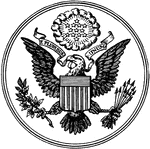
The Great Seal of the United States with "E. Pluribus Unum" and a bald eagle holding thirteen arrows and an olive branch.

Great Seal of the United States

The Great Seal of the United States with "E. Pluribus Unum" and a bald eagle holding thirteen arrows…
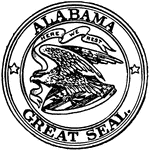
The Great Seal of Alabama, 1911. The image depicts a bald eagle holding a banner that reads "Here we rest." It is holding arrows and standing on a shield decorated with stars and stripes.

Seal of Alabama

The Great Seal of Alabama, 1911. The image depicts a bald eagle holding a banner that reads "Here we…
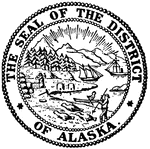
The Seal of the District of Alaska, 1911. The image on the seal shows Alaska's mountains and shore.
Seal of Alaska

The Seal of the District of Alaska, 1911. The image on the seal shows Alaska's mountains and shore.

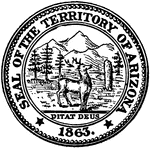
The Seal of the Territory of Arizona, 1863. The image on the seal shows mountains, forests, and a deer. Underneath is Arizona's state motto, 'Ditat Deus,' meaning "God enriches."

Seal of Arizona

The Seal of the Territory of Arizona, 1863. The image on the seal shows mountains, forests, and a deer.…
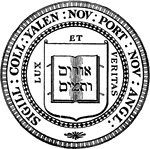
Serious American students of theology and divinity, particularly in New England, regarded Hebrew as a classical language, along with Greek and Latin, and essential for study of the Old Testament in the original words. The Reverend Ezra Stiles, president of the College from 1778 to 1795, brought with him his interest in the Hebrew language as a vehicle for studying ancient Biblical texts in their original language (as was common in other schools), requiring all freshmen to study Hebrew (in contrast to Harvard, where only upperclassmen were required to study the language) and is responsible for the Hebrew words "Urim" and "Thummim" on the Yale seal.

Seal of Yale University

Serious American students of theology and divinity, particularly in New England, regarded Hebrew as…
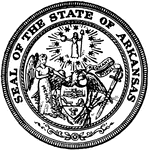
The Seal of the State of Arkansas. The seal shows Mercy, a bald eagle holding a shield, and the sword of justice.

Seal of Arkansas

The Seal of the State of Arkansas. The seal shows Mercy, a bald eagle holding a shield, and the sword…
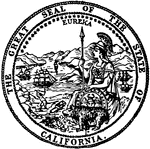
The Great Seal of the State of California. The seal shows Eureka with a bear cub. In the background are mountains and ships.

Seal of California

The Great Seal of the State of California. The seal shows Eureka with a bear cub. In the background…
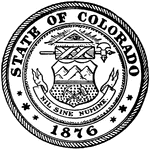
The Seal of Colorado, 1876. The seal shows The Eye of Providence and Colorado's motto 'Nil sine numine' meaning "Nothing without God's will.

Seal of Colorado

The Seal of Colorado, 1876. The seal shows The Eye of Providence and Colorado's motto 'Nil sine numine'…
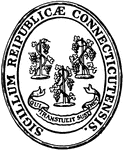
The Seal of the State of Connecticut (Sigillum reipublicae Connecticutensis). The seal shows three grapevines with their motto underneath, 'Qui transtulit sustinet' meaning "He who transplanted sustains."

Seal of Connecticut

The Seal of the State of Connecticut (Sigillum reipublicae Connecticutensis). The seal shows three grapevines…
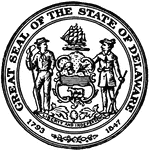
The Seal of the State of Delaware, 1793-1847. The seal shows a farmer, a soldier, Delaware's coat of arms, and their motto "Liberty and Independence."

Seal of Delaware

The Seal of the State of Delaware, 1793-1847. The seal shows a farmer, a soldier, Delaware's coat of…
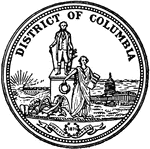
The Great Seal of the District of Columbia. The seal shows Lady justice hanging a wreath on the statue of George Washington. The motto reads 'Justitia omnibus' meaning "Justice for All."

Seal of District of Columbia

The Great Seal of the District of Columbia. The seal shows Lady justice hanging a wreath on the statue…