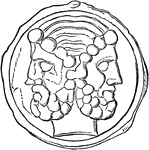
Ondines or undines are elementals, enumerated as the water elementals in works of alchemy by Paracelsus. They also appear in European folklore as fairy-like creatures; the name may be used interchangeably with those of other water spirits. Undines were said to be able to gain a soul by marrying a human and bearing his child. Undine A water nymph without a soul, which she later received by marrying a mortal and bearing a child: Heroine of a book (1812) by Baron Friedrich de la Motte Fouqué, German author.

Ondine

Ondines or undines are elementals, enumerated as the water elementals in works of alchemy by Paracelsus.…
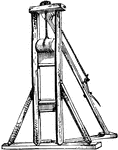
The guillotine was a device used for carrying out executions by decapitation. It consists of a tall upright frame from which a blade is suspended. This blade is raised with a rope and then allowed to drop, severing the victim's head from his or her body.

Guillotine

The guillotine was a device used for carrying out executions by decapitation. It consists of a tall…
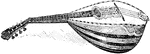
A mandolin is a musical instrument in the lute family (plucked, or strummed). It is descended from the mandore, a soprano member of the lute family. It has a body with a teardrop-shaped soundboard, or one which is essentially oval in shape, with a soundhole, or soundholes, of varying shapes which are open and are not decorated with an intricately carved grille like the Baroque era mandolins.

Mandolin

A mandolin is a musical instrument in the lute family (plucked, or strummed). It is descended from the…
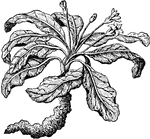
An illustration of a flowering mandrake plant. Mandrake is the common name for members of the plant genus Mandragora belonging to the nightshades family (Solanaceae). Because mandrake contains deliriant hallucinogenic tropane alkaloids such as hyoscyamine and the roots sometimes contain bifurcations causing them to resemble human figures, their roots have long been used in magic rituals, today also in neopagan religions such as Wicca and Germanic revivalism religions such as Odinism.

Flowering Mandrake Plant

An illustration of a flowering mandrake plant. Mandrake is the common name for members of the plant…
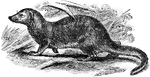
The Common Kusimanse (Crossarchus obscurus), also known as the Long-nosed Kusimanse, is a small, diurnal kusimanse or dwarf mongoose. The Common Kusimanse has a vaguely weasel-shaped body with dark brown fur that is thick, with a wiry texture down the back, and fine and soft on the underside. It has short legs, a short, relatively stiff tail, long claws, small ears, small, dark colored eyes, and an elongated nose.

Common Kusimanse

The Common Kusimanse (Crossarchus obscurus), also known as the Long-nosed Kusimanse, is a small, diurnal…
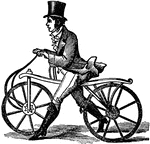
The dandy horse is a two wheeled vehicle propelled by the rider pushing with his feet on the ground.
Dandy Horse

The dandy horse is a two wheeled vehicle propelled by the rider pushing with his feet on the ground.

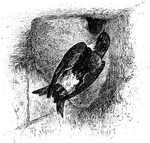
The House Martin (Delichon urbicum), sometimes called the Northern House Martin or Common House Martin, is a migratory passerine bird of the swallow family which breeds in Europe, north Africa and temperate Asia; and winters in sub-Saharan Africa and tropical Asia. It feeds on insects which are caught in flight, and it migrates to climates where flying insects are plentiful. It has a blue head and upperparts, white rump and pure white underparts, and is found in both open country and near human habitation.

House Martin

The House Martin (Delichon urbicum), sometimes called the Northern House Martin or Common House Martin,…
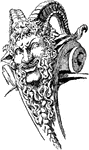
In architecture, a mascaron ornament is a face, usually human, sometimes frightening or chimeric whose function was originally to frighten away evil spirits so that they would not enter the building. The concept was subsequently adapted to become a purely decorative element. The most recent architectural style to extensively employ mascarons was Beaux Arts.

Mascaron

In architecture, a mascaron ornament is a face, usually human, sometimes frightening or chimeric whose…
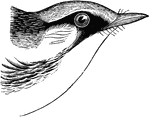
"Chestnut-sided Warbler, Dendroica pensylvanica. Back streaked with black and pale yellow (sometimes ashy or whitish); whole crown pure yellow, immediately bordered with white, then enclosed with black; sides of head and neck and whole under parts pure white, former with an irregular black crescent before the eye, one horn extending backward over the eye to border the yellow crown and be dissipated on the sides of the nape, the other reaching downward and backward to connect with a chain of pure chestnut streaks that run the whole length of the body, the under eyelid and auriculars being left white; wing-bands generally fused into one large patch, and, like the edging of the inner secondaries, much tinged with yellow; tail-spots white, as usual; bill blackish, feet brownish." Elliot Coues, 1884

Chestnut-sided Warbler

"Chestnut-sided Warbler, Dendroica pensylvanica. Back streaked with black and pale yellow (sometimes…
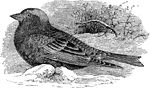
"Leucosticte tephrocotis. Swainson's Rosy Finch. Gray-crowned Rosy Finch. Sexes similar. Adult in breeding plumage or nearly so: Bill and feet black. Nasal plumules white. Frontlet black; rest of pileum hoary-ash, not descending below level of eyes and upper border of auriculars (for when the ash invades the sides of head to any extent, the bird takes the first step toward litoralis, in which the head is extensively hooded in ash). General color, sides of head included, chocolate or liver-brown of varying intensity, many feathers skirted with gray or whitish, especially the interscapulars, which also have dusky centres, and inclining to blackish on chin and throat. Hinder parts of the body above and below, including tail-coverts, rich rosy or carmine red, this color due to broad edgings of the dusky feathers of these parts. Wings and tail blackish, the wing-coverts and primaries edged with rosy, showing nearly continuous in the closed wing; edgings of inner secondaries rosy-white or white." Elliot Coues, 1884

Swainson's Rosy Finch

"Leucosticte tephrocotis. Swainson's Rosy Finch. Gray-crowned Rosy Finch. Sexes similar. Adult in breeding…
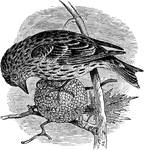
"Carduelis pinus. Pine Linnet. Pine Finch. American Siskin. Pine Siskin. Continuously streaked, above with dusky or dark olivaceous-brown and flaxen or whitish, below with dusky and whitish, the whole body usually suffused with yellowish, most evident on the rump. Wings dusky, the basal portion of all the quills and their inner webs for some distance sulphury-yellow, usually showing externally as a spot just beyond the coverts, sometimes restricted and hidden. Outer webs of the quills also narrowly edged with yellow, separated from the basal yellow patch by a blackish interval. Tail dusky, its basal half yellow, and outer webs edged with yellow. Bill and feet brown." Elliot Coues, 1884

Pine Siskin

"Carduelis pinus. Pine Linnet. Pine Finch. American Siskin. Pine Siskin. Continuously streaked, above…
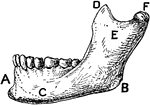
"A, symphysis menti; B, angle of jaw; C, body or horizontal ramus; D, coronoid process; E, ascending ramus; F, condyle; the teeth inserted along the alveolar border. The concave line between D and F is the condyloid notch." -Century, 1889

Lower Jawbone of Man

"A, symphysis menti; B, angle of jaw; C, body or horizontal ramus; D, coronoid process; E, ascending…
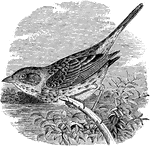
"Melospiza lincolni. Lincoln's Song Sparrow. Below, white, with a broad brownish-yellow belt across breast, the sides of the body and neck, and the crissum, washed with the same; extent and intensity of this buff very variable, often leaving only chin, throat, and belly purely white, but a pectoral band is always evident. All the buffy parts sharply and thickly streaked with dusky. Above, grayish-brown, with numerous sharp black-centred, brown-edged streaks. Top of head ashy, with a pair of dark brown black-streaked stripes; or, say, top of head brown, streaked with black, and with median and lateral ashy stripes. Below the superciliary ashy stripe is a narrow dark brown one, running from eye over ear; auriculars also bounded below by an indistinct dark brown stripe, below which and behind the auriculars the parts are suffused with buff. Wings with much rufous-brown edging of all the quills; inner secondaries and coverts having quite black central fields, with broad bay edging, becoming whitish toward their ends. Tail brown, the feathers with pale edges, and the central pair at least with dusky shaft-stripes. Bill blackish, lighter below; feet brownish." Elliot Coues, 1884

Lincoln's Sparrow

"Melospiza lincolni. Lincoln's Song Sparrow. Below, white, with a broad brownish-yellow belt across…
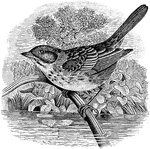
"Melospiza palustris. Swamp Song Sparrow. Crown bright chestnut, blackening on forehead, the red cap and black vizor as conspicuous as in chipping sparrow; but oftener, crown with obscuremedian ashy line, and streaked with black. An ashy-gray superciliary line; dark brown postocular stripe, bordering the auriculars; sides of head ashy, with grayish-brown auriculars, dusky speckling on cheeks and lores, and slight dusky maxillary spots or streaks. An ashy cervical collar separating the chestnut crown from the back, sometimes pure, oftener interrupted with blackish streaks. The general ash of the sides of head and neck spreads all over the breast and under parts, fading to whitish on throat and belly; the sides, flanks, and crissum marked with brown, and obsoletely streaked with darker brown. Back and rump brown, rather darker than sides of body, boldly variegated with black central streaks of the feathers and their pale brown or grayish edges. Wings so strongly edged with bright bay as to appear almost uniformly brownish-red when closed; but inner secondaries and greater coverts showing some black and whitish besides the bay. Tail likewise strongly edged with bay, and usually showing sharp black shaft lines. Thus well marked by the emphasis of black, bay, and ash." Elliot Coues, 1884

Swamp Sparrow

"Melospiza palustris. Swamp Song Sparrow. Crown bright chestnut, blackening on forehead, the red cap…
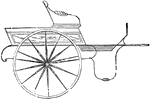
A chaise, sometimes called chay or shay, was a formerly popular, light two- or four-wheeled traveling or pleasure carriage, usually of a chair-backed type, with a movable hood or calash top. The name came from the French for chair, through a transference from a sedan-chair to a wheeled vehicle. The two-wheeled version, for one or two persons, also called a gig or one-horse shay, had a body hung on leather straps or thorough-braces and was usually drawn by one horse; a light chaise having two seats was a double chair . The four-wheeled pleasure carriage type was similar. The term chaise was also used for any light carriage or pleasure cart.

Chaise

A chaise, sometimes called chay or shay, was a formerly popular, light two- or four-wheeled traveling…
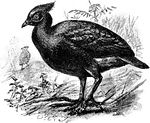
The megapodes, also known as incubator birds or mound-builders, are stocky, medium-large chicken-like birds with small heads and large feet in the family Megapodiidae. Their name literally means large foot and is a reference to the heavy legs and feet typical of these terrestrial birds. All are browsers, all but the Malleefowl occupy wooded habitats, and most are brown or black colored. Megapodes are superprecocial, hatching from their eggs in the most mature condition of any birds. They hatch with open eyes, with bodily coordination and strength, with full wing feathers and downy body feathers, able to run, pursue prey, and, in some species, fly on the same day they hatch.

Mound-builders

The megapodes, also known as incubator birds or mound-builders, are stocky, medium-large chicken-like…
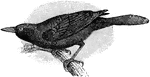
"Quiscalus purpureus. Purple Crow Blackbird. Common Crow Blackbird. Purple Grackle. Of medium size, with moderately keeled and graduated tail, shorter than wings. Sexes subsimilar. Bill usually less tapering and deflected at tip, but very variable. Adult Male: Iridescence very variable with season, age, and sexual vigor, as well as on different parts of the body; but always intense in healthy adults, and at its height during the love-ardor; variously purple, green, blue, violet, and bronzy; not he extensive green of the last species, nor usually the decided brassy of the next variety; wings and tail mostly purplish; dark purplish and steel-blue on head, neck, and breast; back more greenish or bronzy. Bill and feet ebony black." Elliot Coues, 1884

Purple Grackle

"Quiscalus purpureus. Purple Crow Blackbird. Common Crow Blackbird. Purple Grackle. Of medium size,…
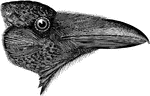
"Corvus corax. American Raven. Feathers of throat somewhat stiffened, lengthened, pointed, lying loose from one another; those of neck with gray downy bases, as elsewhere on the body. Color entirely lustrous black, with chiefly purplish and violet burnishing." Elliot Coues, 1884

American Raven

"Corvus corax. American Raven. Feathers of throat somewhat stiffened, lengthened, pointed, lying loose…
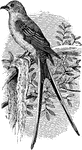
"Milvulus forficatus. Swallow-tailed Flycatcher. Scissor-tail. Crown patch orange or scarlet. General color hoary-ash, paler or white below; sides at insertion of wings scarlet or bloody-red, and other parts of the body variously tinged with the same, or a paler salmon-red. Wings blackish, with whitish edgings. Tail black, but several of the long feathers extensively white or rosy; these are narrow and linear, sometimes widening somewhat in spoon-shape." Elliot Coues, 1884

Swallow-tailed Flycatcher

"Milvulus forficatus. Swallow-tailed Flycatcher. Scissor-tail. Crown patch orange or scarlet. General…
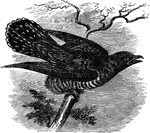
This Old World bird's plumage is gray or brown. They have a long tail, strong legs, and a slim body.
Common Cuckoo

This Old World bird's plumage is gray or brown. They have a long tail, strong legs, and a slim body.

This letter W is enclosed in a box with a background design of a human skeleton.

Letter W

This letter W is enclosed in a box with a background design of a human skeleton.

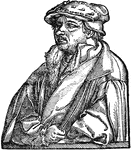
Vitus Rudolph Speckle was an engraver in Strasburg. He is known for his work on the botanical engravings is <I>De Historia Stirpium</I> published in 1542.

Vitus Rudolph Speckle

Vitus Rudolph Speckle was an engraver in Strasburg. He is known for his work on the botanical engravings…
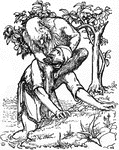
This is an illustration of "The Arabian Nights" by artist J.D. Batten. It is a collection of pre-Islamic folk tales. This drawing seems to depict a man being attacked by an animal in a human form.

The Arabian Nights

This is an illustration of "The Arabian Nights" by artist J.D. Batten. It is a collection of pre-Islamic…
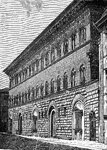
"An expression of great massiveness is the main characteristics of this Florentine style, which was principally applied in the architecture of the palaces. The forms which were borrowed from the Roman columnar construction do not in this style, as they do more or less in the other styles of the Renaissance, constitute a pseudo-architecture. The massiveness, however, of the Florentine palaces conveys rather the notion of a fortress than of a mansion of a wealthy nobleman, and this impression is increased by the smallness of the windows in comparison with the rest of the building. This is especially the case with those fa&ccedil;ades which are entirely constructed of considerably projecting ashlar of irregular size, and to a less degree in the case of those the lowest storey of which alone displays these large undressed blocks." The palace was designed by Michelozzo di Bartolomeo for Cosimo de' Medici, of the Medici family, and was built between 1445 and 1460. It was well known for its stone masonry that includes rustication and ashlar. The tripartite elevation was used here as a revelation of the Renaissance spirit of rationality, order, and classicism of human scale. This tripartite division is emphasized horizontal stringcourses that divide the building into stories of decreasing height. This makes the building seem lighter as the eye moves up to the extremely heavy cornice that caps and clearly defines the building's outline.Michelozzo di Bartolomeo was influenced in his building of this palace by both Roman principles and Brunelleschian principles. During the Renaissance revival of classical culture, Roman elements were often replicated in architecture, both built and imagined in paintings. In the Palazzo Medici Riccardi, the rusticated masonry and the cornice had precedents in Roman art.

Riccardi Palace at Florence

"An expression of great massiveness is the main characteristics of this Florentine style, which was…
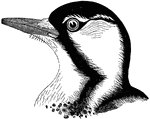
"Picus borealis. Red-Cockaded Woodpecker. Body spotted and crosswise banded, but not streaked. Head black on top, with a large silky white auricular patch embracing the eye and extending on the side of the neck, bordered above in the male by a scarlet stripe not meeting its fellow on the nape; nasal feathers and those on the side of the jay white; black of the crown connected across the lores with a black stripe running from the corner of the bill down the side of the breast in black spots continued less thickly along the whole side and on the crissum; under parts otherwise soiled white. Central tail-feathers black; others white, black-barred. Back and wings barred with black and white, the larger quills and many coverts with the white bars resolved into paired spots. Female lacking the red cockade. A peculiar isolated species; wings longer and more pointed than usual in this genus." Elliot Coues, 1884

Red-cockaded Woodpecker

"Picus borealis. Red-Cockaded Woodpecker. Body spotted and crosswise banded, but not streaked. Head…
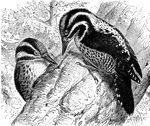
"Pico&iuml;des. Three-toed Woodpeckers. Three-toed: the hallux (1st toe) absent, the 4th toe reversed as usual in the family. Bill as in Picus proper, about as long as the head, stout, straight, with bevelled end and lateral ridges, and nasal tufts hiding the nostrils; very broad and much depressed at base, with the lateral ridges very low down, in most of their length close to and parallel with commissure; nostrils very near commissure; gonys about as long as from nostrils to end of bill. Wings very pointed; 1st quill spurious; 2d between 6th and 7th in length. Crown with a square yellow patch in the male; sides of head striped, of body barred, with black and white; under parts otherwise white; quills but not coverts with white spots; tail-feathers unbarred, the outer white, the central black. All the species of this genus are unquestionably modified derivatives of one circumpolar stock; the American seem to have become completely differentiated from the Asiatic and European, and further divergence seems to have perfectly separated arcticus from americanus; but dorsalis and americanus are still linked together. Elliot Coues, 1884

Three-toed Woodpeckers

"Picoïdes. Three-toed Woodpeckers. Three-toed: the hallux (1st toe) absent, the 4th toe reversed…
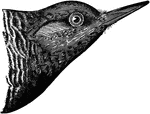
"Sphyropicus thyroides. Brown-headed Woodpecker. Black-breasted Woodpecker. Red-throated Woodpecker. Williamson's Woodpecker. Adult: Glossy black, including all the tail-feathers. Belly gamboge yellow. A narrow scarlet patch on the throat. Upper tail-coverts, a broad oblique bar on the wing-coverts, a post-ocular stripe, a stripe from nostrils below eye and ear, and small, in part paired, spots on the quills, white. Lining of wings, sides of body, flanks and crissum varied with white, leaving the black in bars and cordate spots. Bill slate-color; feet greenish-gray; iris reddish-brown." Elliot Coues, 1884

Brown-headed Woodpecker

"Sphyropicus thyroides. Brown-headed Woodpecker. Black-breasted Woodpecker. Red-throated Woodpecker.…
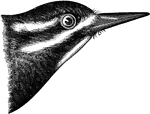
"Sphyropicus thyroides. Brown-headed Woodpecker. Black-breasted Woodpecker. Red-throated Woodpecker. Williamson's Woodpecker. Adult: Glossy black, including all the tail-feathers. Belly gamboge yellow. A narrow scarlet patch on the throat. Upper tail-coverts, a broad oblique bar on the wing-coverts, a post-ocular stripe, a stripe from nostrils below eye and ear, and small, in part paired, spots on the quills, white. Lining of wings, sides of body, flanks and crissum varied with white, leaving the black in bars and cordate spots. Bill slate-color; feet greenish-gray; iris reddish-brown." Elliot Coues, 1884

Red-headed Woodpecker

"Sphyropicus thyroides. Brown-headed Woodpecker. Black-breasted Woodpecker. Red-throated Woodpecker.…
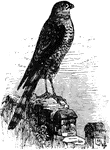
"Accipiter fuscus. Sharp-shinned Hawk. "Pigeon" Hawk. Above, dark plumbeous, slate-color, or bluish-gray, somewhat more fuscous on the wings and tail than on the body, the feathers of the hind-head with fleecy white bases, the scapulars with concealed white spots. Tail crossed by about 4 blackish bars, the first under the coverts, the last subterminal and broadest; extreme tips of the feathers white. Primaries also marked with blackish bars or spots, and whitening at their bases, in bars or indents of the inner webs. Under parts barred crosswise with rufous on a white ground, the bars on some parts cordate and connected along the shafts of the feathers, which are blackish; ear-coverts rufous; rufous mostly or entirely wanting on the cheeks, throat, and crissum, which are more or less finely pencilled with the black shafts of the feathers; crissum, however, often pure white. Axillars barred like other under parts; lining of wings white, with dusky spots." Elliot Coues, 1884

Sharp-shinned Hawk - Small

"Accipiter fuscus. Sharp-shinned Hawk. "Pigeon" Hawk. Above, dark plumbeous, slate-color, or bluish-gray,…
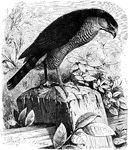
"Accipiter fuscus. Sharp-shinned Hawk. "Pigeon" Hawk. Above, dark plumbeous, slate-color, or bluish-gray, somewhat more fuscous on the wings and tail than on the body, the feathers of the hind-head with fleecy white bases, the scapulars with concealed white spots. Tail crossed by about 4 blackish bars, the first under the coverts, the last subterminal and broadest; extreme tips of the feathers white. Primaries also marked with blackish bars or spots, and whitening at their bases, in bars or indents of the inner webs. Under parts barred crosswise with rufous on a white ground, the bars on some parts cordate and connected along the shafts of the feathers, which are blackish; ear-coverts rufous; rufous mostly or entirely wanting on the cheeks, throat, and crissum, which are more or less finely pencilled with the black shafts of the feathers; crissum, however, often pure white. Axillars barred like other under parts; lining of wings white, with dusky spots." Elliot Coues, 1884

Sharp-shinned Hawk

"Accipiter fuscus. Sharp-shinned Hawk. "Pigeon" Hawk. Above, dark plumbeous, slate-color, or bluish-gray,…
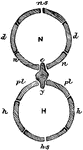
"Ideal plan of the double-ringed body of a vertebrate. N, neural canal; H, haemal canal; the body separating them is the centrum of any vertebra, bearing e, and epapophysis, and y, a hypapophysis; n, n, neurapophyses; d, d, diapophyses; ns, bifid neural spine; pl, pl, pleurapophyses; h, h, haemapophyses; hs, bifid haemal spine. Drawn by Dr. R. W. Shufeldt, USA, After Owen. The Axial Skeleton of a bird or any vertebrated animal, that is, one having a back-bone, exhibits in cross-section two rings or hoops, one above and the other below a central point, like the upper and lower loops of a figure 8. The upper ring is the neural arch, so called because such cylinder encloses a section of the cerebro-spinal axis, or principal nervous system of a vertebrate (brain and spinal cord, whence arise all the nerves of the body, excepting those of the sympathetic nervous system). The lower ring is the haema arch, which similarly contains a section of the principal blood vessals and viscera.

Axial Skeleton

"Ideal plan of the double-ringed body of a vertebrate. N, neural canal; H, haemal canal; the body separating…
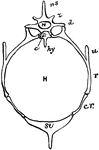
"Fig 55. - Actual section of the body in the thoracic region of a bird. N, neural canal; H, haemal canal; c, centrum of a dorsal vertebra; hy, hypapophysis; d, diapophysis; z, zygapophysis; ns, neural spine; r, pleurapophysis, or vertebral part of a free rib, bearing u, uncinate process or epipleura; cr, haemapophyses; or sternal part of the same; st, section of the sternum or breast-bone (haemal spine). Designed by Dr. R. W. Shufeldt, USA. This figure shows such a section, made across the thoracic or chest-region of the trunk. Here the upper ring (neural) is contracted, only surrounding the slender spinal cord, while the lower ring is expanded to enclose the heart and lungs." Elliot Coues, 1884

The Axial Skeleton

"Fig 55. - Actual section of the body in the thoracic region of a bird. N, neural canal; H, haemal canal;…

"Ectopistes migratorius. Passenger Pigeon. Wild Pigeon Adult: Upper parts, including head all around, slaty-blue, bright and pure on head and rump, shaded with olivaceous-gray on the back and wings; the back and sides of the neck glittering with golden and violet iridescence, the wing-coverts with velvety-clack spots. Below, from the throat, light purplish-chestnut, paler behind and fading into white on the lower belly and crissum. Tibiae, sides of body, and lining of wings like upper parts. Quills blackish, with rufous-white edging. Two middle tail-feathers blackish; others fading from pearly-bluish into white, their extreme bases with black and chestnut spots. Bill black; feet lake red, drying and undefinable color; iris orange; skin about eye red." Elliot Coues, 1884

Passenger Pigeon

"Ectopistes migratorius. Passenger Pigeon. Wild Pigeon Adult: Upper parts, including head all around,…
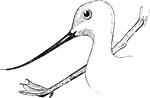
"Another small family, characterized by the extreme length of the slender legs, and the extreme slenderness of the long acute bill, which is either straight or curved upward. Recurvirostra is a 4-toed, and full-webbed; the bill is decidedly recurved, flattened, and tapers to a needle-like point; the body is depressed; the plumage underneath is thickened as in water-birds. The species swim well. Himantopus is 3 toes, semipalmate, the bill nearly straight, and not flattened; in relative length of leg it is probably not surpassed by any bird whatsoever. " Elliot Coues, 1884

Avocets Head and Foot

"Another small family, characterized by the extreme length of the slender legs, and the extreme slenderness…
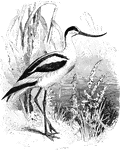
"Recurvirostra. Avocets. Bell slender, more or less recurved, then the upper mandible hooked at the extreme tip; much longer than head, more or less nearly equalling tail and tarsus; flattened on top, without culminal ridge. Wings short (for a wader). Tail very short, square, less than half the wing. Legs exceedingly long and slender; tibiae long-denuded; tarsus nearly twice as long as middle toe and claw; covering of legs skinny. Feet 4-toed; the front toes full-webbed, hind toe short, free. Body remarkably depressed and feathered underneath with thick duck-like plumage; altogether, as in swimming rather than as in wading birds. Altogether, as in swimming rather than as in wading birds. It is a modification like that seen in the lobe-footed phalaropes. Sexes and young alike; winter and summer plumage different." Elliot Coues, 1884

Avocets

"Recurvirostra. Avocets. Bell slender, more or less recurved, then the upper mandible hooked at the…
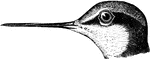
"Steganopus wilsoni. Wilson's Phalarope. Bill and feet black. Crown of head pale ash, passing into white along a narrow stripe in the nape. A narrow, distinct, pure white line over the eye. Sides of neck intense purplish-chestnut, or dark wine-red; anteriorly deepening upon the auriculars into velvety-black; posteriorly continued, somewhat duller in tint, as a stripe along each side of the back to the tips of the scapulars. Other upper parts pearly-ash, blanching on the rump and upper tail-coverts. Wings pale grayish-brown; coverts slightly white-tipped; primaries dusky-brown, their shafts brownish-white, except at tip. Tail marbled with pearly-gray and white. All the under parts pure white, but the fore part and sides of the breast washed with pale chestnut-brown, as if with a weak solution of the rich color on the neck, and a faint tinge of the same along the sides of the body to the flanks. Bill and feet black. Iris brown." Elliot Coues, 1884

Wilson's Phalarope

"Steganopus wilsoni. Wilson's Phalarope. Bill and feet black. Crown of head pale ash, passing into white…
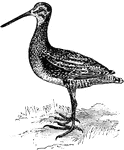
"Gallinago wilsoni. American Snipe. Wilson's Snipe. "English" Snipe. Jack-Snipe. Crown black, with a pale ochrey middle stripe. upper parts brownish-black, varied with bright bay and tawny, the scapular feathers smoothly and evenly edged with tawny or whitish, forming two lengthwise stripes on each side when the wings are folded. Quills and greater coverts blackish-brown, usually with white tips, and outer web of first primary usually white. Lining of wings and axillars white, fully and regularly barred with black. Rump black, the feathers with white tips. Upper tail-coverts tawny with numerous black bars, and tail-feathers black basally, then bright chestnut, with a narrow subterminal black bar, their tips fading to whitish; some of the lateral ones white, with little rufous tinge and several instead of one black nearly white; sides of body shaded with brown, and with numerous regular dusky bars throughout; crissum more or less rufous, with numerous dusky bars." Elliot Coues, 1884

Small Wilson's Snipe

"Gallinago wilsoni. American Snipe. Wilson's Snipe. "English" Snipe. Jack-Snipe. Crown black, with a…
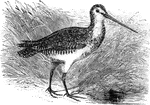
"Gallinago wilsoni. American Snipe. Wilson's Snipe. "English" Snipe. Jack-Snipe. Crown black, with a pale ochrey middle stripe. upper parts brownish-black, varied with bright bay and tawny, the scapular feathers smoothly and evenly edged with tawny or whitish, forming two lengthwise stripes on each side when the wings are folded. Quills and greater coverts blackish-brown, usually with white tips, and outer web of first primary usually white. Lining of wings and axillars white, fully and regularly barred with black. Rump black, the feathers with white tips. Upper tail-coverts tawny with numerous black bars, and tail-feathers black basally, then bright chestnut, with a narrow subterminal black bar, their tips fading to whitish; some of the lateral ones white, with little rufous tinge and several instead of one black nearly white; sides of body shaded with brown, and with numerous regular dusky bars throughout; crissum more or less rufous, with numerous dusky bars." Elliot Coues, 1884

Wilson's Snipe

"Gallinago wilsoni. American Snipe. Wilson's Snipe. "English" Snipe. Jack-Snipe. Crown black, with a…
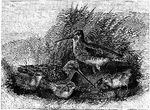
"Gallinago wilsoni. American Snipe. Wilson's Snipe. "English" Snipe. Jack-Snipe. Crown black, with a pale ochrey middle stripe. upper parts brownish-black, varied with bright bay and tawny, the scapular feathers smoothly and evenly edged with tawny or whitish, forming two lengthwise stripes on each side when the wings are folded. Quills and greater coverts blackish-brown, usually with white tips, and outer web of first primary usually white. Lining of wings and axillars white, fully and regularly barred with black. Rump black, the feathers with white tips. Upper tail-coverts tawny with numerous black bars, and tail-feathers black basally, then bright chestnut, with a narrow subterminal black bar, their tips fading to whitish; some of the lateral ones white, with little rufous tinge and several instead of one black nearly white; sides of body shaded with brown, and with numerous regular dusky bars throughout; crissum more or less rufous, with numerous dusky bars." Elliot Coues, 1884

Family of Snipes

"Gallinago wilsoni. American Snipe. Wilson's Snipe. "English" Snipe. Jack-Snipe. Crown black, with a…
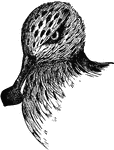
"Eurynorhynchus pygmaeus. Spoon-billed Sandpiper. General appearance of a stint, and size little greater. Coloration of upper parts almost exactly as in the species just names, the feathers being black, with indented light chestnut-red edgings, and mostly grayish-white tips; crown simply streaked with the reddish color and black. Under parts white, the whole throat, breast, and sides of the neck overlaid with bright chestnut (as in a highly-plumaged sanderling), the breast, back of this colored area, and the sides of the body, spotted with dusky. Primaries plain dusky, with blackish outer webs and ends, and mostly white shafts; secondaries mostly white from the base; greater coverts white-tipped. Bill and feet black." Elliot Coues, 1884

Spoon-billed Sandpiper

"Eurynorhynchus pygmaeus. Spoon-billed Sandpiper. General appearance of a stint, and size little greater.…
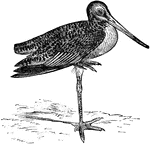
"Limosa fedoa. Great Marbled Godwit. Marlin. Feathers not extending on side of lower mandible to a point far beyond those on upper. no white anywhere; rump, tail, and its coverts barred throughout with blackish and the body-color. Lining of wings chestnut; axillars the same, more or less barred with black. General color rufous or light dull cinnamon-red, uniform and nearly uninterrupted on all the under parts, richer and more chestnut on the lining of the wings and axillars; somewhat marked with dusky on the sides of the breast and body; on the whole upper parts variegated with the brownish-black central field of each feather, the blackish predominating, leaving the rufous chiefly as scallops and tips of the feathers. This rufous very variable in intensity; usually paler on upper than on under parts, and strongest under the wings. Primaries rufous, successively darkening from the last to first, the outer webs and ends of the few outer ones blackish, the shaft of the first white. Bill livid flesh-colored, blackish on about terminal third; legs ashy-blackish." Elliot Coues, 1884

Marbled Godwit

"Limosa fedoa. Great Marbled Godwit. Marlin. Feathers not extending on side of lower mandible to a point…
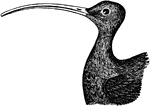
"Numenius longirostris. Long-billed Curlew. Sickle-bill. Plumage very similar to that of the Godwit, Limosa faeda: prevailing tone rufous, of varying intensity in different specimens, usually deepest on the lining of the wings, which are little varied with other color. Primaries varied with rufous. Top of head variegated with blackish and rufous or whitish, without distinct pale median and lateral lines. Upper parts brownish-black, speckled with tawny or cinnamon-brown, each feather having several indentations or broken bars of this color; rufous prevailing on wing-coverts. Tail-feathers and secondaries cinnamon-brown, with pretty regular dark bars throughout. Under parts rufous or cinnamon of varying intensity, usually deepening to chestnut under the wings, fading to whitish on throat; the jugulum and fore-breast with dusky streaks which tend on the sides of breast and body to arrowheads or more or less complete bars; lining of wings, axillars, and crissum, mostly unmarked, though some spots may appear. No white on rump, tail, or wings. Bill black, much of under mandible pale-flesh-color or yellowish; legs dark. Little variation in plumage with sex, age, and season. Chicks hatch in whitish down, thickly blotched above with brownish-black; the bill straight, an inch long." Elliot Coues, 1884

long-billed Curlew

"Numenius longirostris. Long-billed Curlew. Sickle-bill. Plumage very similar to that of the Godwit,…
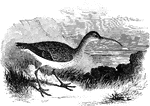
"Numenius hudsonicus. Hudsonian Curlew Jack Curlew. General tone of coloration scarcely rufous, the under parts, and the variegation of the upper, being whitish or ochraceous. No white on rump, tail, or lining of wings. Top of head uniform blackish-brown, with well-defined whitish median and lateral stripes (as in phaeopus, but neither longirostris nor borealis). Upper parts brownish-black, speckled with whitish, ochraceous or pale cinnamon-brown, in same pattern as in longirostris, but the dark in excess of the light colors, and these never strongly rufescent. Tail ashy-brown (not rufous), with numerous narrow blackish bars. Primaries fuscous, marbled or broken-barred with pale color (pattern as in longirostris, tone not strongly rufous). Lining of wings and axillars rufescent, but spotted or barred throughout with dusky. Under parts soiled whitish or somewhat ochraceous, only obscurely rufescent on crissum, if anywhere; the jugulum and fore-breast with dusky streaks which, as in other species, change to arrow-heads or incomplete bars on sides of breast and body. Bill blackish, some part of lower mandible pale; feet dark." Elliot Coues, 1884

Hudsonian Curlew

"Numenius hudsonicus. Hudsonian Curlew Jack Curlew. General tone of coloration scarcely rufous, the…
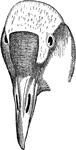
"Fulicia. Coot. Bill and frontal plate much as in the Gallinultes. Body depressed; the under plumage thick and duck-like, to resist water. feet highly natatorial' toes, including the hinder, lobate, being furnished with large semicircular membranous flaps. The Coots are eminently aquatic birds, swimming with ease, by means of their lobate feet, like phalaropes and grebes; but this ability results from very slight modification of a structure shared by the Rails and Gallinules. There are about ten species, of both hemispheres, distinguished, among other characters, by the size and shape of the frontal shield. That, for instance, is of an exotic species, much larger than that of Fulica americana, and differently shaped. One species is remarkable for having the forehead singularly carunculate; the others closely resemble our common species." Elliott Coues, 1884

Coot Head

"Fulicia. Coot. Bill and frontal plate much as in the Gallinultes. Body depressed; the under plumage…
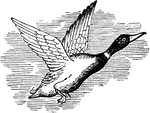
"Anus boscas. Mallard. Wild or Domestic Duck. Green-head. Bill greenish-yellow. Feet orange-red. Iris brown. Head and upper neck glossy-green, succeeded by a white ring. Breast purplish-chestnut. Lower back, rump, and tail-coverts glossy-black. Tail-feathers mostly whitish. Under parts from the breast, and scapulars, silvery-gray, finely undulated with dusky; crissum black. Speculum violet, purplish and greenish, framed in black and white tips of the greater coverts, and black terminal border. Feet and wings in the male, Bill blackish, blotched with orange, especially at base, tip and along edges. Entire body-colors with dusky-brown and tawny-brown; the tone paler and in finer pattern on the head, neck, and under parts than on the back." Elliot Coues, 1884

Wild Duck

"Anus boscas. Mallard. Wild or Domestic Duck. Green-head. Bill greenish-yellow. Feet orange-red. Iris…
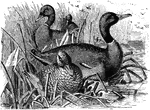
"Anus boscas. Mallard. Wild or Domestic Duck. Green-head. Bill greenish-yellow. Feet orange-red. Iris brown. Head and upper neck glossy-green, succeeded by a white ring. Breast purplish-chestnut. Lower back, rump, and tail-coverts glossy-black. Tail-feathers mostly whitish. Under parts from the breast, and scapulars, silvery-gray, finely undulated with dusky; crissum black. Speculum violet, purplish and greenish, framed in black and white tips of the greater coverts, and black terminal border. Feet and wings in the male, Bill blackish, blotched with orange, especially at base, tip and along edges. Entire body-colors with dusky-brown and tawny-brown; the tone paler and in finer pattern on the head, neck, and under parts than on the back." Elliot Coues, 1884

Mallards

"Anus boscas. Mallard. Wild or Domestic Duck. Green-head. Bill greenish-yellow. Feet orange-red. Iris…
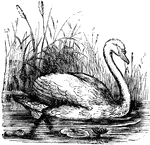
"Cygynus. White Swans. Neck of extreme length. Trachea normally entering sternum. Bill tuberculate or not, the skinny covering in the adults reaching to the eyes; not shorter than head, very high at base, where deeper than wide, broader and flattening toward the rounded end; culminal ridge at base about horizontal, very broad and flat or even excavated, the sides of the bill there nearly vertical. Nostrils near middle of bill, high up. Leg behind centre of equilibrium when the body is horizontal. Tibia bare below. Tarsus shorter than middle toe and claw, entirely reticulate; toes long, with full webs, the anterior reticulate on top for a distance, then scutellate. Hallux small, elevate, with slight lobe. Wings very long and ample. Tail short, rounded or wedged, of twenty or twenty-four feathers. Size large: adults entirely white, with black bill and feet, former usually in part yellow." Elliot Coues, 1884

Mute Swan

"Cygynus. White Swans. Neck of extreme length. Trachea normally entering sternum. Bill tuberculate or…
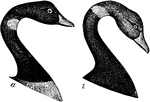
"Bernicla nigricans. Black Brant. Bill, feet, and claws black; iris brown. Head and neck all around, and a little of fore part of body, glossy-black, well defined against the color of the breast; on each side of the neck a small patch of white streaks; frequently also white touches on eyelids and chin. Breast ashy-gray, abruptly from the black, fading on the belly and crissum into white, shaded along the sides of the body; upper parts brownish-gray, the feathers of the dorsal region with paler gray tips; rump darker; upper tail-coverts white. Tail-feathers, wing-quills, and primary-coverts blackish, the inner quills whitish toward base." Elliot Coues, 1884

Black Brant Head

"Bernicla nigricans. Black Brant. Bill, feet, and claws black; iris brown. Head and neck all around,…
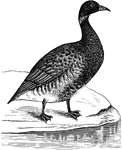
"Bernicla nigricans. Black Brant. Bill, feet, and claws black; iris brown. Head and neck all around, and a little of fore part of body, glossy-black, well defined against the color of the breast; on each side of the neck a small patch of white streaks; frequently also white touches on eyelids and chin. Breast ashy-gray, abruptly from the black, fading on the belly and crissum into white, shaded along the sides of the body; upper parts brownish-gray, the feathers of the dorsal region with paler gray tips; rump darker; upper tail-coverts white. Tail-feathers, wing-quills, and primary-coverts blackish, the inner quills whitish toward base." Elliot Coues, 1884

Black Brant

"Bernicla nigricans. Black Brant. Bill, feet, and claws black; iris brown. Head and neck all around,…
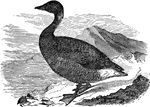
"Bernicla brenta. Brant Goose. Bill, feet, and claws black; iris brown. Head and neck all around, and a little of fore part of body, glossy-black, well defined against the color of the breast; on each side of the neck a small patch of white streaks; frequently also white touches on eyelid and chin. Beast ashy-gray, beginning abruptly from the black, fading on the belly and crissum into white, shaded along the sides of the body; upper parts brownish-gray, the feathers of the dorsal region with paler gray tips; rump darker; upper tail-coverts white. Tail-feathers, wing-quills, and primary-coverts blackish, the inner quills whitish toward base." Elliot Coues, 1884

Common Brant

"Bernicla brenta. Brant Goose. Bill, feet, and claws black; iris brown. Head and neck all around, and…
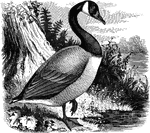
"Bernicla canadensis. Canada Goose. Common Wild Goose. Tail normally 18-feathered. Bill, feet, head, and neck black; on the chin a broad white patch mounting on sides of head behind eyes, sometimes broken on chin; not extending forward to jaws; white touches usually on eyelids. Upper tail-coverts definitely white; rump blackish; tail-feathers black. General color brownish-gray below, all the feathers with paler gray or whitish edges, those of sides of body usually darker than rest of under parts, the lower belly and crissum definitely white. Iris brown." Elliot Coues, 1884

Canada Goose

"Bernicla canadensis. Canada Goose. Common Wild Goose. Tail normally 18-feathered. Bill, feet, head,…
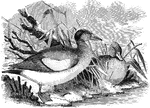
"Mareca americana. American Wigeon. Bald-pate. Bill grayish-blue, with black tip and extreme base; feet similar, duller, with dusky webs and claws; iris brown. Top of head white, or nearly so; sides the same, or more buffy, speckled with dusky-green, purer green forming a broad patch from and below eye to hind head; chin dusky. Fore neck and breast light brownish-red, or very pale purplish-cinnamon, each feather with paler grayish edge; along the sides of the body the same, finely waved with dusky; the breast and belly pure white, the crissum abruptly black. Lower hind neck and fore back and scapulars finely waved with the same reddish color and with dusky; lower back and rump similarly waved with dusky and whitish. Lesser wing-coverts plain gray; middle and greater coverts pure white, forming a large area, the greater black-tipped, forming the fore border of the speculum, which is glossy green, bordered behind by velvety black, internally by the black and white stripes on the inner secondaries. Tail brownish-gray, the lateral upper coverts black; axillary feathers white. Only old drakes have the crown immaculate white, the chin dusky, the auricular definitely green; generally the whole head and upper neck are pale brownish-yellow or reddish-white, speckled with greenish-Dusky." Elliot Coues, 1884

American Wigeon

"Mareca americana. American Wigeon. Bald-pate. Bill grayish-blue, with black tip and extreme base; feet…
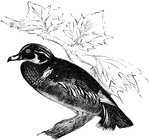
"Aix sponsa. Wood Duck. Summer Duck. "The Bride." Adult Male: Bill pinkish-white, with lake-red base, black ridge, tip, and under mandible; iris and edges of eyelids red; feet orange, with black claws. Upper part of the head, including crest, glistening green and purple; a narrow white line over eye from bill to occiput, and another behind eye to nape, these white lines mixing in the crest. A broad white patch on the throat, forking behind, one branch mounting head behind eye, the other passing to side of neck. Sides and front of lower neck and fore breast rich purplish-chestnut, prettily marked with several chain of angular white spots. A large white black-edged crescent of enlarged feathers in front of the wing. Under parts pure white, the sides yellowish-gray vermiculated with black and white wavy bars; the enlarged flank-feathers broadly rayed with black and white; the lining of the wings white barred with grayish-brown, of which color is the crissum. Upper parts generally lustrous with bronzy-green and purple; scapulars and inner secondaries velvet-black, glassed with purple and green; a green speculum, succeeded by white tips of the secondaries; primaries frosted on outer webs near end. Adult female: Little or no crest, but lengthened feathers on nape; no enlargement or special colorings of feathers about the wings. Bill dusky: feet yellowish-dusky. Head and neck gray, darker on crown, the chin and parts about bill and eyes white. Fore neck, breast and sides of body yellowish-brown, mottled with dark gray, the breast spotted with brown, the belly white. Upper parts dark brown with considerable gloss; wings as in the male, but the velvety-black reduced." Elliot Coues, 1884

Wood Duck

"Aix sponsa. Wood Duck. Summer Duck. "The Bride." Adult Male: Bill pinkish-white, with lake-red base,…
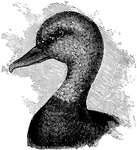
"Fuligula ferina americana. Red-head. American Pochard. The feathers of the head somewhat full and puffy, though forming no crest. Bill broad and flattened, a little widened toward end, running into the forehead which arches abruptly over and away from it, not rising gradually into line with forehead; shorter or not longer than head, 2 inches or less in length along culmen, the nostrils within its basal half; the forward end of nostril about 2/5 the way from upper corner to end of bill. Bill dull blue with a black belt at the end. Iris orange. Feet dull grayish-blue, with dusky webs and black claws. Head and neck all around rich pure chestnut, not obscured with dusky-brown, but with bronzy or coppery red reflections. Lower neck and fore parts of body above and below, with rump and tail-coverts above and below, blackish. Back mixed whitish and blackish in about equal amounts, the dark wavy lines distinct and unbroken. Sides of the body under the wings vermiculated much like the back, the undulations subsiding in the grayish-white of the middle under parts. Wing-coverts ashy-gray, minutely dotted with white; speculum hoary-ash, bordered internally with black; lining of wings mostly white. Female: Bill obscured bluish, with black belt near end; iris yellow." Elliot Coues, 1884

Small Redhead

"Fuligula ferina americana. Red-head. American Pochard. The feathers of the head somewhat full and puffy,…
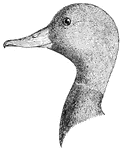
"Fuligula ferina americana. Red-head. American Pochard. The feathers of the head somewhat full and puffy, though forming no crest. Bill broad and flattened, a little widened toward end, running into the forehead which arches abruptly over and away from it, not rising gradually into line with forehead; shorter or not longer than head, 2 inches or less in length along culmen, the nostrils within its basal half; the forward end of nostril about 2/5 the way from upper corner to end of bill. Bill dull blue with a black belt at the end. Iris orange. Feet dull grayish-blue, with dusky webs and black claws. Head and neck all around rich pure chestnut, not obscured with dusky-brown, but with bronzy or coppery red reflections. Lower neck and fore parts of body above and below, with rump and tail-coverts above and below, blackish. Back mixed whitish and blackish in about equal amounts, the dark wavy lines distinct and unbroken. Sides of the body under the wings vermiculated much like the back, the undulations subsiding in the grayish-white of the middle under parts. Wing-coverts ashy-gray, minutely dotted with white; speculum hoary-ash, bordered internally with black; lining of wings mostly white. Female: Bill obscured bluish, with black belt near end; iris yellow." Elliot Coues, 1884

Large Redhead

"Fuligula ferina americana. Red-head. American Pochard. The feathers of the head somewhat full and puffy,…
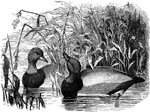
"Fuligula ferina americana. Red-head. American Pochard. The feathers of the head somewhat full and puffy, though forming no crest. Bill broad and flattened, a little widened toward end, running into the forehead which arches abruptly over and away from it, not rising gradually into line with forehead; shorter or not longer than head, 2 inches or less in length along culmen, the nostrils within its basal half; the forward end of nostril about 2/5 the way from upper corner to end of bill. Bill dull blue with a black belt at the end. Iris orange. Feet dull grayish-blue, with dusky webs and black claws. Head and neck all around rich pure chestnut, not obscured with dusky-brown, but with bronzy or coppery red reflections. Lower neck and fore parts of body above and below, with rump and tail-coverts above and below, blackish. Back mixed whitish and blackish in about equal amounts, the dark wavy lines distinct and unbroken. Sides of the body under the wings vermiculated much like the back, the undulations subsiding in the grayish-white of the middle under parts. Wing-coverts ashy-gray, minutely dotted with white; speculum hoary-ash, bordered internally with black; lining of wings mostly white. Female: Bill obscured bluish, with black belt near end; iris yellow." Elliot Coues, 1884

Redheads

"Fuligula ferina americana. Red-head. American Pochard. The feathers of the head somewhat full and puffy,…
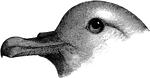
"Priocella tenuirostris. Slender-billed Fulmar. Adult: Plumage white, with clear pearly-blue mantle, and black primaries, just like a gull; the mantle beginning faintly on the nape, continuing over whole back, rump, tail, wing-coverts and inner quills; edge of the wing slaty-gray; primaries black, their shafts yellowish-white at base, their inner webs pearly-white to near the ends; white of first primary extending to within two inches of the tip, further on the rest successively, reaching the end on the 6th; outer webs of secondaries slaty-black, inner white; a small dusky spot before eye; a faint pearly shade on sides of breast and body. Bill and feet (dry) yellow; nasal tube and hood obscured with bluish horn-color." Elliot Coues, 1884

Slender-billed Fulmar

"Priocella tenuirostris. Slender-billed Fulmar. Adult: Plumage white, with clear pearly-blue mantle,…
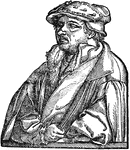
Vitus Rudolph Speckle was an engraver in Strasburg. He is known for his work on the botanical engravings is <I>De Historia Stirpium</I> published in 1542.

Vitus Rudolph Speckle

Vitus Rudolph Speckle was an engraver in Strasburg. He is known for his work on the botanical engravings…
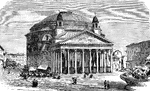
The pantheon at Rome is a temple that was built to all the gods of Ancient Rome. It was built by Marcus Agrippa Roman statesman, general, and son-in-law to Emperor Caesar Augustus. The structure has a circular body with columns and a dome that covers the ceiling.

The Pantheon at Rome

The pantheon at Rome is a temple that was built to all the gods of Ancient Rome. It was built by Marcus…
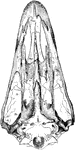
"Dromaeognathous skull of ostrich, nat. size specimen no. 16,629, U.S. Nat Museum, by Dr. R. W. Shufeldt, U.S.A. RR, rostrum, beyond which the ossified nasal septum continues in the axis of the skull to the letters "Pmx." V, the short vomer, borne upon R, uniting laterally with Mxp, the broad maxillo-palatines; Pl, palatines, remote from rostrum, underrunning beyond Mxp, but not to Pmx. Pt, expanded scroll-like pterygoids, atriculating behind with Btp, the strong basipterygoid processes on the body (not rostum) of the sphenoid; they underlap R, but do not articulate there. Pmx, premaxillaries; Mx, maxillaries, whose ends run forward to opposite the letters "Pmx"; jugal; qj, quadrato-jugal; Qu, quadrate. (N.B. This is the most exceptional case of dromaeognathism. Each of the Ratite families - Struthionidae, Rheidae, Casuariidae, Dinornithidae, and Apterygidae, - as well as the Carinate family Tinamidae, offers a special case of such formation, as explained in the text.)." Elliot Coues, 1884

The Skull Structure of an Ostrich

"Dromaeognathous skull of ostrich, nat. size specimen no. 16,629, U.S. Nat Museum, by Dr. R. W. Shufeldt,…