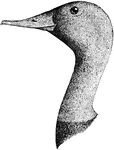
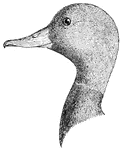
"Fuligula vallisneria. Canvas-back. Adult male: The head close-feathered. Bill high at the base and narrow throughout or scarcely widened toward end, sloping gradually up to the top of the head in line with the sweep of the forehead, altogether somewhat like a goose's in shape; decidedly longer than head, 2 &1/2 inches to nearly or quite 3 in length, measured along the culmen; the nostrils reaching the middle of the bill, their fore end half-way from the upper corner to end of bill. Bill not blue, black-belted, but blackish throughout. Eyes red. Feet grayish-blue. Head and upper neck not coppery brownish-red, but dark reddish-brown, further much obscured with dusky or quite blackish about the bill and on top. Ground color of back white, very finely vermiculated with zigzag blackish bars much narrower than the intervening spaces, and tending to break up, or mostly broken up, into little chains or dots across the feathers; the resulting silvery-gray tone consequently several shades lighter than in the red-head." Elliot Coues, 1884

Large Canvas-backs Head

"Fuligula vallisneria. Canvas-back. Adult male: The head close-feathered. Bill high at the base and…
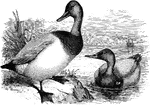
"Fuligula vallisneria. Canvas-back. Adult male: The head close-feathered. Bill high at the base and narrow throughout or scarcely widened toward end, sloping gradually up to the top of the head in line with the sweep of the forehead, altogether somewhat like a goose's in shape; decidedly longer than head, 2 &1/2 inches to nearly or quite 3 in length, measured along the culmen; the nostrils reaching the middle of the bill, their fore end half-way from the upper corner to end of bill. Bill not blue, black-belted, but blackish throughout. Eyes red. Feet grayish-blue. Head and upper neck not coppery brownish-red, but dark reddish-brown, further much obscured with dusky or quite blackish about the bill and on top. Ground color of back white, very finely vermiculated with zigzag blackish bars much narrower than the intervening spaces, and tending to break up, or mostly broken up, into little chains or dots across the feathers; the resulting silvery-gray tone consequently several shades lighter than in the red-head." Elliot Coues, 1884

Canvas-backs

"Fuligula vallisneria. Canvas-back. Adult male: The head close-feathered. Bill high at the base and…
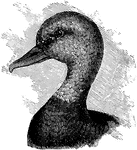
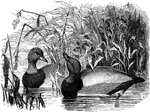
"Fuligula ferina americana. Red-head. American Pochard. The feathers of the head somewhat full and puffy, though forming no crest. Bill broad and flattened, a little widened toward end, running into the forehead which arches abruptly over and away from it, not rising gradually into line with forehead; shorter or not longer than head, 2 inches or less in length along culmen, the nostrils within its basal half; the forward end of nostril about 2/5 the way from upper corner to end of bill. Bill dull blue with a black belt at the end. Iris orange. Feet dull grayish-blue, with dusky webs and black claws. Head and neck all around rich pure chestnut, not obscured with dusky-brown, but with bronzy or coppery red reflections. Lower neck and fore parts of body above and below, with rump and tail-coverts above and below, blackish. Back mixed whitish and blackish in about equal amounts, the dark wavy lines distinct and unbroken. Sides of the body under the wings vermiculated much like the back, the undulations subsiding in the grayish-white of the middle under parts. Wing-coverts ashy-gray, minutely dotted with white; speculum hoary-ash, bordered internally with black; lining of wings mostly white. Female: Bill obscured bluish, with black belt near end; iris yellow." Elliot Coues, 1884

Small Redhead

"Fuligula ferina americana. Red-head. American Pochard. The feathers of the head somewhat full and puffy,…
"Fuligula ferina americana. Red-head. American Pochard. The feathers of the head somewhat full and puffy, though forming no crest. Bill broad and flattened, a little widened toward end, running into the forehead which arches abruptly over and away from it, not rising gradually into line with forehead; shorter or not longer than head, 2 inches or less in length along culmen, the nostrils within its basal half; the forward end of nostril about 2/5 the way from upper corner to end of bill. Bill dull blue with a black belt at the end. Iris orange. Feet dull grayish-blue, with dusky webs and black claws. Head and neck all around rich pure chestnut, not obscured with dusky-brown, but with bronzy or coppery red reflections. Lower neck and fore parts of body above and below, with rump and tail-coverts above and below, blackish. Back mixed whitish and blackish in about equal amounts, the dark wavy lines distinct and unbroken. Sides of the body under the wings vermiculated much like the back, the undulations subsiding in the grayish-white of the middle under parts. Wing-coverts ashy-gray, minutely dotted with white; speculum hoary-ash, bordered internally with black; lining of wings mostly white. Female: Bill obscured bluish, with black belt near end; iris yellow." Elliot Coues, 1884

Large Redhead

"Fuligula ferina americana. Red-head. American Pochard. The feathers of the head somewhat full and puffy,…
"Fuligula ferina americana. Red-head. American Pochard. The feathers of the head somewhat full and puffy, though forming no crest. Bill broad and flattened, a little widened toward end, running into the forehead which arches abruptly over and away from it, not rising gradually into line with forehead; shorter or not longer than head, 2 inches or less in length along culmen, the nostrils within its basal half; the forward end of nostril about 2/5 the way from upper corner to end of bill. Bill dull blue with a black belt at the end. Iris orange. Feet dull grayish-blue, with dusky webs and black claws. Head and neck all around rich pure chestnut, not obscured with dusky-brown, but with bronzy or coppery red reflections. Lower neck and fore parts of body above and below, with rump and tail-coverts above and below, blackish. Back mixed whitish and blackish in about equal amounts, the dark wavy lines distinct and unbroken. Sides of the body under the wings vermiculated much like the back, the undulations subsiding in the grayish-white of the middle under parts. Wing-coverts ashy-gray, minutely dotted with white; speculum hoary-ash, bordered internally with black; lining of wings mostly white. Female: Bill obscured bluish, with black belt near end; iris yellow." Elliot Coues, 1884

Redheads

"Fuligula ferina americana. Red-head. American Pochard. The feathers of the head somewhat full and puffy,…
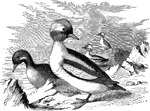
"Clangula albeola. Buffle-head. Butter-ball. spirit-duck. Dipper. Bill with nostrils rather behind than before its middle line. Adult male: Head particularly puffy with much lengthened feathers of lateral and and hind parts, splendidly various with purple-violet and green iridescence; a large snowy patch on each side behind eye, blending on nape with its fellow. Bill dull bluish with dusky nail and base. Eyes brown. Feet pale flesh-color, with blackish claws. Upper parts at large black, fading to grayish-white posteriorly. Lower neck all around, under parts at large, scapulars in part, nearly all the wing-coverts, and most of the secondaries, white. Outer scapulars white, edged with black; inner secondaries velvet-black; sides and sometimes across lower belly shaded with dusky; lining of wings mixed dusky and white. Female much smaller than male; head scarcely puffy, but a thin compressed nuchal elongation of the feathers; dusky gray, with trace at least of the white space of the male, and common a white touch under eye. Bill dusky; feet livid bluish-gray, with dusky webs. above at large dusky-gray or blackish, with white speculum on outer webs only five or six secondaries; below white, shaded into dark along sides and across fore-breast and lower belly." Elliot Coues, 1884

Buffleheads

"Clangula albeola. Buffle-head. Butter-ball. spirit-duck. Dipper. Bill with nostrils rather behind than…
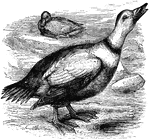
"Camptolaemus labradorius. Labrador Duck. Pied Duck. Adult male: Bill black with orange at base and along edges, and grayish-blue along the ridge; iris reddish-brown; feet grayish-blue, with dusky webs and claws. Head and upper neck white, with a longitudinal black stripe on the crown and nape. Neck below ringed with black continuous with that of upper parts, then half-collared with white continuous with that of scapulars. Below, from this white, entirely black, excepting white axillars and lining of wings. Above, black, except as said; the wing-coverts and secondaries white, some of the latter margined with black; some of the long scapulars pearly-gray; primaries and their coverts and tail-feathers brownish-black. Female: Bill, eyes, and tail-feathers brownish-black. Bill, eyes, and feet as in male; several secondaries white, forming a speculum, but no white on wing-coverts or scapulars; axillars and lining of wings mostly white; inner secondaries edged with black; general color dappled brownish-gray, paler and more ashy or plumbeous on wing-coverts and inner secondaries." Elliot Coues, 1884

Labrador Duck

"Camptolaemus labradorius. Labrador Duck. Pied Duck. Adult male: Bill black with orange at base and…
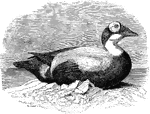
"Somateria fischeri. Spectacled Eider. Bill (in both sexes) peculiar in the extension upon it of dense velvety feathers which reach to a point on the culmen beyond the nostrils, thence sweeping past the nostrils obliquely downward and backward to the commissure, the nostrils opening just beneath the line of feathers. Feathers of chin extending in a point nearly as far as those on culmen. A peculiarly dense and puffy patch of velvety feathers about the eye, suggesting spectacles; frontal feathers erect, pious, in the male somewhat stiffened; occipital feathers lengthened into a crest; these characters of the head-feathering best marked in the male, but indicated also in the female. Nail of bill distinct. Adult male: General color grayish-black, the neck and most of the back white; lesser and median wing-coverts, the curved tertials, the lining of the wings and axillars, white; flanks white. On the head, the white of the neck gives way to rich sea-green, especially on the occipital crest; the frontal feathers are also tinged with greenish; but the 'spectacles' are pure silvery white, framed in black. Bill, in the dried state, dingy yellowish; feet the same, with dusky webs." Elliot Coues, 1884

Spectacled Eider

"Somateria fischeri. Spectacled Eider. Bill (in both sexes) peculiar in the extension upon it of dense…
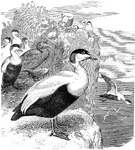
"Somateria mollissima. European Eider Duck. Bill with lateral frontal process extending on each side of the forehead, between the short pointed extension of the feathers on the culmen and the much greater extension of those on the sides of the bill, which reach to below the nostril, about opposite those on the chin. The general upper outline of the bill nearly straight, and the frontal processes narrow, acute, and nearly parallel. Adult male: Plumage almost entirely black and white. Top of head glossy blue-black, including eyes, and forking behind to receive the white of the hind-head. Occiput more or less washed with sea-green. Neck all around, fore breast, most of the back, most of the wing-coverts above and below, the curly tertials, and sides of rump, white, on the breast tinged with pale creamy-brown." Elliot Coues, 1884

Eider Ducks

"Somateria mollissima. European Eider Duck. Bill with lateral frontal process extending on each side…
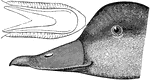
"Oidemia americana. American Black Scoter. Sea Coot. Adult male: Plumage entirely black, less glossy and jetty below than above, grayish on the inner webs of the quills. Iris brown. Feet blackish. Young male resembling the female. Female: Sooty-brown, paler below, becoming grayish-white on belly, there dusky-speckled, on sides and flanks dusky-waved; throat and sides of head mostly continuous whitish, not in special spots; bill blackish, not bulging; feet livid olivaceous with black webs." Elliot Coues, 1884

Black Scoter

"Oidemia americana. American Black Scoter. Sea Coot. Adult male: Plumage entirely black, less glossy…
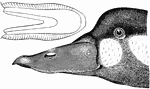
"Oidemia perspicillata. Surf Duck. Sea Coot. Adult male: Bill as above, singularly variegated in color, mostly white in pinkish, and orange, with a great round or squarish black spot on side near base; iris pale yellow; feet orange, with dusky webs. Plumage glossy black, duller below; no white on wings, but a triangular white patch on forehead, pointing forward, reaching to or beyond opposite eye, and another on nape, pointing downward. Young male resembles female, before the bill acquires distinctive shape and color. Female blackish, not tumid, feathers of culmen restricted, not reaching opposite nostrils; feet dark, tinged with reddish, the webs blackish. Plumage sooty-brown, below silvery-gray; side of head with much whitish, chiefly in two patches, loral and auricular; no frontal or nuchal white." Elliot Coues, 1884

Surf Duck

"Oidemia perspicillata. Surf Duck. Sea Coot. Adult male: Bill as above, singularly variegated in color,…
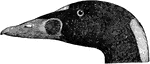
"Oidemia perspicillata trowbridgii. Trowbridge's Surf Duck, With the bill longer, exceeding the head, and o slightly different shape; feathers falling short of nostrils; gape 2.75; white frontal patch small, its posterior border anterior to a line between eyes, instead of reaching or passing beyond this." Elliot Coues, 1884

Trowbridge's Surf Duck

"Oidemia perspicillata trowbridgii. Trowbridge's Surf Duck, With the bill longer, exceeding the head,…
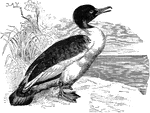
"Mergus merganser. Merganser. Goosander. Nostrils near middle of bill. Frontal feathers extending acutely on culmen about half way from those on side of bill to nostrils; loral feathers sweeping in nearly vertical line across side of base of upper mandible, about opposite those on side of lower mandible. Head scarcely crested, merely a line of little lengthened feathers along occiput and nape, better developed, however, in female than in male. Adult male: Bill and feet vermilion-red in breeding season, with black hook; iris carmine. Head and neck splendid dark green. Under parts salmon-colored, the flanks and lower belly marbled or watered with dusky. Upper parts glossy-black, fading to ashy on rump and tail; surface of wing mostly pure white, crossed by a black bar formed by bases of greater coverts. Primaries and outer secondaries black, intermediate secondaries white, inner secondaries and scapulars black and white. Female: Bill red with dusky culmen, iris yellowish, feet chrome or orange with dusky webs, crest better developed than in male; still flimsy, however long. Head and neck reddish-brown; throat white; under parts less salmon-tinted. Black parts of the male ashy-gray; scapulars without white; white of wing restricted to secondaries and greater coverts, which are black at base; smaller coverts ashy." Elliot Coues, 1884

Merganser

"Mergus merganser. Merganser. Goosander. Nostrils near middle of bill. Frontal feathers extending acutely…
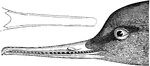
"Mergus serrator. Red-breasted Merganser. Nostrils near base of bill. Frontal feathers extending obtusely on culmen, and not beyond those on sides of upper mandible; the loral sweeping forward convex beyond those on side of lower mandible. A long, thin, pointed and nuchal crest in both sexes. Adult Male: Head and neck all around splendid dark green. A white ring round neck. Under parts white, more or less salmon-tinged, the fore-breast brownish-red streaked with dusky, the sides finely waved with dusky. A white black-bordered patch of broad feathers in front of the wing. Fore-back, interscapulars, and long inner scapulars, black; middle and lower back gray waved with whitish and dusky. Surface of wing mostly white, including outer scapulars; inner secondaries edged on outer web with black, and wing crossed by two black bars at bases and just beyond ends of greater coverts. Bill carmine-red, dusky along the top; eyes carmine; feet bright red. Female: Bill and feet duller color; head grayish-chestnut; throat and under parts white, shaded with ashy-gray along sides. Upper parts plumbeous-gray, the feathers with paler edges; white of wing restricted to a patch formed by the ends of the greater coverts, and much of the outer secondaries; not divided by a black bar." Elliot Coues, 1884

Red-breasted Merganser

"Mergus serrator. Red-breasted Merganser. Nostrils near base of bill. Frontal feathers extending obtusely…
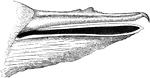
"North American White Pelican. Bill several times as long as the head, comparatively slender, but strong, straight, broad, flattened, grooved throughout, ending with a distinct claw-like hook. Mandibular rami joining only at their apex; the long broad interramal space, and the throat, occupied by an enormous membranous sac. Nostrils abortive." Elliot Coues, 1884

The Bill of a North American White Pelican

"North American White Pelican. Bill several times as long as the head, comparatively slender, but strong,…
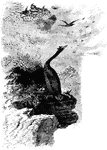
"Phalacrocorax bicristatus. Red-Faced Cormorant. Frontal feathers not reaching base of the culmen, the bill being entirely surrounded by naked red skin which also encircles the eyes, somewhat carunculate, forming a kind of wattle on each side of the chin; base of under mandible blue; feet black, blotched with yellow. Crown with a median bronzy black crest, and nape with another, in the same line. In the specimens examined, a large white flank-patch, but few if any white plumes on neck. Plumage richly iridescent, mostly green, but violet and steel-blue on the neck, purplish, violet, and bronzy on the back and wings, the feathers there without definite dark edgings." Elliot Coues, 1884

Red-faced Cormorant and Nest

"Phalacrocorax bicristatus. Red-Faced Cormorant. Frontal feathers not reaching base of the culmen, the…
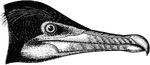
"Phalacrocorax dilophus. Double-crested Cormorant. Tail of 12 feathers. Gular sac convex behind. No colored gorget. Glossy greenish-black; feathers of the back and wings coppery-gray, black-shafted, black-edged. Adult with curly black lateral crests in the breeding season, but few if any other filamentous white ones, over the eyes and along the sides of the neck; white flank-patch not observed in any specimens examined, probable not occurring; iris green; gular sac and lores orange. Winter spec. with bill bright yellow, blackening along culmen, gular sac red anteriorly, ochrey-yellow posteriorly; legs dull black." Elliot Coues, 1884

Double-crested Cormorant

"Phalacrocorax dilophus. Double-crested Cormorant. Tail of 12 feathers. Gular sac convex behind. No…
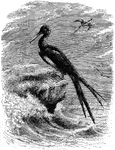
"Tachypetes aquilus. Frigate. Man-of-War Bird. brownish-black, glossed with green of purplish, duller on the belly, wings showing brown and gray; Female with white on neck and breast." Elliot Coues, 1884

Frigate Birds

"Tachypetes aquilus. Frigate. Man-of-War Bird. brownish-black, glossed with green of purplish, duller…
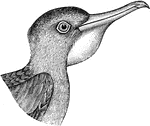
"Tachypetes aquilus. Frigate. Man-of-War Bird. brownish-black, glossed with green of purplish, duller on the belly, wings showing brown and gray; Female with white on neck and breast." Elliot Coues, 1884

Frigatebird Head

"Tachypetes aquilus. Frigate. Man-of-War Bird. brownish-black, glossed with green of purplish, duller…
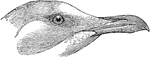
"Larus heermanni. White-headed Gull. Bill shorter than head or tarsus, rather slender, moderately compressed, the tip rather acute; its color red in part in the adult. Folded wings reaching beyond the tail. Tail of moderate length, even, slightly emarginate in the young. Feet rather large. Tarsus equal to the middle toe and claw. General colors dark; tail mostly blackish. Adult, breeding plumage: Bill bright vermilion red, black for its terminal third, sometimes wholly red; a red ring around eye. Head white; this color gradually merging on the neck into plumbeous-ash, which extends over the whole under parts, being lighter on the abdomen and under tail-coverts than elsewhere. The back is deep plumbeous-slate, lighter on the rump. Upper tail-coverts clearly ashy. Upper surfaces of wings like the back; the primaries black; the tips of all, except the two or three outer ones, narrowly white. Tail black, narrowly tipped with white. Legs and feet reddish-black." Elliot Coues, 1884

White-headed Gull Head

"Larus heermanni. White-headed Gull. Bill shorter than head or tarsus, rather slender, moderately compressed,…
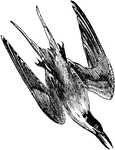
"Sterna dougalli. Roseate Tern. Paradise Tern. Bill about as long as head or foot, straight, slender, compressed, very acute; gonys longer than rami, former straight, latter concave in outline, with acute but not prominent angle between them. Wings shorter than usual, 1st primary little longer than next, all rounded. Tail exceedingly long and deeply forked, with very narrow filamentous outer feathers. Tibia slightly denuded; tarsus a little shorter than middle toe and claw. Whole form trim and elegant. Bill black, the extreme point yellowish, the base for a little distance, and inside of mouth, red. Feet bright yellowish-red; claws black. Cap lustrous black, very ample, reaching to lower border of eyes; under eyelid white, as is a streak to end of feathers on bill. Neck all around and entire under parts snowy white, tinted with lovely rose-pink. Mantle delicate pale pearly, over all the upper parts from the neck, including rump and base of tail, fading however to white on tips of tertials and inner webs of secondaries. Long tail-feathers white with a faint pearly tint. Primaries grayish-black, strongly silvered when fresh; outer web of the first blackish; inner webs of all pure white for more than half their breadth, this white stripe broadest on the first, toward the base of which it occupies the whole web, and on all of them continued to and usually around the very tips; shafts of all the quills white both sides nearly to end." Elliot Coues, 1884

Roseate Tern

"Sterna dougalli. Roseate Tern. Paradise Tern. Bill about as long as head or foot, straight, slender,…
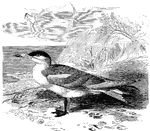
"Sterna (T.) caspia. Caspian Tern. Imperial Tern. Bill dark vermilion red, growing and somewhat "diaphanous" toward the tip. Pileum and occipital crest glossy greenish-black, extending to below the lower level of the eyes, and occupying the termination of the feathers on the side of the mandible to the exclusion of the white; lower eyelid white, forming a noticeable spot on the greenish; a white streak along sides of upper mandible, not extending to the end of the feathers. mantle pearl-blue, the line of demarcation between it and the white rather indefinite, both on nape and rump; most of the tail-feathers, and especially the central ones, retaining a more or less pearly tint. Shafts of the primaries yellowish-white; primaries grayish-black, but, when new, so heavily silvered over as to appear of a light hoary gray, especially on their superior aspects. On the inner web of all there is a central light field; this is very narrow, even on the first primary, although it runs considerable distance, and on the others it rapidly grows less; and it has no trenchant line of division of the primaries from the darker portions of the feather. whole inner web of secondaries pure white, outer pearl-blue. Legs and feet black." Elliot Coues, 1884

Caspian Tern

"Sterna (T.) caspia. Caspian Tern. Imperial Tern. Bill dark vermilion red, growing and somewhat "diaphanous"…
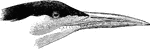
"Sterna (T.) maxima. Cayenne Tern. Royal Tern. Adult in summer: Pileum glossy greenish-black, not extending below eyes, so narrow on side of upper mandible that a broad white streak extends to extreme tip of the feathers. Mantle exceedingly light pearl-blue, fading imperceptibly into white on the rump and towards the extremities of the tertials. Tail white, with a faint tinge of pearly, especially on the central feathers and inner webs of the other. Secondaries pure white for their whole length except a small space on the outer web near the tip, which is grayish-blue, deeper than the mantle. Outer web of first primary grayish-black; in the inner web of the same has a space of black extending the whole length of the feather, very narrow at the base, widening as it runs toward the tip. within 1 & 1/2 inches of which it occupies the whole web; the rest of the web white. separated from the black by a straight distinct line of division. The second, third, fourth, and fifth primaries have the same general characteristics, but the white space grows narrow and shorter, and round up further in the centre than along the edge of the web, so that for a little way from its end it has a border of blackish along its outer margin; other primaries wholly pearl-blue, their inner webs margined with white. Bill coral and orange-red, with a slightly lighter tip; feet blackish, their soles dull yellowish." Elliot Coues, 1884

Royal Tern

"Sterna (T.) maxima. Cayenne Tern. Royal Tern. Adult in summer: Pileum glossy greenish-black, not extending…
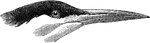
"Sterna (T.) elegans. Elegant Tern. Princely Tern. Bill bright red, salmon-colored toward tip. Feet black; soles and under surfaces of claws slightly yellowish. crown of head, including long-flowing occipital crest, pure black, reaching down on the sides of the head to a straight line just on a level with the lower border of the eye; the white of the cheeks accompanying the black to the foremost point of extension of the feathers in the nasal fossae. All the under parts rosy-white, with satin gloss. Tail entirely pure white, longer and more deeply forked than in winter. Back and wings pale pearl-blue; the usual pattern of coloration of the primaries." Elliot Coues, 1884

Elegant Tern

"Sterna (T.) elegans. Elegant Tern. Princely Tern. Bill bright red, salmon-colored toward tip. Feet…
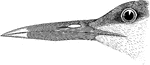
"Sterna (T.) cantiaca. Sandwich Tern. Ducal Tern. Bill black, the tip 1/2 to 3/4 an inch bright yellow, sharply defined against the black; "inside of mouth deep blue." Feet dull black. Pileum and occipital crest glossy black, with a tinge of green; the color extending just below the eyes, but leaving a space along the side of the mandible white to the extremity of the feathers. Mandible exceedingly light pearly-blue, fading on the rump and upper tail-coverts into pure white; but the rectrices themselves have a slight shade of pearly-bluish. Primaries colored as in maxima. On the inner web of the first the black space is broad and deep in color; when about 1& 1/2 inches from the apex of the quill it quite suddenly grows wider, so as to exclude the white portion from the tip altogether. The second, third, and fourth primaries have the same general pattern, but he white runs up further on the central portion than on the edge of the web, so that toward its end it receives a narrow edging of blackish. The other primaries have no blackish, but are simply pearl-blue, with broad white margins along the whole length of heir inner webs. The outer primaries are all heavily silvered when the quills are new.

Sandwich Tern

"Sterna (T.) cantiaca. Sandwich Tern. Ducal Tern. Bill black, the tip 1/2 to 3/4 an inch bright yellow,…
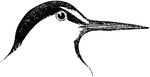
"Sterna aleutica. Aleutian Tern. Bill of ordinary shape, as in hirundo, macrura, etc., entirely black. Feet small, as in the species just named, but the webs more deeply incised; emargination not so great, however, as in Hydrochelidon; much as in Haliplana. Tibia bare to the usual extent. Wings and tail exactly as in Sterna proper, the latter, in its length and depth of fork, recalling macrura and forsteri. Crown and nape black; a large white frontal crescent, the horns of which reach to the posterior border of the eyes, the convexity of which extends into the nasal fossae, the concavity of which is opposite the anterior border of the eyes; thus broader than in most species similarly marked. The black vertex sends through the eye a band that crosses the cheeks and reaches the bill just posterior to the point of greatest extension of the feathers on the latter. The chin, auriculars, and other parts of the head bordering this vitta below, and pure white, presently deepening insensibly into the hue of the under parts. Tail wholly pure white; no pearly wash on either vane of any of the feathers. Upper parts at large dark pearl-gray, with a dull leaden hue, different from the clear pearly of macrura, etc., yet not of the smoky cast of panayensis, etc.; it is a tint intermediate between these, that I find difficult to name satisfactorily. The whole under parts, from the white of the chin, just noticed, to the under tail-coverts, paler and more decidedly pearly, more nearly as in full-plumaged macrura, yet more grayish. Both under and upper tail-coverts, like the tail, white. The color of the back mounts on the neck behind to the black of the nape without intervention of the white. Under wing-coverts and edge of wing pure white; as are all the shafts of the primaries. Primaries blackish lead-color, with silvery hoariness, and each with a large white space on inner web; this white space on the first primary occupies at the base the whole width of the inner web, but grows narrower toward the tip of the feather, ending about an inch from the tip, which is wholly blackish lead-color, this color running down as a narrow margining of the inner vane for two inches or more." Elliot Coues, 1884

Aleutian Tern

"Sterna aleutica. Aleutian Tern. Bill of ordinary shape, as in hirundo, macrura, etc., entirely black.…
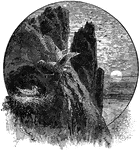
"Fulmarus. Fulmar. Adult: White; mantle pale pearly-blue, restricted to back and wings, or extending on head and tail; usually a dark spot in front of eye; quills dark ashy-brown. Bill yellow, tinged with sea-green on culmen and lower mandible, the opening of the nostrils black; feet drying dingy yellowish, said to be delicate French gray in life; iris brown." Elliot Coues, 1884

Fulmar and Nest

"Fulmarus. Fulmar. Adult: White; mantle pale pearly-blue, restricted to back and wings, or extending…
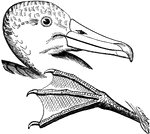
"Diomedea brachyura. Short-tailed Albatross. Bill 5.00 or 6.00 inches long, with long, with moderately concave culmen and prominent hook. Frontal feathers forming almost no reentrance on culmen, running nearly straight around whole base of upper mandible, and extending scarcely farther on sides of under mandible, with hardly any convexity. Tail very short, contained rather more than 3 times in length of wing. Adult plumage white, the head and neck usually washed with shining rusty-yellow; wings and tail dark or blackish, with a wholly indeterminate amount of white on the coverts and inner quills - sometimes nearly all the wing-coverts white excepting a line along the border of the fore-arm - sometimes the white restricted to a small space at the elbow. Bill pale reddish-yellow, drying pale dingy-yellowish; feet flesh-color." Elliot Coues, 1884

Bill and Foot of a Short-tailed Albatross

"Diomedea brachyura. Short-tailed Albatross. Bill 5.00 or 6.00 inches long, with long, with moderately…
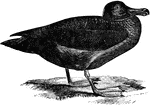
"Phoibetria fuliginosa. Sooty Albatross. Plumage ordinarily uniform sooty-brown; quills and tail blackish with white shafts; eyelids white; bill black, with long yellow (perhaps in life pink or red) groove; feet pale or flesh-color, drying yellow. In some cases the plumage lightens to a clearer more ashy-gray coloration on various prats. The head and neck frequently washed with rusty-yellow. Pacific ocean at large; off coast of N. Am." Elliot Coues, 1884

Sooty Albatross

"Phoibetria fuliginosa. Sooty Albatross. Plumage ordinarily uniform sooty-brown; quills and tail blackish…
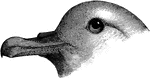
"Priocella tenuirostris. Slender-billed Fulmar. Adult: Plumage white, with clear pearly-blue mantle, and black primaries, just like a gull; the mantle beginning faintly on the nape, continuing over whole back, rump, tail, wing-coverts and inner quills; edge of the wing slaty-gray; primaries black, their shafts yellowish-white at base, their inner webs pearly-white to near the ends; white of first primary extending to within two inches of the tip, further on the rest successively, reaching the end on the 6th; outer webs of secondaries slaty-black, inner white; a small dusky spot before eye; a faint pearly shade on sides of breast and body. Bill and feet (dry) yellow; nasal tube and hood obscured with bluish horn-color." Elliot Coues, 1884

Slender-billed Fulmar

"Priocella tenuirostris. Slender-billed Fulmar. Adult: Plumage white, with clear pearly-blue mantle,…
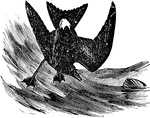
"Cymochorea leucorrhoa. Leach's Petrel. White-rumped Petrel. Coloration as in the last species (pygmy petrel), with white upper tail-coverts, forming a conspicuous mark; but apt to be lighter - rather of a grayish or even ashy hue on some parts; but easily recognized, whatever the shade of color. Bill and feet black; iris brown." Elliot Coues, 1884

Leach's Petrel

"Cymochorea leucorrhoa. Leach's Petrel. White-rumped Petrel. Coloration as in the last species (pygmy…
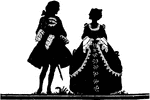
This is a black and white silhouette of a man and a woman.

Silhouette of a Man and Woman

This is a black and white silhouette of a man and a woman.

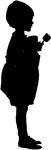
This is a black and white silhouette of a young boy holding a rose.

Silhouette of a Young Boy

This is a black and white silhouette of a young boy holding a rose.

This is a black and white silhouette of a boy playing on his play horse.

Silhouette of a Boy Playing

This is a black and white silhouette of a boy playing on his play horse.
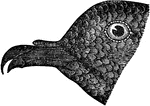
"Cymochorea melaena. Black Petrel. Form of the last very nearly; bill more robust; tarsus a little longer than middle toe and claw. No white anywhere. Plumage sooty brownish-black, darkest above and on head, more smoky-brown on under parts, grayer on wing-coverts, quite black on wing- and tail-feathers; bill and feet black; iris brown." Elliot Coues, 1884

Black Petrel

"Cymochorea melaena. Black Petrel. Form of the last very nearly; bill more robust; tarsus a little longer…
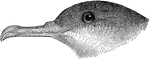
"Puffinus opisthomelas. Black-vented Shearwater. Dark color of upper parts extending farther on sides of head than in obscurus, leaving no white about eye. Under tail-coverts entirely sooty-blackish, except a few of the shortest just at the vent. More dark color on flanks, on lining of wings and axillars than in obscurus. In the dry state, bill yellowish or reddish-brown, the nasal tubes and culmen blackish, the hook mostly bluish-white. Outside of tarsus for the most part, outer toe and edges of webs, blackish; rest of foot pale yellowish flesh-color; "iris brown" Elliot Coues, 1884

Black-vented Shearwater

"Puffinus opisthomelas. Black-vented Shearwater. Dark color of upper parts extending farther on sides…
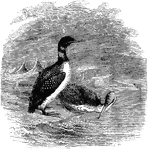
"Colymbus torquatus. Common Loon. Great Northern Diver. Adult: Bill black, the tip and cutting edges sometimes yellowish. Feet black. Iris red. Head and neck deep glossy greenish-black, with lustrous purplish reflections on the front and sides of the head. A patch of sharp white streaks on the throat, and another larger triangular patch of the same on each side of the neck lower down, the two last nearly or quite meeting behind, separate in front. Sides of breast striped with black and white. Entire upper parts, wing-coverts, inner secondaries, and sides under the wings, glossy black; all except the sides thickly marked with white spots; those of the scapulars, tertials, and middle back, large, square, and regular; those of other parts smaller, oval, smallest on rump, most numerous on wing-coverts. Upper tail-coverts greenish-black, immaculate. Wing-quills brownish-black, lighter on inner webs. Under surface of wings, axillars, and under parts generally from the neck, pure white; the lower belly with a dusky band. The white throat-patch consists usually of five or six streaks; in this, as in the lateral neck-stripes, the individual feathers are broadly black, with sharp white edges toward their ends." Elliot Coues, 1884

Loons

"Colymbus torquatus. Common Loon. Great Northern Diver. Adult: Bill black, the tip and cutting edges…
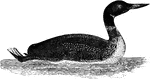
"Colymbus torquatus. Common Loon. Great Northern Diver. Adult: Bill black, the tip and cutting edges sometimes yellowish. Feet black. Iris red. Head and neck deep glossy greenish-black, with lustrous purplish reflections on the front and sides of the head. A patch of sharp white streaks on the throat, and another larger triangular patch of the same on each side of the neck lower down, the two last nearly or quite meeting behind, separate in front. Sides of breast striped with black and white. Entire upper parts, wing-coverts, inner secondaries, and sides under the wings, glossy black; all except the sides thickly marked with white spots; those of the scapulars, tertials, and middle back, large, square, and regular; those of other parts smaller, oval, smallest on rump, most numerous on wing-coverts. Upper tail-coverts greenish-black, immaculate. Wing-quills brownish-black, lighter on inner webs. Under surface of wings, axillars, and under parts generally from the neck, pure white; the lower belly with a dusky band. The white throat-patch consists usually of five or six streaks; in this, as in the lateral neck-stripes, the individual feathers are broadly black, with sharp white edges toward their ends." Elliot Coues, 1884

Common Loon

"Colymbus torquatus. Common Loon. Great Northern Diver. Adult: Bill black, the tip and cutting edges…
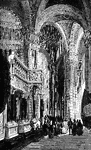
The Cathedral of Siena is a Roman Catholic Marian church located in Siena, central Italy. A medieval church, it was completed in 1263. The interior of the church is designed with black and white marble stripes on the columns and the walls. These black and white stripes represent the coat of arms of Siena. The entire floor of the church is covered with an inlaid marble mosaic.

Cathedral of Sienna

The Cathedral of Siena is a Roman Catholic Marian church located in Siena, central Italy. A medieval…
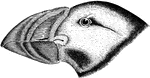
"Fratercula arctica. Common Puffin. Sea Parrot. Crown of head grayish-black, sharply defined against color of sides of head, separated by a slight ashy cervical collar from the dark color of the upper parts. Sides of head, with chin and throat, ashy-white nearly white between eyes and bill, with a dark ashy patch on side of throat. Upper parts glossy blue-black, continuous with a broad collar around the neck in front, not extending to the bill. A narrow line of white along border of fore-arm. Under parts from the neck pure white, the long feathers of the sides and flanks blackish. Under surface of wings pearly-gray; inner webs of primaries and secondaries grayish-brown, the shafts brown, with black ends and whitish bases. Iris brown. Eyelids vermilion-red, the excrescences grayish-blue. Basal collar of bill and first ridge dull yellowish; nasal saddle and corresponding shoe of lower mandible grayish-blue; rest of bill vermilion-red, the tip of the lower mandible and two terminal grooves often yellowish; rosette of mouth orange-yellow; feet coral or vermilion-red; claws black." Elliot Coues, 1884

Puffin

"Fratercula arctica. Common Puffin. Sea Parrot. Crown of head grayish-black, sharply defined against…
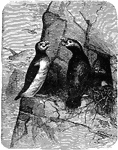
"Fratercula corniculata Horned Masking Puffin. Crown of head grayish-black, narrowing to a point at base of culmen. Sindes of head white; the postocular furrow and sides of lower jaw ashy. A distinct narrow line of white along edge of fore-arm. Entire upper parts glossy blue-black; a sootier shade of black encircling the fore-neck, running forward on throat to bill. Other under parts white, except a few elongated blackish feathers on sides of flanks. Lining of wings pearly-ash. Bill entirely vermilion-red, even the basal collar; edges of eyelids red; excrescences of eyelids bluish-gray; iris brown; feet orange-red, the webs tinged with vermilion; claws brownish-black; rosette of mouth bright yellow-orange. Lunda cirrata. Tufted Puffin. Crests about 4 inches long, straw-yellow, some of the posterior feathers black at base; these bundles of silky, glossy feathers with very delicate shafts and loosened webs; they chiefly sprout from what corresponds to the furrow in the plumage of F. artica. Face white, broadly of this color on sides of head to beyond eyes (as far as the crests), narrowly across forehead and chin, the bill being thus entirely surrounded by white. Crown between the crests, and entire upper parts, excepting the extreme forehead and a line along the forearm, glossy blue-black. Entire under parts, excepting extreme chin, and including sides of hind head and sides of neck, sooty brownish-black, more grayish on the belly, the lining of wings smoky-gray, the under tail-coverts quite black. Wings and tail black, their inner webs brownish-black, the shaft of the primary whitish underneath near base. Bill, feet, and eye-ring vermilion-red; the basil parts of the bill when about to desquamate showing more yellowish or enamel color, or even showing the living color of the subjacent membrane. Rosette of mouth yellow. Claws black." Elliot Coues, 1884

Horned and Tufted Puffins

"Fratercula corniculata Horned Masking Puffin. Crown of head grayish-black, narrowing to a point at…
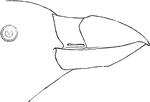
"Lunda cirrata. Tufted Puffin. Crests about 4 inches long, straw-yellow, some of the posterior feathers black at base; these bundles of silky, glossy feathers with very delicate shafts and loosened webs; they chiefly sprout from what corresponds to the furrow in the plumage of F. artica. Face white, broadly of this color on sides of head to beyond eyes (as far as the crests), narrowly across forehead and chin, the bill being thus entirely surrounded by white. Crown between the crests, and entire upper parts, excepting the extreme forehead and a line along the forearm, glossy blue-black. Entire under parts, excepting extreme chin, and including sides of hind head and sides of neck, sooty brownish-black, more grayish on the belly, the lining of wings smoky-gray, the under tail-coverts quite black. Wings and tail black, their inner webs brownish-black, the shaft of the primary whitish underneath near base. Bill, feet, and eye-ring vermilion-red; the basil parts of the bill when about to desquamate showing more yellowish or enamel color, or even showing the living color of the subjacent membrane. Rosette of mouth yellow. Claws black." Elliot Coues, 1884

Tufted Puffin Bill

"Lunda cirrata. Tufted Puffin. Crests about 4 inches long, straw-yellow, some of the posterior feathers…
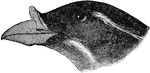
"Ceratorhina monocerata. Unicorn Auk. Horn-bill Auk. Adults in summer: Bill orange-yellow. Culmen and base of upper mandible dusky; feet some yellow color, the tarsi behind and the soles blackish; claws black. The sharp feathers of the head white, about an inch long. Entire upper parts glossy blue-black; a line of white along edge of forearm. Sides of head and neck, of body along under the wings, with chin, throat, and fore-breast, clear grayish-ash, or pale bluish-gray; under parts from breast pure white, shading insensibly into the color of the sides and flanks. Inner webs of wing- and tail-feathers grayish-brown, paler toward base, the shafts of the primaries dull whitish at base." Elliot Coues, 1884

Horn-billed Auk in Summer

"Ceratorhina monocerata. Unicorn Auk. Horn-bill Auk. Adults in summer: Bill orange-yellow. Culmen and…
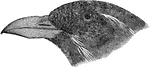
"Ceratorhina monocerata. Unicorn Auk. Horn-bill Auk. In winter: Bill orange-yellow. Culmen and base of upper mandible dusky; feet some yellow color, the tarsi behind and the soles blackish; claws black. The sharp feathers of the head white, about an inch long. Entire upper parts glossy blue-black; a line of white along edge of forearm. Sides of head and neck, of body along under the wings, with chin, throat, and fore-breast, clear grayish-ash, or pale bluish-gray; under parts from breast pure white, shading insensibly into the color of the sides and flanks. Inner webs of wing- and tail-feathers grayish-brown, paler toward base, the shafts of the primaries dull whitish at base." Elliot Coues, 1884

Horn-billed Auk in Winter

"Ceratorhina monocerata. Unicorn Auk. Horn-bill Auk. In winter: Bill orange-yellow. Culmen and base…
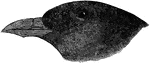
"Ceratorhina monocerata. Unicorn Auk. Horn-bill Auk. Young: Bill like that of adults in winter, lacking horn, but every way weaker, hardly more than half as large. Mostly dark-colored. No white feathers on side of head. White under parts overlaid and marbled with dark-gray ends of the feathers; black of upper parts brownish. The first spring the horn grows, the accessory piece develops, and the plumage clears up. Nestlings are covered with smoky-brown down." Elliot Coues, 1884

Young Horn-billed Auk

"Ceratorhina monocerata. Unicorn Auk. Horn-bill Auk. Young: Bill like that of adults in winter, lacking…
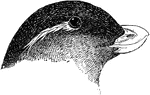
"Simorhynchus psittaculus. Parroquet Auk. Pug-nosed Auk. Adult in summer with the nasal saddle, moulted in one piece in winter; shape of bill not materially altered, however, the piece being small and flattish. Bill vermillion or coral-red, usually enamel-yellow at tip and along edges. No curly crest on forehead, but a series of long white filamentous feathers from the eye downward and backward. Entire upper parts, with chin, throat, breast, and flanks sooty brownish-black, grayer below than above; other under parts white; lining of wings dark. Feet dull greenish or yellowish, darker behind and below." Elliot Coues, 1884

Parroquet Auk

"Simorhynchus psittaculus. Parroquet Auk. Pug-nosed Auk. Adult in summer with the nasal saddle, moulted…
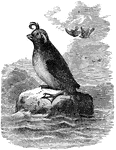
"Simorhynchus cristatellus. Crested Auk. Snub-nosed Auk. The whole plumage otherwise sooty - more brownish-black above, more brownish-gray below. Feet bluish, with dark webs. Aside the transformation of the bill, the young differ in lacking the crest and white filaments; but both are early acquired; there is a white spot below eye. The summer and winter plumages are alike. Iris said to be in winter white, in summer with a blackish outer and bluish inner ring; in the young, brown." Elliot Coues, 1884

Crested Auk

"Simorhynchus cristatellus. Crested Auk. Snub-nosed Auk. The whole plumage otherwise sooty - more brownish-black…
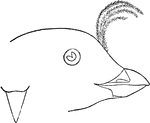
"Simorhynchus cristatellus. Crested Auk. Snub-nosed Auk. A beautiful crest of 12-20 slender feathers springing from the forehead, curling over forward in arc of a circle to fall gracefully upon the bill; this helmet is blackish; at full length about 2 inches long; the feathers are not filamentous, but have well formed webs, and are bundled or impacted together, owning to the oblique divergence of the webs from the shaft, as in the genus Laphortyx. A slender series of white filamentous feathers over and behind each eye, drooping downwards and backwards." Elliot Coues, 1884

Crested Auk in Winter

"Simorhynchus cristatellus. Crested Auk. Snub-nosed Auk. A beautiful crest of 12-20 slender feathers…
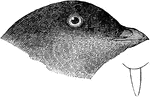
"Simorhynchus pygmaeus. Whiskered Auk. Red-nosed Auk. Bill very small and weak, much compressed. No sign of crest nor of white feathers on head. Above blackish-cinereous, quite black on head, wings, and tail; under parts lighter and more grayish-plumbeous, bleaching on the belly and crissum. Bill reddish-dusky; tarsi behind and soles black; eye black and white." Elliot Coues, 1884

Young Whiskered Auk

"Simorhynchus pygmaeus. Whiskered Auk. Red-nosed Auk. Bill very small and weak, much compressed. No…
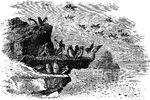
"Simorhynchus pusillus. Least Auk. Knob-nosed Auk. Bill small and simple, but stout for its length, scarcely higher than wide at base, rather obtuse at tip. A small knob or tubercle at the base of the culmen, which is deciduous. No crest; but front, and sides of head more or less thickly lined with delicate white thready feathers; a similar series, exceedingly fine, from the eye along sides of hind head and nape. Excepting these filaments, the entire upper parts glossy black; region about under mandible, and a few feathers along the sides of body and flanks, blackish; under parts white, more or less extensively mottles or clouded with blackish. Lining of wings white, with dark feathers along edge. Bill red, the know and base of upper mandible dark. Legs (dry) undefinably dark, the front of tarsus and tops of toes lighter." Elliot Coues, 1884

Least Auks

"Simorhynchus pusillus. Least Auk. Knob-nosed Auk. Bill small and simple, but stout for its length,…
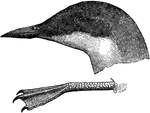
"Brachyrhamphus craverii. Craveri's Murrelet. Entire upper parts unvararied cinereous, slightly darker on head; this color extending on head to include eyelids, and a little farther down on the nape; thence in a straight line along middle of side of neck to shoulders, thence along sides of body in a strip nearly an inch broad, the elongated flank-feathers being also of this color; other under parts pure white, under surface of wing dark. Primaries black, the greater part of their shafts and inner webs whitish. Bill black, the base of lower mandible pale; feet whitish-blue, black below." Elliot Coues, 1884

Craveri's Murrelet

"Brachyrhamphus craverii. Craveri's Murrelet. Entire upper parts unvararied cinereous, slightly darker…
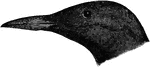
"Lomvia troile. Common Guillemot, or Murre. Adult in summer: Head and neck all around rich dark maroon brown, changing on upper parts into dark slaty-brown, nearly uniform, but most of the feathers of the back and rump with slightly lighter, more grayish-brown, edges. Secondaries narrowly but distinctly tipped with white. Under parts from the throat pure white, the sides and flanks marked with dusky or slaty, the lining of the wings varied with white and dusky. Bill black; mouth yellow; eyes brown; feet blackish. In some cases, not in most, a white "eye-glass," consisting of a rim around eye and handle back of eye in the furrow of the plumage." Elliot Coues, 1884

Common Guillemot

"Lomvia troile. Common Guillemot, or Murre. Adult in summer: Head and neck all around rich dark maroon…
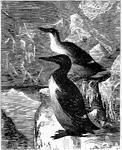
"Lomvia troile. Common Guillemot, or Murre. Adult in summer: Head and neck all around rich dark maroon brown, changing on upper parts into dark slaty-brown, nearly uniform, but most of the feathers of the back and rump with slightly lighter, more grayish-brown, edges. Secondaries narrowly but distinctly tipped with white. Under parts from the throat pure white, the sides and flanks marked with dusky or slaty, the lining of the wings varied with white and dusky. Bill black; mouth yellow; eyes brown; feet blackish. In some cases, not in most, a white "eye-glass," consisting of a rim around eye and handle back of eye in the furrow of the plumage." Elliot Coues, 1884

Murres

"Lomvia troile. Common Guillemot, or Murre. Adult in summer: Head and neck all around rich dark maroon…
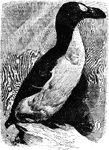
"Alca Impennis. The Great Auk. A great white oval spot between eye and bill. Hood and mantle dark; under parts white, extending in a point on the throat; ends of secondaries white. Bill black, with white grooves; feet dark." Elliot Coues, 1884

Great Auk

"Alca Impennis. The Great Auk. A great white oval spot between eye and bill. Hood and mantle dark; under…
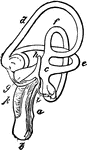
"Membranous labyrinth of Haliaetus albicilla (White-tailed Eagle), X2.  a,b, cochlea; b, its saccular extremity (or lagena); c, vestibule; g, its utricle; d, anterior of superior vertical semicircular canal; e, external or horizontal semicircular canal; f, posterior of inferior vertical semicircular canal; h, membranous canal leading into aqueduct of the vestibule; k, vascular membrane covering the scala vestibuli; opposite this, at i, are seen the edges of the cartilaginous prisms in the fenestra rotunda; from the edges of these cartilages proceeds the delicate membrane closing the opening of the cochlea (not shown in the fi.)" Elliot Coues, 1884

The Inner Ear of an Eagle

"Membranous labyrinth of Haliaetus albicilla (White-tailed Eagle), X2. a,b, cochlea; b, its saccular…
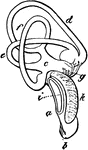
"Membranous labyrinth of Haliaetus albicilla (White-tailed Eagle), X2.  a,b, cochlea; b, its saccular extremity (or lagena); c, vestibule; g, its utricle; d, anterior of superior vertical semicircular canal; e, external or horizontal semicircular canal; f, posterior of inferior vertical semicircular canal; h, membranous canal leading into aqueduct of the vestibule; k, vascular membrane covering the scala vestibuli; opposite this, at i, are seen the edges of the cartilaginous prisms in the fenestra rotunda; from the edges of these cartilages proceeds the delicate membrane closing the opening of the cochlea (not shown in the fi.)" Elliot Coues, 1884

The Inner Ear of a White-tailed Eagle

"Membranous labyrinth of Haliaetus albicilla (White-tailed Eagle), X2. a,b, cochlea; b, its saccular…
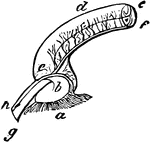
"Part of the superior vertical semicircular canal, showing its ampulla (which is the dilatation of the base of any semicircular canal), nerve of ampulla, artery connective tissue of the perilymph, X3, a, that part of the vestibule (alveus) next to the ampulla; b, the idlatation of the ampulla at its vestibular opening; c, where it passes into the canal proper; d, the canal, furnished with connective of the perilymph along its concave border and sides, as appears clearly at the sections e and f; g, nerve of the ampulla; h, artery of the connective tissue, running beneath it, remote from the wall of the duct." Elliot Coues, 1884

Eagle's Ampulal

"Part of the superior vertical semicircular canal, showing its ampulla (which is the dilatation of the…
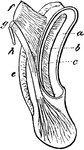
"Cochlea, X3. a, external, b, internal, cartilaginous prism; c, membranous zone; d, saccular extremity of the cochlea, or lagena; e, vascular membrane; f, auditory nerve, its middle fascicle penetrating the internal cartilaginous prism, to reach the membranous zone by its terminal filaments; g, auditory nerve, its posterior fascicle, running to the most posterior part of the lagena; h, filament to ampulla of posterior or inferior vertical semicircular canal." Elliot Coues, 1884

Eagle Cochlea

"Cochlea, X3. a, external, b, internal, cartilaginous prism; c, membranous zone; d, saccular extremity…
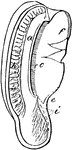
"Section of the cochlea, X3. a, vestibular surface of external cartilaginous prism, extending into d, the lagena; c, section of the membranous zone; e, Huschke's process of the fenestra, which, with the margins of the cartilaginous prisms, affords attachment Treviranus; i, canals in posterior wall of the lagena, by which the nervous filaments enter its cavity." Elliot Coues, 1884

A Section of an Eagle's Cochlea

"Section of the cochlea, X3. a, vestibular surface of external cartilaginous prism, extending into d,…
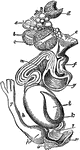
"Female organs of domestic fowl, in activity; from Owen, after Carus. a, b, c, d, mass of ovarian ova, in all stages of development; b, a ripe one; c, its stigma, where the ovisac or calyx ruptures; d, a ruptured empty calyx, to be absorbed; e, infundibulum, or funnel-shaped orifice of the oviduct; f, next portion of oviduct; g, follicular art of oviduct; m, mesometry, membrane steadying the oviduct; the reference line, m, crosses the constricted part or isthmus of the oviduct; these parts secrete the white of the egg; k, shell-forming or uterine part of oviduct, in which is a completed egg, i; l, lowest or vaginal part of oviduct, opening into uro-genital sinus of the cloaca; n, anus." Elliot Coues, 1884

Female Fowl Organs

"Female organs of domestic fowl, in activity; from Owen, after Carus. a, b, c, d, mass of ovarian ova,…