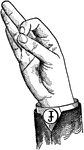
Vowels have a wide, firm, and free channel, whereby the breath is modified without friction or sibilation. &hellip; in representing vowels the hand suggests a wide and firm channel, by having the accented finger bent and its terminal phalanx brought firmly in contact with the terminal phalanx of the thumb. <p> Vowel positions are distinguished by always having the voice phalanx of the thumb accented and in contact with the terminal phalanx of the accented finger. This kind of accent is the strongest which can be given a finger, and so always takes precedence. Two modes of accentuation may not co-exist. Round Vowels differ visibly from normal aperture Vowels by having a contraction of the Lip aperture. This is shown by bringing the terminal phalanges of the thumb and the accented finger together so as to form an outline which is approximately round. Back Vowels have the palm in the posterior position. Wide Vowel positions differ from analogous Primary Vowel positions by having straightened unaccented fingers, to denote "Wide." Low Vowels have the first or index finger accented.

Round Back Wide Low Vowel

Vowels have a wide, firm, and free channel, whereby the breath is modified without friction or sibilation.…
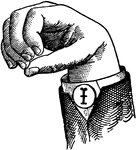
Vowels have a wide, firm, and free channel, whereby the breath is modified without friction or sibilation. &hellip; in representing vowels the hand suggests a wide and firm channel, by having the accented finger bent and its terminal phalanx brought firmly in contact with the terminal phalanx of the thumb. <p> Vowel positions are distinguished by always having the voice phalanx of the thumb accented and in contact with the terminal phalanx of the accented finger. This kind of accent is the strongest which can be given a finger, and so always takes precedence. Two modes of accentuation may not co-exist. Round Vowels differ visibly from normal aperture Vowels by having a contraction of the Lip aperture. This is shown by bringing the terminal phalanges of the thumb and the accented finger together so as to form an outline which is approximately round. Mixed Vowels have the palm thrown forward so as to assume a compromising position. In Primary Vowel positions the accented voice phalanx of the thumb and the terminal phalanx of the accented finger overlap. None of the unaccented fingers are straightened. High Vowels have the third finger accented

Round Mixed Primary High Vowel

Vowels have a wide, firm, and free channel, whereby the breath is modified without friction or sibilation.…
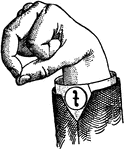
Vowels have a wide, firm, and free channel, whereby the breath is modified without friction or sibilation. &hellip; in representing vowels the hand suggests a wide and firm channel, by having the accented finger bent and its terminal phalanx brought firmly in contact with the terminal phalanx of the thumb. <p> Vowel positions are distinguished by always having the voice phalanx of the thumb accented and in contact with the terminal phalanx of the accented finger. This kind of accent is the strongest which can be given a finger, and so always takes precedence. Two modes of accentuation may not co-exist. Round Vowels differ visibly from normal aperture Vowels by having a contraction of the Lip aperture. This is shown by bringing the terminal phalanges of the thumb and the accented finger together so as to form an outline which is approximately round. Mixed Vowels have the palm thrown forward so as to assume a compromising position. In Primary Vowel positions the accented voice phalanx of the thumb and the terminal phalanx of the accented finger overlap. None of the unaccented fingers are straightened. Mid Vowels have the center finger accented.

Round Mixed Primary Mid Vowel

Vowels have a wide, firm, and free channel, whereby the breath is modified without friction or sibilation.…
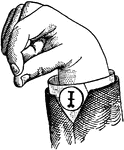
Vowels have a wide, firm, and free channel, whereby the breath is modified without friction or sibilation. &hellip; in representing vowels the hand suggests a wide and firm channel, by having the accented finger bent and its terminal phalanx brought firmly in contact with the terminal phalanx of the thumb. <p> Vowel positions are distinguished by always having the voice phalanx of the thumb accented and in contact with the terminal phalanx of the accented finger. This kind of accent is the strongest which can be given a finger, and so always takes precedence. Two modes of accentuation may not co-exist. Mixed Vowels have the palm thrown forward so as to assume a compromising position. In Primary Vowel positions the accented voice phalanx of the thumb and the terminal phalanx of the accented finger overlap. None of the unaccented fingers are straightened. Wide Vowel positions differ from analogous Primary Vowel positions by having straightened unaccented fingers, to denote "Wide." Low Vowels have the first or index finger accented.

Round Mixed Primary Low Vowel

Vowels have a wide, firm, and free channel, whereby the breath is modified without friction or sibilation.…
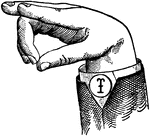
Vowels have a wide, firm, and free channel, whereby the breath is modified without friction or sibilation. &hellip; in representing vowels the hand suggests a wide and firm channel, by having the accented finger bent and its terminal phalanx brought firmly in contact with the terminal phalanx of the thumb. <p> Vowel positions are distinguished by always having the voice phalanx of the thumb accented and in contact with the terminal phalanx of the accented finger. This kind of accent is the strongest which can be given a finger, and so always takes precedence. Two modes of accentuation may not co-exist. Round Vowels differ visibly from normal aperture Vowels by having a contraction of the Lip aperture. This is shown by bringing the terminal phalanges of the thumb and the accented finger together so as to form an outline which is approximately round. Mixed Vowels have the palm thrown forward so as to assume a compromising position. Wide Vowel positions differ from analogous Primary Vowel positions by having straightened unaccented fingers, to denote "Wide." High Vowels have the third finger accented

Round Mixed Wide High Vowel

Vowels have a wide, firm, and free channel, whereby the breath is modified without friction or sibilation.…
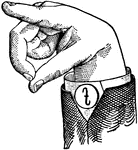
Vowels have a wide, firm, and free channel, whereby the breath is modified without friction or sibilation. &hellip; in representing vowels the hand suggests a wide and firm channel, by having the accented finger bent and its terminal phalanx brought firmly in contact with the terminal phalanx of the thumb. <p> Vowel positions are distinguished by always having the voice phalanx of the thumb accented and in contact with the terminal phalanx of the accented finger. This kind of accent is the strongest which can be given a finger, and so always takes precedence. Two modes of accentuation may not co-exist. Round Vowels differ visibly from normal aperture Vowels by having a contraction of the Lip aperture. This is shown by bringing the terminal phalanges of the thumb and the accented finger together so as to form an outline which is approximately round. Mixed Vowels have the palm thrown forward so as to assume a compromising position. Wide Vowel positions differ from analogous Primary Vowel positions by having straightened unaccented fingers, to denote "Wide." Mid Vowels have the center finger accented.

Round Mixed Wide Mid Vowel

Vowels have a wide, firm, and free channel, whereby the breath is modified without friction or sibilation.…
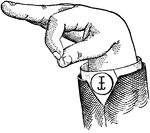
Vowels have a wide, firm, and free channel, whereby the breath is modified without friction or sibilation. &hellip; in representing vowels the hand suggests a wide and firm channel, by having the accented finger bent and its terminal phalanx brought firmly in contact with the terminal phalanx of the thumb. <p> Vowel positions are distinguished by always having the voice phalanx of the thumb accented and in contact with the terminal phalanx of the accented finger. This kind of accent is the strongest which can be given a finger, and so always takes precedence. Two modes of accentuation may not co-exist. Mixed Vowels have the palm thrown forward so as to assume a compromising position. Wide Vowel positions differ from analogous Primary Vowel positions by having straightened unaccented fingers, to denote "Wide." Low Vowels have the first or index finger accented.

Round Mixed Wide Low Vowel

Vowels have a wide, firm, and free channel, whereby the breath is modified without friction or sibilation.…
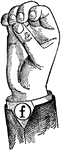
Vowels have a wide, firm, and free channel, whereby the breath is modified without friction or sibilation. &hellip; in representing vowels the hand suggests a wide and firm channel, by having the accented finger bent and its terminal phalanx brought firmly in contact with the terminal phalanx of the thumb. <p> Vowel positions are distinguished by always having the voice phalanx of the thumb accented and in contact with the terminal phalanx of the accented finger. This kind of accent is the strongest which can be given a finger, and so always takes precedence. Two modes of accentuation may not co-exist. Round Vowels differ visibly from normal aperture Vowels by having a contraction of the Lip aperture. This is shown by bringing the terminal phalanges of the thumb and the accented finger together so as to form an outline which is approximately round. Front Vowels have the palm in the anterior position.  In Primary Vowel positions the accented voice phalanx of the thumb and the terminal phalanx of the accented finger overlap. None of the unaccented fingers are straightened.  High Vowels have the third finger accented

Round Front Primary High Vowel

Vowels have a wide, firm, and free channel, whereby the breath is modified without friction or sibilation.…

Vowels have a wide, firm, and free channel, whereby the breath is modified without friction or sibilation. &hellip; in representing vowels the hand suggests a wide and firm channel, by having the accented finger bent and its terminal phalanx brought firmly in contact with the terminal phalanx of the thumb. <p> Vowel positions are distinguished by always having the voice phalanx of the thumb accented and in contact with the terminal phalanx of the accented finger. This kind of accent is the strongest which can be given a finger, and so always takes precedence. Two modes of accentuation may not co-exist. Front Vowels have the palm in the anterior position. In Primary Vowel positions the accented voice phalanx of the thumb and the terminal phalanx of the accented finger overlap. None of the unaccented fingers are straightened. Mid Vowels have the center finger accented.

Round Front Primary Mid Vowel

Vowels have a wide, firm, and free channel, whereby the breath is modified without friction or sibilation.…
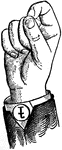
Vowels have a wide, firm, and free channel, whereby the breath is modified without friction or sibilation. &hellip; in representing vowels the hand suggests a wide and firm channel, by having the accented finger bent and its terminal phalanx brought firmly in contact with the terminal phalanx of the thumb. <p> Vowel positions are distinguished by always having the voice phalanx of the thumb accented and in contact with the terminal phalanx of the accented finger. This kind of accent is the strongest which can be given a finger, and so always takes precedence. Two modes of accentuation may not co-exist. Front Vowels have the palm in the anterior position. In Primary Vowel positions the accented voice phalanx of the thumb and the terminal phalanx of the accented finger overlap. None of the unaccented fingers are straightened. Low Vowels have the first or index finger accented.

Round Front Primary Low Vowel

Vowels have a wide, firm, and free channel, whereby the breath is modified without friction or sibilation.…
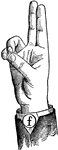
Vowels have a wide, firm, and free channel, whereby the breath is modified without friction or sibilation. &hellip; in representing vowels the hand suggests a wide and firm channel, by having the accented finger bent and its terminal phalanx brought firmly in contact with the terminal phalanx of the thumb. <p> Vowel positions are distinguished by always having the voice phalanx of the thumb accented and in contact with the terminal phalanx of the accented finger. This kind of accent is the strongest which can be given a finger, and so always takes precedence. Two modes of accentuation may not co-exist. Round Vowels differ visibly from normal aperture Vowels by having a contraction of the Lip aperture. This is shown by bringing the terminal phalanges of the thumb and the accented finger together so as to form an outline which is approximately round. Front Vowels have the palm in the anterior position. Wide Vowel positions differ from analogous Primary Vowel positions by having straightened unaccented fingers, to denote "Wide." High Vowels have the third finger accented

Round Front Wide High Vowel

Vowels have a wide, firm, and free channel, whereby the breath is modified without friction or sibilation.…
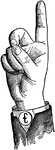
Vowels have a wide, firm, and free channel, whereby the breath is modified without friction or sibilation. &hellip; in representing vowels the hand suggests a wide and firm channel, by having the accented finger bent and its terminal phalanx brought firmly in contact with the terminal phalanx of the thumb. <p> Vowel positions are distinguished by always having the voice phalanx of the thumb accented and in contact with the terminal phalanx of the accented finger. This kind of accent is the strongest which can be given a finger, and so always takes precedence. Two modes of accentuation may not co-exist. Front Vowels have the palm in the anterior position. Wide Vowel positions differ from analogous Primary Vowel positions by having straightened unaccented fingers, to denote "Wide." Mid Vowels have the center finger accented.

Round Front Wide Mid Vowel

Vowels have a wide, firm, and free channel, whereby the breath is modified without friction or sibilation.…
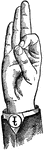
Vowels have a wide, firm, and free channel, whereby the breath is modified without friction or sibilation. &hellip; in representing vowels the hand suggests a wide and firm channel, by having the accented finger bent and its terminal phalanx brought firmly in contact with the terminal phalanx of the thumb. <p> Vowel positions are distinguished by always having the voice phalanx of the thumb accented and in contact with the terminal phalanx of the accented finger. This kind of accent is the strongest which can be given a finger, and so always takes precedence. Two modes of accentuation may not co-exist. Front Vowels have the palm in the anterior position. Wide Vowel positions differ from analogous Primary Vowel positions by having straightened unaccented fingers, to denote "Wide." Low Vowels have the first or index finger accented.

Round Front Wide Low Vowel

Vowels have a wide, firm, and free channel, whereby the breath is modified without friction or sibilation.…
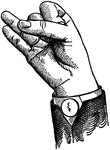
Glides are only transitional sounds. They are intermediate to Consonants and Vowels, combining the characteristics of certain central-aperature consonants with the wide or expanded quality of vowels, but differing from vowels in not having a fixed configuration. ...in representing glides the peculiarities of consonants and vowels are blended: the accented fingers, by being straightened, contribute a consonant characteristic; while the second phalanx of the thumb, by being held at an angle to the plane of the palm, imparts to the glide positions the wide, without giving them the firm, quality of vowel positions. <p> Glides-Indicated positions are distinguished by having the accent finger straightened, and the accented voice phalanx of the thumb in contact with that finger's second phalanx. They are adapted to illustrate the easy transition from Vowel to Glide. Glides-Indicated possess exactly the same phonetic value and significance as the Glides which they respectively replace. When used with a High Vowel, have the third finger accented. Primary glides-indicated have closed unaccented fingers. Back Glide-Indicated positions, being posterior, have the palm held laterally at an angle to the arm.

Indicated High Primary Back Glide

Glides are only transitional sounds. They are intermediate to Consonants and Vowels, combining the characteristics…
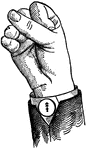
Glides are only transitional sounds. They are intermediate to Consonants and Vowels, combining the characteristics of certain central-aperature consonants with the wide or expanded quality of vowels, but differing from vowels in not having a fixed configuration. ...in representing glides the peculiarities of consonants and vowels are blended: the accented fingers, by being straightened, contribute a consonant characteristic; while the second phalanx of the thumb, by being held at an angle to the plane of the palm, imparts to the glide positions the wide, without giving them the firm, quality of vowel positions. <p> Glides-Indicated positions are distinguished by having the accent finger straightened, and the accented voice phalanx of the thumb in contact with that finger's second phalanx. They are adapted to illustrate the easy transition from Vowel to Glide. Glides-Indicated possess exactly the same phonetic value and significance as the Glides which they respectively replace. When used with a High Vowel, have the third finger accented.  Primary glides-indicated have closed unaccented fingers.  Lip Glide-Indicated positions, being anterior, have the palm upright and in line with the arm.

Indicated High Primary Top Glide

Glides are only transitional sounds. They are intermediate to Consonants and Vowels, combining the characteristics…
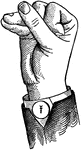
Glides are only transitional sounds. They are intermediate to Consonants and Vowels, combining the characteristics of certain central-aperature consonants with the wide or expanded quality of vowels, but differing from vowels in not having a fixed configuration. ...in representing glides the peculiarities of consonants and vowels are blended: the accented fingers, by being straightened, contribute a consonant characteristic; while the second phalanx of the thumb, by being held at an angle to the plane of the palm, imparts to the glide positions the wide, without giving them the firm, quality of vowel positions. <p> Glides-Indicated positions are distinguished by having the accent finger straightened, and the accented voice phalanx of the thumb in contact with that finger's second phalanx. They are adapted to illustrate the easy transition from Vowel to Glide. Glides-Indicated possess exactly the same phonetic value and significance as the Glides which they respectively replace. When used with a High Vowel, have the third finger accented.  Primary glides-indicated have closed unaccented fingers.  Point Glide-Indicated positions, being anterior, have the palm upright and in line with the arm.

Indicated High Primary Point Glide

Glides are only transitional sounds. They are intermediate to Consonants and Vowels, combining the characteristics…
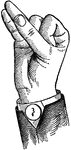
Glides are only transitional sounds. They are intermediate to Consonants and Vowels, combining the characteristics of certain central-aperature consonants with the wide or expanded quality of vowels, but differing from vowels in not having a fixed configuration. ...in representing glides the peculiarities of consonants and vowels are blended: the accented fingers, by being straightened, contribute a consonant characteristic; while the second phalanx of the thumb, by being held at an angle to the plane of the palm, imparts to the glide positions the wide, without giving them the firm, quality of vowel positions. <p> Glides-Indicated positions are distinguished by having the accent finger straightened, and the accented voice phalanx of the thumb in contact with that finger's second phalanx. They are adapted to illustrate the easy transition from Vowel to Glide. Glides-Indicated possess exactly the same phonetic value and significance as the Glides which they respectively replace. When used with a High Vowel, have the third finger accented.  Primary glides-indicated have closed unaccented fingers.  Lip Glide-Indicated positions, being anterior, have the palm upright and in line with the arm.

Indicated High Primary Lip Glide

Glides are only transitional sounds. They are intermediate to Consonants and Vowels, combining the characteristics…
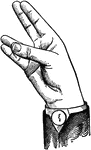
Glides are only transitional sounds. They are intermediate to Consonants and Vowels, combining the characteristics of certain central-aperature consonants with the wide or expanded quality of vowels, but differing from vowels in not having a fixed configuration. ...in representing glides the peculiarities of consonants and vowels are blended: the accented fingers, by being straightened, contribute a consonant characteristic; while the second phalanx of the thumb, by being held at an angle to the plane of the palm, imparts to the glide positions the wide, without giving them the firm, quality of vowel positions. <p> Glides-Indicated positions are distinguished by having the accent finger straightened, and the accented voice phalanx of the thumb in contact with that finger's second phalanx. They are adapted to illustrate the easy transition from Vowel to Glide. Glides-Indicated possess exactly the same phonetic value and significance as the Glides which they respectively replace. When used with a High Vowel, have the third finger accented.  Straightened unaccented fingers should be employed only to indicate "Wide".  Back Glide-Indicated positions, being posterior, have the palm held laterally at an angle to the arm.

Indicated High Wide Back Glide

Glides are only transitional sounds. They are intermediate to Consonants and Vowels, combining the characteristics…
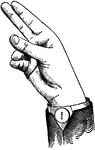
Glides are only transitional sounds. They are intermediate to Consonants and Vowels, combining the characteristics of certain central-aperature consonants with the wide or expanded quality of vowels, but differing from vowels in not having a fixed configuration. ...in representing glides the peculiarities of consonants and vowels are blended: the accented fingers, by being straightened, contribute a consonant characteristic; while the second phalanx of the thumb, by being held at an angle to the plane of the palm, imparts to the glide positions the wide, without giving them the firm, quality of vowel positions. <p> Glides-Indicated positions are distinguished by having the accent finger straightened, and the accented voice phalanx of the thumb in contact with that finger's second phalanx. They are adapted to illustrate the easy transition from Vowel to Glide. Glides-Indicated possess exactly the same phonetic value and significance as the Glides which they respectively replace. When used with a High Vowel, have the third finger accented.  Straightened unaccented fingers should be employed only to indicate "Wide".  Top Glide-Indicated positions have the lower phalanges of the fingers at right angles to the plane of the palm.

Indicated High Wide Top Glide

Glides are only transitional sounds. They are intermediate to Consonants and Vowels, combining the characteristics…
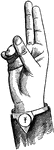
Glides are only transitional sounds. They are intermediate to Consonants and Vowels, combining the characteristics of certain central-aperature consonants with the wide or expanded quality of vowels, but differing from vowels in not having a fixed configuration. ...in representing glides the peculiarities of consonants and vowels are blended: the accented fingers, by being straightened, contribute a consonant characteristic; while the second phalanx of the thumb, by being held at an angle to the plane of the palm, imparts to the glide positions the wide, without giving them the firm, quality of vowel positions. <p> Glides-Indicated positions are distinguished by having the accent finger straightened, and the accented voice phalanx of the thumb in contact with that finger's second phalanx. They are adapted to illustrate the easy transition from Vowel to Glide. Glides-Indicated possess exactly the same phonetic value and significance as the Glides which they respectively replace. When used with a High Vowel, have the third finger accented.  Straightened unaccented fingers should be employed only to indicate "Wide".  Point Glide-Indicated positions, being anterior, have the palm upright and in line with the arm.

Indicated High Wide Point Glide

Glides are only transitional sounds. They are intermediate to Consonants and Vowels, combining the characteristics…
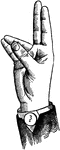
Glides are only transitional sounds. They are intermediate to Consonants and Vowels, combining the characteristics of certain central-aperature consonants with the wide or expanded quality of vowels, but differing from vowels in not having a fixed configuration. ...in representing glides the peculiarities of consonants and vowels are blended: the accented fingers, by being straightened, contribute a consonant characteristic; while the second phalanx of the thumb, by being held at an angle to the plane of the palm, imparts to the glide positions the wide, without giving them the firm, quality of vowel positions. <p> Glides-Indicated positions are distinguished by having the accent finger straightened, and the accented voice phalanx of the thumb in contact with that finger's second phalanx. They are adapted to illustrate the easy transition from Vowel to Glide. Glides-Indicated possess exactly the same phonetic value and significance as the Glides which they respectively replace. When used with a High Vowel, have the third finger accented.  Straightened unaccented fingers should be employed only to indicate "Wide".  Lip Glide-Indicated positions, being anterior, have the palm upright and in line with the arm.

Indicated High Wide Lip Glide

Glides are only transitional sounds. They are intermediate to Consonants and Vowels, combining the characteristics…
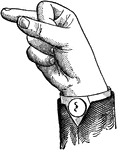
Glides are only transitional sounds. They are intermediate to Consonants and Vowels, combining the characteristics of certain central-aperature consonants with the wide or expanded quality of vowels, but differing from vowels in not having a fixed configuration. ...in representing glides the peculiarities of consonants and vowels are blended: the accented fingers, by being straightened, contribute a consonant characteristic; while the second phalanx of the thumb, by being held at an angle to the plane of the palm, imparts to the glide positions the wide, without giving them the firm, quality of vowel positions. <p> Glides-Indicated positions are distinguished by having the accent finger straightened, and the accented voice phalanx of the thumb in contact with that finger's second phalanx. They are adapted to illustrate the easy transition from Vowel to Glide. Glides-Indicated possess exactly the same phonetic value and significance as the Glides which they respectively replace. When used with a Mid, have the center finger accented.  Primary glides-indicated have closed unaccented fingers.  Back Glide-Indicated positions, being posterior, have the palm held laterally at an angle to the arm.

Indicated Mid Primary Back Glide

Glides are only transitional sounds. They are intermediate to Consonants and Vowels, combining the characteristics…
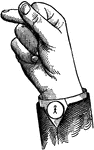
Glides are only transitional sounds. They are intermediate to Consonants and Vowels, combining the characteristics of certain central-aperature consonants with the wide or expanded quality of vowels, but differing from vowels in not having a fixed configuration. ...in representing glides the peculiarities of consonants and vowels are blended: the accented fingers, by being straightened, contribute a consonant characteristic; while the second phalanx of the thumb, by being held at an angle to the plane of the palm, imparts to the glide positions the wide, without giving them the firm, quality of vowel positions. <p> Glides-Indicated positions are distinguished by having the accent finger straightened, and the accented voice phalanx of the thumb in contact with that finger's second phalanx. They are adapted to illustrate the easy transition from Vowel to Glide. Glides-Indicated possess exactly the same phonetic value and significance as the Glides which they respectively replace. When used with a Mid, have the center finger accented.  Primary glides-indicated have closed unaccented fingers.  Top Glide-Indicated positions have the lower phalanges of the fingers at right angles to the plane of the palm.

Indicated Mid Primary Top Glide

Glides are only transitional sounds. They are intermediate to Consonants and Vowels, combining the characteristics…
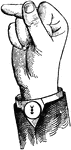
Glides are only transitional sounds. They are intermediate to Consonants and Vowels, combining the characteristics of certain central-aperature consonants with the wide or expanded quality of vowels, but differing from vowels in not having a fixed configuration. ...in representing glides the peculiarities of consonants and vowels are blended: the accented fingers, by being straightened, contribute a consonant characteristic; while the second phalanx of the thumb, by being held at an angle to the plane of the palm, imparts to the glide positions the wide, without giving them the firm, quality of vowel positions. <p> Glides-Indicated positions are distinguished by having the accent finger straightened, and the accented voice phalanx of the thumb in contact with that finger's second phalanx. They are adapted to illustrate the easy transition from Vowel to Glide. Glides-Indicated possess exactly the same phonetic value and significance as the Glides which they respectively replace. When used with a Mid, have the center finger accented.  Primary glides-indicated have closed unaccented fingers.  Point Glide-Indicated positions, being anterior, have the palm upright and in line with the arm.

Indicated Mid Primary Point Glide

Glides are only transitional sounds. They are intermediate to Consonants and Vowels, combining the characteristics…
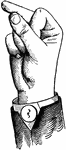
Glides are only transitional sounds. They are intermediate to Consonants and Vowels, combining the characteristics of certain central-aperature consonants with the wide or expanded quality of vowels, but differing from vowels in not having a fixed configuration. ...in representing glides the peculiarities of consonants and vowels are blended: the accented fingers, by being straightened, contribute a consonant characteristic; while the second phalanx of the thumb, by being held at an angle to the plane of the palm, imparts to the glide positions the wide, without giving them the firm, quality of vowel positions. <p> Glides-Indicated positions are distinguished by having the accent finger straightened, and the accented voice phalanx of the thumb in contact with that finger's second phalanx. They are adapted to illustrate the easy transition from Vowel to Glide. Glides-Indicated possess exactly the same phonetic value and significance as the Glides which they respectively replace. When used with a Mid, have the center finger accented.  Primary glides-indicated have closed unaccented fingers.  Lip Glide-Indicated positions, being anterior, have the palm upright and in line with the arm.

Indicated Mid Primary Lip Glide

Glides are only transitional sounds. They are intermediate to Consonants and Vowels, combining the characteristics…
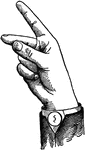
Glides are only transitional sounds. They are intermediate to Consonants and Vowels, combining the characteristics of certain central-aperature consonants with the wide or expanded quality of vowels, but differing from vowels in not having a fixed configuration. ...in representing glides the peculiarities of consonants and vowels are blended: the accented fingers, by being straightened, contribute a consonant characteristic; while the second phalanx of the thumb, by being held at an angle to the plane of the palm, imparts to the glide positions the wide, without giving them the firm, quality of vowel positions. <p> Glides-Indicated positions are distinguished by having the accent finger straightened, and the accented voice phalanx of the thumb in contact with that finger's second phalanx. They are adapted to illustrate the easy transition from Vowel to Glide. Glides-Indicated possess exactly the same phonetic value and significance as the Glides which they respectively replace. When used with a Mid, have the center finger accented.  Straightened unaccented fingers should be employed only to indicate "Wide".  Back Glide-Indicated positions, being posterior, have the palm held laterally at an angle to the arm.

Indicated Mid Wide Back Glide

Glides are only transitional sounds. They are intermediate to Consonants and Vowels, combining the characteristics…
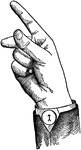
Glides are only transitional sounds. They are intermediate to Consonants and Vowels, combining the characteristics of certain central-aperature consonants with the wide or expanded quality of vowels, but differing from vowels in not having a fixed configuration. ...in representing glides the peculiarities of consonants and vowels are blended: the accented fingers, by being straightened, contribute a consonant characteristic; while the second phalanx of the thumb, by being held at an angle to the plane of the palm, imparts to the glide positions the wide, without giving them the firm, quality of vowel positions. <p> Glides-Indicated positions are distinguished by having the accent finger straightened, and the accented voice phalanx of the thumb in contact with that finger's second phalanx. They are adapted to illustrate the easy transition from Vowel to Glide. Glides-Indicated possess exactly the same phonetic value and significance as the Glides which they respectively replace. When used with a Mid, have the center finger accented.  Straightened unaccented fingers should be employed only to indicate "Wide".  Top Glide-Indicated positions have the lower phalanges of the fingers at right angles to the plane of the palm.

Indicated Mid Wide Top Glide

Glides are only transitional sounds. They are intermediate to Consonants and Vowels, combining the characteristics…
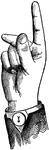
Glides are only transitional sounds. They are intermediate to Consonants and Vowels, combining the characteristics of certain central-aperature consonants with the wide or expanded quality of vowels, but differing from vowels in not having a fixed configuration. ...in representing glides the peculiarities of consonants and vowels are blended: the accented fingers, by being straightened, contribute a consonant characteristic; while the second phalanx of the thumb, by being held at an angle to the plane of the palm, imparts to the glide positions the wide, without giving them the firm, quality of vowel positions. <p> Glides-Indicated positions are distinguished by having the accent finger straightened, and the accented voice phalanx of the thumb in contact with that finger's second phalanx. They are adapted to illustrate the easy transition from Vowel to Glide. Glides-Indicated possess exactly the same phonetic value and significance as the Glides which they respectively replace. When used with a Mid, have the center finger accented.  Straightened unaccented fingers should be employed only to indicate "Wide".  Point Glide-Indicated positions, being anterior, have the palm upright and in line with the arm.

Indicated Mid Wide Point Glide

Glides are only transitional sounds. They are intermediate to Consonants and Vowels, combining the characteristics…
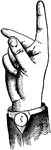
Glides are only transitional sounds. They are intermediate to Consonants and Vowels, combining the characteristics of certain central-aperature consonants with the wide or expanded quality of vowels, but differing from vowels in not having a fixed configuration. <p> Glides-Indicated positions are distinguished by having the accent finger straightened, and the accented voice phalanx of the thumb in contact with that finger's second phalanx. They are adapted to illustrate the easy transition from Vowel to Glide. Glides-Indicated possess exactly the same phonetic value and significance as the Glides which they respectively replace. When used with a Mid, have the center finger accented.  Straightened unaccented fingers should be employed only to indicate "Wide".  Lip Glide-Indicated positions, being anterior, have the palm upright and in line with the arm.

Indicated Mid Wide Lip Glide

Glides are only transitional sounds. They are intermediate to Consonants and Vowels, combining the characteristics…
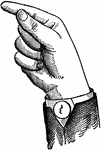
Glides are only transitional sounds. They are intermediate to Consonants and Vowels, combining the characteristics of certain central-aperature consonants with the wide or expanded quality of vowels, but differing from vowels in not having a fixed configuration. ...in representing glides the peculiarities of consonants and vowels are blended: the accented fingers, by being straightened, contribute a consonant characteristic; while the second phalanx of the thumb, by being held at an angle to the plane of the palm, imparts to the glide positions the wide, without giving them the firm, quality of vowel positions. <p> Glides-Indicated positions are distinguished by having the accent finger straightened, and the accented voice phalanx of the thumb in contact with that finger's second phalanx. They are adapted to illustrate the easy transition from Vowel to Glide. Glides-Indicated possess exactly the same phonetic value and significance as the Glides which they respectively replace. When used with a Low, have the first finger accented.  Primary glides-indicated have closed unaccented fingers.  Back Glide-Indicated positions, being posterior, have the palm held laterally at an angle to the arm.

Indicated Low Primary Back Glide

Glides are only transitional sounds. They are intermediate to Consonants and Vowels, combining the characteristics…
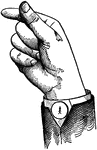
Glides are only transitional sounds. They are intermediate to Consonants and Vowels, combining the characteristics of certain central-aperature consonants with the wide or expanded quality of vowels, but differing from vowels in not having a fixed configuration. ...in representing glides the peculiarities of consonants and vowels are blended: the accented fingers, by being straightened, contribute a consonant characteristic; while the second phalanx of the thumb, by being held at an angle to the plane of the palm, imparts to the glide positions the wide, without giving them the firm, quality of vowel positions. <p> Glides-Indicated positions are distinguished by having the accent finger straightened, and the accented voice phalanx of the thumb in contact with that finger's second phalanx. They are adapted to illustrate the easy transition from Vowel to Glide. Glides-Indicated possess exactly the same phonetic value and significance as the Glides which they respectively replace. When used with a Low, have the first finger accented.   Primary glides-indicated have closed unaccented fingers. Top Glide-Indicated positions have the lower phalanges of the fingers at right angles to the plane of the palm.

Indicated Low Primary Top Glide

Glides are only transitional sounds. They are intermediate to Consonants and Vowels, combining the characteristics…
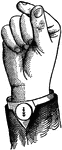
Glides are only transitional sounds. They are intermediate to Consonants and Vowels, combining the characteristics of certain central-aperature consonants with the wide or expanded quality of vowels, but differing from vowels in not having a fixed configuration. ...in representing glides the peculiarities of consonants and vowels are blended: the accented fingers, by being straightened, contribute a consonant characteristic; while the second phalanx of the thumb, by being held at an angle to the plane of the palm, imparts to the glide positions the wide, without giving them the firm, quality of vowel positions. <p> Glides-Indicated positions are distinguished by having the accent finger straightened, and the accented voice phalanx of the thumb in contact with that finger's second phalanx. They are adapted to illustrate the easy transition from Vowel to Glide. Glides-Indicated possess exactly the same phonetic value and significance as the Glides which they respectively replace. When used with a Low, have the first finger accented.  Primary glides-indicated have closed unaccented fingers.  Point Glide-Indicated positions, being anterior, have the palm upright and in line with the arm.

Indicated Low Primary Point Glide

Glides are only transitional sounds. They are intermediate to Consonants and Vowels, combining the characteristics…
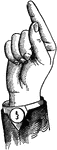
Glides are only transitional sounds. They are intermediate to Consonants and Vowels, combining the characteristics of certain central-aperature consonants with the wide or expanded quality of vowels, but differing from vowels in not having a fixed configuration. ...in representing glides the peculiarities of consonants and vowels are blended: the accented fingers, by being straightened, contribute a consonant characteristic; while the second phalanx of the thumb, by being held at an angle to the plane of the palm, imparts to the glide positions the wide, without giving them the firm, quality of vowel positions. <p> Glides-Indicated positions are distinguished by having the accent finger straightened, and the accented voice phalanx of the thumb in contact with that finger's second phalanx. They are adapted to illustrate the easy transition from Vowel to Glide. Glides-Indicated possess exactly the same phonetic value and significance as the Glides which they respectively replace. When used with a Low, have the first finger accented.  Primary glides-indicated have closed unaccented fingers. Lip Glide-Indicated positions, being anterior, have the palm upright and in line with the arm.

Indicated Low Primary Lip Glide

Glides are only transitional sounds. They are intermediate to Consonants and Vowels, combining the characteristics…
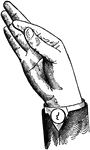
Glides are only transitional sounds. They are intermediate to Consonants and Vowels, combining the characteristics of certain central-aperature consonants with the wide or expanded quality of vowels, but differing from vowels in not having a fixed configuration. ...in representing glides the peculiarities of consonants and vowels are blended: the accented fingers, by being straightened, contribute a consonant characteristic; while the second phalanx of the thumb, by being held at an angle to the plane of the palm, imparts to the glide positions the wide, without giving them the firm, quality of vowel positions. <p> Glides-Indicated positions are distinguished by having the accent finger straightened, and the accented voice phalanx of the thumb in contact with that finger's second phalanx. They are adapted to illustrate the easy transition from Vowel to Glide. Glides-Indicated possess exactly the same phonetic value and significance as the Glides which they respectively replace. When used with a Low, have the first finger accented.  Straightened unaccented fingers should be employed only to indicate "Wide".  Back Glide-Indicated positions, being posterior, have the palm held laterally at an angle to the arm.

Indicated Low Wide Back Glide

Glides are only transitional sounds. They are intermediate to Consonants and Vowels, combining the characteristics…
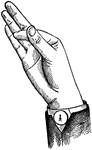
Glides are only transitional sounds. They are intermediate to Consonants and Vowels, combining the characteristics of certain central-aperature consonants with the wide or expanded quality of vowels, but differing from vowels in not having a fixed configuration. ...in representing glides the peculiarities of consonants and vowels are blended: the accented fingers, by being straightened, contribute a consonant characteristic; while the second phalanx of the thumb, by being held at an angle to the plane of the palm, imparts to the glide positions the wide, without giving them the firm, quality of vowel positions. <p> Glides-Indicated positions are distinguished by having the accent finger straightened, and the accented voice phalanx of the thumb in contact with that finger's second phalanx. They are adapted to illustrate the easy transition from Vowel to Glide. Glides-Indicated possess exactly the same phonetic value and significance as the Glides which they respectively replace. When used with a Low, have the first finger accented.  Straightened unaccented fingers should be employed only to indicate "Wide".  Top Glide-Indicated positions have the lower phalanges of the fingers at right angles to the plane of the palm.

Indicated Low Wide Top Glide

Glides are only transitional sounds. They are intermediate to Consonants and Vowels, combining the characteristics…
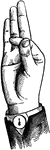
Glides are only transitional sounds. They are intermediate to Consonants and Vowels, combining the characteristics of certain central-aperature consonants with the wide or expanded quality of vowels, but differing from vowels in not having a fixed configuration. ...in representing glides the peculiarities of consonants and vowels are blended: the accented fingers, by being straightened, contribute a consonant characteristic; while the second phalanx of the thumb, by being held at an angle to the plane of the palm, imparts to the glide positions the wide, without giving them the firm, quality of vowel positions. <p> Glides-Indicated positions are distinguished by having the accent finger straightened, and the accented voice phalanx of the thumb in contact with that finger's second phalanx. They are adapted to illustrate the easy transition from Vowel to Glide. Glides-Indicated possess exactly the same phonetic value and significance as the Glides which they respectively replace. When used with a Low, have the first finger accented.  Straightened unaccented fingers should be employed only to indicate "Wide".  Point Glide-Indicated positions, being anterior, have the palm upright and in line with the arm.

Indicated Low Wide Point Glide

Glides are only transitional sounds. They are intermediate to Consonants and Vowels, combining the characteristics…
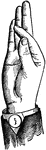
Glides are only transitional sounds. They are intermediate to Consonants and Vowels, combining the characteristics of certain central-aperature consonants with the wide or expanded quality of vowels, but differing from vowels in not having a fixed configuration. ...in representing glides the peculiarities of consonants and vowels are blended: the accented fingers, by being straightened, contribute a consonant characteristic; while the second phalanx of the thumb, by being held at an angle to the plane of the palm, imparts to the glide positions the wide, without giving them the firm, quality of vowel positions. <p> Glides-Indicated positions are distinguished by having the accent finger straightened, and the accented voice phalanx of the thumb in contact with that finger's second phalanx. They are adapted to illustrate the easy transition from Vowel to Glide. Glides-Indicated possess exactly the same phonetic value and significance as the Glides which they respectively replace. When used with a Low, have the first finger accented.  Straightened unaccented fingers should be employed only to indicate "Wide".  Lip Glide-Indicated positions, being anterior, have the palm upright and in line with the arm.

Indicated Low Wide Lip Glide

Glides are only transitional sounds. They are intermediate to Consonants and Vowels, combining the characteristics…
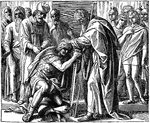
"And Moses did as the LORD commanded him: and he took Joshua, and set him before Eleazar the priest, and before all the congregation: And he laid his hands upon him, and gave him a charge, as the LORD commanded by the hand of Moses." Numbers 27:22-23 KJV

Moses Giving the Charge to Joshua

"And Moses did as the LORD commanded him: and he took Joshua, and set him before Eleazar the priest,…
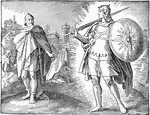
"And it came to pass, when Joshua was by Jericho, that he lifted up his eyes and looked, and, behold, there stood a man over against him with his sword drawn in his hand: and Joshua went unto him, and said unto him, Art thou for us, or for our adversaries?" Joshua 5:13 KJV

The Angel Appearing to Joshua

"And it came to pass, when Joshua was by Jericho, that he lifted up his eyes and looked, and, behold,…
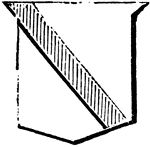
21 Then the angel of the LORD put forth the end of the staff that was in his hand, and touched the flesh and the unleavened cakes; and there rose up fire out of the rock, and consumed the flesh and the unleavened cakes. Then the angel of the LORD departed out of his sight. Judges 6:21 KJV

Shield Showing Garter

21 Then the angel of the LORD put forth the end of the staff that was in his hand, and touched the flesh…
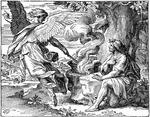
"Then the angel of Jehovah put forth the end of the staff that was in his hand, and touched the flesh and the unleavened cakes; and there went up fire out of the rock, and consumed the flesh and the unleavened cakes; and the angel of Jehovah departed out of his sight." Judges 6:21 ASV

Gideon's Offering Burnt by Fire from the Rock

"Then the angel of Jehovah put forth the end of the staff that was in his hand, and touched the flesh…
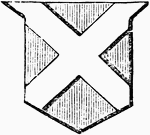
5 Then went Samson down, and his father and his mother, to Timnath, and came to the vineyards of Timnath: and, behold, a young lion roared against him. 6 And the Spirit of the LORD came mightily upon him, and he rent him as he would have rent a kid, and he had nothing in his hand: but he told not his father or his mother what he had done. Judges 14:5-6 KJV

Saltier Ordinary

5 Then went Samson down, and his father and his mother, to Timnath, and came to the vineyards of Timnath:…
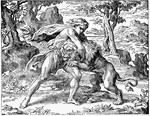
"Then went Samson down, and his father and his mother, to Timnah, and came to the vineyards of Timnah: and, behold, a young lion roared against him. And the Spirit of Jehovah came mightily upon him, and he rent him as he would have rent a kid; and he had nothing in his hand: but he told not his father or his mother what he had done." Judges 14:5-6
<p>Illustration of Samson fighting a lion barehanded.

Samson Slaying the Lion

"Then went Samson down, and his father and his mother, to Timnah, and came to the vineyards of Timnah:…
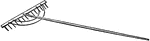
Farmers have said that the common hand-rake operates very well. It is preferred among farmers because it saves money and time.

Hand Rake

Farmers have said that the common hand-rake operates very well. It is preferred among farmers because…
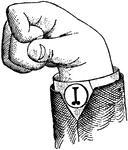
Vowels have a wide, firm, and free channel, whereby the breath is modified without friction or sibilation. &hellip; in representing vowels the hand suggests a wide and firm channel, by having the accented finger bent and its terminal phalanx brought firmly in contact with the terminal phalanx of the thumb. <p> Vowel positions are distinguished by always having the voice phalanx of the thumb accented and in contact with the terminal phalanx of the accented finger. This kind of accent is the strongest which can be given a finger, and so always takes precedence. Two modes of accentuation may not co-exist. Mixed Vowels have the palm thrown forward so as to assume a compromising position. In Primary Vowel positions the accented voice phalanx of the thumb and the terminal phalanx of the accented finger overlap. None of the unaccented fingers are straightened. Wide Vowel positions differ from analogous Primary Vowel positions by having straightened unaccented fingers, to denote "Wide." Low Vowels have the pointer finger accented.

Normal Aperture Mixed Primary Low Vowel

Vowels have a wide, firm, and free channel, whereby the breath is modified without friction or sibilation.…
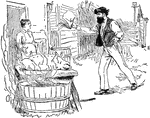
It is four o'clock in the afternoon when a messenger rides up to the house of Captain Knott V. Martin. The captain has killed a pig and is ready to dress it, when the messenger hands him a slip of paper. With knife in hand he reads it: "You are ordered to appear with your company on Boston Common at the earliest possible moment." He throws down his knife to put on the uniform. Mrs. Martin asks what he will do with the pig and Captain Martin says the pig isn't important anymore. Not an instant does he wait; the members of his company must be summoned, his knapsack packed.

Captain Knott V. Martin's Pig

It is four o'clock in the afternoon when a messenger rides up to the house of Captain Knott V. Martin.…
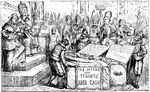
The Economical Council in Albany, NY showing New York corruption. This is the second Tweed cartoon. Hoffman sits on the dais, with Sweeny at his right hand. Hall, Connolly, and Tweed are prominent among the supporters, as are Jay Gould and Jim Frisk of the Erie contingent.

Economical Council and New York Corruption

The Economical Council in Albany, NY showing New York corruption. This is the second Tweed cartoon.…
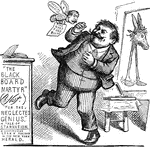
Nast shoos away the Herald insect while a caricature of the "Caesar Ghost," a caricature of a caricature, appears on the blackboard near at hand.

Nast Shoos Herald Insect

Nast shoos away the Herald insect while a caricature of the "Caesar Ghost," a caricature of a caricature,…
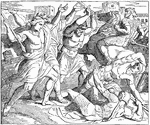
" 20 And they were helped against them, and the Hagarites were delivered into their hand, and all that were with them: for they cried to God in the battle, and he was intreated of them; because they put their trust in him." 1 Chronicles 5:20 KJV

The Destruction of the Hagarites

" 20 And they were helped against them, and the Hagarites were delivered into their hand, and all that…
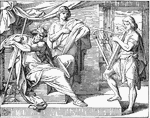
"And it came to pass, when the evil spirit from God was upon Saul, that David took an harp, and played with his hand: so Saul was refreshed, and was well, and the evil spirit departed from him." 1 Samuel 16:23 KJV

David Playing the Harp before Saul

"And it came to pass, when the evil spirit from God was upon Saul, that David took an harp, and played…
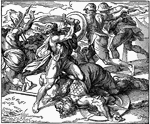
"And David put his hand in his bag, and took thence a stone, and slang it, and smote the Philistine in his forehead, that the stone sunk into his forehead; and he fell upon his face to the earth." 1 Samuel 17:49 KJV

David Slaying Goliath

"And David put his hand in his bag, and took thence a stone, and slang it, and smote the Philistine…
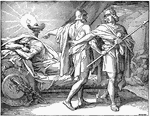
"Behold, this day thine eyes have seen how that the LORD had delivered thee to day into mine hand in the cave: and some bade me kill thee: but mine eye spared thee; and I said, I will not put forth mine hand against my lord; for he is the LORD'S anointed." 1 Samuel 24:10 KJV

David Spared the Sleeping Saul

"Behold, this day thine eyes have seen how that the LORD had delivered thee to day into mine hand in…
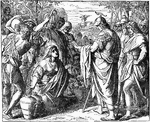
"So David received of her hand that which she had brought him, and said unto her, Go up in peace to thine house; see, I have hearkened to thy voice, and have accepted thy person." 1 Samuel 25:35 KJV

Abigail's Present to David

"So David received of her hand that which she had brought him, and said unto her, Go up in peace to…
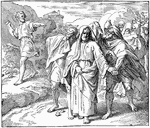
"And he cast stones at David, and at all the servants of king David: and all the people and all the mighty men were on his right hand and on his left." 2 Samuel 16:6 KJV

Shimei Casting Stones at David

"And he cast stones at David, and at all the servants of king David: and all the people and all the…
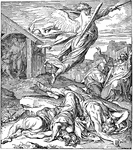
"And when the angel stretched out his hand upon Jerusalem to destroy it, the LORD repented him of the evil, and said to the angel that destroyed the people, It is enough: stay now thine hand. And the angel of the LORD was by the threshingplace of Araunah the Jebusite." 2 Samuel 24:16

An Angel goes Forth to Smite the Land

"And when the angel stretched out his hand upon Jerusalem to destroy it, the LORD repented him of the…
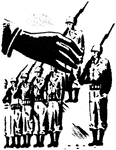
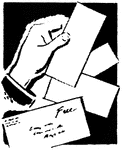
An illustration of a hand holding a military toy figurine.

Hand Holding Military Toy Figurine

An illustration of a hand holding a military toy figurine.

An illustration of a hand holding letters.

Hand Holding Letters

An illustration of a hand holding letters.

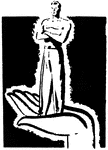
An illustration of a man standing in the palm of a hand.

Man in Palm of Hand

An illustration of a man standing in the palm of a hand.

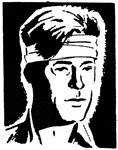
An illustration of the face of a man with a bandaged hand.

Man with Bandaged Head

An illustration of the face of a man with a bandaged hand.

"Argent, a sinister hand couped at the wrist and erected gules, within a bordure azure. BORDURE or BORDER. This was the most ancient difference in coats of arms, to distinguish different branches of the same family. It is a border round the edge of the shield. Its situation is always the same; but the inner edge may be varied." -Hall, 1862

Hand and Bordure

"Argent, a sinister hand couped at the wrist and erected gules, within a bordure azure. BORDURE or BORDER.…