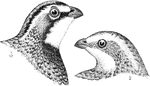
"Ortyx virginiana. Virginia Partridge or "Quail". Bobwhite. Male: Forehead, superciliary line, and throat, white, bordered with black; crown, neck all round,and upper part of breast, brownish-red; other parts tawny-whitish, all with more or fewer doubly-crescentic black bars; crissum rufous; sides broadly striped with brownish-red; upper parts variegated with chestnut, black, gray and tawny, the latter edging in the inner quills, forming a continuous line when the wing in closed. Female: Known by having the throat buff instead of white, less black about the fore-parts, and general coloration subdued. The reddish of this bird is of a peculiar dull pinkish shade. The black crescents of the under parts are scarcely or not half the width of the intervening white spaces; the bill is not jet black." Elliot Coues, 1884

Male and Female Bob-whites

"Ortyx virginiana. Virginia Partridge or "Quail". Bobwhite. Male: Forehead, superciliary line, and throat,…
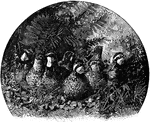
"Ortyx virginiana. Virginia Partridge or "Quail". Bobwhite. Male: Forehead, superciliary line, and throat, white, bordered with black; crown, neck all round,and upper part of breast, brownish-red; other parts tawny-whitish, all with more or fewer doubly-crescentic black bars; crissum rufous; sides broadly striped with brownish-red; upper parts variegated with chestnut, black, gray and tawny, the latter edging in the inner quills, forming a continuous line when the wing in closed. Female: Known by having the throat buff instead of white, less black about the fore-parts, and general coloration subdued. The reddish of this bird is of a peculiar dull pinkish shade. The black crescents of the under parts are scarcely or not half the width of the intervening white spaces; the bill is not jet black." Elliot Coues, 1884

Bob-white Family

"Ortyx virginiana. Virginia Partridge or "Quail". Bobwhite. Male: Forehead, superciliary line, and throat,…
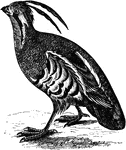
"Orortyx picta. Plumed Partridge. Mountain Quail. Back, wings and tail olive-brown, the inner secondaries and tertiaries bordered with whitish or tawny, forming a lengthwise border in single line when the wings are folded; the primaries fuscous, the tail-feathers fuscous, minutely marbled with the color of the back. Fore-parts, above and below, slaty-blue (above more or less glossed with olive shade of the back, below minutely marbled with black); the throat chestnut, immediately bordered laterally with black, then framed in the firm white line, broken through the eye, reappearing around base of under mandible. Extreme forehead whitish, The arrow-plumes black. Belly chestnut, the sides banded with broad bars of black and white, or rufous-white; middle of the lower belly, tibia, and flanks, whitish or rufous; crissum velvety-black, streaked with chestnut. Bill dusky, paler below; feet brown." Elliot Coues, 1884

Mountain Quail

"Orortyx picta. Plumed Partridge. Mountain Quail. Back, wings and tail olive-brown, the inner secondaries…
"Lophortyx gambeli. Gambel's Partridge. Arizona Quail. Male: Without white loral line; forehead black with whitish lines; occiput chestnut; nuchal and cervical feathers with dark shaft lines, but few dark edgings or none, and no white specking. General color of upper parts clear ash, the edging of the inner quills white. Fore-breast like the back; other under parts whitish, the middle of the belly with a large jet-black patch; sides rich purplish-chestnut, with sharp white stripes; vent, flanks and crissum white with dusky streaks. Bill black, iris brown. Besides lacking the definite head-markings, the female wants the black abdominal area, where the feathers are whitish with dark lengthwise touches; crest dark brown, not recurved, and fewer-feathered than that of a cock. Top of had grayish-brown, nearly uniform from bill to nape; throat grayish-white with slight dark pencilling." Elliot Coues, 1884

Gambel's Partridge

"Lophortyx gambeli. Gambel's Partridge. Arizona Quail. Male: Without white loral line; forehead black…
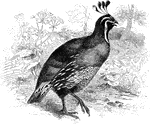
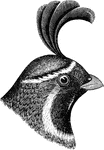
"Lophortyx californica. Californian Partridge. Valley Quail. Male: With a small white line from bill to eye; forehead whitish with black lines; occiput smoky-brown; nuchal and cervical feathers with very dark edging and shaft-lines, and fine whitish speckling. General color of upper parts ashy, with strong olive-brown gloss, the edging of the inner quills brownish-orange. Fore breast slaty-blue; other under parts tawny, deepening centrally into rich golden-brown or orange-chestnut, all the feathers sharply edged with jet-black; sides olive-ashy like the back, with sharp white stripes; vent, flanks, and crissum tawny, with dark stripes." Elliot Coues, 1884

Californian Partridge

"Lophortyx californica. Californian Partridge. Valley Quail. Male: With a small white line from bill…
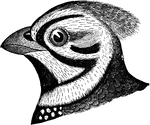
"Cyrtonyx massena. Massena Partridge. Male: Upper parts intimately waved with black and reddish-brown and tawny-brown, and marked with sharp buff or whitish shaft-lines; on the wings the irregular black variegation changing to black bars and round spots, in regular paired series on each feather. Outer quills fuscous, their outer webs spotted with white or buff. Under parts crowded with innumerable round white spots on a dark ground, several pairs on each feather; the middle line of the breast and belly mahogany-colored, the flanks, vent, and crissum velvety-black. Top of head black in front, with slight white touches, changing on the crest to brown. Sides of the head and throat fantastically striped with black and white; a broad black throat-patch; another on the cheeks, across lored alongside of crown; a third on the ear-coverts; a fourth bordering the white all around behind." Elliot Coues, 1884

Massena Quail

"Cyrtonyx massena. Massena Partridge. Male: Upper parts intimately waved with black and reddish-brown…
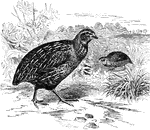
"Coturnix dactylisonans. Messina Quail. Migratory Quail. Common Quail of Europe. Upper parts variegated with buff or whitish and black upon a mixed reddish-brown and gray ground, the most conspicuous markings being sharp lance-lineal lengthwise stripes of buff or whitish over most of the upper parts, these dashes mostly edged with black; other less prominent buff or whitish cross-bars, several to a feather, likewise framed in black. Crown mixed brown and black, with sharp median and lateral buff stripes. Throat white, bounded before by a dark bar curving down behind the auriculars; behind, by a necklace of ruddy-brown, blackish, or whitish spots; chin varied with dark marks n advance of the auricular bar. Under parts fading to whitish from the buff or pale yellowish-brown breast, without any dark crossbars, but the long feathers of the sides and flanks with large and conspicuous white shaft-stripes and otherwise variegated with black, brown, and buff. Primaries fuscous, spotted with light brown on outer webs; secondaries similar, but the markings becoming bars on both webs. Tail-feathers brownish-black, much varied with shaft-lines, cross-bars, and edgings of buff; crissum immaculate, like the abdomen. Bill dark; feet pale; iris dark brown." Elliot Coues, 1884

Common Quail of Europe

"Coturnix dactylisonans. Messina Quail. Migratory Quail. Common Quail of Europe. Upper parts variegated…
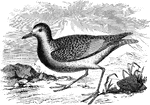
"Squatarola helvetica. Swiss Plover. Black-bellied Plover. Bull-head Plover. Whistling Field Plover. Ox-eye. Upper parts fretted with blackish and ashy-white, the feathers being basally, then black, tipped and usually scalloped with white. Upper tail-coverts mostly white, with few dark touches. Fore-head, line over eye and thence more broadly over side of neck, the lining of wings, tibiae, vent and under tail-coverts, white. Sides of head to an extent embracing the eyes, axillary plumes, and entire under parts (except as said), black. Tail closely barred with black and white. Primaries dark brown, blackening at tips, with large basal areas and a portion of their shafts, white. Bill and feet black." Elliot Coues, 1884

Black-bellied Plover

"Squatarola helvetica. Swiss Plover. Black-bellied Plover. Bull-head Plover. Whistling Field Plover.…
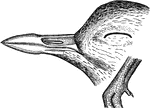
"Squatarola. Four-toed Plover. A small but distinct hind toe, contrary to the rule in this family. Tail less than half as long as wing. Tarsus much longer than middle toe and claw. Tibia bare below, reticulate like the tarsus. Basal web between outer and middle toes. Upper plumage speckled, lower black or white; no rings or bars of color about head or neck. Legs dark-colored. Tail fully barred. Seasonal changes of plumage very; sexes alike." Elliot Coues, 1884

Four-toed Plover Bill and Hind Toe

"Squatarola. Four-toed Plover. A small but distinct hind toe, contrary to the rule in this family. Tail…
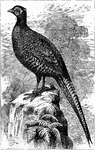
English Pheasant. Common Pheasant. Phasianus colchicus. Adult plumage: Maroon breast, orangey flanks, white ring round neck; tail brown with dark brownish barring, rump gray; green iridescent head with lighter tufts and a bare red face

English Pheasant

English Pheasant. Common Pheasant. Phasianus colchicus. Adult plumage: Maroon breast, orangey flanks,…
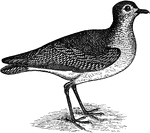
"Charadrius dominicus. American Golden Plover. Field Plover. Bull-head Plover. Upper parts black, everywhere speckled with golden-yellow, and mostly also white, the brighter color in excess. The markings of individual feathers are a tipping and one or several paired scollops. Hind neck less strongly marked than crown or back. Forehead, and long stripe over eye snowy-white. Region immediately around bill, sides of head to include eyes, and entire under parts, glossy brownish-black. Lining of wings, and axillars, sooty-gray or ashy. Tail dusky grayish-brown, with numerous irregular pale gray bars, and reddish-brown shafts; upper tail-coverts and rump like back. Primaries fuscous, blackening at tips and whitening at bases of inner webs, though without definite white spaces; shafts white for space. Secondaries and many of the coverts, like the primaries, plain fuscous, without the golden and white fretwork of the back. Bill and feet black." Elliot Coues, 1884

American Golden Plover

"Charadrius dominicus. American Golden Plover. Field Plover. Bull-head Plover. Upper parts black, everywhere…
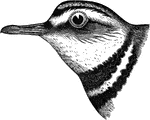
"Aegialites vociferus. Kildeer Plover. Above, grayish-brown, with an olive shade, and in high plumage a slight bronzy lustre. Rump and upper tail-coverts bright-colored, very variable in tint, from tawny or orange-brown to cinnamon-brown or chestnut. Forehead with a white band from eye to eye, more or less prolonged as a superciliary streak, and a black band above it. A white collar around hind neck, continuous with white of the throat. A black collar around back of neck, continuous with a black pectoral band. Back of the latter a black pectoral belt. Thus the fore-parts are encircled with one complete black ring, behind which is a black half-ring on breast, before which is a complete white ring. A white stripe over and behind eye; a dusky stripe below eye. Under parts entirely pure white, except the two pectoral belts. Primary quills blackish; a white space on the outer webs of the most of them, forming an oblique series, and a longer white space on their inner webs. Secondaries mostly white, but with black areas in increasing size from within outward. Long inner secondaries, or tertiaries, like the back. Tail-feathers singularly variegated; several inner pairs like the back, insensibly blackening towards ends, then lightning again, and usually with rusty tips; lateral ones gaining more and more of the bright color of the rump, with more definite black subterminal bars, and pure white tips; outermost pair mostly white, with the rufous shade, and several broken black bars. The effect of all this variegation is very striking when the pairs are displayed in flight. Bill black; eye black, with a bright ring around it; legs pale." Eliot Coues, 1884

Kildeer Plover

"Aegialites vociferus. Kildeer Plover. Above, grayish-brown, with an olive shade, and in high plumage…
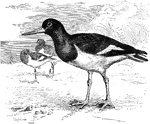
"Haematopus ostrilegus. European Oyster-catcher. (oyster-opener would b a better name, as oysters do not run fast). Upper parts glossy-black, like the head and neck. Quills, broadly margined with white on inner webs excepting towards end, and also with isolated white shafts and spaces near end. Back below, interscapulars, rump, and upper tail-coverts entirely white, as well as bases of the tail-feathers." Elliot Coues, 1884

European Oyster-catcher

"Haematopus ostrilegus. European Oyster-catcher. (oyster-opener would b a better name, as oysters do…
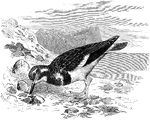
"Strepsilas interpres. Turnstone. Brant Bird. Calico-back. Pied above with black, white, brown, and chestnut-red; below, snowy, with jet breast. Top of head streaked with black and white. Forehead, cheeks, side of head and back of neck, white, with a bar of black coming up from the side of neck to below eye, then coming forward and meeting or tending to meet its fellow over base of bill, enclosing or nearly enclosing a white loral, and another black prolongation on side of neck; lower eye-lid white or not. Lower hind neck, interscapulars and scapulars, pied with black and chestnut; back, rump, and upper tail-coverts, snowy-white, with a large central blackish field on the latter. Tail white, with broad subterminal blackish field, narrowing on the outer feathers and incomplete, widening to usually cut off white tips of central feathers. Wing-coverts and long inner secondaries pied like the scapulars with black and chestnut, the greater coverts broadly white-tipped or mostly white, the short inner secondaries entirely white, the rest acquiring dusky on their ends to increasing extent, with result of a broad oblique white wing-bar. Primaries blackish, the longer ones with large white fields on inner webs, the shorter ones also definitely white on outer webs for a space, the shafts white on the outer webs for a space, the shafts white unless at end; primary coverts white-tipped. Under parts, under wing-coverts, snowy-white, the breast and jugulum jet-black, enclosing a white throat-patch, and sending limbs on sides of head and neck as above said. Bill black; iris black; feet orange." Elliot Coues, 1884

Turnstone

"Strepsilas interpres. Turnstone. Brant Bird. Calico-back. Pied above with black, white, brown, and…
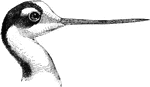
"Stilt. Long-shanks. Lawyer. Adult. Mantle, constituted by the interscapulars, scapulars, and wings (above and below) glossy-black, prolonged up the back of the neck and on to[ and sides of head, embracing the eyes. A spot over and behind eye, one on under eyelid, forehead to opposite eyes, sides of head below eyes, sides of neck and entire under parts, together with the lower back, rump, and, upper tail-coverts, white; tail pearl-gray. In life the long black wings fold entirely over the white upper parts and tail, so that the bird looks entirely black above. Bill black; eyes and legs carmine, latter drying yellowish." Elliot Coues, 1884

Black-necked Stilt

"Stilt. Long-shanks. Lawyer. Adult. Mantle, constituted by the interscapulars, scapulars, and wings…
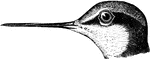
"Steganopus wilsoni. Wilson's Phalarope. Bill and feet black. Crown of head pale ash, passing into white along a narrow stripe in the nape. A narrow, distinct, pure white line over the eye. Sides of neck intense purplish-chestnut, or dark wine-red; anteriorly deepening upon the auriculars into velvety-black; posteriorly continued, somewhat duller in tint, as a stripe along each side of the back to the tips of the scapulars. Other upper parts pearly-ash, blanching on the rump and upper tail-coverts. Wings pale grayish-brown; coverts slightly white-tipped; primaries dusky-brown, their shafts brownish-white, except at tip. Tail marbled with pearly-gray and white. All the under parts pure white, but the fore part and sides of the breast washed with pale chestnut-brown, as if with a weak solution of the rich color on the neck, and a faint tinge of the same along the sides of the body to the flanks. Bill and feet black. Iris brown." Elliot Coues, 1884

Wilson's Phalarope

"Steganopus wilsoni. Wilson's Phalarope. Bill and feet black. Crown of head pale ash, passing into white…
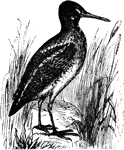
"Gallinago media. European Snipe. English Snipe. In size, form, and general coloration indistinguishable from No. 608, but axillary feathers almost entirely white, with slight and sparse dark markings, and the feathers of the flanks and sides less frequently and less regularly barred with dark gray." Elliot Coues, 1884

English Snipe

"Gallinago media. European Snipe. English Snipe. In size, form, and general coloration indistinguishable…
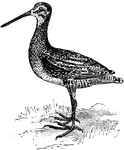
"Gallinago wilsoni. American Snipe. Wilson's Snipe. "English" Snipe. Jack-Snipe. Crown black, with a pale ochrey middle stripe. upper parts brownish-black, varied with bright bay and tawny, the scapular feathers smoothly and evenly edged with tawny or whitish, forming two lengthwise stripes on each side when the wings are folded. Quills and greater coverts blackish-brown, usually with white tips, and outer web of first primary usually white. Lining of wings and axillars white, fully and regularly barred with black. Rump black, the feathers with white tips. Upper tail-coverts tawny with numerous black bars, and tail-feathers black basally, then bright chestnut, with a narrow subterminal black bar, their tips fading to whitish; some of the lateral ones white, with little rufous tinge and several instead of one black nearly white; sides of body shaded with brown, and with numerous regular dusky bars throughout; crissum more or less rufous, with numerous dusky bars." Elliot Coues, 1884

Small Wilson's Snipe

"Gallinago wilsoni. American Snipe. Wilson's Snipe. "English" Snipe. Jack-Snipe. Crown black, with a…
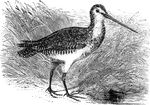
"Gallinago wilsoni. American Snipe. Wilson's Snipe. "English" Snipe. Jack-Snipe. Crown black, with a pale ochrey middle stripe. upper parts brownish-black, varied with bright bay and tawny, the scapular feathers smoothly and evenly edged with tawny or whitish, forming two lengthwise stripes on each side when the wings are folded. Quills and greater coverts blackish-brown, usually with white tips, and outer web of first primary usually white. Lining of wings and axillars white, fully and regularly barred with black. Rump black, the feathers with white tips. Upper tail-coverts tawny with numerous black bars, and tail-feathers black basally, then bright chestnut, with a narrow subterminal black bar, their tips fading to whitish; some of the lateral ones white, with little rufous tinge and several instead of one black nearly white; sides of body shaded with brown, and with numerous regular dusky bars throughout; crissum more or less rufous, with numerous dusky bars." Elliot Coues, 1884

Wilson's Snipe

"Gallinago wilsoni. American Snipe. Wilson's Snipe. "English" Snipe. Jack-Snipe. Crown black, with a…
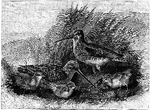
"Gallinago wilsoni. American Snipe. Wilson's Snipe. "English" Snipe. Jack-Snipe. Crown black, with a pale ochrey middle stripe. upper parts brownish-black, varied with bright bay and tawny, the scapular feathers smoothly and evenly edged with tawny or whitish, forming two lengthwise stripes on each side when the wings are folded. Quills and greater coverts blackish-brown, usually with white tips, and outer web of first primary usually white. Lining of wings and axillars white, fully and regularly barred with black. Rump black, the feathers with white tips. Upper tail-coverts tawny with numerous black bars, and tail-feathers black basally, then bright chestnut, with a narrow subterminal black bar, their tips fading to whitish; some of the lateral ones white, with little rufous tinge and several instead of one black nearly white; sides of body shaded with brown, and with numerous regular dusky bars throughout; crissum more or less rufous, with numerous dusky bars." Elliot Coues, 1884

Family of Snipes

"Gallinago wilsoni. American Snipe. Wilson's Snipe. "English" Snipe. Jack-Snipe. Crown black, with a…
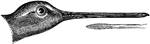
"Macrorhamphus griseus. Red-breasted Snipe. Gray Snipe. Brown-back. Dowitcher. In summer:Under parts rich rust-red, paler or whitish on the belly; jugulum, breast, and sides fully speckled with dusky. Axillars and lining of wings white, with angular dusky markings. Wing-quills fuscous, the shaft of the 1st primary white, of the others brown; secondaries conspicuously tipped with white. Above, black, varied everywhere with reddish color of the under parts, and on the back and scapulars with white ; the rump snowy-white, unmarked, very conspicuous in flight. Tail and its upper coverts black, closely barred with white or rufous. A dusky line from bill to eye. Bill and feet greenish-black. In winter: Dark gray above, supercilliary line and spot on under eye-lid white; below, white, the jugulum, fore-breast, and sides heavily shaded with gray, leaving chin whitish; the flanks and crissum with wavy dusky spots or bars." Elliot Coues, 1884

Red-breasted Snipe Head

"Macrorhamphus griseus. Red-breasted Snipe. Gray Snipe. Brown-back. Dowitcher. In summer:Under parts…
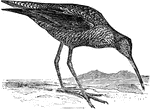
"Micropalama himantopus. Stilt Sandpiper. In summer: blackish, each feather edged and tipped with white and tawny or bay, which on the scapulars becomes scalloped. Auriculars chestnut; a dusky line from bill to eye, and a light reddish superciliary one; upper tail-coverts white with dusky bars. Primaries dusky with blackish tips; tail-feathers 12 ashy-gray, their edges and a central field white; under parts mixed reddish, black, and whitish, in streaks on the jugulum, elsewhere in bars; bill and feet greenish-black." Elliot Coues, 1884

Stilt Sandpiper

"Micropalama himantopus. Stilt Sandpiper. In summer: blackish, each feather edged and tipped with white…
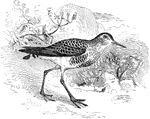
"Calidris arenaria. Sanderling. Ruddy "Plover". Adult in summer: Entire upper parts and neck all round variegated with black, light ashy and bright reddish; on the back and scapulars each feather having a central black field, and being broadly margined and tipped with ashy or reddish. Under parts white, immaculate. Outer webs an tips of primaries deep brownish-black, inner light ashy. A white spot at base of inner primaries. Secondaries mostly pure white; the outer vanes and part of inner on the latter half dusky. Greater coverts dusky, broadly tipped and narrowly edged with pure white. Rump, upper tail-coverts and central tail-feathers dusky, tipped and narrowly edged with ashy-white; lateral tail=-feathers very light ash, nearly white. Bill and feet black." Elliot Coues, 1884

Sanderling

"Calidris arenaria. Sanderling. Ruddy "Plover". Adult in summer: Entire upper parts and neck all round…
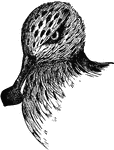
"Eurynorhynchus pygmaeus. Spoon-billed Sandpiper. General appearance of a stint, and size little greater. Coloration of upper parts almost exactly as in the species just names, the feathers being black, with indented light chestnut-red edgings, and mostly grayish-white tips; crown simply streaked with the reddish color and black. Under parts white, the whole throat, breast, and sides of the neck overlaid with bright chestnut (as in a highly-plumaged sanderling), the breast, back of this colored area, and the sides of the body, spotted with dusky. Primaries plain dusky, with blackish outer webs and ends, and mostly white shafts; secondaries mostly white from the base; greater coverts white-tipped. Bill and feet black." Elliot Coues, 1884

Spoon-billed Sandpiper

"Eurynorhynchus pygmaeus. Spoon-billed Sandpiper. General appearance of a stint, and size little greater.…
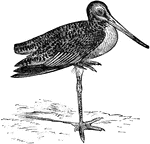
"Limosa fedoa. Great Marbled Godwit. Marlin. Feathers not extending on side of lower mandible to a point far beyond those on upper. no white anywhere; rump, tail, and its coverts barred throughout with blackish and the body-color. Lining of wings chestnut; axillars the same, more or less barred with black. General color rufous or light dull cinnamon-red, uniform and nearly uninterrupted on all the under parts, richer and more chestnut on the lining of the wings and axillars; somewhat marked with dusky on the sides of the breast and body; on the whole upper parts variegated with the brownish-black central field of each feather, the blackish predominating, leaving the rufous chiefly as scallops and tips of the feathers. This rufous very variable in intensity; usually paler on upper than on under parts, and strongest under the wings. Primaries rufous, successively darkening from the last to first, the outer webs and ends of the few outer ones blackish, the shaft of the first white. Bill livid flesh-colored, blackish on about terminal third; legs ashy-blackish." Elliot Coues, 1884

Marbled Godwit

"Limosa fedoa. Great Marbled Godwit. Marlin. Feathers not extending on side of lower mandible to a point…
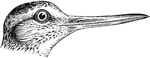
"Symphemia semipalmata. Semipalmated Tattler. Willet. Adult in summer: Upper parts ashy, confoundedly speckled to greater or less extent with blackish; this sometimes giving the prevailing tone, but in lighter colored cases the blackish restricted to an irregular central field on each feather, throwing out angular processes and tending to become traverse bars. When such dark fields prevail, the upper parts become quite blackish, speckled with ashy-white, like Totanus melanoleucus, for example. Furthermore, there is often a slight rufescence. Under parts white, sometimes with a rufous or brownish tinge, the jugulum and breast spotted and streaked, the sides barred or arrow-headed, with brownish-black. Axillars and lining of wing, edge of wing and primary coverts, sooty-blackish. Primaries blackish, with a great space white at base, partly overlaid and concealed by the primary coverts, partly showing conspicuously as a speculum; shafts white along this space. Most secondaries white most upper tail-coverts white, the shorter ones dark like rump, the longer ones barred like tail. Tail ashy, incompletely barred with blackish; lateral feathers pale, or marbled with white. Bill dark; legs bluish." Elliot Coues, 1884

Willet Head

"Symphemia semipalmata. Semipalmated Tattler. Willet. Adult in summer: Upper parts ashy, confoundedly…
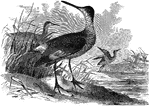
"Symphemia semipalmata. Semipalmated Tattler. Willet. Adult in summer: Upper parts ashy, confoundedly speckled to greater or less extent with blackish; this sometimes giving the prevailing tone, but in lighter colored cases the blackish restricted to an irregular central field on each feather, throwing out angular processes and tending to become traverse bars. When such dark fields prevail, the upper parts become quite blackish, speckled with ashy-white, like Totanus melanoleucus, for example. Furthermore, there is often a slight rufescence. Under parts white, sometimes with a rufous or brownish tinge, the jugulum and breast spotted and streaked, the sides barred or arrow-headed, with brownish-black. Axillars and lining of wing, edge of wing and primary coverts, sooty-blackish. Primaries blackish, with a great space white at base, partly overlaid and concealed by the primary coverts, partly showing conspicuously as a speculum; shafts white along this space. Most secondaries white most upper tail-coverts white, the shorter ones dark like rump, the longer ones barred like tail. Tail ashy, incompletely barred with blackish; lateral feathers pale, or marbled with white. Bill dark; legs bluish." Elliot Coues, 1884

Willets

"Symphemia semipalmata. Semipalmated Tattler. Willet. Adult in summer: Upper parts ashy, confoundedly…
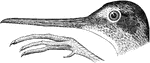
"Totanus melanoleucus. Greater Tell-tale. Greater Yellow-shanks. Long-legged Tattler. Stone-snipe. Bill straight or slightly inclined upwards, not with regular curve, but as if bent near the middle, black or greenish-black. Legs very long and slender, chrome-yellow. Above, blackish, more or less ashy according to season, everywhere speckled with whitish, in a series on indentations along edge of each feather; the markings spottle on the back and wings, streaky on the head and neck. A slight white superciliary line. Upper tail-coverts mostly white. Under parts white, the jugulum and fore-breast streaked, the sides and flanks, lining of wings and axillars barred and arrow-headed with the color of the back. Tail like back,with numerous white bars, generally broken on the middle feathers. Primaries blackish, with black shafts, mostly with white tips; secondaries and their coverts the same, but their edges marbled, spotted, or broken-barred with white. The seasonal changes of plumage are inconsiderable, consisting chiefly in the tone of the upper parts, more blackish and white in summer, more gray and ashy in winter and in the young; and in the emphasis of the dark markings of the under parts." Elliot Coues, 1884

Greater Yello-shanks

"Totanus melanoleucus. Greater Tell-tale. Greater Yellow-shanks. Long-legged Tattler. Stone-snipe. Bill…
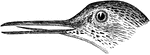
"Rhyacophilus solitarius. Solitary Tattler. American Green Sandpiper. Solitary Sandpiper. Above, dark lustrous olive-brown, streaked on the head and neck, elsewhere finely speckled, with white; no continuous white on rump or upper tail-coverts. Below, white; the jugulum and sides of neck shaded with brownish and streaked with dusky; sides, axillars, and `lining of wings regularly barred with dusky. Rump and upper tail-coverts like back; tail beautifully and regularly barred throughout with black and white; white prevailing on the outer feathers, where the dark bars may be broken, and white reduced to a series of marginal spots on the middle feathers. Primaries and edge of wing blackish, unmarked; secondaries like back, mostly unmarked, the inner ones gradually gaining white spots. Bill blackish; legs dull greenish." Elliot Coues, 1884

Solitary Sandpiper

"Rhyacophilus solitarius. Solitary Tattler. American Green Sandpiper. Solitary Sandpiper. Above, dark…
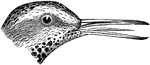
"Tringoides macularius. Spotted Sandpiper. Above, silken ashen-olive (quaker-color- as in our cuckoos) with a coppery lustre, finely varied with blackish, in streaks on head and neck, elsewhere in wavy or otherwise irregular cross-bars. line over eye, and entire under parts, pure white, with numerous sharp circular black spots, larger and more crowded in the female than in the male. Secondaries. and their coverts broadly white-tipped; some white feathers along bend of wing; axillars and lining of wings white, the latter with an oblique dusky bar. Primaries and most of the secondaries brownish-black, with brown shafts and large white basal spaces, concealed in the folded wing, conspicuous in flight. Upper tail-coverts and middle tail-feathers like back; lateral ones successively acquiring white tips; outer with several incomplete white bars. Feet pinkish-white, drying yellowish. Bill flesh-color, black-tipped; sometimes much of culmen dusky; sometimes much of under mandible orange." Elliot Coues, 1884

Spotted Sandpiper

"Tringoides macularius. Spotted Sandpiper. Above, silken ashen-olive (quaker-color- as in our cuckoos)…
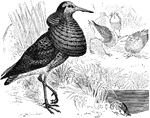
"Machetes pugnax. Ruff. Reeve. Combatant. Gambetta. Varied above with black, brown, buff and chestnut, the sides of rump white; under parts white, breast and sides and crissum black, spotted with white; tail brown, barred with chestnut and white; quills dusky, with shafts; wing-coverts ashy-brown. Bill blackish, flesh-colored at base; legs dingy yellow; warty excrescences yellow; feathers of the ruff endlessly varied in color." Elliot Coues, 1884

Ruff

"Machetes pugnax. Ruff. Reeve. Combatant. Gambetta. Varied above with black, brown, buff and chestnut,…
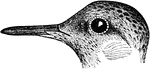
"Tryngites rufescens. Buff-breasted Sandpiper. Above, brownish-black with a greenish gloss, every feather broadly margined with tawny or yellowish-brown, the latter the prevailing tone. Under parts buff or fawn-colored, without markings except a few small blackish spots on sides of breast. Central tail-feathers greenish-brown, blackening at ends; others paler, often rufescent, with white or tawny tips and subterminal black bar; and usually, also, some black marbling or streaking/ Primaries and secondaries ashy-brown blackening at end, the extreme tip white - most of the inner webs of the primaries, and both webs of the secondaries pearly white, speckled and marbled with black. This curious tracery, best seen from below, is diagnostic; though the precise pattern varies interminably. The patch of under coverts at the bases of the primaries have the same character. Axillars white, lining of wings white or rufescent. Iris brown. Bill brownish-black; legs greenish or yellowish." Elliot Coues, 1884

Buff-breasted Sandpiper

"Tryngites rufescens. Buff-breasted Sandpiper. Above, brownish-black with a greenish gloss, every feather…
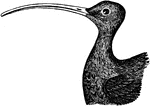
"Numenius longirostris. Long-billed Curlew. Sickle-bill. Plumage very similar to that of the Godwit, Limosa faeda: prevailing tone rufous, of varying intensity in different specimens, usually deepest on the lining of the wings, which are little varied with other color. Primaries varied with rufous. Top of head variegated with blackish and rufous or whitish, without distinct pale median and lateral lines. Upper parts brownish-black, speckled with tawny or cinnamon-brown, each feather having several indentations or broken bars of this color; rufous prevailing on wing-coverts. Tail-feathers and secondaries cinnamon-brown, with pretty regular dark bars throughout. Under parts rufous or cinnamon of varying intensity, usually deepening to chestnut under the wings, fading to whitish on throat; the jugulum and fore-breast with dusky streaks which tend on the sides of breast and body to arrowheads or more or less complete bars; lining of wings, axillars, and crissum, mostly unmarked, though some spots may appear. No white on rump, tail, or wings. Bill black, much of under mandible pale-flesh-color or yellowish; legs dark. Little variation in plumage with sex, age, and season. Chicks hatch in whitish down, thickly blotched above with brownish-black; the bill straight, an inch long." Elliot Coues, 1884

long-billed Curlew

"Numenius longirostris. Long-billed Curlew. Sickle-bill. Plumage very similar to that of the Godwit,…
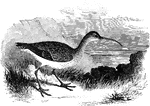
"Numenius hudsonicus. Hudsonian Curlew Jack Curlew. General tone of coloration scarcely rufous, the under parts, and the variegation of the upper, being whitish or ochraceous. No white on rump, tail, or lining of wings. Top of head uniform blackish-brown, with well-defined whitish median and lateral stripes (as in phaeopus, but neither longirostris nor borealis). Upper parts brownish-black, speckled with whitish, ochraceous or pale cinnamon-brown, in same pattern as in longirostris, but the dark in excess of the light colors, and these never strongly rufescent. Tail ashy-brown (not rufous), with numerous narrow blackish bars. Primaries fuscous, marbled or broken-barred with pale color (pattern as in longirostris, tone not strongly rufous). Lining of wings and axillars rufescent, but spotted or barred throughout with dusky. Under parts soiled whitish or somewhat ochraceous, only obscurely rufescent on crissum, if anywhere; the jugulum and fore-breast with dusky streaks which, as in other species, change to arrow-heads or incomplete bars on sides of breast and body. Bill blackish, some part of lower mandible pale; feet dark." Elliot Coues, 1884

Hudsonian Curlew

"Numenius hudsonicus. Hudsonian Curlew Jack Curlew. General tone of coloration scarcely rufous, the…
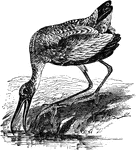
"Tantalops loculator. American Wood Stork. Wood Ibis. Colorado Turkey. Plumage white, the wing-quills, primary coverts, alula, and tail, glossy black. The bald head livid bluish and yellowish. Bill dingy yellowish. Legs blue, becoming blackish on the toe, the webs tinged with yellow. Iris dark brown." Elliot Coues, 1884

Wood Ibis

"Tantalops loculator. American Wood Stork. Wood Ibis. Colorado Turkey. Plumage white, the wing-quills,…
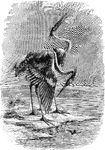
"Ardea. Great Herons. Of largest size, former well feathered all around. Tibia extensively denuded below. Tarsus longer than middle toe and claw. Outer lateral toe longer than inner. Bill shorter than tarsus, equal to or longer than middle toe and claw. Colors dark and varied, exceptionally white; back without lengthened loosened plumes; scapulars lanceolate, lengthened, but not loosened; lower fore-neck with lengthened feathers; head crested, in breeding season with two long, slender, flowing, occipital plumes. Sexes alike; young similar, but lacking all lengthened feathers." Elliot Coues, 1884

Heron

"Ardea. Great Herons. Of largest size, former well feathered all around. Tibia extensively denuded below.…
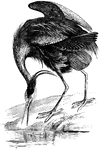
"Ardea herodias. Great Blue Heron. Of large size, and varied dark colors, not dichromatic. Back without peculiar plumes at any season, but scapulars lengthened and lanceolate; an occipital crest, two deciduous feathers of which in the breeding season are long and filamentous; long loose feathers on the lower neck. Adult: Bill yellow, more or less blackened on culmen; lores blue; iris chrome yellow; legs and feet blackish, the soles yellowish. Tibia the edge of wing chestnut-brown. Forehead and middle of crown white; sides of of crown and occipital crest black. Neck pale purplish-gray, with a mixed white, black, and rust throat-line, yielding to white on chin and cheeks. Plumes of lower neck, the breast, and belly, black, more or less interrupted with white streaks on the middle line; crissum white. Upper parts in general slaty-blue; tail the same; long scapular feathers more pearly-gray; wing-quills deepening from this color to the black primaries." Elliot Coues, 1884

Great Blue Heron

"Ardea herodias. Great Blue Heron. Of large size, and varied dark colors, not dichromatic. Back without…
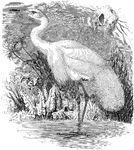
"Herodias. Great Egret Heron. Character of Ardea proper, excepting in plumage; color white; no crest; a long depending train of still-shafted loose-webbed scapular feathers in the breeding season. Size large, only exceeded by the species of Ardea." Elliot Coues, 1884

European Great White Egret

"Herodias. Great Egret Heron. Character of Ardea proper, excepting in plumage; color white; no crest;…
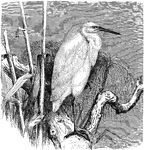
"Garzetta. Small Egret Herons. Color white; and occipital crest, and short recurved train of stiff-shafted loose-webbed feathers in the breeding season; lower neck-feathers lengthened, depending.

European Little White Egret

"Garzetta. Small Egret Herons. Color white; and occipital crest, and short recurved train of stiff-shafted…
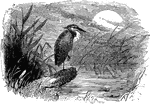
"Nyctiardea grisea naevia. Black-crowned Night Heron. Qua-bird. Squawk. Crown, scapulars and interscapulars very dark glossy green; other upper parts, wings and tail, pale bluish-gray with a lilac or lavender tinge, most decided on the neck. Forehead and throat-line white, shading into the lilaceous of the neck; under parts whitish,tinged with lilac. The long occipital plumes white. Eyes red; lores greenish; bill black; legs yellow; claws brown." Elliot Coues, 1884

Night Heron

"Nyctiardea grisea naevia. Black-crowned Night Heron. Qua-bird. Squawk. Crown, scapulars and interscapulars…
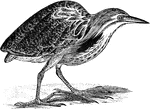
"Botaurus mugitans. American Bittern. Indian Hen. Stake-driver. Bog-Bull. Plumage of the upper parts singularly freckled with brown of various shades, blackish, tawny, and whitish; neck and under parts ochrey or tawny-white, each feather marked with a brown dark-edged stripe, the throat-line white, with brown streaks. A velvety-black patch on each side of the neck above. Crown dull brown, with buff superciliary stripe. Tail brown. Quills greenish-black, with a glaucous shade, brown-tipped. Iris yellow. Bill on the ridge brownish-black, the rest pale yellowish; a dark brown loral strip. Legs dull yellowish-green; claws brown.

American Bittern

"Botaurus mugitans. American Bittern. Indian Hen. Stake-driver. Bog-Bull. Plumage of the upper parts…
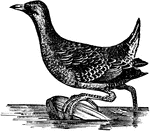
"Porzana carolina. Carolina Crake. Common Rail. "ortolan." Above, olive-brown, varied with black, with numerous sharp white streaks and specks; flanks, axilars and lining of wings, barred with white and blackish; belly whitish; crissum rufescent. Face and central line of throat black, the rest of the throat, line over eye, and especially the breast, more or less intensely slate-gray, the sides of the breast usually also with some obsolete whitish barring and speckling." Elliot Coues, 1884

Small Carolina Rail

"Porzana carolina. Carolina Crake. Common Rail. "ortolan." Above, olive-brown, varied with black, with…
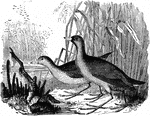
"Porzana carolina. Carolina Crake. Common Rail. "ortolan." Above, olive-brown, varied with black, with numerous sharp white streaks and specks; flanks, axilars and lining of wings, barred with white and blackish; belly whitish; crissum rufescent. Face and central line of throat black, the rest of the throat, line over eye, and especially the breast, more or less intensely slate-gray, the sides of the breast usually also with some obsolete whitish barring and speckling." Elliot Coues, 1884

Carolina Rail

"Porzana carolina. Carolina Crake. Common Rail. "ortolan." Above, olive-brown, varied with black, with…
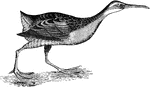
"Rallus longirostris crepitans. Clapper Rail. Salt-water Marsh-hen. Mud-hen. Above, variegated with olive-brown and pale olive-ash, the latter edging the feathers, the variegation dull and blended. Below, pale dull ochrey-brown, whitening on the throat, frequently ashy-shaded on the breast, without decided cinnamon-brown shade. Flanks, axillars, and lining of wings, fuscous-gray, with sharp narrow white bars. Quills and tail plain dark-brown, without chestnut on the coverts. Eyelids and short superciliary line whitish. The general tone is that of a gray bird, without any reddishness." Elliot Coues, 1884

Clapper Rail

"Rallus longirostris crepitans. Clapper Rail. Salt-water Marsh-hen. Mud-hen. Above, variegated with…
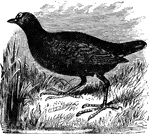
"Gallinula. Gallinules. Water Hens. Mud Hens. Bill not longer than head, stout at base, tapering, compressed, the culmen running directly up on the forehead and expanding into a frontal plate of different shape in different species. Nostrils near middle of bill, linear. Feet large and stout; tibia naked below; tarsus moderately compressed, scutellate; toes very long, the outer longer than the inner, with an evident though slight marginal membrane; claws long, slender, little curved, acute. Wings short and rounded, but ample. Tail very short, of 12 weak feathers, with long ample under coverts, as in Rails. Plumage not rich blue." Elliot Coues, 1884

Gallinule

"Gallinula. Gallinules. Water Hens. Mud Hens. Bill not longer than head, stout at base, tapering, compressed,…
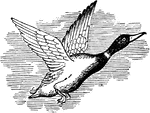
"Anus boscas. Mallard. Wild or Domestic Duck. Green-head. Bill greenish-yellow. Feet orange-red. Iris brown. Head and upper neck glossy-green, succeeded by a white ring. Breast purplish-chestnut. Lower back, rump, and tail-coverts glossy-black. Tail-feathers mostly whitish. Under parts from the breast, and scapulars, silvery-gray, finely undulated with dusky; crissum black. Speculum violet, purplish and greenish, framed in black and white tips of the greater coverts, and black terminal border. Feet and wings in the male, Bill blackish, blotched with orange, especially at base, tip and along edges. Entire body-colors with dusky-brown and tawny-brown; the tone paler and in finer pattern on the head, neck, and under parts than on the back." Elliot Coues, 1884

Wild Duck

"Anus boscas. Mallard. Wild or Domestic Duck. Green-head. Bill greenish-yellow. Feet orange-red. Iris…
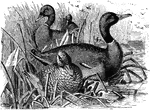
"Anus boscas. Mallard. Wild or Domestic Duck. Green-head. Bill greenish-yellow. Feet orange-red. Iris brown. Head and upper neck glossy-green, succeeded by a white ring. Breast purplish-chestnut. Lower back, rump, and tail-coverts glossy-black. Tail-feathers mostly whitish. Under parts from the breast, and scapulars, silvery-gray, finely undulated with dusky; crissum black. Speculum violet, purplish and greenish, framed in black and white tips of the greater coverts, and black terminal border. Feet and wings in the male, Bill blackish, blotched with orange, especially at base, tip and along edges. Entire body-colors with dusky-brown and tawny-brown; the tone paler and in finer pattern on the head, neck, and under parts than on the back." Elliot Coues, 1884

Mallards

"Anus boscas. Mallard. Wild or Domestic Duck. Green-head. Bill greenish-yellow. Feet orange-red. Iris…
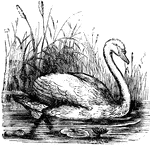
"Cygynus. White Swans. Neck of extreme length. Trachea normally entering sternum. Bill tuberculate or not, the skinny covering in the adults reaching to the eyes; not shorter than head, very high at base, where deeper than wide, broader and flattening toward the rounded end; culminal ridge at base about horizontal, very broad and flat or even excavated, the sides of the bill there nearly vertical. Nostrils near middle of bill, high up. Leg behind centre of equilibrium when the body is horizontal. Tibia bare below. Tarsus shorter than middle toe and claw, entirely reticulate; toes long, with full webs, the anterior reticulate on top for a distance, then scutellate. Hallux small, elevate, with slight lobe. Wings very long and ample. Tail short, rounded or wedged, of twenty or twenty-four feathers. Size large: adults entirely white, with black bill and feet, former usually in part yellow." Elliot Coues, 1884

Mute Swan

"Cygynus. White Swans. Neck of extreme length. Trachea normally entering sternum. Bill tuberculate or…
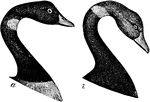
"Bernicla nigricans. Black Brant. Bill, feet, and claws black; iris brown. Head and neck all around, and a little of fore part of body, glossy-black, well defined against the color of the breast; on each side of the neck a small patch of white streaks; frequently also white touches on eyelids and chin. Breast ashy-gray, abruptly from the black, fading on the belly and crissum into white, shaded along the sides of the body; upper parts brownish-gray, the feathers of the dorsal region with paler gray tips; rump darker; upper tail-coverts white. Tail-feathers, wing-quills, and primary-coverts blackish, the inner quills whitish toward base." Elliot Coues, 1884

Black Brant Head

"Bernicla nigricans. Black Brant. Bill, feet, and claws black; iris brown. Head and neck all around,…
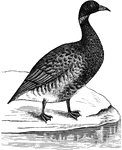
"Bernicla nigricans. Black Brant. Bill, feet, and claws black; iris brown. Head and neck all around, and a little of fore part of body, glossy-black, well defined against the color of the breast; on each side of the neck a small patch of white streaks; frequently also white touches on eyelids and chin. Breast ashy-gray, abruptly from the black, fading on the belly and crissum into white, shaded along the sides of the body; upper parts brownish-gray, the feathers of the dorsal region with paler gray tips; rump darker; upper tail-coverts white. Tail-feathers, wing-quills, and primary-coverts blackish, the inner quills whitish toward base." Elliot Coues, 1884

Black Brant

"Bernicla nigricans. Black Brant. Bill, feet, and claws black; iris brown. Head and neck all around,…
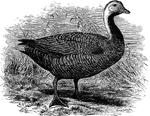
"Philacte canagica. Painted Goose. Emperor Goose. Wavy bluish-gray, with lavender or lilac tinting, and sharp black crescentic mark; head, nape, and tail white, former often washed with amber-yellow; throat black, white-speckled; quills varied with black and white; eye brown; feet flesh-color." Elliot Coues, 1884

Emperor Goose

"Philacte canagica. Painted Goose. Emperor Goose. Wavy bluish-gray, with lavender or lilac tinting,…
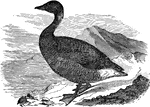
"Bernicla brenta. Brant Goose. Bill, feet, and claws black; iris brown. Head and neck all around, and a little of fore part of body, glossy-black, well defined against the color of the breast; on each side of the neck a small patch of white streaks; frequently also white touches on eyelid and chin. Beast ashy-gray, beginning abruptly from the black, fading on the belly and crissum into white, shaded along the sides of the body; upper parts brownish-gray, the feathers of the dorsal region with paler gray tips; rump darker; upper tail-coverts white. Tail-feathers, wing-quills, and primary-coverts blackish, the inner quills whitish toward base." Elliot Coues, 1884

Common Brant

"Bernicla brenta. Brant Goose. Bill, feet, and claws black; iris brown. Head and neck all around, and…
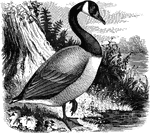
"Bernicla canadensis. Canada Goose. Common Wild Goose. Tail normally 18-feathered. Bill, feet, head, and neck black; on the chin a broad white patch mounting on sides of head behind eyes, sometimes broken on chin; not extending forward to jaws; white touches usually on eyelids. Upper tail-coverts definitely white; rump blackish; tail-feathers black. General color brownish-gray below, all the feathers with paler gray or whitish edges, those of sides of body usually darker than rest of under parts, the lower belly and crissum definitely white. Iris brown." Elliot Coues, 1884

Canada Goose

"Bernicla canadensis. Canada Goose. Common Wild Goose. Tail normally 18-feathered. Bill, feet, head,…
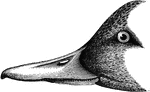
"Dafila. Pin-tail Ducks. Tail (in adult male) narrow, cuneate, when fully developed nearly as long as wing, the 2 central feathers long-exserted, linear-acute: in female and young the tail merely tapering, with acute feathers; tail-feathers 16, including the long middle pair. Bill shorter than head, longer than tarsus, nearly parallel sided, widening a little to the end, the nail small, the narrow nostrils high up in basal third of bill. Feathers of cheeks sweeping in strongly convex outline along side of upper mandible, beyond those on side of lower mandible. Wing acute, the 1st and 2d primaries subequal and longest, rest rapidly graduated. Neck unusually long and slender, and form less "stocky" than that of most ducks. Sexes and young very unlike in color, even to the wing-markings, as well as in shape of tail. Bill and feet dark. Under parts white or whitish." Elliot Coues, 1884

Pin-tail Duck Head

"Dafila. Pin-tail Ducks. Tail (in adult male) narrow, cuneate, when fully developed nearly as long as…
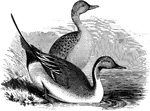
"Dafila acuta. Pin-tail Duck. Sprig-tail. Bill black, with grayish-blue edge of upper mandible; feet grayish-blue; claws black; iris brown. Head and neck above rich dark brown, glossed with green and purple; side of neck with a long white stripe running up from the white under parts; back of neck with a black stripe passing below into the gray color of the back; the lower fore-neck, breast, and under parts usually, white, the sides finely waved with black, the crissum black, white-bordered. Fore back finely waved with narrow bars of black and white or whitish; the scapulars and long tertiaries firmly striped lengthwise with velvety-black and silvery-gray. Lesser wing-coverts plain gray; greater tipped with reddish-buff, framing the speculum anteriorly; this is of coppery-or purplish-violet iridescence, framed posteriorly with black sub-tips and white tips of the secondaries, internally with silvery and black stripes. Tail-feathers gray, the long central ones blackish; sides and roots of tail varied with blackish and buff. It is thus a very handsome duck in full plumage, aside from the trim and clipper-like build." Elliot Coues, 1884

Pin-tail Ducks

"Dafila acuta. Pin-tail Duck. Sprig-tail. Bill black, with grayish-blue edge of upper mandible; feet…
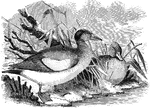
"Mareca americana. American Wigeon. Bald-pate. Bill grayish-blue, with black tip and extreme base; feet similar, duller, with dusky webs and claws; iris brown. Top of head white, or nearly so; sides the same, or more buffy, speckled with dusky-green, purer green forming a broad patch from and below eye to hind head; chin dusky. Fore neck and breast light brownish-red, or very pale purplish-cinnamon, each feather with paler grayish edge; along the sides of the body the same, finely waved with dusky; the breast and belly pure white, the crissum abruptly black. Lower hind neck and fore back and scapulars finely waved with the same reddish color and with dusky; lower back and rump similarly waved with dusky and whitish. Lesser wing-coverts plain gray; middle and greater coverts pure white, forming a large area, the greater black-tipped, forming the fore border of the speculum, which is glossy green, bordered behind by velvety black, internally by the black and white stripes on the inner secondaries. Tail brownish-gray, the lateral upper coverts black; axillary feathers white. Only old drakes have the crown immaculate white, the chin dusky, the auricular definitely green; generally the whole head and upper neck are pale brownish-yellow or reddish-white, speckled with greenish-Dusky." Elliot Coues, 1884

American Wigeon

"Mareca americana. American Wigeon. Bald-pate. Bill grayish-blue, with black tip and extreme base; feet…
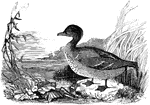
"Querquedula (N.) carolinensis. American Green-winged Teal. Bill black; feet bluish-gray: iris brown. A white crescent in front of wing. Head and upper neck rich chestnut, blackening on chin, with a glossy green patch behind each eye blackening on its lower border and on the nape where it meets its fellow among the lengthened feathers of the parts, bordered below by a more or less evident whitish line, which may often be traced to the angle of the mouth. Upper parts and flanks waved with narrow black bars on a whitish ground. Under parts white, becoming, becoming buff or fawn-colored on breast, nebulated with gray, on the breast with numerous sharp circular black spots; fore neck and sides of breast waved like the upper parts. Crissum black, with a buff or creamy patch on each side. Primaries and wing-coverts leaden gray; speculum velvety purplish-black on outer half, the inner half rich green; bordered in front with chestnut, fawn or whitish tips of the greater coverts, behind by white tips of secondaries, interiorly with purplish-black stripes on the outer webs of the lengthened secondaries." Elliot Coues, 1884

American Green-winged Teal

"Querquedula (N.) carolinensis. American Green-winged Teal. Bill black; feet bluish-gray: iris brown.…
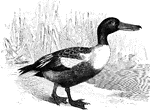
"Spatula clypeata. Shoveller Duck. Broad-bill. Bill blackish; iris orange-red: feet vermilion-red. Head and neck dark glossy green. Lower neck and fore breast pure white. Abdomen purplish-chestnut. Wing-coverts sky-blue; speculum rich green, set between white tips of greater coverts, and black subtips and white tips of secondaries; inner secondaries greenish-black, with long white stripe; long scapulars blue on outer webs, striped with white and greenish-black on inner; short anterior scapulars white. Rump and upper and under tail-coverts black; a white patch on each side at root of tail." Elliot Coues, 1884

Northern Shoveler

"Spatula clypeata. Shoveller Duck. Broad-bill. Bill blackish; iris orange-red: feet vermilion-red. Head…
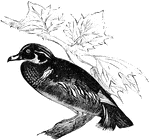
"Aix sponsa. Wood Duck. Summer Duck. "The Bride." Adult Male: Bill pinkish-white, with lake-red base, black ridge, tip, and under mandible; iris and edges of eyelids red; feet orange, with black claws. Upper part of the head, including crest, glistening green and purple; a narrow white line over eye from bill to occiput, and another behind eye to nape, these white lines mixing in the crest. A broad white patch on the throat, forking behind, one branch mounting head behind eye, the other passing to side of neck. Sides and front of lower neck and fore breast rich purplish-chestnut, prettily marked with several chain of angular white spots. A large white black-edged crescent of enlarged feathers in front of the wing. Under parts pure white, the sides yellowish-gray vermiculated with black and white wavy bars; the enlarged flank-feathers broadly rayed with black and white; the lining of the wings white barred with grayish-brown, of which color is the crissum. Upper parts generally lustrous with bronzy-green and purple; scapulars and inner secondaries velvet-black, glassed with purple and green; a green speculum, succeeded by white tips of the secondaries; primaries frosted on outer webs near end. Adult female: Little or no crest, but lengthened feathers on nape; no enlargement or special colorings of feathers about the wings. Bill dusky: feet yellowish-dusky. Head and neck gray, darker on crown, the chin and parts about bill and eyes white. Fore neck, breast and sides of body yellowish-brown, mottled with dark gray, the breast spotted with brown, the belly white. Upper parts dark brown with considerable gloss; wings as in the male, but the velvety-black reduced." Elliot Coues, 1884

Wood Duck

"Aix sponsa. Wood Duck. Summer Duck. "The Bride." Adult Male: Bill pinkish-white, with lake-red base,…
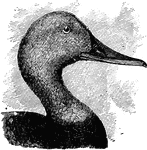
"Fuligula vallisneria. Canvas-back. Adult male: The head close-feathered. Bill high at the base and narrow throughout or scarcely widened toward end, sloping gradually up to the top of the head in line with the sweep of the forehead, altogether somewhat like a goose's in shape; decidedly longer than head, 2 &1/2 inches to nearly or quite 3 in length, measured along the culmen; the nostrils reaching the middle of the bill, their fore end half-way from the upper corner to end of bill. Bill not blue, black-belted, but blackish throughout. Eyes red. Feet grayish-blue. Head and upper neck not coppery brownish-red, but dark reddish-brown, further much obscured with dusky or quite blackish about the bill and on top. Ground color of back white, very finely vermiculated with zigzag blackish bars much narrower than the intervening spaces, and tending to break up, or mostly broken up, into little chains or dots across the feathers; the resulting silvery-gray tone consequently several shades lighter than in the red-head." Elliot Coues, 1884

Canvas-back Head

"Fuligula vallisneria. Canvas-back. Adult male: The head close-feathered. Bill high at the base and…