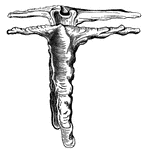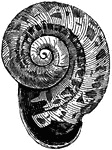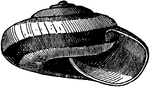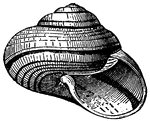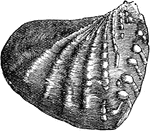
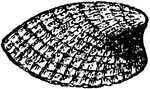
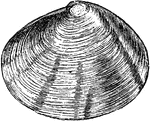
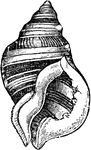
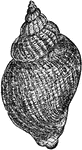
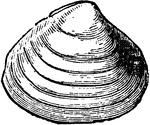
"Trigonia–a common Oolitic fossil." -Taylor, 1904

Trigonia

"Trigonia–a common Oolitic fossil." -Taylor, 1904

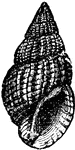
"Nassa reticulata." -Taylor, 1904

Nassa reticulata

"Nassa reticulata." -Taylor, 1904

"Pectunculus glycimeris." -Taylor, 1904

Pectunculus glycimeris

"Pectunculus glycimeris." -Taylor, 1904

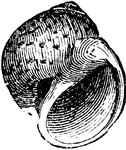
"Natica catenoides." -Taylor, 1904

Natica catenoides

"Natica catenoides." -Taylor, 1904

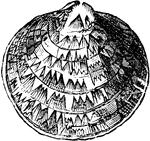
"Emarginula reticulata." -Taylor, 1904

Emarginula reticulata

"Emarginula reticulata." -Taylor, 1904

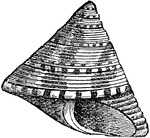
"Trochus ziziphinus." -Taylor, 1904

Trochus ziziphinus

"Trochus ziziphinus." -Taylor, 1904

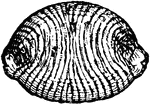
"Cyprea Europea." -Taylor, 1904

Cyprea Europea

"Cyprea Europea." -Taylor, 1904

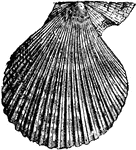
"Pecten varius." -Taylor, 1904

Pecten varius

"Pecten varius." -Taylor, 1904

"Tellina crassa." -Taylor, 1904

Tellina crassa

"Tellina crassa." -Taylor, 1904

"Purpura lapillus." -Taylor, 1904

Purpura lapillus

"Purpura lapillus." -Taylor, 1904

"White whelk (Buccinum undatum)." -Taylor, 1904

White Whelk

"White whelk (Buccinum undatum)." -Taylor, 1904

"Tellina Balthica— a common marine shell in the Boulder Clays." -Taylor, 1904

Tellina Balthica

"Tellina Balthica— a common marine shell in the Boulder Clays." -Taylor, 1904

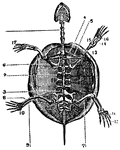
A skeleton of a tortoise The ribs of which are expanded, forming the dorsal part of its shell. Labels: 1, cervical; 2, dorsal; 3, lumbar vertebra; 4, scapula; 5, clavicle; 6, coracoid bone; 13, humerus; 14, ulna; 15, radius, 16, carpus. 17, phalanges (fingers); 7, femur; 8, tibia; 9, fibula; 10, tarsus. 11, metatarsus, 12, phalanges (toes).

Skeleton of a Tortoise

A skeleton of a tortoise The ribs of which are expanded, forming the dorsal part of its shell. Labels:…
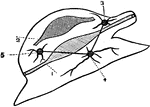
A diagram of a mollusca. Mollusca are soft-bodied animals that are usually protected by an external skeleton or shell composed of carbonate of lime. Labels: 1, Alimentary canal. 2, Heart. 3, Cerebral ganglion. 4, Pedal ganglion. 5, Ganglion of digestive organs and muscles.

Diagram of a Mollusca

A diagram of a mollusca. Mollusca are soft-bodied animals that are usually protected by an external…
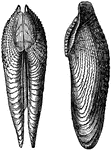
This species is able to hollow out a home in a solid block of gneiss, one of the hardest rocks. To excavate its cell at the bottom of one of these gloomy retreats seems to be all that the animal lives for.

Pholas Dactylus (Linnaeus)

This species is able to hollow out a home in a solid block of gneiss, one of the hardest rocks. To excavate…
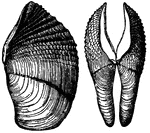
This species is able to hollow out a home in a solid block of gneiss, one of the hardest rocks. To excavate its cell at the bottom of one of these gloomy retreats seems to be all that the animal lives for.

Pholas Crispata (Linnaeus)

This species is able to hollow out a home in a solid block of gneiss, one of the hardest rocks. To excavate…
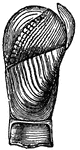
This species is able to hollow out a home in a solid block of gneiss, one of the hardest rocks. To excavate its cell at the bottom of one of these gloomy retreats seems to be all that the animal lives for.

Pholas Papyracea (Solander)

This species is able to hollow out a home in a solid block of gneiss, one of the hardest rocks. To excavate…
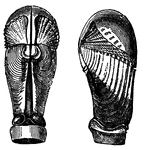
This species is able to hollow out a home in a solid block of gneiss, one of the hardest rocks. To excavate its cell at the bottom of one of these gloomy retreats seems to be all that the animal lives for.

Pholas Melanoura (Sowerby)

This species is able to hollow out a home in a solid block of gneiss, one of the hardest rocks. To excavate…
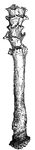
It has received the strange name of the Watering-pot because of a convex disk that is pierced with holes like a watering-pot. The animal is attached by certain muscles to the interior of the tube.

Aspergillum Vaginiferum (Lamarck)

It has received the strange name of the Watering-pot because of a convex disk that is pierced with holes…
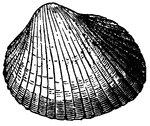
"The familiar cockles are among the most widely distributed of shells. A species common to the Atlantic coast. It's white or fawn-colored shell being hollowed out into twenty-six furrows, forming so many corrugated ripples on the side. It is considered good for food."

Cardium Edulis (Linnaeus)

"The familiar cockles are among the most widely distributed of shells. A species common to the Atlantic…
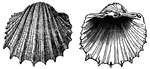
"The familiar cockles are among the most widely distributed of shells. An exotic species which inhabits the coast of Guinea and Senegal, the shell of which, white and fragile, is much sought after by collectors."

Cardium Costatum (Linnaeus)

"The familiar cockles are among the most widely distributed of shells. An exotic species which inhabits…
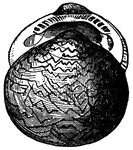
"On the shores of the Mediterranean and along the Atlantic coast, species of the genus <em>Pectunculus</em> are abundant. When taken alive, the animal sometimes exudes a thick mucous liquid over the shell, which has disgusted many a young collector with his capture."

Pectunculus Scriptus (Lamarck)

"On the shores of the Mediterranean and along the Atlantic coast, species of the genus Pectunculus

"Only six actually living species of the genus have been found; these inhabit the Indian Ocean, the Australian seas, and the Pacific Ocean. The interior of the pearl oyster-shell affords the most exquisite pearls."

Malleus Alba (Lamarck)

"Only six actually living species of the genus have been found; these inhabit the Indian Ocean, the…
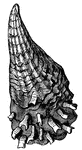
"The genus <em>Pinna</em> was so called from its resemblance to the plumelet which the Roman soldiers attached to their helmets. They are of a brown, smoky color, with a fibrous, horny shell, very thin and fragile."

Pinna Rudis (Linnaeus)

"The genus Pinna was so called from its resemblance to the plumelet which the Roman soldiers…
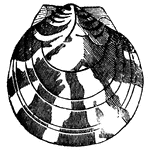
"The Watered Pecten belongs to the scallop-shells. The shell is generally nearly circular, more or less elongated, and terminated toward the summit in a straight line."

Pecten Pseudamussium (Chenu.)

"The Watered Pecten belongs to the scallop-shells. The shell is generally nearly circular, more or less…
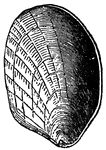
"The Molluscous Gasteropoda have the organs of respiration formed for aerial respiration or for respiration under water. A magic influence was attributed to them; they were supposed , for instance, to have an influence over the female heart."

Aplysia Depilans (Linn.)

"The Molluscous Gasteropoda have the organs of respiration formed for aerial respiration or for respiration…
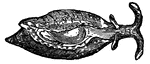
"The Molluscous Gasteropoda have the organs of respiration formed for aerial respiration or for respiration under water. Some of the species were known to the ancients as Sea-hares."

Aplysia Inca (D'Orbigny)

"The Molluscous Gasteropoda have the organs of respiration formed for aerial respiration or for respiration…
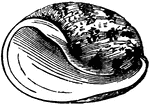
"The animals have a well-developed shell, the form of which is elegant and delicate in structure. They are found in almost every sea, but abound chiefly in the Indian ocean and Oceania."

Bulla Ampulla (Linnaeus)

"The animals have a well-developed shell, the form of which is elegant and delicate in structure. They…
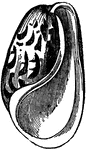
"The animals have a well-developed shell, the form of which is elegant and delicate in structure. They are found in almost every sea, but abound chiefly in the Indian ocean and Oceania."

Bulla Oblonga (Adams)

"The animals have a well-developed shell, the form of which is elegant and delicate in structure. They…
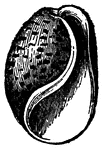
"The animals have a well-developed shell, the form of which is elegant and delicate in structure. They are found in almost every sea, but abound chiefly in the Indian ocean and Oceania."

Bulla Aspersa (Adams)

"The animals have a well-developed shell, the form of which is elegant and delicate in structure. They…
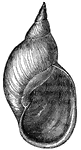
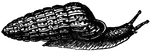
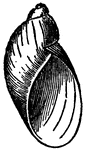
A thin diaphanous shell in which species of the genus Limnaea live. They can be found in the fresh waters of most countries.

Limnaea Stagnalis (Linnaeus)

A thin diaphanous shell in which species of the genus Limnaea live. They can be found in the fresh waters…
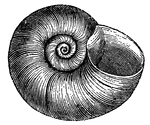
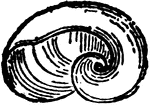
The shell of the Planorbis is thin, light and disk-like in form. The can creep along solid bodies, or swim upside-down through the water.

Planorbis Corneus (Linnaeus)

The shell of the Planorbis is thin, light and disk-like in form. The can creep along solid bodies, or…
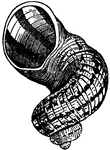
"The snails are male and female in the same individual, or hermaphrodite. The Romans had many species served up at their feasts, which they distinguished in categories according to the delicacy of their flesh."

Helix Aspersa (Var. Scalaris)

"The snails are male and female in the same individual, or hermaphrodite. The Romans had many species…

"The snails are male and female in the same individual, or hermaphrodite. [This is] the favorite culinary snail in the region around Paris"

Helix Pomatia (Linnaeus)

"The snails are male and female in the same individual, or hermaphrodite. [This is] the favorite culinary…
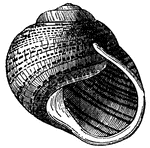
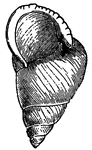
Tun-bottomed classification of the genus <em>Helix</em>.

Helix Undulata (Ferussac)

Tun-bottomed classification of the genus Helix.

Plain or biform classification of the genus <em>Helix</em>.

Helix Translucida (Linnaeus)

Plain or biform classification of the genus Helix.

Plain or biform classification of the genus <em>Helix</em>.

Helix Waltoni (Reeve)

Plain or biform classification of the genus Helix.

An "idea of the many elegant forms which the shell of the genus <em>Helix</em> assumes."

Helix Citrina

An "idea of the many elegant forms which the shell of the genus Helix assumes."

An "idea of the many elegant forms which the shell of the genus <em>Helix</em> assumes."

Helix Stuartia

An "idea of the many elegant forms which the shell of the genus Helix assumes."

Kindred of the genus <em>Helix</em>.

Pupa Uva

Kindred of the genus Helix.

Found "amid the grasses and in shrubs near brooks."

Succinea Putris (Linnaeus)

Found "amid the grasses and in shrubs near brooks."

This shell is so small that the animal cannot enter it.

Vitrina Fasciata (Ed. and Soul)

This shell is so small that the animal cannot enter it.

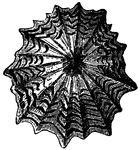
"Ruby-eyed Limpet, from the Antilles. If the common Limpet is alarmed, no human force, pulling in a direct line, can remove it."

Patella Granatina (Linnaeus)

"Ruby-eyed Limpet, from the Antilles. If the common Limpet is alarmed, no human force, pulling in a…
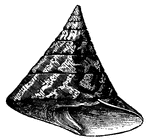
"The species of the genus <em>Trochus</em> are found in all seas, and near to the shore in the clefts of rocks, especially in places where seaweeds grow luxuriantly."

Trochus Niloticus (Linnaeus)

"The species of the genus Trochus are found in all seas, and near to the shore in the clefts…
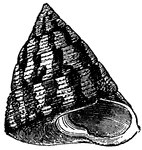
"The species of the genus <em>Trochus</em> are found in all seas, and near to the shore in the clefts of rocks, especially in places where seaweeds grow luxuriantly."

Trochus Virgatus (Gmel.)

"The species of the genus Trochus are found in all seas, and near to the shore in the clefts…
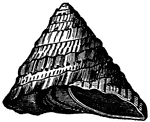
"The species of the genus <em>Trochus</em> are found in all seas, and near to the shore in the clefts of rocks, especially in places where seaweeds grow luxuriantly."

Trochus Inermis (Gmel.)

"The species of the genus Trochus are found in all seas, and near to the shore in the clefts…
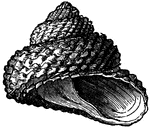
"The species of the genus <em>Trochus</em> are found in all seas, and near to the shore in the clefts of rocks, especially in places where seaweeds grow luxuriantly."

Trochus Cookii (Chemnitz)

"The species of the genus Trochus are found in all seas, and near to the shore in the clefts…
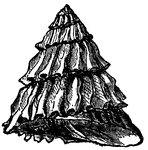
"The species of the genus <em>Trochus</em> are found in all seas, and near to the shore in the clefts of rocks, especially in places where seaweeds grow luxuriantly."

Trochus Imbricatus Gmel.)

"The species of the genus Trochus are found in all seas, and near to the shore in the clefts…
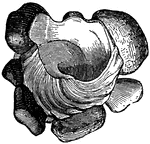
"The species of the genus <em>Trochus</em> are found in all seas, and near to the shore in the clefts of rocks, especially in places where seaweeds grow luxuriantly."

Phorus Conchyliophorus (Borfu)

"The species of the genus Trochus are found in all seas, and near to the shore in the clefts…
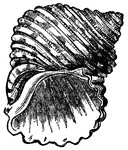
"A large thick and weighty shell, round-bellied and deeply furrowed; it is yellow, or rust-colored, marked my square, brown spots."

Turbo Margaritaceus (Linnaeus)

"A large thick and weighty shell, round-bellied and deeply furrowed; it is yellow, or rust-colored,…
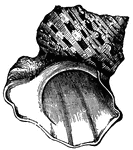
"The Marbled Turbo is the largest shell in the group. It is marbled green, white and brown outside, and superbly nacred inside."

Turbo Marmoratus (Linnaeus)

"The Marbled Turbo is the largest shell in the group. It is marbled green, white and brown outside,…
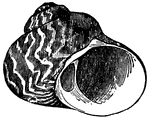
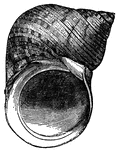
"The Wavy Turbo is commonly known as the Australian Serpent's-skin."

Turbo Undulatus (Chemnitz)

"The Wavy Turbo is commonly known as the Australian Serpent's-skin."

This specimen comes from the Chinese seas. It is green on the outside, and brilliantly nacred within.
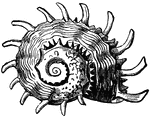
Turbo Imperialis (Gmel.)

This specimen comes from the Chinese seas. It is green on the outside, and brilliantly nacred within.

"The <em>Monodonta</em> are elegantly marked shells. Some curious specimens from this family come from the Indian ocean; they are remarkable for their numerous spines and the asperity of their shells."

Delphinula Sphaerula (Kiener)

"The Monodonta are elegantly marked shells. Some curious specimens from this family come from…
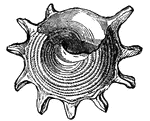
"The <em>Monodonta</em> are elegantly marked shells. Some curious specimens from this family come from the Indian ocean; they are remarkable for their numerous spines and the asperity of their shells. The Spurred Trochus, studded with radiating spines."

Imperator Stella (Lamarck)

"The Monodonta are elegantly marked shells. Some curious specimens from this family come from…
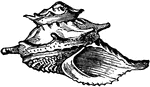
"The <em>Monodonta</em> are elegantly marked shells. Some curious specimens from this family come from the Indian ocean; they are remarkable for their numerous spines and the asperity of their shells. The Star Commander, a native of the Australian seas."

Imperator Stellaris (Lamarck)

"The Monodonta are elegantly marked shells. Some curious specimens from this family come from…
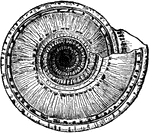
"The Staircase-shell is recognized by its deep umbilicus, wide and funnel-shaped, in the interior of which may be seen the little teeth which follow the edge of every turn of the spiral up to the top. The diameter of this shell is sometimes two and a half inches."

Solarium Perpectivum (Bottom View)

"The Staircase-shell is recognized by its deep umbilicus, wide and funnel-shaped, in the interior of…
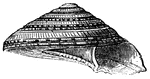
"The Staircase-shell is recognized by its deep umbilicus, wide and funnel-shaped, in the interior of which may be seen the little teeth which follow the edge of every turn of the spiral up to the top. The diameter of this shell is sometimes two and a half inches."

Solarium Perpectivum (Side View)

"The Staircase-shell is recognized by its deep umbilicus, wide and funnel-shaped, in the interior of…
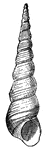
"Some other species, the names of which indicate a winding pyramid, have shells terminating in a sharp point, some of them having fluted spirals, others rounded, angular or flat."

Turritella Replicata (Linnaeus)

"Some other species, the names of which indicate a winding pyramid, have shells terminating in a sharp…
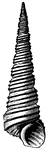
"Some other species, the names of which indicate a winding pyramid, have shells terminating in a sharp point, some of them having fluted spirals, others rounded, angular or flat."

Turritella Angulata (Sowerby)

"Some other species, the names of which indicate a winding pyramid, have shells terminating in a sharp…