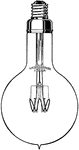
"Improved Mazda lamp for lighting large areas-- the most efficient lamp ever made." -Bodmer, 1917

Improved Mazda Light Bulb

"Improved Mazda lamp for lighting large areas-- the most efficient lamp ever made." -Bodmer, 1917
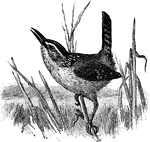
The Marsh Wren (Cistothorus palustris) is a small North American songbird of the wren family. It is sometimes called Long-billed Marsh Wren to distinguish it from the Sedge Wren, also known as Short-billed Marsh Wren. Adults have brown upperparts with a light brown belly and flanks and a white throat and breast. The back is black with white stripes. They have a dark cap with a white line over the eyes and a short thin bill.

Marsh Wren

The Marsh Wren (Cistothorus palustris) is a small North American songbird of the wren family. It is…
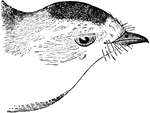
"Myiodioctes pussies. Blacked-capped Fly-catching Warbler. Upper parts, including exposed edging of the wings and tail, bright yellowish-olive; under parts, including front and sides of the head and superciliary line, rich yellow, shaded with olive on the sides. A squarish, glossy blue-black patch on the crown. Wings and tail plain fuscous, with greenish edging, unmarked with with other color. Upper mandible dark; under mandible and feet light." Elliot Coues, 1884

Black-capped Fly-catching Warbler

"Myiodioctes pussies. Blacked-capped Fly-catching Warbler. Upper parts, including exposed edging of…
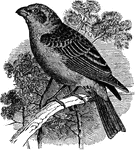
"Pinicola enucleator. Pine Grosbeak. Light carmine or rosy-red, feathers of back with dusky centres; lower belly and under tail-coverts gray, and, in general, the red continuous only in highly plumaged specimens. Nasal tufts and lores blackish. Wings blackish; primaries with narrow white or rosy edging, inner secondaries more broadly edged with white, ends of greater and middle coverts white or rosy, forming conspicuous wing-bars. Tail like wings, with narrow edgings like those of primaries. Bill blackish, with or without paler base below; feet blackish." Elliot Coues, 1884

Pine Grosbeak

"Pinicola enucleator. Pine Grosbeak. Light carmine or rosy-red, feathers of back with dusky centres;…
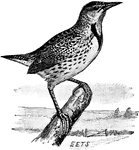
The Eastern Meadowlark, Sturnella magna, is a medium-sized icterid bird, very similar in appearance to the Western Meadowlark. It occurs from eastern North America to South America, where it is also most widespread in the east. Adults have yellow underparts with a black "V" on the breast and white flanks with black streaks. The upperparts are mainly brown with black streaks. They have a long pointed bill; the head is striped with light brown and black. The song of this bird is simpler and not warbled like that of the Western Meadowlark; their ranges overlap across central North America. In the field, the song is often the easiest way to tell the two species apart.

Eastern Meadowlark

The Eastern Meadowlark, Sturnella magna, is a medium-sized icterid bird, very similar in appearance…
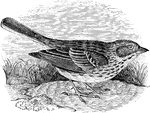
"Pooecetes gramineus. Grass Finch. Bay-winged Bunting. Vesper-bird. Above, grayish-brown, closely and uniformly marked with dusky-centered brown-edged streaks, and further variegated by pale gray edging of the feathers. Crown quite like back, though the marking is in smaller pattern; superciliary line and eye-ring whitish. Under parts dull white, usually noticeably buff-tinged in the streaked areas, thickly streaked across breast and along sides with dusky-centered brown-edged streaks, anteriorly tending to concentrate in lateral chains bounding the white throat; above this chain a maxillary brown stripe; auriculars varied with light and dark brown. Quills fuscous, the longer ones with grayish-white edging, the secondaries and greater and median coverts with broad firm brown and white edges and tips; lesser coverts bright chestnut, whence the name "bay-winged". Outer-feather largely or wholly white, next pair or two airs largely white in decreasing amount. Upper mandible brown; lower, and the feet, flash-colored or yellowish." Elliot Coues, 1884

Bay-winged Bunting

"Pooecetes gramineus. Grass Finch. Bay-winged Bunting. Vesper-bird. Above, grayish-brown, closely and…
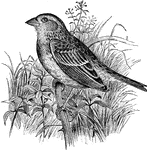
"Coturniculus passerinus. Yellow-winged Sparrow. Quail Sparrow. Grasshopper Sparrow. Edge of wing conspicuously yellow; lesser wing-coverts greenish-yellow; a yellow loral spot; short line over eye buffy-yellow. Crown with median stripe of pale brownish-yellow. Below, ochraceous or pale buff or tawny, fading to whitish on belly, not evidently streaked, though a few dark touches may appear on sides of breast. Above, singularly variegated with black, gray, yellowish-brown and a peculiar purplish-bay, in short streaks and specks; the crown being nearly black with sharp median brownish-yellow stripe, the middle of the back chiefly black with bay and brownish-yellow edgings of the feathers, the cervical region and rump chiefly bay and gray. When the feathers are not disturbed, the peculiar pattern of the cervical region separates that of the crown and back; the markings extend on the sides of the neck, but the sides of the head are plain, like the under parts. Wing-coverts and inner secondaries variegated in intricate pattern, the general effect like the back. Primaries and tail-feathers plain dusky, with narrow light edgings; outer tail-feathers paler, but not white. Feet flesh-colored." Elliot Coues, 1884

Yellow-winged Sparrow

"Coturniculus passerinus. Yellow-winged Sparrow. Quail Sparrow. Grasshopper Sparrow. Edge of wing conspicuously…
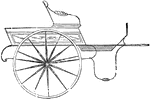
A chaise, sometimes called chay or shay, was a formerly popular, light two- or four-wheeled traveling or pleasure carriage, usually of a chair-backed type, with a movable hood or calash top. The name came from the French for chair, through a transference from a sedan-chair to a wheeled vehicle. The two-wheeled version, for one or two persons, also called a gig or one-horse shay, had a body hung on leather straps or thorough-braces and was usually drawn by one horse; a light chaise having two seats was a double chair . The four-wheeled pleasure carriage type was similar. The term chaise was also used for any light carriage or pleasure cart.

Chaise

A chaise, sometimes called chay or shay, was a formerly popular, light two- or four-wheeled traveling…
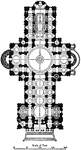
This is a plan of the St Paul's Cathedral in London, England. It is an example of English Renaissance architecture. The construction lasted from 1675 to 1710. Sir Christopher Wren designed the cathedral. "In plan, Wren's design was in accordance with the traditional arrangement of an English cathedral, with nave, north and south transepts and choir, in all the cases with side aisles together...Wren introduced a series of cupolas over the main arms of the cathedral, which enabled him to light with clerestory windows; these are not visible on the exterior, as they are masked by the upper storey which Wren carried round the whole structure, in order, probably, to give it greater height and importance." The scale is given in feet.

Plan of St Paul's Cathedral, London, 1675–1710

This is a plan of the St Paul's Cathedral in London, England. It is an example of English Renaissance…
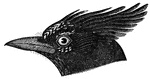
"Cyanocitta stelleri macrolopha. Long-crested Jay. Upper parts sooty umber-brown, with a faint blue tinge, blackening on head and neck all around in decided contrast, passing on rump and upper tail-coverts into beautiful light cobalt-blue; passing on fore breast into the same blue which occupies all the under parts. Crest black, but faced on forehead with bluish-white, which, when the feathers are not disturbed, runs in two parallel lines from the nostrils upward - these colored tips of the feathers of firmer texture than their basal portions. One or both eyelids patched with white. Chin abruptly whitish, streaky. Exposed surfaces of wings rich indigo-blue, most intense on the inner secondaries, which, with the greater coverts, are regularly and firmly barred across both webs with black; the outer webs of the primaries lighter blue, more like that of the rump or under parts, Upper surface of tail rich indigo, like the secondaries, and similarly black-barred; these bands most distinct towards the end and on the outer webs of the feathers; tail viewed from below appearing mostly blackish. Iris dark. Bill and feet black." Elliot Coues , 1884

Long-crested Jay

"Cyanocitta stelleri macrolopha. Long-crested Jay. Upper parts sooty umber-brown, with a faint blue…
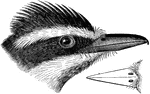
"Pitangus derbianus. Derby Flycatcher. Under parts light wood-brown, with an olive tinge; wings and tail the same, but the feathers extensively bordered without and within with chestnut, forming a conspicuous continuous area on the wing-quills in the closed wing, and on most of the wing and tail-feathers more extensively than the brown portion of the inner webs. Below from the breast, including lining of wings, clear and continuous lemon-yellow. Whole chin and throat pure white, widening behind up under ear-coverts. Top and sides of head black, a circle of white from forehead over eyes to nape white, the enclosed black enclosing black a lemon and orange patch. Or, middle of crown yellow and orange, enclosed and partly concealed in black, this black enclosed in white, then the long and broad black bar on side of head, separating the white of side of crown from that of side of throat. The coronal feathers lengthened and erectile as in a king-bird, or more so; crown-patch of same character but more extensive. Bill and feet black; iris hazel Sexes alike." Elliot Coues, 1884

Derby Flycatcher

"Pitangus derbianus. Derby Flycatcher. Under parts light wood-brown, with an olive tinge; wings and…
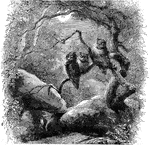
"Scops. Little Horned Owls. Screech Owls. Like the miniature Bubo in form (all our species under a foot long). Skull and ear-parts symmetrical; latter small, simply elliptical, with rudimentry operculum; facial disc moderately developed; plumicorns evident; nostrils at edge of cere, which is not inflated, and shorter than the rest of the culmen. Wings rounded, but long, about twice the length of the short rounded tail, about to the end which they fold; in our species the 4th and 5th primaries longest, the 1st quite short; 3 or 4 outer primaries sinuate or emarginate on inner webs. Tarsus feathered (in our species), but toes only partly bristly (in the S. asio group) or quite naked (as in S. Flammeola). Plumage dichromatic in some cases; i.e. some individuals of the same species normally mottled gray, while others are reddish, the two phases very distinct when fully developed, but shading insensibly into each other, and entirely independent of age, season, or sex. In normal plumage, a white or whitish scapular stripe; lower parts with lengthwise blotches or shaft-lines and crosswise bars or waves of blackish or dark colors; upper parts with black or blackish shaft-lines on a finely-dappled brown or gray ground (more or less obliterated in the red phase); facial disc black-bordered nearly all around; wing-quills spotted or marbled on outer webs, barred on inner webs. Tail with light and dark bars. A large and nearly cosmopolitan genus, especially rich in tropical species; but only two are known to inhabit N. Am. one of them running into several local races very difficult to characterize satisfactorily." Elliot Coues, 1884

Screech Owls

"Scops. Little Horned Owls. Screech Owls. Like the miniature Bubo in form (all our species under a foot…
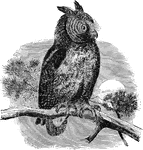
Scops. Little Horned Owls. Screech Owls. Like the miniature Bubo in form (all our species under a foot long). Skull and ear-parts symmetrical; latter small, simply elliptical, with rudimentry operculum; facial disc moderately developed; plumicorns evident; nostrils at edge of cere, which is not inflated, and shorter than the rest of the culmen. Wings rounded, but long, about twice the length of the short rounded tail, about to the end which they fold; in our species the 4th and 5th primaries longest, the 1st quite short; 3 or 4 outer primaries sinuate or emarginate on inner webs. Tarsus feathered (in our species), but toes only partly bristly (in the S. asio group) or quite naked (as in S. Flammeola). Plumage dichromatic in some cases; i.e. some individuals of the same species normally mottled gray, while others are reddish, the two phases very distinct when fully developed, but shading insensibly into each other, and entirely independent of age, season, or sex. In normal plumage, a white or whitish scapular stripe; lower parts with lengthwise blotches or shaft-lines and crosswise bars or waves of blackish or dark colors; upper parts with black or blackish shaft-lines on a finely-dappled brown or gray ground (more or less obliterated in the red phase); facial disc black-bordered nearly all around; wing-quills spotted or marbled on outer webs, barred on inner webs. Tail with light and dark bars. A large and nearly cosmopolitan genus, especially rich in tropical species; but only two are known to inhabit N. Am. one of them running into several local races very difficult to characterize satisfactorily." Elliot Coues, 1884

Screech Owl

Scops. Little Horned Owls. Screech Owls. Like the miniature Bubo in form (all our species under a foot…
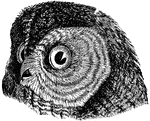
"Strix nebulosa. Barred Owl. Hoot Owl. American Wood Owl. Toes fully feathered, nearly or quite to the claws, which are blackish; bill yellow; iris black. Of medium size in this genus. Markings of back and breast in cross-bars, of belly in lengthwise stripes. Above, umber-brown or liver-color, everywhere with white or tawny, or both; breast the same; on the belly the pattern changing abruptly to heavy dusky shaft-stripes on a white or tawny ground; crissum the same; feet speckled with dusky; wings and tail like the back or rather darker, regularly barred with gray, light brown or tawny, some of the bars usually making white spots at their ends, and the markings of the wing-coverts rather in spots than bars. Lining of wings tawny, with some dusky spotting. Facial disc set in a frame of black and white specks, with blackened eye-lids, and obscurely watered with lighter and darker colors in rings around the eye as a centre, the bristly feathers about the bill mixed black and white, or white at base, blackened terminally. A notably large and somewhat impressive owl of Eastern North America, common in woodland of the U.S. especially southerly; not known to range much north of the U.S. though occurring in parts of Canada, and not reported from the West, where apparently replaced by S. occidentalis." Elliot Coues, 1884

Barred Owl

"Strix nebulosa. Barred Owl. Hoot Owl. American Wood Owl. Toes fully feathered, nearly or quite to the…
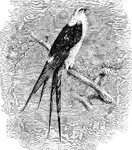
"Elanoides forficatus. Swallow-tailed Kite. Adult: Head, neck, band on rump, and entire under parts, including lining of wings, snow-white; back, wings, and tail, glossy black, with various lustre, chiefly green and violet. Bill bluish-black; cere, edges of mandibles, and feet pale bluish, the latter tinged with greenish; claws light-colored." Elliot Coues, 1884

Swallow-tailed Kite

"Elanoides forficatus. Swallow-tailed Kite. Adult: Head, neck, band on rump, and entire under parts,…
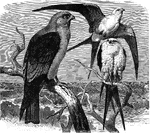
Two Swallow-tail and One Mississippi Kite. "Ictinia subcaerulea. Mississippi Kite. General plumage plumbeous or dark ashy-gray, bleaching on the head and secondaries, blackening on the tail and wings, several primaries more (male) or less (female) suffused with chestnut-red on the inner web or on both webs. Forehead and tips of secondaries usually silvery-whitish; concealed white spots on the scapulars; bases of the head and under parts fleecy-white. Lores eyelids, and bill, including cere, black; gape of mouth and feet, orange, the latter obscures on the front tarsus, and along the tops of the toes; iris lake-red. Feet and cere drying to a nameless dingy color." And "Elanoides forficatus. Swallow-tailed Kite. Adult: Head, neck, band on rump, and entire under parts, including lining of wings, snow-white; back, wings, and tail, glossy black, with various lustre, chiefly green and violet. Bill bluish-black; cere, edges of mandibles, and feet pale bluish, the latter tinged with greenish; claws light-colored." Elliot Coues, 1884

Two Swallow-tail and One Mississippi Kites

Two Swallow-tail and One Mississippi Kite. "Ictinia subcaerulea. Mississippi Kite. General plumage plumbeous…

"The purity of style, however, of the Genoese palaces is not so great as in the Roman, particularly as regards the heavy, ungraceful forms of details. This is shown by [this image], and there are other instances in which the faults are more marked than in the palaces in question. The palaces of Genoa may, however, be favorably contrasted with the Roman as regards height; for ground-floor and the mezzanine are raised considerably, in order to gain more light and a better view from the main storey. Owing, however, to the extreme narrowness of the streets and the consequent difficulty in obtaining a satisfactory point of view, the object is not obtained to the desired degree."

Half the Façade of a Palace at Genoa

"The purity of style, however, of the Genoese palaces is not so great as in the Roman, particularly…
"The purity of style, however, of the Genoese palaces is not so great as in the Roman, particularly as regards the heavy, ungraceful forms of details. This is shown by [this image], and there are other instances in which the faults are more marked than in the palaces in question. The palaces of Genoa may, however, be favorably contrasted with the Roman as regards height; for ground-floor and the mezzanine are raised considerably, in order to gain more light and a better view from the main storey. Owing, however, to the extreme narrowness of the streets and the consequent difficulty in obtaining a satisfactory point of view, the object is not obtained to the desired degree."

Façade of the Tursi-Doria Palace at Genoa

"The purity of style, however, of the Genoese palaces is not so great as in the Roman, particularly…

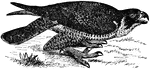
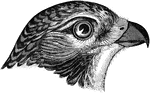
"Falco peregrinus. Peregrine Falcon. Duck Hawk. Great-footed Hawk. A medium-sized falcon, about as large as the foregoing, but known at a glance from any bird of N. Am. by the slaty-plumbeous or dark bluish-ash of the upper parts, the black "moustache," and other marks, taken with its particular size and shape. Wings stiff, long, thin, pointed by the 2d quill, supported nearly to its tip by 1st and 3d; 1st quill alone abruptly emarginate on inner web, this about 2 inches from its tip; none cut on outer webs. Tomium of upper mandible strongly toothed, of under mandible deeply notched. Tarsus feathered but a little way down in front, otherwise entirely reticulate; toes very long, giving great grasp to the talons. Adult: Above rich dark bluish-ash or slate-color, very variable, sometimes quite slaty-blackish, again much lighter bluish-slate; the tint pretty uniform, whatever it may be, over all the upper parts, but all the feathers with somewhat paler edges, and the larger ones for the most part obscurely barred with lighter and darker hues. Under parts at large varying from nearly pure white to a peculiar muddy buff color of different degrees of intensity; the throat and breast usually free from markings (or only with a few sharp shaft pencillings), and this white or light color mounting on the auriculars, so that it partly isolates a blackish moustache from the blackish of the side of the head; the under parts, except as said, and including the under wing- and tail-coverts closely and regularly barred, or less closely and more irregularly spotted, with blackish; the bars best pronounced on the flanks, tibiae, and crissum, other parts tending to spotting, which may extend forward to invade the breast (this is the rule in European birds, the exception, though not a rare one, in American birds). Tail and its upper coverts regularly and closely barred with blackish and ashy-gray, the interspacing best marked on the inner webs, and all the feathers narrowly tipped with white or whitish." Elliot Coues, 1884

Peregrine Falcon Small

"Falco peregrinus. Peregrine Falcon. Duck Hawk. Great-footed Hawk. A medium-sized falcon, about as large…
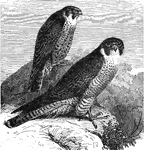
"Falco peregrinus. Peregrine Falcon. Duck Hawk. Great-footed Hawk. A medium-sized falcon, about as large as the foregoing, but known at a glance from any bird of N. Am. by the slaty-plumbeous or dark bluish-ash of the upper parts, the black "moustache," and other marks, taken with its particular size and shape. Wings stiff, long, thin, pointed by the 2d quill, supported nearly to its tip by 1st and 3d; 1st quill alone abruptly emarginate on inner web, this about 2 inches from its tip; none cut on outer webs. Tomium of upper mandible strongly toothed, of under mandible deeply notched. Tarsus feathered but a little way down in front, otherwise entirely reticulate; toes very long, giving great grasp to the talons. Adult: Above rich dark bluish-ash or slate-color, very variable, sometimes quite slaty-blackish, again much lighter bluish-slate; the tint pretty uniform, whatever it may be, over all the upper parts, but all the feathers with somewhat paler edges, and the larger ones for the most part obscurely barred with lighter and darker hues. Under parts at large varying from nearly pure white to a peculiar muddy buff color of different degrees of intensity; the throat and breast usually free from markings (or only with a few sharp shaft pencillings), and this white or light color mounting on the auriculars, so that it partly isolates a blackish moustache from the blackish of the side of the head; the under parts, except as said, and including the under wing- and tail-coverts closely and regularly barred, or less closely and more irregularly spotted, with blackish; the bars best pronounced on the flanks, tibiae, and crissum, other parts tending to spotting, which may extend forward to invade the breast (this is the rule in European birds, the exception, though not a rare one, in American birds). Tail and its upper coverts regularly and closely barred with blackish and ashy-gray, the interspacing best marked on the inner webs, and all the feathers narrowly tipped with white or whitish." Elliot Coues, 1884

Two Peregrine Falcons

"Falco peregrinus. Peregrine Falcon. Duck Hawk. Great-footed Hawk. A medium-sized falcon, about as large…
"Buteo borealis. Red-tailed Buzzard. "Hen Hawk". Upper surface of tail rich chestnut, with white tip and usually a black subterminal zone, with or without other narrower and more or less imperfect black bars; sometimes barred throughout. From below, the tail appears pearly whitish with a reddish tinge, wither quite uniform, or barred throughout with the whitish and blackish. In general, it is the female with the most barred or completely barred tail, the male with the uniform tail, only subterminally once-zoned. Upper parts blackish-brown, with a thoroughly indeterminate amount of light variegation, gray, fulvous, and whitish; feathers of hind head and nape with cottony white bases, showing when disturbed; those of hind neck usually with fulvous edging; of scapular region showing most variegation with tawny or whitish, or both, the scapulars and adjoining feathers being largely barred, and only blackish on their exposed portions; upper tail-coverts showing much tawny and white. Ground color of under parts white, more or less buff-toned, the dark color of the upper parts reaching nearly or quite around the throat, the flanks and lower belly heavily marked with dark brown or blackish, but a large pectoral area, with the tibiae and crissum, mostly free from markings, as a rule; but no description will cover the latitude of coloration. Primaries blackening on their exposed portions, for the rest lighter grayish-brown, dark-barred across both webs, and extensively white-areated on inner webs basally." Elliot Coues, 1884

Red-tailed Buzzard

"Buteo borealis. Red-tailed Buzzard. "Hen Hawk". Upper surface of tail rich chestnut, with white tip…
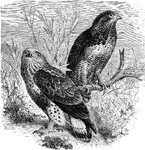
"Archibuteo lagopus sancti-johannis. American Rough-legged Buzzard. "Black Hawk" Adult: Too variable in plumage to be concisely described. In general, the whole plumage with dark brown or blackish and light brown, gray, or whitish, the lighter colors edging or barring the individual feathers; tendency to excess of the whitish on the head, and to the formation of a dark abdominal zone or area which may or may not include the tibiae; usually a blackish anteorbital and maxillary area. Lining of wings extensively blackish. Tail usually white from the base for some distance, then with dark and light barring. The inner webs of the flight-feathers white from the base, usually with little if any of the dark barring so prevalent among buteonine hawks. From such a light and variegated plumage as this, the bird varies to more or less nearly uniform blackish, in which case the tail is usually barred several times with white. Our lighted-colored birds are not fairly separable from the normal European A. Lagopus; but our birds average darker, and their frequent melanism does not appear to befall the European stock. But in any plumage the rough-leg is known at a glance from any Buteo by the feathered shanks; while the peculiar coloration of A. ferrugineus i highly distinctive of the latter." Elliot Coues, 1884

American Rough-legged Buzzard

"Archibuteo lagopus sancti-johannis. American Rough-legged Buzzard. "Black Hawk" Adult: Too variable…

"Ectopistes migratorius. Passenger Pigeon. Wild Pigeon Adult: Upper parts, including head all around, slaty-blue, bright and pure on head and rump, shaded with olivaceous-gray on the back and wings; the back and sides of the neck glittering with golden and violet iridescence, the wing-coverts with velvety-clack spots. Below, from the throat, light purplish-chestnut, paler behind and fading into white on the lower belly and crissum. Tibiae, sides of body, and lining of wings like upper parts. Quills blackish, with rufous-white edging. Two middle tail-feathers blackish; others fading from pearly-bluish into white, their extreme bases with black and chestnut spots. Bill black; feet lake red, drying and undefinable color; iris orange; skin about eye red." Elliot Coues, 1884

Passenger Pigeon

"Ectopistes migratorius. Passenger Pigeon. Wild Pigeon Adult: Upper parts, including head all around,…
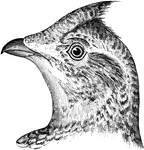
"Pediaecetes phasianellus Columbianus. Common Sharp-tailed Grouse. Upper parts closely and pretty evenly variegated with blackish-brown, reddish-brown, and grayish-brown, the pattern smallest on the rump and lower back, where the blackish is mostly in sharp-angled stars; the reddish most conspicuous on the upper back, and both the lighter colors everywhere finely sprinkled with blackish. Wing-coverts like the upper back, but with numerous conspicuous rounded white spots, one on the end of each feather. Crown and back of neck nearly like the back, but in smaller pattern, and the markings mostly transverse. An illy-defined white area on each side of the neck, over the tympanum, and slight whitish stripe behind the eye. Throat fine light buff, usually immaculate, but sometimes finely speckled quite across. Under parts white, more or less tinted with buff towards the throat; the breast with numerous regular dark-brown U-shaped spots, one on each feather; similar but smaller, sharper, and fewer such spots thence scattered over most of the under parts, only the middle of the belly being left unmarked. Long feathers of the sides under the wings matching the upper wing-coverts nearly; under wing-coverts and axillaries pure white, not marked; flanks with bars or U-spots of dark brown. Legs grayish-white, unmarked. Quills of the wings fuscous; outer webs of the secondaries with equidistant, squarish, white or tawny spots, the secondaries tipped and imperfectly twice or thrice barred with white, gradually becoming sprinkled with the varied colors of the back, so that the innermost of them are almost precisely like the greater coverts. Four middle tail-feathers variegated, much like the back; others white, or grayish-white, on the inner webs, the outer webs being mottled; a few under tail-coverts spotted, the rest white; upper tail-coverts nearly like the rump. Iris light brown; bill dark horn-color; part of under mandible flesh-colored; claws like bill; toes on top light horn-color, the soles darker." Elliot Coues, 1884

Sharp-tailed Grouse

"Pediaecetes phasianellus Columbianus. Common Sharp-tailed Grouse. Upper parts closely and pretty evenly…
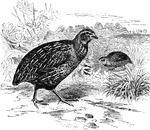
"Coturnix dactylisonans. Messina Quail. Migratory Quail. Common Quail of Europe. Upper parts variegated with buff or whitish and black upon a mixed reddish-brown and gray ground, the most conspicuous markings being sharp lance-lineal lengthwise stripes of buff or whitish over most of the upper parts, these dashes mostly edged with black; other less prominent buff or whitish cross-bars, several to a feather, likewise framed in black. Crown mixed brown and black, with sharp median and lateral buff stripes. Throat white, bounded before by a dark bar curving down behind the auriculars; behind, by a necklace of ruddy-brown, blackish, or whitish spots; chin varied with dark marks n advance of the auricular bar. Under parts fading to whitish from the buff or pale yellowish-brown breast, without any dark crossbars, but the long feathers of the sides and flanks with large and conspicuous white shaft-stripes and otherwise variegated with black, brown, and buff. Primaries fuscous, spotted with light brown on outer webs; secondaries similar, but the markings becoming bars on both webs. Tail-feathers brownish-black, much varied with shaft-lines, cross-bars, and edgings of buff; crissum immaculate, like the abdomen. Bill dark; feet pale; iris dark brown." Elliot Coues, 1884

Common Quail of Europe

"Coturnix dactylisonans. Messina Quail. Migratory Quail. Common Quail of Europe. Upper parts variegated…
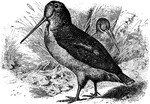
"Philohela minor. Woodcock. Bog-sucker. Colors above harmoniously blended and varied black, brown, gray, and russet; below, pale warm brown of variable shade, not barred. A dark stripe from bill to eye. Crown from opposite eye with black and light bars; along the inner edges of the wings a bluish-ashy stripe; lining of wings rust-brown; quills plain fuscous; tail black, spotted, and tipped; bill brownish flesh-color, dusky at end; feet pale reddish flesh-color." Elliot Coues, 1884

American Woodcock

"Philohela minor. Woodcock. Bog-sucker. Colors above harmoniously blended and varied black, brown, gray,…
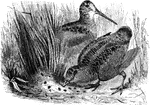
"Philohela minor. Woodcock. Bog-sucker. Colors above harmoniously blended and varied black, brown, gray, and russet; below, pale warm brown of variable shade, not barred. A dark stripe from bill to eye. Crown from opposite eye with black and light bars; along the inner edges of the wings a bluish-ashy stripe; lining of wings rust-brown; quills plain fuscous; tail black, spotted, and tipped; bill brownish flesh-color, dusky at end; feet pale reddish flesh-color." Elliot Coues, 1884

Probing American Woodcock

"Philohela minor. Woodcock. Bog-sucker. Colors above harmoniously blended and varied black, brown, gray,…
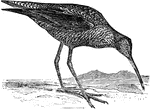
"Micropalama himantopus. Stilt Sandpiper. In summer: blackish, each feather edged and tipped with white and tawny or bay, which on the scapulars becomes scalloped. Auriculars chestnut; a dusky line from bill to eye, and a light reddish superciliary one; upper tail-coverts white with dusky bars. Primaries dusky with blackish tips; tail-feathers 12 ashy-gray, their edges and a central field white; under parts mixed reddish, black, and whitish, in streaks on the jugulum, elsewhere in bars; bill and feet greenish-black." Elliot Coues, 1884

Stilt Sandpiper

"Micropalama himantopus. Stilt Sandpiper. In summer: blackish, each feather edged and tipped with white…
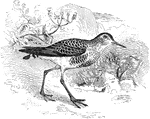
"Calidris arenaria. Sanderling. Ruddy "Plover". Adult in summer: Entire upper parts and neck all round variegated with black, light ashy and bright reddish; on the back and scapulars each feather having a central black field, and being broadly margined and tipped with ashy or reddish. Under parts white, immaculate. Outer webs an tips of primaries deep brownish-black, inner light ashy. A white spot at base of inner primaries. Secondaries mostly pure white; the outer vanes and part of inner on the latter half dusky. Greater coverts dusky, broadly tipped and narrowly edged with pure white. Rump, upper tail-coverts and central tail-feathers dusky, tipped and narrowly edged with ashy-white; lateral tail=-feathers very light ash, nearly white. Bill and feet black." Elliot Coues, 1884

Sanderling

"Calidris arenaria. Sanderling. Ruddy "Plover". Adult in summer: Entire upper parts and neck all round…
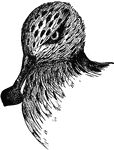
"Eurynorhynchus pygmaeus. Spoon-billed Sandpiper. General appearance of a stint, and size little greater. Coloration of upper parts almost exactly as in the species just names, the feathers being black, with indented light chestnut-red edgings, and mostly grayish-white tips; crown simply streaked with the reddish color and black. Under parts white, the whole throat, breast, and sides of the neck overlaid with bright chestnut (as in a highly-plumaged sanderling), the breast, back of this colored area, and the sides of the body, spotted with dusky. Primaries plain dusky, with blackish outer webs and ends, and mostly white shafts; secondaries mostly white from the base; greater coverts white-tipped. Bill and feet black." Elliot Coues, 1884

Spoon-billed Sandpiper

"Eurynorhynchus pygmaeus. Spoon-billed Sandpiper. General appearance of a stint, and size little greater.…
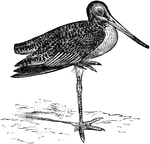
"Limosa fedoa. Great Marbled Godwit. Marlin. Feathers not extending on side of lower mandible to a point far beyond those on upper. no white anywhere; rump, tail, and its coverts barred throughout with blackish and the body-color. Lining of wings chestnut; axillars the same, more or less barred with black. General color rufous or light dull cinnamon-red, uniform and nearly uninterrupted on all the under parts, richer and more chestnut on the lining of the wings and axillars; somewhat marked with dusky on the sides of the breast and body; on the whole upper parts variegated with the brownish-black central field of each feather, the blackish predominating, leaving the rufous chiefly as scallops and tips of the feathers. This rufous very variable in intensity; usually paler on upper than on under parts, and strongest under the wings. Primaries rufous, successively darkening from the last to first, the outer webs and ends of the few outer ones blackish, the shaft of the first white. Bill livid flesh-colored, blackish on about terminal third; legs ashy-blackish." Elliot Coues, 1884

Marbled Godwit

"Limosa fedoa. Great Marbled Godwit. Marlin. Feathers not extending on side of lower mandible to a point…
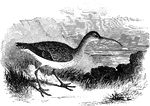
"Numenius hudsonicus. Hudsonian Curlew Jack Curlew. General tone of coloration scarcely rufous, the under parts, and the variegation of the upper, being whitish or ochraceous. No white on rump, tail, or lining of wings. Top of head uniform blackish-brown, with well-defined whitish median and lateral stripes (as in phaeopus, but neither longirostris nor borealis). Upper parts brownish-black, speckled with whitish, ochraceous or pale cinnamon-brown, in same pattern as in longirostris, but the dark in excess of the light colors, and these never strongly rufescent. Tail ashy-brown (not rufous), with numerous narrow blackish bars. Primaries fuscous, marbled or broken-barred with pale color (pattern as in longirostris, tone not strongly rufous). Lining of wings and axillars rufescent, but spotted or barred throughout with dusky. Under parts soiled whitish or somewhat ochraceous, only obscurely rufescent on crissum, if anywhere; the jugulum and fore-breast with dusky streaks which, as in other species, change to arrow-heads or incomplete bars on sides of breast and body. Bill blackish, some part of lower mandible pale; feet dark." Elliot Coues, 1884

Hudsonian Curlew

"Numenius hudsonicus. Hudsonian Curlew Jack Curlew. General tone of coloration scarcely rufous, the…
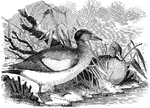
"Mareca americana. American Wigeon. Bald-pate. Bill grayish-blue, with black tip and extreme base; feet similar, duller, with dusky webs and claws; iris brown. Top of head white, or nearly so; sides the same, or more buffy, speckled with dusky-green, purer green forming a broad patch from and below eye to hind head; chin dusky. Fore neck and breast light brownish-red, or very pale purplish-cinnamon, each feather with paler grayish edge; along the sides of the body the same, finely waved with dusky; the breast and belly pure white, the crissum abruptly black. Lower hind neck and fore back and scapulars finely waved with the same reddish color and with dusky; lower back and rump similarly waved with dusky and whitish. Lesser wing-coverts plain gray; middle and greater coverts pure white, forming a large area, the greater black-tipped, forming the fore border of the speculum, which is glossy green, bordered behind by velvety black, internally by the black and white stripes on the inner secondaries. Tail brownish-gray, the lateral upper coverts black; axillary feathers white. Only old drakes have the crown immaculate white, the chin dusky, the auricular definitely green; generally the whole head and upper neck are pale brownish-yellow or reddish-white, speckled with greenish-Dusky." Elliot Coues, 1884

American Wigeon

"Mareca americana. American Wigeon. Bald-pate. Bill grayish-blue, with black tip and extreme base; feet…
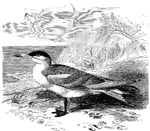
"Sterna (T.) caspia. Caspian Tern. Imperial Tern. Bill dark vermilion red, growing and somewhat "diaphanous" toward the tip. Pileum and occipital crest glossy greenish-black, extending to below the lower level of the eyes, and occupying the termination of the feathers on the side of the mandible to the exclusion of the white; lower eyelid white, forming a noticeable spot on the greenish; a white streak along sides of upper mandible, not extending to the end of the feathers. mantle pearl-blue, the line of demarcation between it and the white rather indefinite, both on nape and rump; most of the tail-feathers, and especially the central ones, retaining a more or less pearly tint. Shafts of the primaries yellowish-white; primaries grayish-black, but, when new, so heavily silvered over as to appear of a light hoary gray, especially on their superior aspects. On the inner web of all there is a central light field; this is very narrow, even on the first primary, although it runs considerable distance, and on the others it rapidly grows less; and it has no trenchant line of division of the primaries from the darker portions of the feather. whole inner web of secondaries pure white, outer pearl-blue. Legs and feet black." Elliot Coues, 1884

Caspian Tern

"Sterna (T.) caspia. Caspian Tern. Imperial Tern. Bill dark vermilion red, growing and somewhat "diaphanous"…
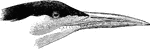
"Sterna (T.) maxima. Cayenne Tern. Royal Tern. Adult in summer: Pileum glossy greenish-black, not extending below eyes, so narrow on side of upper mandible that a broad white streak extends to extreme tip of the feathers. Mantle exceedingly light pearl-blue, fading imperceptibly into white on the rump and towards the extremities of the tertials. Tail white, with a faint tinge of pearly, especially on the central feathers and inner webs of the other. Secondaries pure white for their whole length except a small space on the outer web near the tip, which is grayish-blue, deeper than the mantle. Outer web of first primary grayish-black; in the inner web of the same has a space of black extending the whole length of the feather, very narrow at the base, widening as it runs toward the tip. within 1 & 1/2 inches of which it occupies the whole web; the rest of the web white. separated from the black by a straight distinct line of division. The second, third, fourth, and fifth primaries have the same general characteristics, but the white space grows narrow and shorter, and round up further in the centre than along the edge of the web, so that for a little way from its end it has a border of blackish along its outer margin; other primaries wholly pearl-blue, their inner webs margined with white. Bill coral and orange-red, with a slightly lighter tip; feet blackish, their soles dull yellowish." Elliot Coues, 1884

Royal Tern

"Sterna (T.) maxima. Cayenne Tern. Royal Tern. Adult in summer: Pileum glossy greenish-black, not extending…
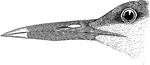
"Sterna (T.) cantiaca. Sandwich Tern. Ducal Tern. Bill black, the tip 1/2 to 3/4 an inch bright yellow, sharply defined against the black; "inside of mouth deep blue." Feet dull black. Pileum and occipital crest glossy black, with a tinge of green; the color extending just below the eyes, but leaving a space along the side of the mandible white to the extremity of the feathers. Mandible exceedingly light pearly-blue, fading on the rump and upper tail-coverts into pure white; but the rectrices themselves have a slight shade of pearly-bluish. Primaries colored as in maxima. On the inner web of the first the black space is broad and deep in color; when about 1& 1/2 inches from the apex of the quill it quite suddenly grows wider, so as to exclude the white portion from the tip altogether. The second, third, and fourth primaries have the same general pattern, but he white runs up further on the central portion than on the edge of the web, so that toward its end it receives a narrow edging of blackish. The other primaries have no blackish, but are simply pearl-blue, with broad white margins along the whole length of heir inner webs. The outer primaries are all heavily silvered when the quills are new.

Sandwich Tern

"Sterna (T.) cantiaca. Sandwich Tern. Ducal Tern. Bill black, the tip 1/2 to 3/4 an inch bright yellow,…
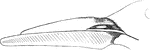
'Rhynchops. Skimmer. Bill hypognathous Among the singular bills of birds that frequently excite our wonder, that of the skimmers as one of the most anomalous. The under mandible is much longer than the upper, compressed like a knife-blade; its end is obtuse; its sides come abruptly together and are completely soldered; the upper edge is as sharp as the under, and fits a groove in the upper mandible; the jawbone, viewed apart, looks like a short-handled pitchfork. The upper mandible in also compressed, but less so, nor is it so obtuse at the end; its substance is nearly hallow, with light cancellated structure, much as in a toucan; it is freely movable by means of an elastic hinge at the forehead." Elliot Coues, 1884

The Bill of a Skimmer

'Rhynchops. Skimmer. Bill hypognathous Among the singular bills of birds that frequently excite our…
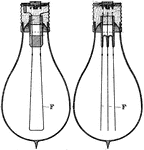
The incandescent light bulb is a source of electric light that works by heat driven light emissions. An electric current passes through a thin filament, heating it until it produces light.

The Light Emitting Incandescent Lamp

The incandescent light bulb is a source of electric light that works by heat driven light emissions.…
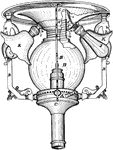
A lamp is an electrical device used to create artificial light. This lamp uses the reflection of a convex surface, and a ring fitting to engage the incandescent light bulbs.

Dual Output Electric lamp

A lamp is an electrical device used to create artificial light. This lamp uses the reflection of a convex…
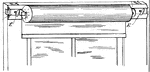
A curtain is a piece of cloth intended to block or obscure light. Curtains are often hung in the inside of a building window to block the travel of light.

Curtain Hanger

A curtain is a piece of cloth intended to block or obscure light. Curtains are often hung in the inside…
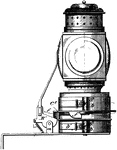
A lantern is a portable lighting device used to illuminate broad areas. Lanterns may be used for signaling, or as general light sources for camping.

Lantern Holder

A lantern is a portable lighting device used to illuminate broad areas. Lanterns may be used for signaling,…
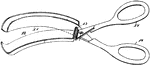
Lamp trimmers were specialized onboard ships that involved maintaining oil lamps. In the days when light came from burning oil in lamps, a vessel at sea needed crewmen to constantly care for the lamps. This care involved trimming the wick, which drew the oil up from the storage reservoir, so that the flame would be clean and bright. Lamp trimmers also refilled the reservoirs, which held enough oil for several hours of burning, but not enough to start a major fire if the lamp were to be knocked down or damaged somehow. As vessels became larger the number of lamp trimmers increased significantly, because the only lighting below decks came from lamps. The position of lamp trimmer was so entrenched into marine tradition that electricians were called lamp trimmers for years after oil lamps had been completely replaced.

Lamp Trimmer

Lamp trimmers were specialized onboard ships that involved maintaining oil lamps. In the days when light…
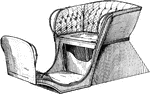
This is a buggy, also called a horse and carriage which refers to a light, simple, two person carriage of the 19th and early 20th centuries, drawn usually by one or sometimes two horses.

Buggy Body

This is a buggy, also called a horse and carriage which refers to a light, simple, two person carriage…
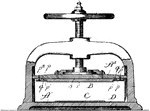
In photography, a negative may refer to three different things, although they are all related. A negative comes in long narrow strips of chemical-coated plastic. When the film is developed it is a long strip of small negative images. A negative image is a tonal inversion of a positive image, in which light areas appear dark and vice versa. A negative color image is additionally color reversed, with red areas appearing cyan, greens appearing magenta and blues appearing yellow. In negative film, Many photographic processes create negative images: the chemicals involved react when exposed to light, and during developing these exposed chemicals are retained and become opaque while the unexposed chemicals are washed away.

Photographic Negative Treatment

In photography, a negative may refer to three different things, although they are all related. A negative…
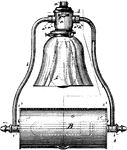
A lamp is a replaceable component such as an incandescent light bulb, which is designed to produce light from electricity. These components usually have a base of ceramic, metal, glass or plastic, which makes an electrical connection in the socket of a light fixture.

Electric Lamp

A lamp is a replaceable component such as an incandescent light bulb, which is designed to produce light…
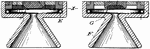
Credit for the invention of the electric telephone is frequently disputed, and new controversies over the issue have arisen from time-to-time. As with other great inventions such as radio, television, light bulb, and computer, there were several inventors who did pioneering experimental work on voice transmission over a wire and improved on each other's ideas.

Telephone Transmitting Device

Credit for the invention of the electric telephone is frequently disputed, and new controversies over…
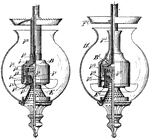
Gas lighting refers to the production of light from a gaseous fuel. Before electricity became sufficiently widespread and economical to allow for general public use, gas was the most popular means of lighting in cities and suburbs. Early gas lights had to be lit manually, but soon gas lights could light themselves.

Lamp Having Regenerative Gas Burner

Gas lighting refers to the production of light from a gaseous fuel. Before electricity became sufficiently…
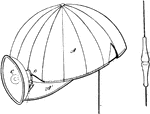
This leatherhead is an old style leather helmet used by many, some even firefighters. This leather helmet is attached with a battery powered light designed to give the user greater visibility.

Electric Light Head Gear for Personal Wear

This leatherhead is an old style leather helmet used by many, some even firefighters. This leather helmet…
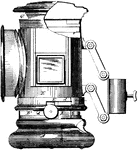
The earliest bicycle and car lights were powered by acetylene, generated in a carbide lamp, now almost unused except by cavers. They were dim and temperamental, and the arrival of battery lamps was welcomed.

Bicycle Lantern Illumination

The earliest bicycle and car lights were powered by acetylene, generated in a carbide lamp, now almost…
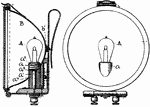
A lantern is a portable lighting deice used to illuminate broad areas, in this case intended for use with bicycle riders. These may be used for signaling, or as general light sources for camping.

Bicycle Riding Lantern

A lantern is a portable lighting deice used to illuminate broad areas, in this case intended for use…
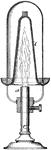
The incandescent light bulb, is a source of electric light that works by incandescence which is a general term for heat driven light emissions, which includes the simple cases of black body radiation.

Process of Producing Incandescing Bodies for Electric Lamps

The incandescent light bulb, is a source of electric light that works by incandescence which is a general…
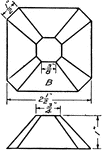
A problem exercise creating a stretched out or developed image of the octagonal light shade by using the hexagonal pyramid development method.

Development Exercise of Octagonal Light Shade

A problem exercise creating a stretched out or developed image of the octagonal light shade by using…
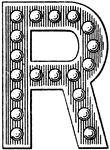
This is a letter sign shaped into the letter R. This sign features 19 small light bulbs for night time illumination.

Letter Sign R

This is a letter sign shaped into the letter R. This sign features 19 small light bulbs for night time…
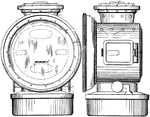
This lamp body is used for a lighting fixture; an electrical device used to create artificial light. A luminaries is a lighting fixture complete with the light source or lamp.

Lamp Body

This lamp body is used for a lighting fixture; an electrical device used to create artificial light.…
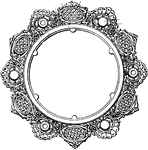
This table top centers around a pellucid top panel which a crystal like surface which emits light.
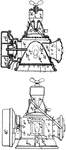
Pellucid Table Top

This table top centers around a pellucid top panel which a crystal like surface which emits light.

A lamp is a replaceable component such as an incandescent light bulb, which is designed to produce light from electricity. These components usually have a base of ceramic, metal, glass or plastic, which makes an electrical connection in the socket of a light fixture. This connection may be made with a screw-thread base, two metal pins, 2 metal caps or a bayonet cap.

Light Fixture

A lamp is a replaceable component such as an incandescent light bulb, which is designed to produce light…
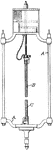
An arc lamp or arc light is the general term for a class of lamps that produce light by an electric arc. The lamp consists of two electrodes, typically made of tungsten, which are separated by a gas.

Electric Arc Lamp

An arc lamp or arc light is the general term for a class of lamps that produce light by an electric…
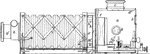
This collapsible magic lantern is an early form of a slide projector, also known as the ancestor of the modern slide projector; used for projecting images painted on glass with translucent colors. Composed of a light source which, in the early lanterns was candlestick. The magic lantern was also known a a light projector of a positive image from a glass plate. These images were used for lantern slides and were traditionally drawn or stenciled on. This lantern can collapse in on itself saving two and a half times its original size.

Collapsible Magic Lantern

This collapsible magic lantern is an early form of a slide projector, also known as the ancestor of…
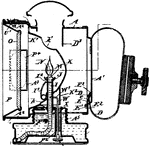
A headlamp is attached to the front of a bicycle while illuminating the road ahead specially when there is low visibility.

Bicycle Lamp

A headlamp is attached to the front of a bicycle while illuminating the road ahead specially when there…
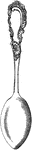
Spoons are used primarily for eating liquid or semi-liquid foods, such as soup, stew or ice cream, and very small or powdery solid items which cannot be easily lifted with a fork, such as rice, sugar, cereals and green peas. In Southeast Asia, spoons are the primary utensil used for eating; forks are used to push foods such as rice onto the spoon as well as their western usage for piercing the food.

Light Handle Design Spoon

Spoons are used primarily for eating liquid or semi-liquid foods, such as soup, stew or ice cream, and…