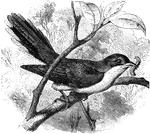
"Coccygus americanus. Yellow-billed Cuckoo. Bill black, extensively yellow below and on the sides of upper mandible. Feet dark plumbeous. Above, satiny olive-gray. Below, pure white. Wings extensively cinnamon-rufous on inner webs of the quills. Central tail-feathers like the back; the rest black with large white tips, the outermost usually also edged with white. Very constant in color, the chief variation being in extent and intensity of the cinnamon on the wings, which sometimes shows through when the wings are closed, and even tinges the coverts. Young differ chiefly in having the white ends of the tail-feathers less trenchant and extensive, the black not so pure; this state approaches the condition of erthrophthalmus, but does not match it." Elliot Coues, 1884

Yellow-billed Cuckoo

"Coccygus americanus. Yellow-billed Cuckoo. Bill black, extensively yellow below and on the sides of…
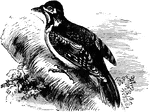
"Picus major. European Spotted Woodpecker. Bill more or less nearly equal to head in length, stout, straight, truncate at tip, bevelled toward end, with sharp culmen and distinct lateral ridges on upper mandible; at base rather broader than high, with large nasal tufts hiding the nostrils; culmen, commissure and gonys straight or nearly so. Feet with the outer posterior longer than outer anterior toe; inner anterior intermediate between these. Wing long, pointed by the 4th, 3d, and 5th quills; 2d decidedly shorter (shorter than 7th, except in P. borealis); 1st fairly spurious. Species of medium and small size. All black and white (one brown-backed), the back striped or barred, the wings with numerous small round white spots on the quills; Male with red on the head." Elliot Coues, 1884

European Spotted Woodpecker

"Picus major. European Spotted Woodpecker. Bill more or less nearly equal to head in length, stout,…
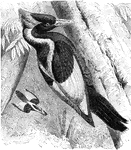
"Campephilus principalis. Ivory-billed Woodpecker. Glossy blue-black; a stripe down side of neck, one at base of bill, the scapulars, under wing-coverts, end of secondaries and of inner primaries, the bill and nasal feathers white; feet grayish-blue; iris yellow. A long pointed crest, in the male scarlet faced with black, in the female black." Elliot Coues, 1884

Ivory-billed Woodpecker

"Campephilus principalis. Ivory-billed Woodpecker. Glossy blue-black; a stripe down side of neck, one…
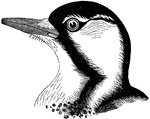
"Picus borealis. Red-Cockaded Woodpecker. Body spotted and crosswise banded, but not streaked. Head black on top, with a large silky white auricular patch embracing the eye and extending on the side of the neck, bordered above in the male by a scarlet stripe not meeting its fellow on the nape; nasal feathers and those on the side of the jay white; black of the crown connected across the lores with a black stripe running from the corner of the bill down the side of the breast in black spots continued less thickly along the whole side and on the crissum; under parts otherwise soiled white. Central tail-feathers black; others white, black-barred. Back and wings barred with black and white, the larger quills and many coverts with the white bars resolved into paired spots. Female lacking the red cockade. A peculiar isolated species; wings longer and more pointed than usual in this genus." Elliot Coues, 1884

Red-cockaded Woodpecker

"Picus borealis. Red-Cockaded Woodpecker. Body spotted and crosswise banded, but not streaked. Head…
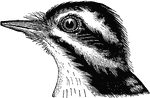
"Picus pubescens. Downy Woodpecker. Usually 6-7 long; outer tail-feathers barred with black and white. Exactly like P. villosus, except in these respects. Length 6.00-7.00; entent 11.00-12.00; wing 3.50-4.00; tail under 3.00; bill about .66; whole foot 1.25." Elliot Coues, 1884

Downy Woodpecker

"Picus pubescens. Downy Woodpecker. Usually 6-7 long; outer tail-feathers barred with black and white.…
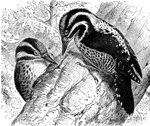
"Picoïdes. Three-toed Woodpeckers. Three-toed: the hallux (1st toe) absent, the 4th toe reversed as usual in the family. Bill as in Picus proper, about as long as the head, stout, straight, with bevelled end and lateral ridges, and nasal tufts hiding the nostrils; very broad and much depressed at base, with the lateral ridges very low down, in most of their length close to and parallel with commissure; nostrils very near commissure; gonys about as long as from nostrils to end of bill. Wings very pointed; 1st quill spurious; 2d between 6th and 7th in length. Crown with a square yellow patch in the male; sides of head striped, of body barred, with black and white; under parts otherwise white; quills but not coverts with white spots; tail-feathers unbarred, the outer white, the central black. All the species of this genus are unquestionably modified derivatives of one circumpolar stock; the American seem to have become completely differentiated from the Asiatic and European, and further divergence seems to have perfectly separated arcticus from americanus; but dorsalis and americanus are still linked together. Elliot Coues, 1884

Three-toed Woodpeckers

"Picoïdes. Three-toed Woodpeckers. Three-toed: the hallux (1st toe) absent, the 4th toe reversed…
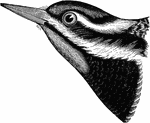
"Sphyropicus varius. Yellow-bellied Woodpecker. Male: Crown crimson, bordered all around with black; chin, and breast black, enclosing a large crimson patch on the former (in the male; in the female this patch white); sides of head with a white line starting from the nasal feathers and dividing the black of the throat from a trans-ocular black stripe, this separated from the black of the crown by a white post-ocular stripe; all these stripes frequently yellowish. Under parts dingy yellow, brownish and and with sagittate dusky marks on the sides. Back variegated with black and yellowish. Wings black with a large oblique white bar on the coverts; the quills with numerous paired white spots on the edges of both webs. Tail black, most of the feathers white-edged, the inner webs of the middle pair, and the upper coverts, mostly white. Bill brownish; feet greenish-plumbeous; iris brown." Elliot Coues, 1884

Yellow-bellied Woodpecker

"Sphyropicus varius. Yellow-bellied Woodpecker. Male: Crown crimson, bordered all around with black;…
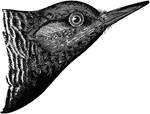
"Sphyropicus thyroides. Brown-headed Woodpecker. Black-breasted Woodpecker. Red-throated Woodpecker. Williamson's Woodpecker. Adult: Glossy black, including all the tail-feathers. Belly gamboge yellow. A narrow scarlet patch on the throat. Upper tail-coverts, a broad oblique bar on the wing-coverts, a post-ocular stripe, a stripe from nostrils below eye and ear, and small, in part paired, spots on the quills, white. Lining of wings, sides of body, flanks and crissum varied with white, leaving the black in bars and cordate spots. Bill slate-color; feet greenish-gray; iris reddish-brown." Elliot Coues, 1884

Brown-headed Woodpecker

"Sphyropicus thyroides. Brown-headed Woodpecker. Black-breasted Woodpecker. Red-throated Woodpecker.…
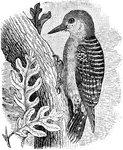
"Centurus carolinus. Red-bellied Woodpecker. Whole crown and nape scarlet in the male; nape only so in the female. Sides of head, and under parts, grayish-white, usually with a yellow shade, reddening on the belly; tail black, one or two outer feathers white-barred; inner web of central feathers white with black spots, outer web of the same black with a white space next the shaft for most of its length; white predominating on the rump. Bill and feet dusky plumbeous. Iris red." Elliot Coues, 1884

Red-bellied Woodpecker

"Centurus carolinus. Red-bellied Woodpecker. Whole crown and nape scarlet in the male; nape only so…
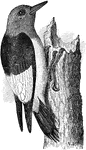
"Melanerpes erythrocephalus. Red-headed Woodpecker. Tricolor. Adult: Beautifully tricolor with "the red, white, and blue." Back, wings and tail glossy blue-black; secondaries, upper tail-coverts, under wing-coverts, under parts from the breast, and ends of some outer tail-feathers, white. Whole head, neck and fore breast crimson, usually black-bordered where adjoining the white. The white of hte wings and rump is pure; that of belly usually tinged with ochraceous or reddish; the white quills have black shafts. The red feathers are stiffish and somewhat bristly in their colored portions. The gloss is sometimes green instead of blue. Bill and feet dusky horn-color. Iris brown." Elliot Coues, 1884

Red-headed Woodpecker

"Melanerpes erythrocephalus. Red-headed Woodpecker. Tricolor. Adult: Beautifully tricolor with "the…
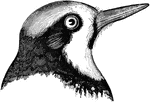
"Melanerpes formicivorus bairdi. Californian Woodpecker. Glossy blue-black; rump, bases of all the quills, edge of the wing, and under parts from the breast, white; sides with sparse black streaks; forehead squarely white, continuous with a stripe down in front of hte eyes and thence broadly encircling the throat, there becoming yellowish; this cuts off the black around base of bill and on the chin completely; crown in the male crimson from the white front, in the female separated from the white by a black interval; frequently a few red feathers in the black breast-patch, which is not sharply defined behind, but changes by streaks into the white of the belly. Bill black; eyes white, often rosy, creamy, yellowish, milky, bluish, or brown." Elliot Coues, 1884

Californian Woodpecker

"Melanerpes formicivorus bairdi. Californian Woodpecker. Glossy blue-black; rump, bases of all the quills,…
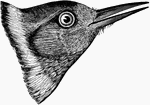
"Asyndesmus torquatus. Lewis' Woodpecker. Lared Woodpecker. Adult: Upper parts, including wings and tail, flanks and crissum, green-black with intense bronzy lustre, especially on the back - this iridescence like that of Quiscalus aneus almost. Face dark crimson, in a patch of velvety feathers around bill and eyes. A narrow distant collar around back of neck, and breast, hoary bluish-gray, gradually brightening behind on the under parts to intense rose-red or lake, delicately pencilled in hair lines with the hoary-gray. No white on wings or tail, their under surfaces simply black. Bill blackish; feet greenish-plumbeous. Iris brown." Elliot Coues, 1884

Lewis' Woodpecker Head

"Asyndesmus torquatus. Lewis' Woodpecker. Lared Woodpecker. Adult: Upper parts, including wings and…
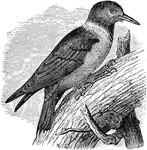
"Asyndesmus torquatus. Lewis' Woodpecker. Lared Woodpecker. Adult: Upper parts, including wings and tail, flanks and crissum, green-black with intense bronzy lustre, especially on the back - this iridescence like that of Quiscalus aneus almost. Face dark crimson, in a patch of velvety feathers around bill and eyes. A narrow distant collar around back of neck, and breast, hoary bluish-gray, gradually brightening behind on the under parts to intense rose-red or lake, delicately pencilled in hair lines with the hoary-gray. No white on wings or tail, their under surfaces simply black. Bill blackish; feet greenish-plumbeous. Iris brown." Elliot Coues, 1884

Lewis' Woodpecker

"Asyndesmus torquatus. Lewis' Woodpecker. Lared Woodpecker. Adult: Upper parts, including wings and…
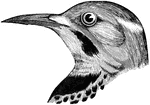
"Colaptes auratus. Golden-winged Woodpecker. Pigeon Woodpecker. Flicker. Yucker. High-holder. Back and exposed surfaces of wing-coverts and secondaries olive-brown with numerous black bars. Rump snowy-white; upper tail-coverts white, mixed with black. Primaries blackish, with golden shafts, and glossed with golden underneath, at their bases paler and more tawny yellow. Tail-feathers above black, their shafts and under surfaces golden, blackened at ends, the outermost with a few touches of yellow or white. Top of head, with back and sides of neck, ash, with a scarlet nuchel band (in both sexes). Sides of head, whole chin, throat, and fore-breast lilac-brown, with broad black cheek patches, these 'moustaches' wanting usually in the female. A broad black pectoral semi-lune. Other under parts shading from a lighter shade of the color of the breast into creamy-yellow, marked with numerous circular black spots. Bill and feet dark plumbeous. Iris brown." Elliot Coues, 1884

Flicker

"Colaptes auratus. Golden-winged Woodpecker. Pigeon Woodpecker. Flicker. Yucker. High-holder. Back and…
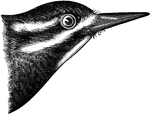
"Sphyropicus thyroides. Brown-headed Woodpecker. Black-breasted Woodpecker. Red-throated Woodpecker. Williamson's Woodpecker. Adult: Glossy black, including all the tail-feathers. Belly gamboge yellow. A narrow scarlet patch on the throat. Upper tail-coverts, a broad oblique bar on the wing-coverts, a post-ocular stripe, a stripe from nostrils below eye and ear, and small, in part paired, spots on the quills, white. Lining of wings, sides of body, flanks and crissum varied with white, leaving the black in bars and cordate spots. Bill slate-color; feet greenish-gray; iris reddish-brown." Elliot Coues, 1884

Red-headed Woodpecker

"Sphyropicus thyroides. Brown-headed Woodpecker. Black-breasted Woodpecker. Red-throated Woodpecker.…
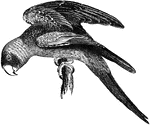
"Conuropsis carolinensis. Carolina Parroquet. Green; head yellow; face red; bill white; feet flesh-color; wings more or less variegated with blue and yellow. Sexes alike." Elliot Coues, 1884

Carolina Parroquet

"Conuropsis carolinensis. Carolina Parroquet. Green; head yellow; face red; bill white; feet flesh-color;…
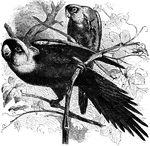
"Conuropsis carolinensis. Carolina Parroquet. Green; head yellow; face red; bill white; feet flesh-color; wings more or less variegated with blue and yellow. Sexes alike." Elliot Coues, 1884

Carolina Parroquets

"Conuropsis carolinensis. Carolina Parroquet. Green; head yellow; face red; bill white; feet flesh-color;…
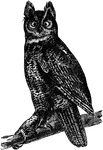
"Bubo virginianus. Great Horned Owl. Hoot Owl. Cat Owl. Distinguished by its large size and conspicuous ear-tufts, our other species of similar stature being tuftless or nearly so. Plumage varying interminably, no concise description meeting all its phases. A white collar on the throat is the most constant color-mark. On the upper parts, the under-plumage tawny, but so overlaid with course mottling of blackish and white, that it shows chiefly on the head, nape, and scapulars; the mottling chiefly transverse, and resolving into 7-9 continuous or broken bars on the wings and tail. Under parts white, indefinitely tawny-tinged, and for the most part barred crosswise with blackish, changing on the fore breast to ragged and rather lengthwise blotches. Feathering of feet nearly plain tawny. Ear-tufts black and tawny; a dark mark over eye; border of the facial disc black, the face white or tawny, but the feathers mostly black shafted. Bill and claws black; iris yellow; pupil always circular; when fully dilated as large as a finger-ring, contractile to the size of a pea." Elliot Coues, 1884

Great Horned Owl

"Bubo virginianus. Great Horned Owl. Hoot Owl. Cat Owl. Distinguished by its large size and conspicuous…
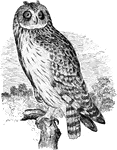
"Asio accipitrinus. Short-eared Owl. Marsh Owl. Ear-tufts inconspicuous, much shorter than middle toe and claw, few-feathered. First and 2d primaries emarginate on inner webs. Above, completely variegated, chiefly in streaks, with fulvous or tawny, and dark brown; breast much the same, but other under parts paler ochrey, usually bleaching on the belly, which in sparely but sharply streaked (never barred) with dark brown; feet pale tawny or whitish, usually immaculate; lining of wings interruptedly whitish. Wing-quills varied, mostly in large pattern, and tail pretty regularly barred (about 5 bars) with the two colors of the upper parts. Facial area white or nearly so, but with a large black eye-patch; the disc minutely speckled with fulvous and blackish, bordered with white internally and usually having a blackish patch behind the ear; radiating feathers of the oper-culum streaked with blackish and fulvous. Iris bright yellow; bill and claws dusky-bluish; the naked granular soles yellowish. The ear-opening of this species is extremely large, being two inches or more across the longest way." Elliot Coues, 1884

Short-eared Owl

"Asio accipitrinus. Short-eared Owl. Marsh Owl. Ear-tufts inconspicuous, much shorter than middle toe…
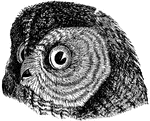
"Strix nebulosa. Barred Owl. Hoot Owl. American Wood Owl. Toes fully feathered, nearly or quite to the claws, which are blackish; bill yellow; iris black. Of medium size in this genus. Markings of back and breast in cross-bars, of belly in lengthwise stripes. Above, umber-brown or liver-color, everywhere with white or tawny, or both; breast the same; on the belly the pattern changing abruptly to heavy dusky shaft-stripes on a white or tawny ground; crissum the same; feet speckled with dusky; wings and tail like the back or rather darker, regularly barred with gray, light brown or tawny, some of the bars usually making white spots at their ends, and the markings of the wing-coverts rather in spots than bars. Lining of wings tawny, with some dusky spotting. Facial disc set in a frame of black and white specks, with blackened eye-lids, and obscurely watered with lighter and darker colors in rings around the eye as a centre, the bristly feathers about the bill mixed black and white, or white at base, blackened terminally. A notably large and somewhat impressive owl of Eastern North America, common in woodland of the U.S. especially southerly; not known to range much north of the U.S. though occurring in parts of Canada, and not reported from the West, where apparently replaced by S. occidentalis." Elliot Coues, 1884

Barred Owl

"Strix nebulosa. Barred Owl. Hoot Owl. American Wood Owl. Toes fully feathered, nearly or quite to the…
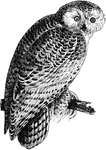
"Nyctea scandiaca. Snowy Owl. Pure white, spotted and barred with brownish-black markings, wholly indeterminate in size and number; but entirely white specimens are very rare. There is often more black then white; and in the darkest birds, the markings tend to bar the plumage with with rows of spots, such pattern specially evident of the wings and tails. A common average plumage is spotted all over the upper parts, broken-barred on the quills and tail-feathers, regularly barred on the under parts, and with white face and paws. The face, throat, and feet are usually whitest. Bill and claws black; iris yellow. Nearly or about two two feet long." Elliot Coues, 1884

Snowy Owl

"Nyctea scandiaca. Snowy Owl. Pure white, spotted and barred with brownish-black markings, wholly indeterminate…
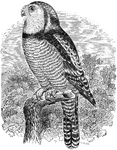
"Surnia funerea. American Hawk Owl. Day Owl. Bill and eyes yellow; claws brownish-black. Upper parts bistre-brown, darkest and almost blackish on the head, where profusely spotted with small round white mark, to which succeeds a nuchal interval less spotted or free from spots, then an area of larger and lengthened spots; scapulars profusely spotted with white in large pattern, forming a scapular bar as in Scops; back and wing-coverts more or less spotted with white also; primaries and secondaries with with white spots in pairs on opposite edges of the feathers. Tail broken-barred with white or pale gray, usually narrowly and distinctly, on one or both webs, and tipped with the same; but there is great individual variation in this respect, as may also be said of the amount and character of the spotting of the upper parts. Under parts from the breast backward, including the crissum, closely and regularly cross-barred with rich reddish-brown, or even reddish-brown, or even reddish-black, upon a white ground, the alternating bars of color usually of about equal widths - if anything, the white the broadest.

Hawk Owl

"Surnia funerea. American Hawk Owl. Day Owl. Bill and eyes yellow; claws brownish-black. Upper parts…
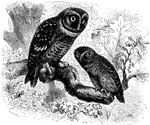
"Nyctala - Saw-whet Owls. Skull and ear-parts highly unsymmetrical, the the latter of great size, and fully operculate. Head very large (as in Strix), without plumicorns; facial disc complete, with centric eye. Nostril at edge of the cere, which is inflated or not. Tail from 1/2 to 2/3rds as long as the wing, rounded. Third and 4th primaries longest; 1st quite short; 2 or 3 emarginate on inner webs. Feet thickly and closely feathered to the claws. In this interesting genus the ear-parts are of great size, and reach the extreme of asymmetry, the whole skull seeming misshapen." Glaucidium. Gnome Owls. Sparrow Owls. Pygmy owls. Size very small. Head perfectly smooth; no plumicorns; ear-parts small, non-operculate; facial disc very incomplete, the eye not centric. Nostril circular, opening in the tumid cere; bill robust. Tarsus fully and closely feathered, but toes only bristly for the most part. Wings short and much rounded, the 4th primary longest, the 1st quite short, the 3 outer ones emarginate, and next one or two sinuate. Tail long, about 3/4ths as long as the wing, even or nearly so. Claws strong, much curved. A large genus of very small owls, mostly of tropical countries. The numerous species, chiefly of warm parts of America, are in dire confusion, but the only two known to inhabit N. Am. are well determined. The plumage of many or most species is dichromatic, as in Scops, there being a red and a gray phase independently of age, season, or sex; but the red is not known to occur in our G. gnoma. The upper parts are marked with spots or lines; bars, or rows of spots, cross the wings and tail; the under parts are streaked; there is a cervical collar." Elliot Coues, 1884

Saw-whet and Sparrow Owls

"Nyctala - Saw-whet Owls. Skull and ear-parts highly unsymmetrical, the the latter of great size, and…
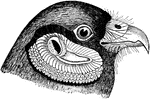
"Circinae. Harriers. Face surrounded with an incomplete ruff (as in most owls); orifice of ear about as large as the eye, and in some cases at least with a decided conch (in this picture). Bill rather weak, not toothed or notched. Bill thickly beset with many curved radiating bristles surpassing in length the cere, which is large and tumid; tomia lobed or festooned, but neither toothed nor notched. Nostrils ovate-oblong, nearly horizontal. Superciliary shield prominent. Tarsus long and slender, scutellate before and mostly so behind, reticulate laterally; toes slender, the middle with its claw much shorter than the tarsus; a basal web between the outer and middle; all tuberculate underneath; Claws very large and sharp, much curved. Wings very long and ample; 3d and 4th quills longest; 1st shorter than 6th; outer 3-5 (in our species 4) emarginate on inner webs; 2d-5th emarginate on outer webs. Tail very long, about 2/3rds as long as the wing, nearly even or rounded, the folded wings falling short of its end. " Elliot, Coues, 1884

Harrier Ear Parts

"Circinae. Harriers. Face surrounded with an incomplete ruff (as in most owls); orifice of ear about…
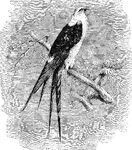
"Elanoides forficatus. Swallow-tailed Kite. Adult: Head, neck, band on rump, and entire under parts, including lining of wings, snow-white; back, wings, and tail, glossy black, with various lustre, chiefly green and violet. Bill bluish-black; cere, edges of mandibles, and feet pale bluish, the latter tinged with greenish; claws light-colored." Elliot Coues, 1884

Swallow-tailed Kite

"Elanoides forficatus. Swallow-tailed Kite. Adult: Head, neck, band on rump, and entire under parts,…
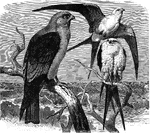
Two Swallow-tail and One Mississippi Kite. "Ictinia subcaerulea. Mississippi Kite. General plumage plumbeous or dark ashy-gray, bleaching on the head and secondaries, blackening on the tail and wings, several primaries more (male) or less (female) suffused with chestnut-red on the inner web or on both webs. Forehead and tips of secondaries usually silvery-whitish; concealed white spots on the scapulars; bases of the head and under parts fleecy-white. Lores eyelids, and bill, including cere, black; gape of mouth and feet, orange, the latter obscures on the front tarsus, and along the tops of the toes; iris lake-red. Feet and cere drying to a nameless dingy color." And "Elanoides forficatus. Swallow-tailed Kite. Adult: Head, neck, band on rump, and entire under parts, including lining of wings, snow-white; back, wings, and tail, glossy black, with various lustre, chiefly green and violet. Bill bluish-black; cere, edges of mandibles, and feet pale bluish, the latter tinged with greenish; claws light-colored." Elliot Coues, 1884

Two Swallow-tail and One Mississippi Kites

Two Swallow-tail and One Mississippi Kite. "Ictinia subcaerulea. Mississippi Kite. General plumage plumbeous…
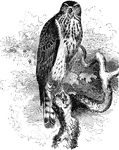
"Astur atricapillus. American Goshawk. Blue Hen Hawk (adult). Chicken Hawk (young). Adult: Above, dark bluish-slate color, each feather black-shafted; top of head blackish, conspicuously different from other upper parts, the feathers there with fleecy white bases; a long white superciliary or rather post-ocular stripe; auriculars blackish. Ground color of under parts, including lining of wings, white, closely barred or vermiculated in narrow zigzag lines with slaty-brown, except on throat and crissum, and everywhere sharply pencilled with blackish shaft-lines, one on each feather. The barring is largest and most regular on the belly, flanks, and tibiae, but is for the most part much dissipated in a fine mottling. It varies greatly in coarseness in different specimens, some of which approach A. palumbarius in this respect. Tail like back, banded with four or five blackish bars, the terminal one much the broadest. Bill dark bluish; iris yellowish; feet yellow, claws black." Elliot Coues, 1884

American Goshawk

"Astur atricapillus. American Goshawk. Blue Hen Hawk (adult). Chicken Hawk (young). Adult: Above, dark…
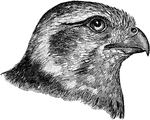
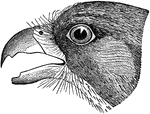
"Falco mexicanus. American Lanner Falcon. Prairie Flacon. A medium-sized species, distinguished from any gyrfalcon by the smaller size, different feathering of the tarsus etc., from the duck hawk by the general much lighter color, which is dull brownish above instead of dark slate, etc. Adult: Upper parts brownish-drab, each feather with a paler border of brown, grayish, or whitish; the top of the head more uniform, the occiput and nape showing more whitish. Under parts white, everywhere excepting on the throat marked with firm spots of dark brown, most linear on the breast, then more broadly oval on the belly, enlarging and tending to merge into bars on the flanks, very sparse or obsolete on the crissum, on the maxiliary region forming a broad firm moustache; these marking corresponding with the ground color of the upper parts. Primaries ashy-brown, with narrow but firm pale edging of outer webs and ends, the inner webs regularly marked with white in form of barred indents or circumscribed spots, most numerous and regular on the outer primaries; the white tinged with fulvous, next to the shafts; the outer web of the first primary either plain, or with whitish indents as in F. lanarius; outer webs of secondaries more or less marked with fulvous; axillars plain dark brown; lining of wings otherwise white, spotted with dark brown. Tail pale brownish-gray, nearly uniform, but with white tip, and more or less distinct barring or indenting with whitish, especially on the lateral feathers, producing a pattern not unlike that of the primaries. Bill mostly dark bluish horn-color, but its base, and much of under mandible, yellow; feet yellow." Elliot Coues, 1884

Prairie Falcon Head

"Falco mexicanus. American Lanner Falcon. Prairie Flacon. A medium-sized species, distinguished from…
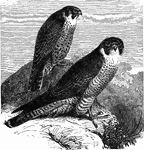
"Falco mexicanus. American Lanner Falcon. Prairie Flacon. A medium-sized species, distinguished from any gyrfalcon by the smaller size, different feathering of the tarsus etc., from the duck hawk by the general much lighter color, which is dull brownish above instead of dark slate, etc. Adult: Upper parts brownish-drab, each feather with a paler border of brown, grayish, or whitish; the top of the head more uniform, the occiput and nape showing more whitish. Under parts white, everywhere excepting on the throat marked with firm spots of dark brown, most linear on the breast, then more broadly oval on the belly, enlarging and tending to merge into bars on the flanks, very sparse or obsolete on the crissum, on the maxiliary region forming a broad firm moustache; these marking corresponding with the ground color of the upper parts. Primaries ashy-brown, with narrow but firm pale edging of outer webs and ends, the inner webs regularly marked with white in form of barred indents or circumscribed spots, most numerous and regular on the outer primaries; the white tinged with fulvous, next to the shafts; the outer web of the first primary either plain, or with whitish indents as in F. lanarius; outer webs of secondaries more or less marked with fulvous; axillars plain dark brown; lining of wings otherwise white, spotted with dark brown. Tail pale brownish-gray, nearly uniform, but with white tip, and more or less distinct barring or indenting with whitish, especially on the lateral feathers, producing a pattern not unlike that of the primaries. Bill mostly dark bluish horn-color, but its base, and much of under mandible, yellow; feet yellow." Elliot Coues, 1884

Two Lanner Falcon

"Falco mexicanus. American Lanner Falcon. Prairie Flacon. A medium-sized species, distinguished from…
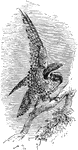
"Falcons. Bill furnished with a sharp tooth and notch near the end of the cutting edge of the upper mandible (sometimes two such teeth), and the end of under mandible truncated, with notch near the tip. Nostrils circular, high in the cere, with a prominent central tubercle. Inter-nasal septum extensively ossified. Palate with a median keel anteriorly. Superciliary shied prominent, in one large piece. Shoulder-joint strengthened by union of scapular process of the coracoid with the clavicle as in Micrastur, Herpetothers, and the Polyborinae alone of Flaconidae. Wings strong, long, and pointed, with rigid and usually straight and tapering flight-feathers; the tip formed by the 2d and 3d quills, supported nearly to their ends by the 1st and the 4th, both of which are longer then the 5th; only one or two outer primaries emarginate on inner webs near the end. Tail short and stiff, with more or less tapering rectrices. Feet strong, rather short, the tarsus of less length than the tibia, feathered more or less extensively, elsewhere irregularly reculate in small pattern varying with the genera or subgenera; never scutellate in single series before or behind. Middle toe very long; talons very short." Elliot Coues, 1884

Falcons

"Falcons. Bill furnished with a sharp tooth and notch near the end of the cutting edge of the upper…
"Falco sparverius. Rusty-crowned Falcon. Sparrow Hawk. Adults: Crown ashy-blue, with a chestnut patch, sometimes small or altogether wanting, sometimes occupying nearly all the crown. Conspicuous black maxillary and auricular patches which, with three others around the nape, make seven places in all, usually evident, but some of them often obscure or wanting. Back cinnamon-rufous, or chestnut, like the crown-patch, in the male with a few black spots or none, in the female with numerous black bars. Wing-coverts of the male fine ashy-blue, like the crown, with or without black spots; of the female cinnamon-rufous and black barred, like the back. Quill feathers in male, female blackish, usually with pale edges and tips, and the inner webs with numerous white indentations, or bars continuous along the inner webs, leaving the black chiefly in a series of dentations proceeding from the shafts; ends of secondaries usually also slaty-blue like the coverts. Tail bright chestnut, in the male with white tip, broad black subterminal zone, and outer feathers mostly white with several black bars, in the female the whole tail with numerous imperfect black bars. Under parts white, variously tinged with buff or tawny, in the male with a few black spots or none, in the female with many dark brown streaks; throat and vent usually immaculate. Bill dark horn; cere and feet yellow or orange. Elliot Coues, 1884

Sparrow Hawk

"Falco sparverius. Rusty-crowned Falcon. Sparrow Hawk. Adults: Crown ashy-blue, with a chestnut patch,…
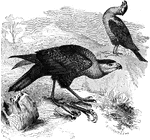
"Polyborus auduboni. Common Caracara. General color blackish, the throat, neck all around, and more or less of fore back and breast whitish, spotted and chiefly barred with blackish; upper and under tail-coverts and most of the tail white, the latter very numerously barred with blackish, of which color is the broad terminal zone; the shafts white along the white portion of each feather. Basal portion of primaries likewise barred with whitish. Bill variously pale colored; cere carmine; iris brown; feet yellow; claws black; soft parts drying to a dingy indefinable color." Elliot Coues, 1884

Caracaras

"Polyborus auduboni. Common Caracara. General color blackish, the throat, neck all around, and more…
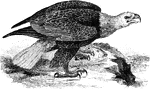
"Haliaetus leucocephalus. White-headed Sea Eagle. "Bald Eagle." "Bird of Washington". Adult: Dark brown; quills black; head and tail white; bill, eyes, and feet yellow. Three years are required for the perfection of the white head tail of the "bald" eagle. The first year, the young are "black" eagle; very dark colored, with fleecy white bases of the feathers showing here and there; bill black; iris brown feet yellow. The next year, they are "gray" eagles, and usually larger than the old birds, the largest known specimens being of this kind." Elliot Coues, 1884

Bald Eagle

"Haliaetus leucocephalus. White-headed Sea Eagle. "Bald Eagle." "Bird of Washington". Adult: Dark brown;…
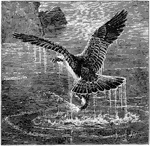
An Osprey catching a fish. "Pandion haliaetus. Fish Hawk. Osprey. Adult. dark vandyke- brown, blackening on the quills, the feathers of the upper parts more or less completely edged with white - the older the bird, the more conspicuous the white markings. Tail dark brown with dusky bars, white tip and shafts, and inner webs of all but the middle pair of feathers regularly barred with white and dark. Head, neck, and under parts white, the crown more or less extensively streaked with blackish, and a heavy blackish postocular stripe to the nape; the breast more or less spotted with dusky brown; the white more or less tinged with tawny in some places, especially under the wings and on the head. Coloration very variable in the relative amounts of the dark and white colors; young darker, the upper parts without the white crescents. Bill blackish, bluing at base and on cere; feet grayish-blue; claws black; iris yellow or red." Elliot Coues, 1884

Osprey

An Osprey catching a fish. "Pandion haliaetus. Fish Hawk. Osprey. Adult. dark vandyke- brown, blackening…
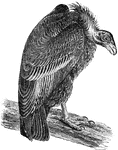
"Pseudogryphus californianus. California Condor. Adult: Blackish, the feathers with browner tips or edges, quite gray or even whitish on the wing-coverts and inner quills; primaries and tail-feathers black; axillars and lining of wings white; bill yellowish, reddening on cere, and skin of the head orange or reddish; iris said by some to be brown, by other carmine." Elliot Coues, 1884

California Condor

"Pseudogryphus californianus. California Condor. Adult: Blackish, the feathers with browner tips or…
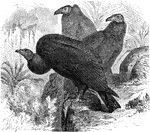
"Cathartes aura. Turkey Buzzard. Blackih-brown, grayer on the wing-coverts; quills black, ashy-gray on their under surface; tail black, with pale brown shafts. Head red, from livid crimson to pale carmine, with whitish specks usually; bill dead white; feet flesh-colored; iris brown." Elliot Coues, 1884

Turkey Buzzard

"Cathartes aura. Turkey Buzzard. Blackih-brown, grayer on the wing-coverts; quills black, ashy-gray…
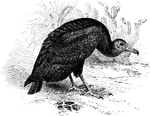
"Catharista atrata. Black Vulture. Carrion Crow. Adult: Entire plumage, including skin of head, and bill, blackish; shafts of the of the primaries white; bases of the primaries paling to gray or whitish. Tip of bill and feet grayish-yellow; iris brown; claws black." Elliot Coues, 1884

Black Vulture

"Catharista atrata. Black Vulture. Carrion Crow. Adult: Entire plumage, including skin of head, and…

"Ectopistes migratorius. Passenger Pigeon. Wild Pigeon Adult: Upper parts, including head all around, slaty-blue, bright and pure on head and rump, shaded with olivaceous-gray on the back and wings; the back and sides of the neck glittering with golden and violet iridescence, the wing-coverts with velvety-clack spots. Below, from the throat, light purplish-chestnut, paler behind and fading into white on the lower belly and crissum. Tibiae, sides of body, and lining of wings like upper parts. Quills blackish, with rufous-white edging. Two middle tail-feathers blackish; others fading from pearly-bluish into white, their extreme bases with black and chestnut spots. Bill black; feet lake red, drying and undefinable color; iris orange; skin about eye red." Elliot Coues, 1884

Passenger Pigeon

"Ectopistes migratorius. Passenger Pigeon. Wild Pigeon Adult: Upper parts, including head all around,…
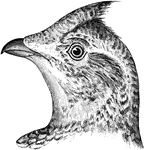
"Pediaecetes phasianellus Columbianus. Common Sharp-tailed Grouse. Upper parts closely and pretty evenly variegated with blackish-brown, reddish-brown, and grayish-brown, the pattern smallest on the rump and lower back, where the blackish is mostly in sharp-angled stars; the reddish most conspicuous on the upper back, and both the lighter colors everywhere finely sprinkled with blackish. Wing-coverts like the upper back, but with numerous conspicuous rounded white spots, one on the end of each feather. Crown and back of neck nearly like the back, but in smaller pattern, and the markings mostly transverse. An illy-defined white area on each side of the neck, over the tympanum, and slight whitish stripe behind the eye. Throat fine light buff, usually immaculate, but sometimes finely speckled quite across. Under parts white, more or less tinted with buff towards the throat; the breast with numerous regular dark-brown U-shaped spots, one on each feather; similar but smaller, sharper, and fewer such spots thence scattered over most of the under parts, only the middle of the belly being left unmarked. Long feathers of the sides under the wings matching the upper wing-coverts nearly; under wing-coverts and axillaries pure white, not marked; flanks with bars or U-spots of dark brown. Legs grayish-white, unmarked. Quills of the wings fuscous; outer webs of the secondaries with equidistant, squarish, white or tawny spots, the secondaries tipped and imperfectly twice or thrice barred with white, gradually becoming sprinkled with the varied colors of the back, so that the innermost of them are almost precisely like the greater coverts. Four middle tail-feathers variegated, much like the back; others white, or grayish-white, on the inner webs, the outer webs being mottled; a few under tail-coverts spotted, the rest white; upper tail-coverts nearly like the rump. Iris light brown; bill dark horn-color; part of under mandible flesh-colored; claws like bill; toes on top light horn-color, the soles darker." Elliot Coues, 1884

Sharp-tailed Grouse

"Pediaecetes phasianellus Columbianus. Common Sharp-tailed Grouse. Upper parts closely and pretty evenly…
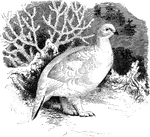
"Lagopus albus. Willow Grouse. Willow Ptarmigan. Bill very stout and convex, its depth at base as the distance from nasal fossa to tip; whole culmen 0.75; bill black at all seasons. Male and female in winter: Snow white; 14 tail feathers black, white-tipped; the middle pair (which most resemble and perhaps are true rectrices, having no after-shafts) together with all the coverts, one pair of which reach to end of tail, white; shafts of several outer wing-quills black; no black stripe on head." Elliot Coues, 1884

Willow Ptarmigan in Winter

"Lagopus albus. Willow Grouse. Willow Ptarmigan. Bill very stout and convex, its depth at base as the…
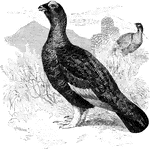
"Lagopus albus. Willow Grouse. Willow Ptarmigan. Bill very stout and convex, its depth at base as the distance from nasal fossa to tip; whole culmen 0.75; bill black at all seasons. Male in summer: The head and fore parts rich chestnut or orange-brown, more tawny-brown on back and rump; the richer brown parts sparsely, the tawny-brown more closely, barred with black; most of the wings and under parts remaining white. Female similar, wholly colored excepting the wings, the color more tawny than in the male, and more heavily, closely, and uniformly barred with black." Elliot Coues, 1884

Willow Ptarmigan in Summer

"Lagopus albus. Willow Grouse. Willow Ptarmigan. Bill very stout and convex, its depth at base as the…
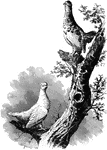
"Lagopus leucurus. White-tailed Ptarmigan. Rocky Mountain Snow Grouse. Male and Female in winter: Entirely snow-white; bill black, rather slender, and general size and proportions nearly as in L. rupestris. Male and female, in summer: Tail, most of the wing, and lower parts from the breast, remaining white; rest of the plumage minutely marked with black, white, and tawny or grayish-brown, varying in precise character almost with every specimen; but there is no difficulty in recognizing this whit-tailed species, of alpine distribution in Western N. A. from the Arctic regions to New Mexico (lat. 37 degrees)." Elliot Coues, 1884

White-tailed Ptarmigan

"Lagopus leucurus. White-tailed Ptarmigan. Rocky Mountain Snow Grouse. Male and Female in winter: Entirely…
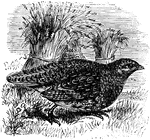
"Coturnix. Bill smaller and much slenderer than that of any of the foregoing genera of Odontophorinae; nasal fossae feathered, except on the tumid nasal scale. Wings of moderate length, little vaulted and not rounded, pointed by the 1st-3d quills, the 1st not shorter than the next. First primary emarginate on inner web; 2d and 3d sinuate on outer web. Tail extremely short and slight, not half as long as the wing, pointed, its feathers very soft, the central pair lanceolate. Feet small; tarsus shorter than middle toe and claw, slightly feathered above in front, with two rows of alternating large scutella in front, two rows of smaller rounded scales meeting in a ridge behind, the sides filled in with small plates. Size smaller than that of any of the foregoing species; pattern of coloration somewhat as in Ortyx; sexes nearly alike." Elliot Coues, 1884

European Partridge

"Coturnix. Bill smaller and much slenderer than that of any of the foregoing genera of Odontophorinae;…
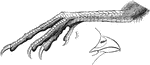
"Ortyx. Quail. Outstretched feet reaching beyond end of tail. Bill black or blackish-brown. " Elliot Coues, 1884

Quail Foot and Bill

"Ortyx. Quail. Outstretched feet reaching beyond end of tail. Bill black or blackish-brown. " Elliot…
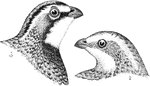
"Ortyx virginiana. Virginia Partridge or "Quail". Bobwhite. Male: Forehead, superciliary line, and throat, white, bordered with black; crown, neck all round,and upper part of breast, brownish-red; other parts tawny-whitish, all with more or fewer doubly-crescentic black bars; crissum rufous; sides broadly striped with brownish-red; upper parts variegated with chestnut, black, gray and tawny, the latter edging in the inner quills, forming a continuous line when the wing in closed. Female: Known by having the throat buff instead of white, less black about the fore-parts, and general coloration subdued. The reddish of this bird is of a peculiar dull pinkish shade. The black crescents of the under parts are scarcely or not half the width of the intervening white spaces; the bill is not jet black." Elliot Coues, 1884

Male and Female Bob-whites

"Ortyx virginiana. Virginia Partridge or "Quail". Bobwhite. Male: Forehead, superciliary line, and throat,…
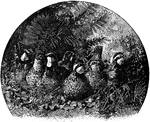
"Ortyx virginiana. Virginia Partridge or "Quail". Bobwhite. Male: Forehead, superciliary line, and throat, white, bordered with black; crown, neck all round,and upper part of breast, brownish-red; other parts tawny-whitish, all with more or fewer doubly-crescentic black bars; crissum rufous; sides broadly striped with brownish-red; upper parts variegated with chestnut, black, gray and tawny, the latter edging in the inner quills, forming a continuous line when the wing in closed. Female: Known by having the throat buff instead of white, less black about the fore-parts, and general coloration subdued. The reddish of this bird is of a peculiar dull pinkish shade. The black crescents of the under parts are scarcely or not half the width of the intervening white spaces; the bill is not jet black." Elliot Coues, 1884

Bob-white Family

"Ortyx virginiana. Virginia Partridge or "Quail". Bobwhite. Male: Forehead, superciliary line, and throat,…
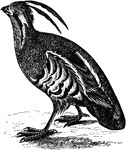
"Orortyx picta. Plumed Partridge. Mountain Quail. Back, wings and tail olive-brown, the inner secondaries and tertiaries bordered with whitish or tawny, forming a lengthwise border in single line when the wings are folded; the primaries fuscous, the tail-feathers fuscous, minutely marbled with the color of the back. Fore-parts, above and below, slaty-blue (above more or less glossed with olive shade of the back, below minutely marbled with black); the throat chestnut, immediately bordered laterally with black, then framed in the firm white line, broken through the eye, reappearing around base of under mandible. Extreme forehead whitish, The arrow-plumes black. Belly chestnut, the sides banded with broad bars of black and white, or rufous-white; middle of the lower belly, tibia, and flanks, whitish or rufous; crissum velvety-black, streaked with chestnut. Bill dusky, paler below; feet brown." Elliot Coues, 1884

Mountain Quail

"Orortyx picta. Plumed Partridge. Mountain Quail. Back, wings and tail olive-brown, the inner secondaries…
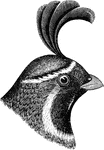
"Lophortyx gambeli. Gambel's Partridge. Arizona Quail. Male: Without white loral line; forehead black with whitish lines; occiput chestnut; nuchal and cervical feathers with dark shaft lines, but few dark edgings or none, and no white specking. General color of upper parts clear ash, the edging of the inner quills white. Fore-breast like the back; other under parts whitish, the middle of the belly with a large jet-black patch; sides rich purplish-chestnut, with sharp white stripes; vent, flanks and crissum white with dusky streaks. Bill black, iris brown. Besides lacking the definite head-markings, the female wants the black abdominal area, where the feathers are whitish with dark lengthwise touches; crest dark brown, not recurved, and fewer-feathered than that of a cock. Top of had grayish-brown, nearly uniform from bill to nape; throat grayish-white with slight dark pencilling." Elliot Coues, 1884

Gambel's Partridge

"Lophortyx gambeli. Gambel's Partridge. Arizona Quail. Male: Without white loral line; forehead black…
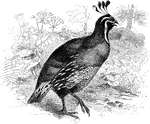
"Lophortyx californica. Californian Partridge. Valley Quail. Male: With a small white line from bill to eye; forehead whitish with black lines; occiput smoky-brown; nuchal and cervical feathers with very dark edging and shaft-lines, and fine whitish speckling. General color of upper parts ashy, with strong olive-brown gloss, the edging of the inner quills brownish-orange. Fore breast slaty-blue; other under parts tawny, deepening centrally into rich golden-brown or orange-chestnut, all the feathers sharply edged with jet-black; sides olive-ashy like the back, with sharp white stripes; vent, flanks, and crissum tawny, with dark stripes." Elliot Coues, 1884

Californian Partridge

"Lophortyx californica. Californian Partridge. Valley Quail. Male: With a small white line from bill…
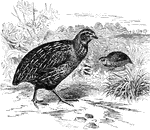
"Coturnix dactylisonans. Messina Quail. Migratory Quail. Common Quail of Europe. Upper parts variegated with buff or whitish and black upon a mixed reddish-brown and gray ground, the most conspicuous markings being sharp lance-lineal lengthwise stripes of buff or whitish over most of the upper parts, these dashes mostly edged with black; other less prominent buff or whitish cross-bars, several to a feather, likewise framed in black. Crown mixed brown and black, with sharp median and lateral buff stripes. Throat white, bounded before by a dark bar curving down behind the auriculars; behind, by a necklace of ruddy-brown, blackish, or whitish spots; chin varied with dark marks n advance of the auricular bar. Under parts fading to whitish from the buff or pale yellowish-brown breast, without any dark crossbars, but the long feathers of the sides and flanks with large and conspicuous white shaft-stripes and otherwise variegated with black, brown, and buff. Primaries fuscous, spotted with light brown on outer webs; secondaries similar, but the markings becoming bars on both webs. Tail-feathers brownish-black, much varied with shaft-lines, cross-bars, and edgings of buff; crissum immaculate, like the abdomen. Bill dark; feet pale; iris dark brown." Elliot Coues, 1884

Common Quail of Europe

"Coturnix dactylisonans. Messina Quail. Migratory Quail. Common Quail of Europe. Upper parts variegated…
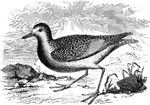
"Squatarola helvetica. Swiss Plover. Black-bellied Plover. Bull-head Plover. Whistling Field Plover. Ox-eye. Upper parts fretted with blackish and ashy-white, the feathers being basally, then black, tipped and usually scalloped with white. Upper tail-coverts mostly white, with few dark touches. Fore-head, line over eye and thence more broadly over side of neck, the lining of wings, tibiae, vent and under tail-coverts, white. Sides of head to an extent embracing the eyes, axillary plumes, and entire under parts (except as said), black. Tail closely barred with black and white. Primaries dark brown, blackening at tips, with large basal areas and a portion of their shafts, white. Bill and feet black." Elliot Coues, 1884

Black-bellied Plover

"Squatarola helvetica. Swiss Plover. Black-bellied Plover. Bull-head Plover. Whistling Field Plover.…
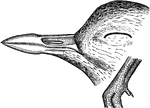
"Squatarola. Four-toed Plover. A small but distinct hind toe, contrary to the rule in this family. Tail less than half as long as wing. Tarsus much longer than middle toe and claw. Tibia bare below, reticulate like the tarsus. Basal web between outer and middle toes. Upper plumage speckled, lower black or white; no rings or bars of color about head or neck. Legs dark-colored. Tail fully barred. Seasonal changes of plumage very; sexes alike." Elliot Coues, 1884

Four-toed Plover Bill and Hind Toe

"Squatarola. Four-toed Plover. A small but distinct hind toe, contrary to the rule in this family. Tail…
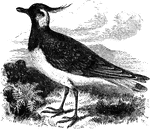
"The glareoles (Glareolidae) are a remarkable Old World form, like long-legged swallows, wth a cuckoo's bill; the tail is forked; there are four toes; the wings are extremely long and pointed; the tarsi are scullate; the middle claw denticulate." Elliot Coues, 1884

European Lapwing

"The glareoles (Glareolidae) are a remarkable Old World form, like long-legged swallows, wth a cuckoo's…
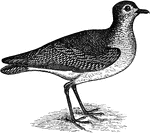
"Charadrius dominicus. American Golden Plover. Field Plover. Bull-head Plover. Upper parts black, everywhere speckled with golden-yellow, and mostly also white, the brighter color in excess. The markings of individual feathers are a tipping and one or several paired scollops. Hind neck less strongly marked than crown or back. Forehead, and long stripe over eye snowy-white. Region immediately around bill, sides of head to include eyes, and entire under parts, glossy brownish-black. Lining of wings, and axillars, sooty-gray or ashy. Tail dusky grayish-brown, with numerous irregular pale gray bars, and reddish-brown shafts; upper tail-coverts and rump like back. Primaries fuscous, blackening at tips and whitening at bases of inner webs, though without definite white spaces; shafts white for space. Secondaries and many of the coverts, like the primaries, plain fuscous, without the golden and white fretwork of the back. Bill and feet black." Elliot Coues, 1884

American Golden Plover

"Charadrius dominicus. American Golden Plover. Field Plover. Bull-head Plover. Upper parts black, everywhere…
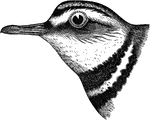
"Aegialites vociferus. Kildeer Plover. Above, grayish-brown, with an olive shade, and in high plumage a slight bronzy lustre. Rump and upper tail-coverts bright-colored, very variable in tint, from tawny or orange-brown to cinnamon-brown or chestnut. Forehead with a white band from eye to eye, more or less prolonged as a superciliary streak, and a black band above it. A white collar around hind neck, continuous with white of the throat. A black collar around back of neck, continuous with a black pectoral band. Back of the latter a black pectoral belt. Thus the fore-parts are encircled with one complete black ring, behind which is a black half-ring on breast, before which is a complete white ring. A white stripe over and behind eye; a dusky stripe below eye. Under parts entirely pure white, except the two pectoral belts. Primary quills blackish; a white space on the outer webs of the most of them, forming an oblique series, and a longer white space on their inner webs. Secondaries mostly white, but with black areas in increasing size from within outward. Long inner secondaries, or tertiaries, like the back. Tail-feathers singularly variegated; several inner pairs like the back, insensibly blackening towards ends, then lightning again, and usually with rusty tips; lateral ones gaining more and more of the bright color of the rump, with more definite black subterminal bars, and pure white tips; outermost pair mostly white, with the rufous shade, and several broken black bars. The effect of all this variegation is very striking when the pairs are displayed in flight. Bill black; eye black, with a bright ring around it; legs pale." Eliot Coues, 1884

Kildeer Plover

"Aegialites vociferus. Kildeer Plover. Above, grayish-brown, with an olive shade, and in high plumage…
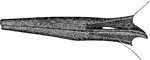
"Haematopus. Oyster-catcher. Bill peculiar - longer than tarsus, twice as long as head, constricted near the base, much compressed, almost like a knife-blade toward end, and truncate, something like a woodpecker's (it is an efficient instrument for prying open shells of bivalve mollusks), hard, straight or or deflected sideways, highly colored. Nasal groove very short, broad, and shallow; grooving of lower mandible slight; interramal space very short, scarcely a third the length of the long ascending gonys. Nostrils remote from the feathers, linear, close to edge of bill." Elliot Coues, 1884

Oyster-catcher Bill

"Haematopus. Oyster-catcher. Bill peculiar - longer than tarsus, twice as long as head, constricted…
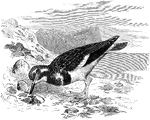
"Strepsilas interpres. Turnstone. Brant Bird. Calico-back. Pied above with black, white, brown, and chestnut-red; below, snowy, with jet breast. Top of head streaked with black and white. Forehead, cheeks, side of head and back of neck, white, with a bar of black coming up from the side of neck to below eye, then coming forward and meeting or tending to meet its fellow over base of bill, enclosing or nearly enclosing a white loral, and another black prolongation on side of neck; lower eye-lid white or not. Lower hind neck, interscapulars and scapulars, pied with black and chestnut; back, rump, and upper tail-coverts, snowy-white, with a large central blackish field on the latter. Tail white, with broad subterminal blackish field, narrowing on the outer feathers and incomplete, widening to usually cut off white tips of central feathers. Wing-coverts and long inner secondaries pied like the scapulars with black and chestnut, the greater coverts broadly white-tipped or mostly white, the short inner secondaries entirely white, the rest acquiring dusky on their ends to increasing extent, with result of a broad oblique white wing-bar. Primaries blackish, the longer ones with large white fields on inner webs, the shorter ones also definitely white on outer webs for a space, the shafts white on the outer webs for a space, the shafts white unless at end; primary coverts white-tipped. Under parts, under wing-coverts, snowy-white, the breast and jugulum jet-black, enclosing a white throat-patch, and sending limbs on sides of head and neck as above said. Bill black; iris black; feet orange." Elliot Coues, 1884

Turnstone

"Strepsilas interpres. Turnstone. Brant Bird. Calico-back. Pied above with black, white, brown, and…
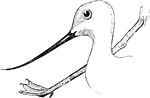
"Another small family, characterized by the extreme length of the slender legs, and the extreme slenderness of the long acute bill, which is either straight or curved upward. Recurvirostra is a 4-toed, and full-webbed; the bill is decidedly recurved, flattened, and tapers to a needle-like point; the body is depressed; the plumage underneath is thickened as in water-birds. The species swim well. Himantopus is 3 toes, semipalmate, the bill nearly straight, and not flattened; in relative length of leg it is probably not surpassed by any bird whatsoever. " Elliot Coues, 1884

Avocets Head and Foot

"Another small family, characterized by the extreme length of the slender legs, and the extreme slenderness…
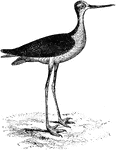
"Himantopus. Stilts. Bill extremely slender, but not flattened, nor turned up, nor hooked; longer than head, rather shorter than tarsus. Wing long and pointed, folding beyond the short and square tail, which is less than half the wing. Legs of unique length and slenderness, the bare part about as long as the wing; tibiae denuded for a great distance; tarsus about twice as long as toes. Feet 3-toes, semipalmate; but the species scarcely swim. Sexes similar; young different." Elliot Coues, 1884

Stilt

"Himantopus. Stilts. Bill extremely slender, but not flattened, nor turned up, nor hooked; longer than…
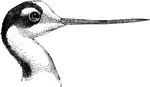
"Stilt. Long-shanks. Lawyer. Adult. Mantle, constituted by the interscapulars, scapulars, and wings (above and below) glossy-black, prolonged up the back of the neck and on to[ and sides of head, embracing the eyes. A spot over and behind eye, one on under eyelid, forehead to opposite eyes, sides of head below eyes, sides of neck and entire under parts, together with the lower back, rump, and, upper tail-coverts, white; tail pearl-gray. In life the long black wings fold entirely over the white upper parts and tail, so that the bird looks entirely black above. Bill black; eyes and legs carmine, latter drying yellowish." Elliot Coues, 1884

Black-necked Stilt

"Stilt. Long-shanks. Lawyer. Adult. Mantle, constituted by the interscapulars, scapulars, and wings…